In Louisiana, contracts generally cannot waive an employee's right to receive workers' compensation benefits, as such agreements are prohibited by Louisiana Revised Statute 23:1033. However, contracts can significantly limit a worker's legal options by establishing "statutory employer" status, which grants a company immunity from personal injury lawsuits (tort immunity) and restricts the worker’s recovery solely to workers' compensation benefits.
The landscape of Louisiana workers’ compensation law is unique due to the state's Civil Code heritage and specific legislative protections designed to balance the interests of laborers and industrial principals. While the basic right to medical care and indemnity (wage replacement) is protected from contractual erosion, the scope of who is liable and what legal paths are available is frequently dictated by the fine print of employment agreements, Master Service Agreements (MSAs), and independent contractor contracts. Understanding how these documents interact with the Louisiana Workers’ Compensation Act is essential for both employers and workers in 2026.
The Prohibition of Direct Waivers: LRS 23:1033
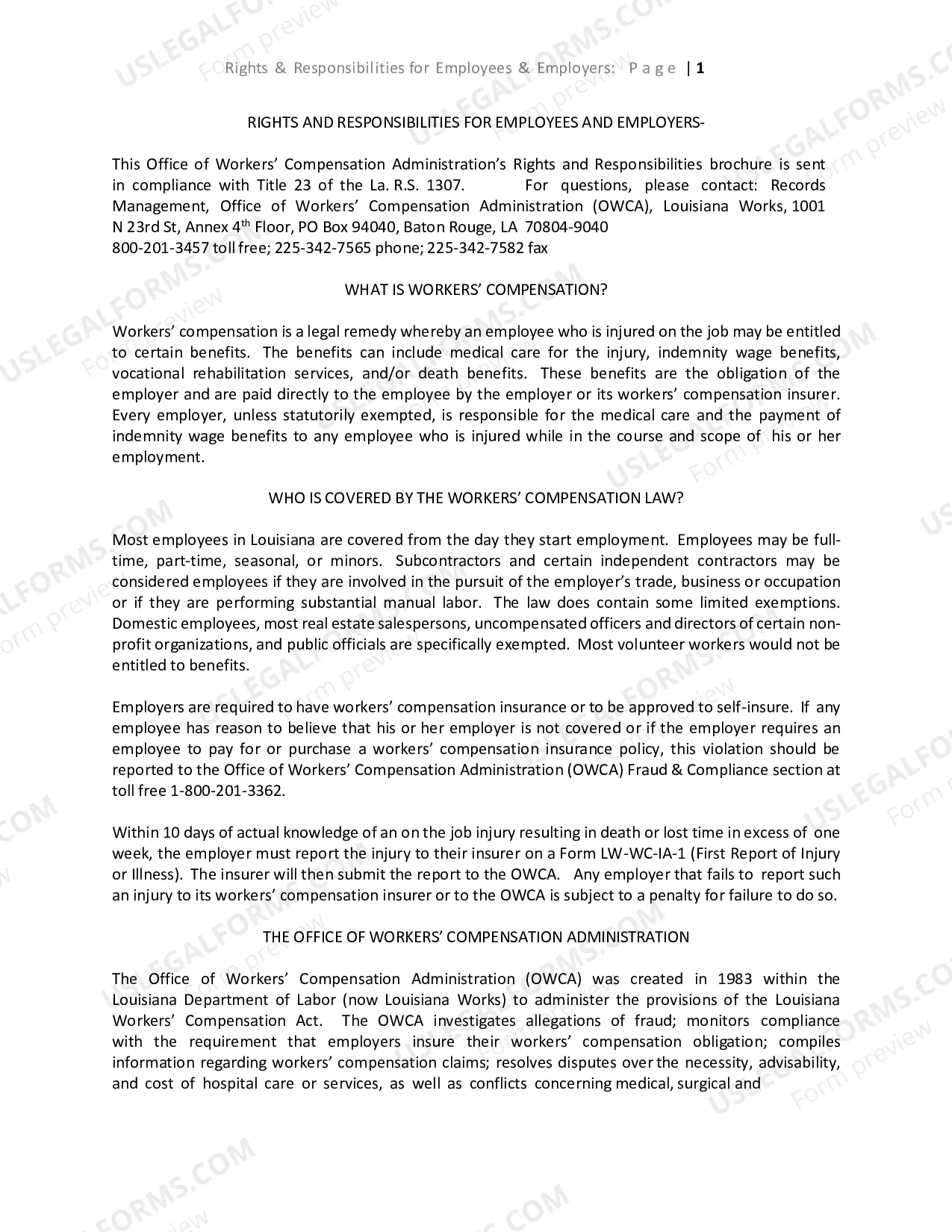
The most fundamental rule regarding contracts and workers' compensation in Louisiana is found in La. R.S. 23:1033. This statute explicitly states that no contract, rule, or regulation can operate to relieve an employer of the obligation to pay workers' compensation benefits.
This means that if a worker is a "covered employee" under the law, they cannot sign a document before or after starting a job that says, "I agree not to file a workers' comp claim if I am hurt." Such a waiver is considered "void as against public policy." Even if a worker signs such a document in exchange for a higher hourly wage or a signing bonus, Louisiana courts will not enforce it. The right to medical treatment and a portion of lost wages is an inherent protection that cannot be bargained away in a standard employment relationship.
However, the "limitation" occurs not in the waiving of the benefits themselves, but in the contractual definitions that determine if the worker is an employee or an independent contractor, and whether the hiring entity is a "statutory employer."
The Statutory Employer Doctrine: Contractual Tort Immunity
The most common way a contract limits a worker’s rights in Louisiana is through the Statutory Employer provision, governed by La. R.S. 23:1061.
In a typical construction or industrial setting, a "Principal" (the project owner or general contractor) hires a "Contractor" to perform work. If an employee of the Contractor gets hurt, they are entitled to workers' compensation from the Contractor. Historically, the worker could also sue the Principal in civil court for negligence (a "third-party claim") to recover damages for pain and suffering, which are not available in workers' comp.
To limit this liability, Louisiana law allows the Principal and the Contractor to enter into a written contract recognizing the Principal as the "statutory employer" of the Contractor's employees.
Requirements for a Valid Statutory Employer Contract
For a contract to successfully limit a worker's rights to only workers' compensation (and block a lawsuit), it must meet specific criteria:
- Written Agreement: There must be a written contract between the Principal and the direct employer.
- Specific Language: The contract must explicitly state that the Principal is considered the "statutory employer" for purposes of Louisiana workers' compensation law.
- Pre-Injury Execution: The contract must generally be in place before the injury occurs.
When these conditions are met, the worker is legally barred from suing the Principal for negligence. Their "exclusive remedy" against both their direct boss and the project owner is workers' compensation. While this ensures the worker receives benefits, it "limits" them by removing the possibility of a high-value jury award for non-economic damages.

Independent Contractor Agreements and the Manual Labor Exception
Many companies attempt to limit their workers' compensation exposure by labeling workers as "independent contractors" in a written agreement. Under La. R.S. 23:1021(6), true independent contractors are generally excluded from workers' compensation coverage.
However, a contract label is not the final word. Louisiana law looks at the reality of the work relationship, specifically the "Manual Labor Exception."
The "Substantial Part" Test
Even if a contract clearly states, "Worker is an independent contractor and not entitled to workers' compensation," the worker may still be covered if:
- The worker spends a "substantial part" of their work time in manual labor (physical exertion).
- The work performed is part of the principal's trade, business, or occupation.
In 2026, Louisiana courts continue to prioritize the "right to control" and the "nature of the work" over the "intent of the contract." If a company provides the tools, sets the hours, and the work is physically demanding, the contract’s attempt to limit workers' compensation coverage will likely fail, and the hiring entity will be held liable for benefits if the worker is injured.
Waivers of Subrogation in Commercial Contracts
While an employee cannot waive their own rights, the insurance companies involved in a contract often do. A Waiver of Subrogation is a contractual provision where an employer’s workers' compensation insurer agrees not to sue a third party (like a job site owner) to recover the money paid out in claims.
In many Louisiana MSAs, the Contractor is required to have their insurer include a waiver of subrogation in favor of the Principal.
- Impact on the Employer: It may increase insurance premiums because the insurer loses its right to recoup losses from the party actually at fault.
- Impact on the Worker: It does not directly stop the worker from receiving benefits, but it can complicate third-party settlements. If a worker sues a negligent third party, the employer usually has a "lien" on that settlement to get their workers' comp money back. A waiver of subrogation in the contract can shift who gets paid what in the final resolution of a complex legal case.
The Louisiana Oilfield Anti-Indemnity Act (LOAIA)
In the energy sector, contracts often try to shift all liability for workers' compensation and personal injury from the big oil companies to the smaller service contractors. This is done through "indemnity clauses," where the contractor agrees to pay for the oil company’s legal defense and any damages, even if the oil company was the one at fault.
The Louisiana Oilfield Anti-Indemnity Act (La. R.S. 9:2780) places a major limit on these contracts. The Act declares that any provision in an agreement pertaining to a well for oil, gas, or water that requires a contractor to indemnify the principal for the principal's own negligence or strict liability is "void and unenforceable."
This law prevents large entities from using their superior bargaining power to contractually force smaller companies to bear the entire burden of workers' compensation claims and tort suits arising from the principal’s own mistakes.
Borrowed Servant Doctrine and Staffing Contracts
In 2026, the use of temporary staffing agencies remains prevalent in Louisiana’s industrial corridors. Contracts between staffing agencies and "host" companies often contain clauses regarding who is responsible for workers' compensation.
The Borrowed Servant Doctrine is a legal principle where a worker, though paid by a staffing agency, becomes the "employee" of the host company for the duration of the work. If the contract specifies that the host company has the right to control the details of the work, the host company gains workers' compensation immunity.
This limits the worker’s rights because, like the statutory employer situation, it prevents the worker from suing the host company for a workplace accident. The contract effectively "trades" the worker's right to sue for the guarantee of workers' comp coverage from the host company (or the agency’s insurer).
Comparison of Contractual Impacts on Worker Status
The following table outlines how different contract types affect workers' compensation rights and limitations in Louisiana.
| Contract Type | Primary Purpose | Impact on Workers' Comp | Limitation on the Worker |
|---|---|---|---|
| Employment Agreement | Defines job roles and pay. | Cannot waive coverage (LRS 23:1033). | Generally no limitation on benefits. |
| Statutory Employer Clause | Defines the Principal as an employer. | Principal becomes liable for comp. | Total bar on suing the Principal for negligence (Tort Immunity). |
| Independent Contractor Agreement | Labels worker as a non-employee. | No coverage unless "Manual Labor" exception applies. | Loss of all benefits if the label is legally upheld. |
| Waiver of Subrogation | Insurance agreement. | Prevents insurer from suing 3rd parties. | Complicates 3rd-party recovery and lien offsets. |
| Staffing Agency MSA | Defines "Borrowed Servant" status. | Host company becomes the "employer." | Barred from suing the host company for site negligence. |
Choice of Law and Jurisdictional Limitations
Sometimes, a contract will state that the laws of another state (e.g., Texas or Delaware) apply to the employment relationship. This is known as a Choice of Law clause.
In Louisiana, if an accident happens on Louisiana soil, the courts will almost always apply Louisiana Workers' Compensation law regardless of what the contract says. Louisiana has a strong "public policy" interest in ensuring that people injured within its borders are covered by its specific social safety nets. A contract cannot "limit" a worker to the (potentially lower) benefits of another state if the work was being performed in Louisiana.
Frequently Asked Questions
Can a contract limit the amount of weekly benefits I receive?
No. The maximum and minimum weekly compensation rates are set annually by the Louisiana Workforce Commission based on the state's average weekly wage. As of 2026, these rates are fixed by law. Any contract attempting to pay a worker less than the statutory rate for a total disability is unenforceable.
If my contract says I am an independent contractor, am I barred from workers' comp?
Not necessarily. If you perform manual labor for a substantial part of your day—such as carpentry, heavy lifting, or operating machinery—you are likely entitled to workers' compensation benefits under the "Manual Labor Exception," regardless of the words used in your contract.
What is the "Two-Contract Theory" in Louisiana?
This is a specific type of statutory employer status. It applies when a Principal enters into a contract with a third party to perform work, and then subcontracts part of that work to another company. By law, the Principal is automatically the statutory employer of the subcontractor’s employees because of the "two-contract" relationship, even without a specific "statutory employer" clause in the document.
Can a contract limit which doctor I see after an injury?
Louisiana Revised Statute 23:1121 gives the employee the right to select one physician in any field or specialty. While some contracts or company policies may suggest you must see a "company doctor," the law overrides the contract. You have the right to choose your own treating physician, though you may be required to undergo a separate examination by a doctor chosen by the employer (an Independent Medical Examination or IME).
Does a "Hold Harmless" agreement affect my workers' comp claim?
A hold harmless agreement is typically a contract between two businesses, not between a worker and a boss. While it may determine which insurance company pays for the claim, it does not stop the injured worker from filing the claim or receiving the full extent of their benefits.
Practical Steps for Workers and Employers
For employers and principals, it is vital to ensure that "statutory employer" language is included in every written contract. Without this specific verbiage, you remain vulnerable to expensive personal injury lawsuits from contractors' employees, even if you are already paying for their insurance coverage through the contract price.
For workers, it is important to realize that the "Independent Contractor" label on your 1099 or contract is often a legal fiction used to save the company money. If you are injured, do not assume you are ineligible for benefits just because of a contract you signed. The reality of your daily labor and the level of control the company has over you are the factors that carry the most weight in 2026.
If you are involved in a dispute where a contract is being used to deny benefits or block a lawsuit, consulting with a legal professional who specializes in the Louisiana Workers' Compensation Act is necessary. The intersection of contract law and the Workers' Compensation Act is dense, and small errors in contract wording can lead to significant shifts in financial liability.
Image Gallery
Select an image to open it in a new tab.



Zara El-Hashem
Sociocultural Dynamics and Academics Writer
