Data Analytics in the Oil and Gas Industry: Driving Operational Efficiency and Energy Transition

Data analytics in the oil and gas industry is the systematic application of statistical models, machine learning, and big data processing to optimize exploration, drilling, production, and refining. By 2026, it has become the primary driver for reducing lifting costs, minimizing carbon intensity, and ensuring asset integrity across the global energy value chain.
The oil and gas (O&G) industry has transitioned from a period of "data richness and information poverty" to an era where data is the most valuable asset alongside physical reserves. In 2026, the integration of high-frequency sensor data, satellite imagery, and historical production logs allows operators to make split-second decisions that previously took weeks of manual analysis. This shift is not merely about incremental improvements; it is a fundamental restructuring of how energy is discovered, extracted, and delivered.
The Three Pillars of Data Analytics in Oil and Gas
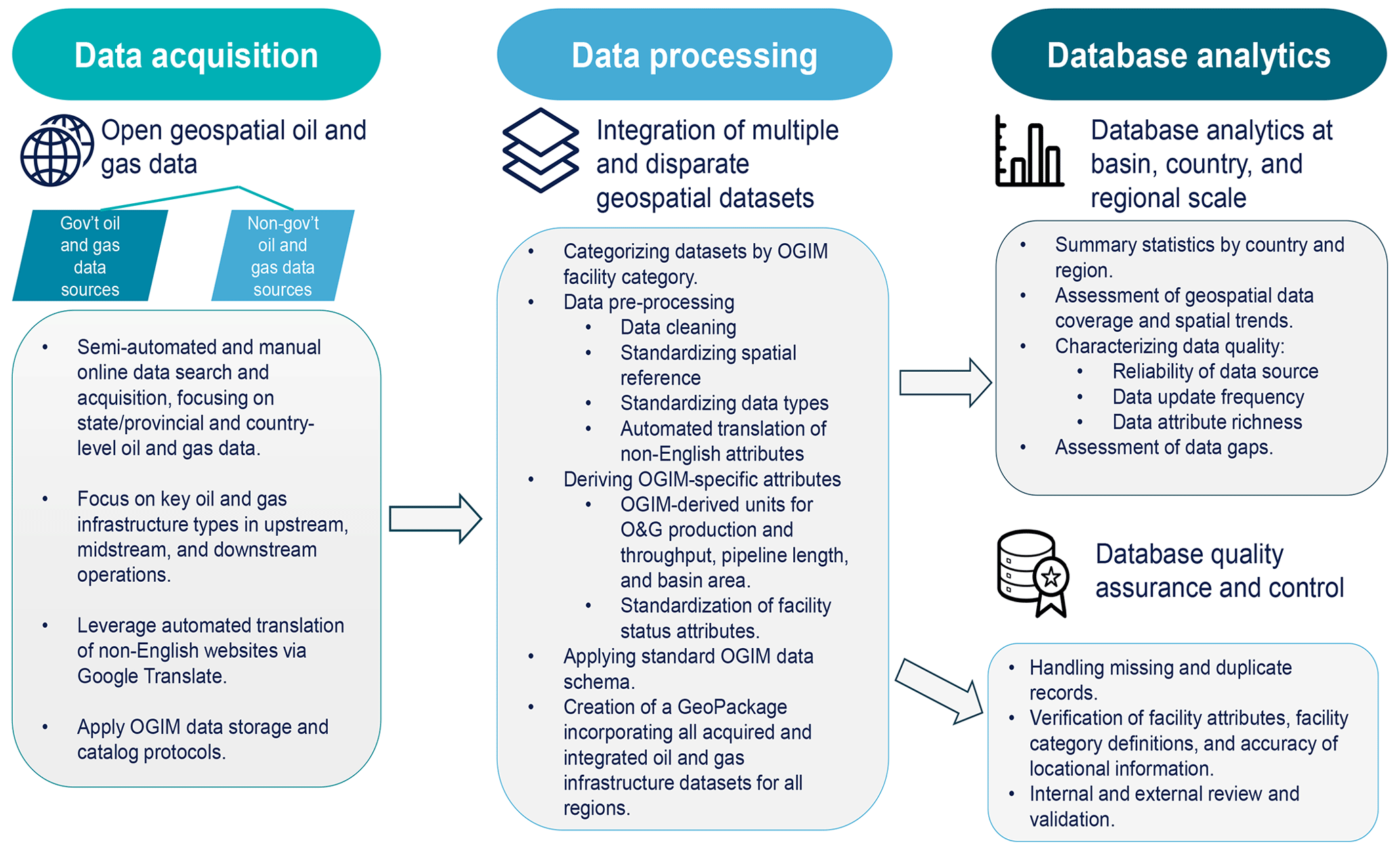
To understand how data analytics functions in the current landscape, one must look at its application across the three primary sectors: upstream, midstream, and downstream. Each sector faces unique challenges that require specific analytical approaches.
Upstream: Exploration and Production (E&P)
In the upstream sector, the focus is on "seeing the invisible." Subsurface data is inherently uncertain. By 2026, advanced seismic imaging techniques use deep learning algorithms to process petabytes of data, identifying potential reservoirs with a precision that was impossible a decade ago.
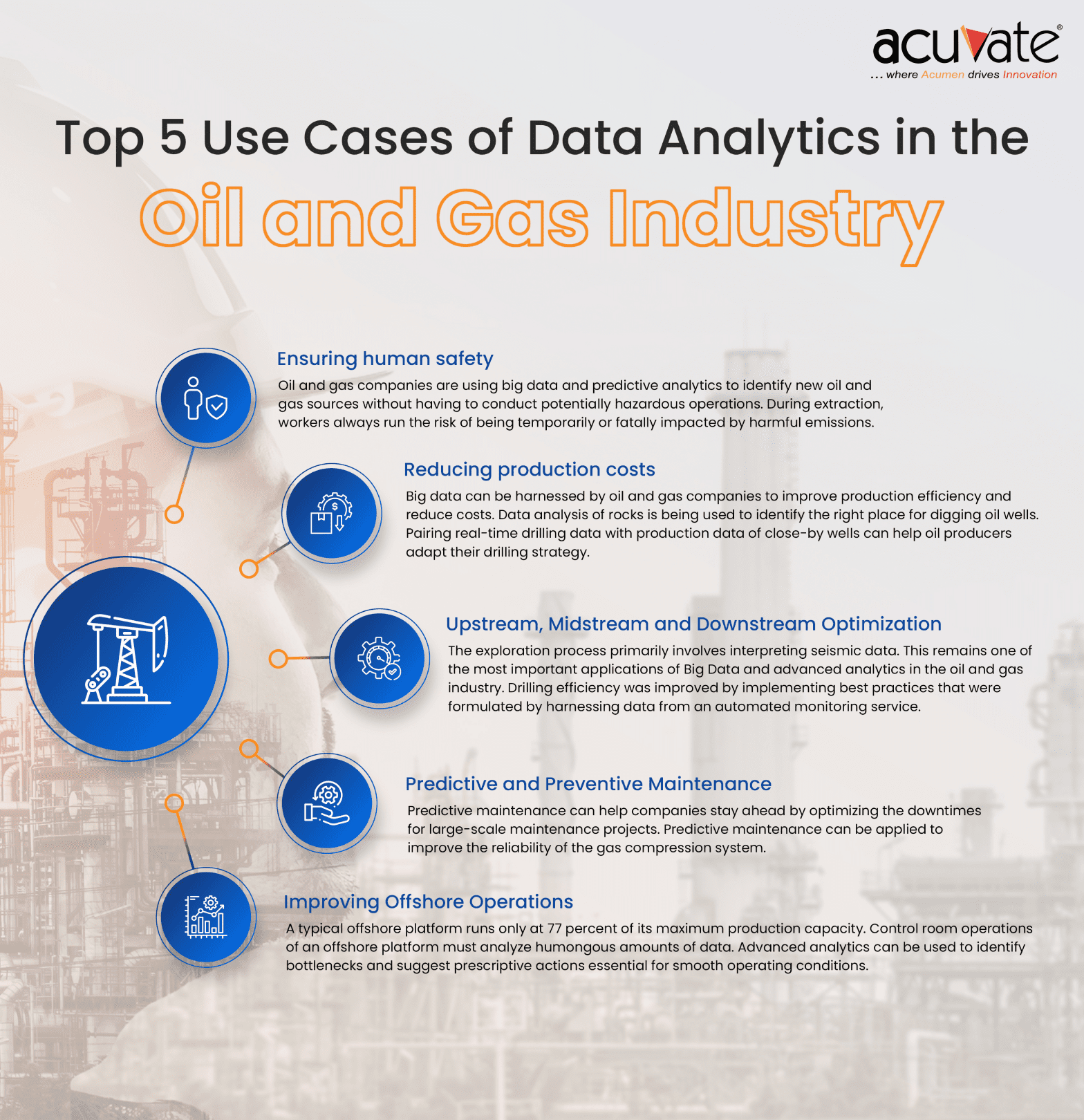
- Seismic Interpretation: Machine learning models now automate the picking of horizons and faults, reducing the time required for seismic interpretation from months to days. This allows geoscientists to focus on high-level risk assessment rather than manual data entry.
- Drilling Optimization: Real-time analytics at the "edge" (on the drilling rig itself) analyze vibrations, torque, and rate of penetration (ROP). These systems can predict "kick" events or equipment failures hours before they occur, preventing costly non-productive time (NPT) and enhancing crew safety.
- Reservoir Management: Digital twins of reservoirs simulate fluid flow and pressure changes. By integrating real-time production data, these models suggest optimal injection rates for Enhanced Oil Recovery (EOR), maximizing the total recovery factor of a field.
Midstream: Transportation and Storage
The midstream sector relies on analytics to maintain the integrity of vast networks of pipelines and storage facilities. The primary goal here is leak detection and logistics optimization.
- Predictive Maintenance for Pipelines: Fiber-optic sensors and satellite-based InSAR (Interferometric Synthetic Aperture Radar) monitor ground movement and pipeline stress. Predictive algorithms analyze these inputs to identify sections of pipe at risk of corrosion or mechanical failure.
- Logistics and Supply Chain: For Liquefied Natural Gas (LNG) and crude transport, analytics platforms optimize shipping routes based on weather patterns, port congestion, and fluctuating global prices, ensuring the highest netback for producers.
Downstream: Refining and Petrochemicals
Refineries are among the most complex industrial environments. Analytics in 2026 focuses on "autonomous operations" and margin optimization.
- Process Optimization: Modern refineries use multivariable predictive control (MPC) powered by AI to adjust temperatures, pressures, and flow rates in real-time. This ensures that the product slate (the mix of gasoline, diesel, and jet fuel) matches market demand while minimizing energy consumption.
- Asset Health Monitoring: Heat exchangers, compressors, and pumps are monitored by acoustic sensors and thermal imaging. Analytics platforms identify "early warning" signals of fouling or wear, allowing for scheduled maintenance that avoids unplanned shutdowns, which can cost millions of dollars per day.
The Technological Architecture of 2026
The success of data analytics in O&G is built upon a sophisticated technological stack. It is no longer enough to have a centralized data lake; the industry has moved toward a decentralized, high-speed architecture.
Edge Computing and IoT
In remote offshore environments or desert locations, bandwidth is often limited. Edge computing allows data to be processed locally on the asset (e.g., a subsea manifold or a remote wellhead). This enables immediate autonomous responses to critical alarms without waiting for data to travel to a central cloud server. The "Industrial Internet of Things" (IIoT) provides the sensory inputs—pressure, temperature, vibration, and chemical composition—that feed these edge devices.
Digital Twins
A digital twin is a virtual representation of a physical asset that is updated in real-time. In 2026, digital twins are not just 3D models; they are "living" entities that incorporate physics-based simulations and historical performance data. Operators use them to run "what-if" scenarios: "What happens to the pressure if we increase the flow rate by 10%?" This allows for optimization without risking the actual physical equipment.
Generative AI and Large Language Models (LLMs)
While traditional analytics handles numerical data, Generative AI has revolutionized how the industry handles "unstructured" data. Decades of drilling reports, maintenance logs, and geological surveys are now indexed by LLMs. Engineers can query a system in plain English: "Find all instances of pump failure in the Permian Basin caused by sand infiltration in 2024," and receive a summarized report in seconds.
ESG and Sustainability Analytics
In 2026, the "Social" and "Governance" aspects of ESG (Environmental, Social, and Governance) are heavily scrutinized by investors and regulators. Data analytics is the primary tool for verifying sustainability claims.
Methane Emissions Tracking
Methane is a potent greenhouse gas, and the O&G industry is under intense pressure to eliminate leaks. Integrated analytics platforms combine data from satellites, high-altitude drones, and ground-based sensors to create a real-time "methane map." This allows operators to pinpoint and repair leaks (Leads and Repairs, LDAR) with unprecedented speed, directly contributing to net-zero targets.
Carbon Capture and Storage (CCS) Optimization
For companies investing in CCS, analytics is used to model the long-term behavior of CO2 injected into saline aquifers or depleted reservoirs. Sensors monitor the plume of CO2 to ensure it remains trapped, providing the data necessary for regulatory compliance and carbon credit verification.
Comparative Analysis: Traditional vs. Analytics-Driven Operations
The following table illustrates the material impact of shifting from traditional reactive workflows to proactive, data-driven strategies.
| Operational Area | Traditional Approach (Pre-2020) | Data-Driven Approach (2026) | Impact on Bottom Line |
|---|---|---|---|
| Maintenance | Reactive: Fix it when it breaks. | Predictive: Fix it before it breaks based on sensor data. | 20-30% reduction in maintenance costs. |
| Drilling | Based on historical offset well logs and manual adjustments. | Real-time "geosteering" using ML to stay in the "pay zone." | 15% increase in well productivity. |
| Safety | Relies on manual inspections and periodic audits. | Continuous monitoring via drones, wearables, and AI-vision. | Significant reduction in Lost Time Incidents (LTI). |
| Production | Manual testing of wells once a month. | Virtual flow metering and continuous automated optimization. | 5-10% increase in total field output. |
| Emissions | Estimated based on equipment run-times and averages. | Measured directly and reported in real-time via integrated sensors. | Improved ESG ratings and lower carbon taxes. |
Challenges to Implementation
Despite the clear benefits, the path to a fully data-driven O&G organization is fraught with challenges. These are not just technical, but cultural and structural.
- Data Silos: Historically, different departments (drilling, production, finance) used proprietary software that didn't talk to each other. Breaking down these silos to create a "Single Source of Truth" is an ongoing struggle for many legacy supermajors.
- Legacy Infrastructure: Many refineries and offshore platforms were built decades ago. Retrofitting these assets with modern sensors and high-speed connectivity is a massive capital expenditure.
- The Talent Gap: The industry needs a new breed of professional—the "Petrotechnical Data Scientist." These individuals must understand both the physics of fluid dynamics and the nuances of gradient-boosted trees. Competition for this talent with Big Tech remains fierce.
- Cybersecurity: As operational technology (OT) becomes more connected to the internet (IT), the attack surface for cyber-terrorists increases. Protecting the "digital oilfield" from ransomware and state-sponsored attacks is a top priority in 2026.
Verification and Strategic Implementation
For organizations looking to scale their analytics capabilities, the International Energy Agency (IEA) provides frameworks for tracking digital transformation in the energy sector. Additionally, the Society of Petroleum Engineers (SPE) offers peer-reviewed research on the latest algorithms for reservoir simulation.
To verify the effectiveness of an analytics program, companies should implement a "Value Tracking Office" (VTO). The VTO measures the Delta between the "business-as-usual" case and the "AI-optimized" case, ensuring that digital investments translate into actual cash flow.
FAQs
How does data analytics improve safety in hazardous environments?
Data analytics improves safety by moving from reactive to proactive risk management. By analyzing patterns from wearable sensors (tracking heart rate and heat stress) and computer vision (identifying personnel not wearing PPE or entering restricted zones), companies can intervene before an accident occurs. Furthermore, predictive maintenance prevents catastrophic equipment failures, such as blowouts or pipeline ruptures, which pose the greatest risk to life and the environment.
What is the role of "Cloud vs. Edge" in 2026 O&G operations?
In 2026, the industry uses a hybrid model. The Cloud is used for heavy-duty tasks like training machine learning models, running regional reservoir simulations, and storing long-term historical data for ESG reporting. The Edge is used for real-time applications where latency is critical. For example, a subsea blowout preventer (BOP) uses edge analytics to trigger an emergency shut-in within milliseconds if it detects abnormal pressure spikes, without needing to communicate with a distant cloud server.
Can data analytics help small to mid-sized O&G operators?
Yes, and in 2026, it is often a survival necessity for smaller players. While they may not have the budget for custom-built AI, the rise of "SaaS" (Software as a Service) platforms tailored for O&G allows smaller operators to access world-class predictive maintenance and production optimization tools. This levels the playing field, allowing smaller companies to operate more leanly and compete with larger entities.
How do "Digital Twins" differ from traditional CAD models?
A CAD (Computer-Aided Design) model is a static representation of how a piece of equipment should look. A Digital Twin is a dynamic representation of how it is performing. It is fed by real-time sensor data, meaning if a pump begins to vibrate or a valve starts to leak, the digital twin reflects that change immediately. It also incorporates historical data to predict how that specific piece of equipment will age over time.
Is the use of AI in O&G contributing to job losses?
The impact is better described as "job transformation" rather than "job loss." While manual data entry and basic monitoring roles are being automated, there is an explosion in demand for roles that can interpret AI outputs and manage the digital systems. Field technicians, for example, now use Augmented Reality (AR) headsets that use analytics to provide step-by-step repair instructions, making them more efficient and specialized.
Practical Recommendations for 2026
For energy professionals and organizations, the following actions are recommended to stay competitive in an analytics-driven market:
- Prioritize Data Quality: Before investing in expensive AI models, ensure your underlying sensor data is clean, timestamped, and standardized. "Garbage in, garbage out" remains the most significant hurdle in industrial analytics.
- Invest in Interoperability: Use open standards like OSDU (Open Group Energy Data Core) to ensure that tools from different vendors can share data seamlessly. Avoid vendor lock-in at all costs.
- Focus on Change Management: The best algorithm in the world is useless if field operators don't trust it. Involve end-users early in the design of digital tools to ensure they solve real-world pain points.
- Start Small, Scale Fast: Begin with high-value, low-complexity use cases—such as predictive maintenance for a single critical pump—and use the demonstrated ROI to fund larger, cross-functional analytics initiatives.
Image Gallery
Select an image to open it in a new tab.


Ingrid Bjornson
Global Cyber Policy and Regulation Analyst
