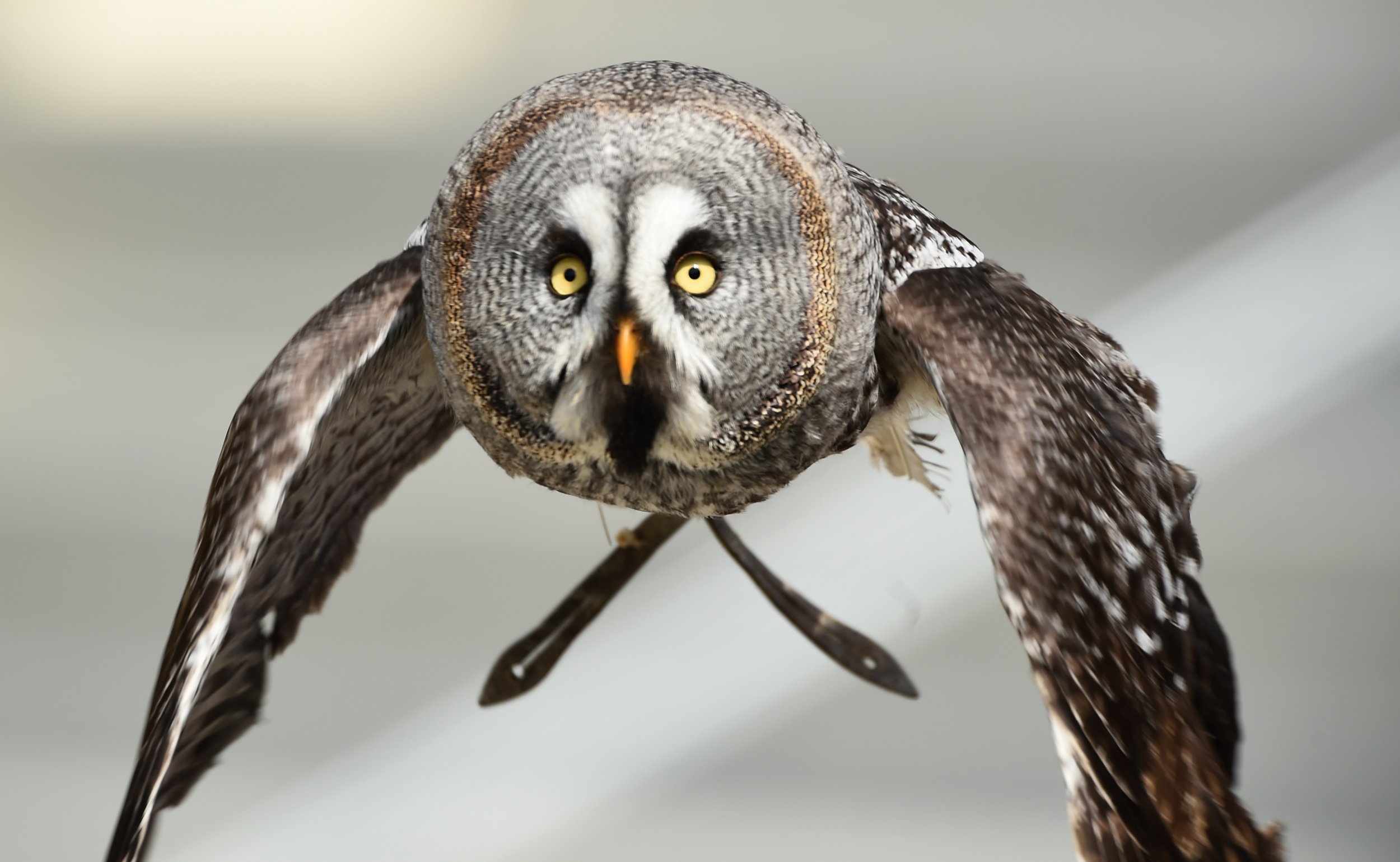
Birds are instinctively afraid of owls because owls are elite, stealthy predators engineered to hunt other birds. Featuring adaptations like silent flight, acute low-light vision, asymmetric hearing, and crushing talon strength, owls target roosting diurnal birds at night when they are most vulnerable, driving deep evolutionary fear and defensive behaviors across hundreds of bird species.
Evolutionary Adaptations That Make Owls Apex Avian Predators
To understand why smaller birds display intense fear around owls, one must first examine the evolutionary design of the owl. Owls belong to two primary biological families within the order Strigiformes: Strigidae (true or typical owls) and Tytonidae (barn owls). Both lineages have evolved over tens of millions of years into highly efficient nocturnal and crepuscular hunters.
While many raptors, such as hawks and falcons, rely on sheer speed and open-air maneuvering during daylight hours, owls dominate the acoustic and low-light landscape. For songbirds, woodpeckers, waterfowl, and even other birds of prey, an encounter with an owl represents a threat against which standard defensive senses—like long-range visual detection—are rendered far less effective.
- Serrated Leading Edge: Breaks airflow into smaller micro-turbulences
- Soft Downy Barbules: Absorbs high-frequency acoustic friction
- Flexible Trailing Edge: Reduces air pressure differentials
- Result: Acoustic Stealth (Silent Flight below audible human/avian thresholds)
Silent Flight Mechanics
The primary survival mechanism for most flying birds is early detection followed by immediate flight. Owls bypass this defense almost entirely through specialized feather architecture that enables near-silent flight.
- Serrated Leading Edges: The outermost flight feathers (primaries) of an owl feature a rigid, comb-like fringe along their leading edge. As the wing cuts through the air, this serration disrupts incoming airflow, splitting large acoustic vortices into smaller, less turbulent micro-turbulences.
- Soft Downy Barbules: The upper surface of an owl’s wing feathers is covered in a soft, velvet-like down composed of microscopic barbules. This structure absorbs the high-frequency sounds produced by feathers rubbing together during wingbeats.
- Flexible Trailing Edges: The trailing edge of the flight feathers terminates in a soft, flexible fringe. This gradually blends the airflow back into the surrounding environment, preventing the abrupt air pressure changes that create wing-slapping sounds in hawks or pigeons.
Because smaller birds rely on subtle rustles or wingbeats to detect approaching danger, the silent flight of an owl deprives prey of critical early warnings. An owl can glide within striking distance before a roosting bird even registers a change in air movement.
Exceptional Low-Light Vision and Asymmetrical Hearing
Beyond silent movement, an owl’s sensory perception far exceeds that of diurnal birds during hours of darkness. Diurnal species—such as robins, finches, and sparrows—possess eyes dominated by cone photoreceptor cells, which provide rich color vision in daylight but function poorly in ambient night light. In contrast, owl eyes are packed with rod cells, granting them exceptional night vision.
Furthermore, an owl's eyes are fixed in elongated, tubular sockets held in place by bone structures called sclerotic rings. Rather than moving their eyes within the sockets, owls must turn their heads up to 270 degrees. This binocular visual field provides depth perception capable of tracking subtle movements in dense foliage under moonlight.
- Asymmetric Auditory Pathway (e.g., Barn Owl)
- Left Ear Opening (Higher): Detects sounds from BELOW horizontal axis
- Right Ear Opening (Lower): Detects sounds from ABOVE horizontal axis
- Neural Processing: Instantaneous Acoustic Mapping
In species like the Barn Owl (Tyto alba) and Boreal Owl (Aegolius funereus), the auditory openings are asymmetrical—one ear aperture is situated higher on the skull than the other. Sound waves reaching the ears arrive at slightly different times and intensities. The owl’s brain processes these microsecond discrepancies to construct a three-dimensional acoustic map of its surroundings, allowing it to locate a hidden or sleeping bird in absolute darkness without relying on visual cues.
Talon Pressure and Predatory Force
Once an owl strikes, the probability of prey escaping is remarkably low. Raptors possess a specialized tendon-locking mechanism in their feet. When an owl flexes its leg joints upon gripping a branch or prey item, the tendons pull taut automatically, locking the toes into place without requiring continuous muscle contraction.
Large species, such as the Great Horned Owl (Bubo virginianus), can exert talon pressure exceeding 300 pounds per square inch (PSI)—a force comparable to the bite grip of a large dog. This crushing pressure instantly disables avian prey, puncturing vital organs and snapping skeletal structures.
For smaller birds, surviving a direct physical strike by an owl is biologically improbable, reinforcing evolutionary selective pressure to avoid owls entirely.
The Nighttime Advantage: Why Sleeping Birds Are Vulnerable
The fundamental divergence between diurnal (day-active) and nocturnal (night-active) lifecycles creates a severe ecological vulnerability for most bird species. During daylight hours, songbirds maintain high situational awareness. They forage in flocks, leverage wide fields of view, and communicate constantly through contact calls to monitor potential hazards.
At dusk, diurnal birds enter a state of reduced physiological activity known as torpor or deep sleep to conserve energy. They roost in hedges, tree cavities, brush piles, or structural nooks. During this period:
Impaired Visual Acuity: Diurnal birds lose their primary sensory defense mechanism in low-light conditions.
Delayed Reflex Arc: Waking from deep roosting takes several seconds, making instantaneous escape maneuvers impossible.
Predictable Roosting Locations: Many species return to the same communal roosts night after night, allowing resident owls to establish routine hunting circuits over known feeding spots.
Diurnal Bird Vulnerability
- Daytime Status: High Alert | Wide Visual Field | Rapid Response
- Nighttime Status: Torpor | Minimal Low-Light Vision | Slow Response
Nocturnal Owl Dominance
- Nighttime Status: Peak Hunting | Silent Flight | Asymmetric Auditory Localization | High-Density Rod Vision
Owls exploit this asymmetry. A Great Horned Owl or Eastern Screech-Owl (Megascops asio) can quietly sweep through a tree canopy, locate a sleeping cluster of starlings or sparrows by sound or silhouette, and snatch individuals straight off their roosting perches before neighboring birds can react. This persistent nocturnal mortality instills a deep-seated evolutionary dread across bird families.
Defensive Behaviors: How Birds React to the Threat of Owls
Because the risk of predation by owls is so extreme, birds have developed sophisticated behavioral strategies dedicated specifically to detecting, confronting, and avoiding these silent predators.
Mobbing Behavior and Interspecies Alarm Calls
One of the most noticeable phenomena in bird observation is mobbing behavior. When a diurnal bird discovers an owl resting or roosting during the day, it rarely flies away quietly. Instead, it emits intense, harsh alarm calls to rally nearby birds of various species to harass the predator.
- Single Bird Spots Day-Roosting Owl
- Emits High-Frequency Mobbing Call
- Interspecies Recruitment & Harassment Tactics:
- Interspecies Recruitment:
- Blue Jays
- American Crows
- Chickadees & Titmice
- Harassment Tactics:
- Repeated swooping
- Loud vocalization
- Direct dive-bombing
- Interspecies Recruitment:
- Owl Driven Out of Territory / Deprived of Stealth
Mobbing serves several vital evolutionary functions:
- Eliminating the Element of Surprise: Owls depend heavily on covert strikes. By surrounding an owl and calling loudly, mobbing birds signal to the owl that its location is compromised, rendering its nighttime hunting strategy far less effective in that immediate area.
- Educating Juvenile Birds: Young or inexperienced birds learn to recognize the visual profile of a camouflaged owl by observing adults participate in mobbing events.
- Driving the Predator Away: Continuous physical annoyance, dive-bombing, and loud vocalizations exhaust the owl, frequently forcing it to abandon its roost for a more secluded spot.
Intriguingly, mobbing signals cross species lines. Blue Jays (Cyanocitta cristata), American Crows (Corvus brachyrhynchos), Black-capped Chickadees (Poecile atricapillus), and Tufted Titmice (Baeolophus bicolor) will set aside territorial rivalries to form cooperative mobbing flocks against a single perched owl.
Nesting Alterations and Avoidance Strategies
The presence of owls fundamentally shapes how smaller birds choose nesting sites and manage their daily routines. Studies in avian ecology demonstrate that songbirds actively adjust their breeding behavior when owl vocalization is detected nearby:
- Suppression of Dawn Chorus: Male songbirds may reduce or alter their morning singing displays if a Eastern Screech-Owl or Barred Owl (Strix varia) is calling in the area, minimizing acoustic broadcast of their location.
- Nest Cavity Selection: Small cavity nesters select tree hollows with entrance holes too narrow for screech-owls or larger raptors to enter, protecting eggs and brooding adults.
- Territorial Abandonment: High densities of apex owl species often result in lower songbird nesting success, prompting smaller birds to migrate to safer habitats.
Comparative Analysis of Owl Species and Avian Reactions
Different owl species occupy distinct ecological niches, vary widely in size, and present different danger levels to various bird species. The following table breaks down major North American owl species, their primary hunting targets, and how diurnal birds react to them.
| Owl Species | Common Name & Scientific Name | Average Wingspan | Primary Avian Prey | Typical Diurnal Bird Reaction |
|---|---|---|---|---|
| Great Horned Owl | Bubo virginianus | 39–57 inches (100–145 cm) | Ducks, crows, gulls, hawks, smaller owls, songbirds | Heavy mobbing by crows and jays; total spatial avoidance by mid-sized birds. |
| Barred Owl | Strix varia | 38–49 inches (96–125 cm) | Small songbirds, woodpeckers, small mammals | Aggressive mobbing by songbird mixed-species flocks; vocal alarm signaling. |
| Barn Owl | Tyto alba | 31–43 inches (80–110 cm) | Rodents primarily; occasional roosting starlings and sparrows | Moderate avoidance; lower mobbing frequency due to strictly nocturnal routine. |
| Eastern Screech-Owl | Megascops asio | 18–24 inches (46–61 cm) | Warblers, finches, sparrows, insects | Intense mobbing by small passerines (chickadees, titmice, nuthatches). |
| Northern Pygmy-Owl | Glaucidium gnoma | 12–15 inches (31–38 cm) | Diurnal songbirds up to twice its body weight | Extreme localized mobbing; active daytime hunting causes high songbird distress. |
Plastic Owls and Decoys: Why Birds Fear Them (And Why the Fear Fades)
Property owners, gardeners, and facility managers frequently install visual owl decoys—typically molded plastic representations of a Great Horned Owl—to deter birds from nesting on ledges, damaging crops, or defacing buildings. The effectiveness of these devices relies directly on the innate evolutionary fear birds possess toward owls.
- Plastic Owl Decoy Setup
- Initial Stage: Fear Response
- Direct sight triggers predator recognition
- Birds flee or display mobbing
- Immediate area avoided
- Secondary Stage: Habituation
- Decoy remains static over time
- No movements, calls, or strikes occur
- Birds recognize lack of threat
- Perching/nesting resumes on decoy
- Initial Stage: Fear Response
The Mechanisms of Avian Habituation
While a plastic owl often triggers immediate avoidance or mobbing when first placed, its deterrence value typically decreases over time. This decline is driven by a behavioral process called habituation.
Habituation occurs when an animal stops responding to a stimulus after repeated exposure without any positive or negative consequences. Birds possess sophisticated spatial memory and visual pattern recognition. When a bird encounters an owl decoy:
- Initial Threat Assessment: The signature visual cues—large forward-facing eyes, tufted "horns," and a hooked beak—trigger an instinctual fear response.
- Observation Phase: The target birds observe the decoy from a safe distance.
- Pattern Recognition: Over hours or days, the birds notice crucial anomalies: the object does not turn its head, shift weight, adjust feathers, make sounds, or react to mobbing calls.
- Extinction of Fear Response: Realizing the object poses no actual physical threat, birds resume normal activities. It is common to see pigeons, swallows, or sparrows perched directly on top of static plastic owls once habituation is complete.
Strategies to Maintain Decoy Effectiveness
To prevent birds from quickly habituating to fake owls, property managers must disrupt the static nature of the decoy:
- Relocate Frequently: Move the decoy to a different location every two to three days. Changing its height, angle, and position keeps birds from identifying it as a harmless landmark.
- Utilize Dynamic Motion Decoys: Select decoys with wind-activated flexible wings, rotating heads, or internal motion sensors. Movement breaks the static visual pattern that signals safety to observing birds.
- Combine Multi-Sensory Cue Systems: Pair visual decoys with bioacoustic deterrent sound units that broadcast authentic distress calls or owl vocalizations at irregular intervals.
- Deploy Decoys Seasonally: Install decoys only during critical periods, such as early spring nest building or fruit ripening seasons, and store them out of sight during other times of the year.
Frequently Asked Questions
Do all bird species fear owls equally?
No. The intensity of fear depends on the size of the bird relative to the owl species in its habitat. Small songbirds display intense fear toward small-to-medium owls like Screech-Owls and Pygmy-Owls. Larger birds, such as crows and red-tailed hawks, fear apex predators like the Great Horned Owl but will aggressively target smaller owl species during daylight hours.
Why do birds attack owls during the daylight?
Birds attack or harass owls during the daytime (a process called mobbing) to drive the predator away while it is at a vision advantage handicap. By drawing attention to the resting owl, birds reduce the chance that the owl can perform a surprise hunting attack during the coming night.
Can owls hunt birds while flying in complete darkness?
Yes. Species such as the Barn Owl can hunt in total darkness using their asymmetrical auditory systems alone. However, most owls prefer ambient light from the moon or stars, using a combination of specialized rod-vision eyes and acute acoustic tracking to catch birds on their perches.
Are owls afraid of any other animals or birds?
Yes. Owls are not immune to predation. Larger owls, such as Great Horned Owls, occasionally prey on smaller owl species like screech-owls or barn owls. Eagles, large hawks, coyotes, foxes, and raccoons will also attack owls, raid their nests, or consume their eggs and nestlings given the opportunity.
Why do birds return to an area after an owl decoy is installed?
Birds return because they undergo habituation. If the fake owl does not move, make noise, change position, or pose a physical threat, birds recognize it as a non-living object and lose their initial fear response.
Practical Guidance for Birdwatchers and Gardeners
Understanding the relationship between birds and owls can improve both backyard bird feeding and property management strategies.
For Backyard Bird Enthusiasts
If you wish to attract songbirds to your yard while protecting them from natural owl predation:
- Provide Dense Cover: Place bird feeders within 10 to 15 feet of evergreen shrubs, dense brush piles, or thick tree canopies. This offers immediate shelter if a screech-owl or Cooper's Hawk sweeps through the yard.
- Listen for Mobbing Calls: Pay attention to sudden bursts of harsh, rhythmic calls from jays, chickadees, or crows. Following these sounds often reveals a camouflaged owl roosting in a nearby tree trunk or evergreen branch.
- Maintain Nighttime Safety: Avoid lighting feeders with bright floodlights, which can illuminate sleeping birds for nocturnal predators.
For Humane Pest Management
If you are attempting to deter nuisance birds from balconies, rooftops, or gardens:
- Avoid Relying Solely on Static Decoys: Static plastic owls fail quickly without active repositioning.
- Implement Integrated Pest Management (IPM): Combine visual deterrents (relocated dynamic decoys) with mechanical exclusion methods, such as physical bird netting, stainless steel bird spikes on ledges, or tension wire systems.
Image Gallery
Select an image to open it in a new tab.
Simon Caldwell
Enterprise Technology and Systems Editor
