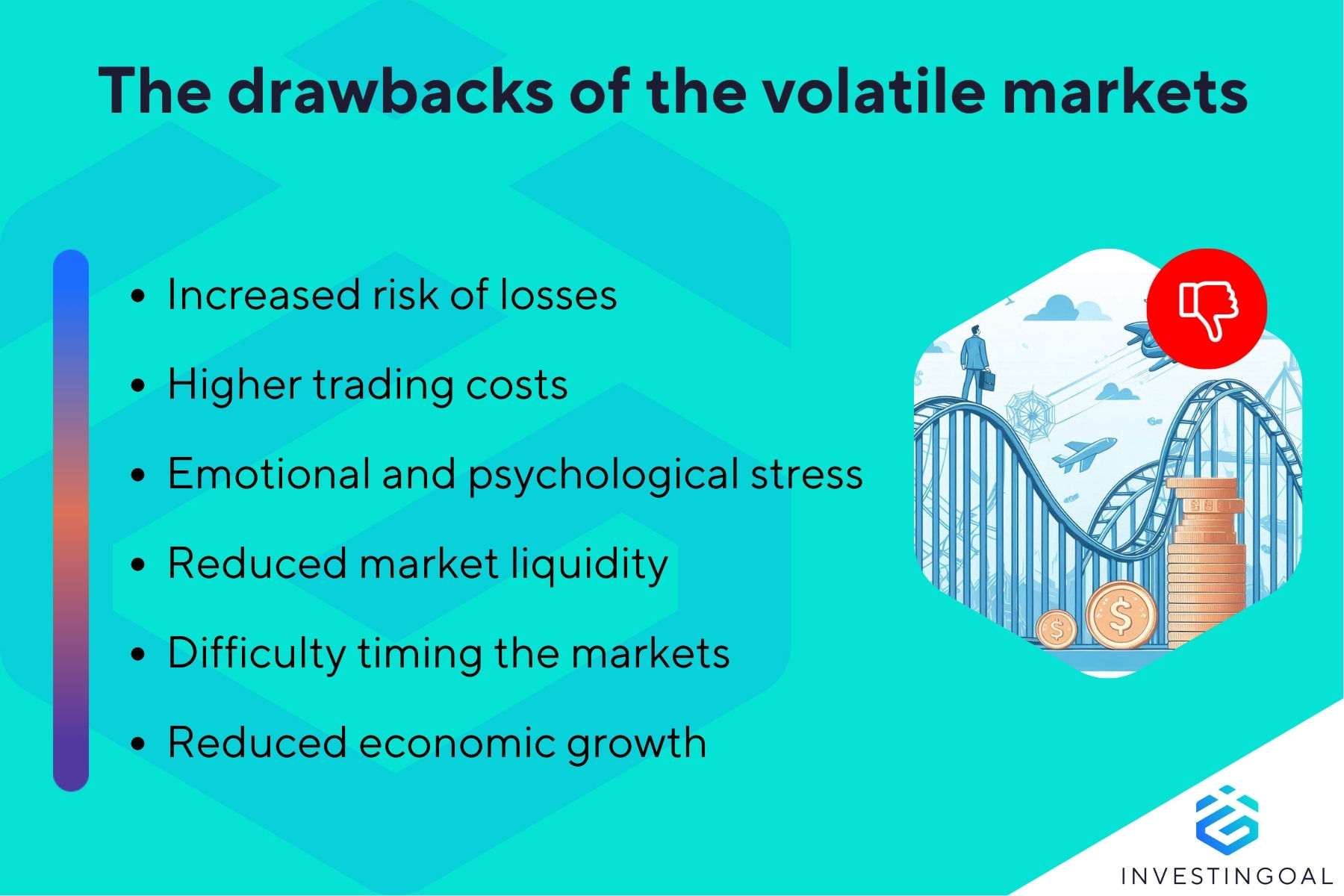
Commodities traders navigate market volatility by employing a combination of strict risk management frameworks, financial derivatives like futures and options, fundamental supply-demand analysis, and real-time operational flexibility to hedge against sudden price swings.
The world of raw materials is inherently turbulent. Unlike equities, which can be evaluated through corporate earnings and balance sheets, commodities—ranging from crude oil and natural gas to agricultural grains and industrial metals—are subject to forces far beyond human control. Weather anomalies, geopolitical conflicts, sudden supply chain bottlenecks, and macroeconomic shifts can cause prices to spike or collapse within a single trading session. For professional trading desks, producers, and consumers alike, understanding how to navigate this volatility is not merely a strategy for generating profits; it is a fundamental requirement for survival.
Successfully navigating these turbulent waters demands a deep comprehension of market mechanics, sophisticated risk quantification tools, and an unwavering discipline in execution. Market participants must look beyond immediate price tickers to analyze the structural underpinnings of physical supply and demand, matching these insights with precise financial instruments designed to absorb financial shocks.
Understanding the Roots of Commodity Market Volatility
To effectively manage volatility, traders must first identify its primary drivers. Commodity markets are unique because they deal in tangible, physical goods that must be extracted, grown, transported, and stored. Each step in this physical chain introduces vulnerability.
Geopolitical events frequently serve as immediate catalysts for sharp price movements. A conflict in a major oil-producing region, trade tariffs imposed on agricultural exports, or the sudden implementation of maritime sanctions can alter trade flows overnight. For example, disruptions in critical shipping lanes such as the Suez Canal or the Panama Canal immediately impact freight rates and delivery timelines, forcing physical traders to reprice inventories instantly.
Weather patterns represent another uncontrollable source of volatility, particularly in agricultural markets and energy sectors. A severe drought in the Midwest of the United States can decimate soybean and corn yields, driving prices skyward. Conversely, an unusually mild winter can cause natural gas demand to plummet, leaving storage facilities oversupplied and prices depressed.
Macroeconomic factors also play a massive role. Currency fluctuations, particularly the strength or weakness of the United States Dollar (priced in which most global commodities are traded), interest rate decisions by central banks, and global inflation prints dictate the flow of speculative capital into and out of commodity asset classes.
The Foundation of Risk Management Frameworks
Navigating volatility begins long before a trade is executed. It starts with a robust risk management framework that defines the maximum capital an institution or individual is willing to put at risk. Professional trading desks operate under strict mandates regarding Value at Risk (VaR), stress testing, and position limits.
Value at Risk models estimate how much a set of investments might lose, given normal market conditions, in a set time period such as a day or a week. However, because commodities are prone to "fat-tail" events—rare occurrences that fall outside normal statistical distributions—standard VaR is rarely enough. Traders supplement this with rigorous stress testing, simulating historical crises (such as the 2008 financial crisis or the 2020 negative oil price anomaly) or hypothetical catastrophic scenarios to see how their portfolios would hold up.
Position sizing and stop-loss protocols act as critical safety valves. Traders establish predefined thresholds where losing positions must be liquidated automatically. This prevents emotional decision-making during high-stress market crashes or vertical price rallies, ensuring that a single bad trade cannot wipe out a trading account or destabilize a firm's balance sheet.

Utilizing Derivatives: Futures, Options, and Swaps
The primary tools used by commodities traders to manage and neutralize price risk are derivatives. These financial instruments derive their value from an underlying physical asset, allowing market participants to lock in prices or limit downside exposure without necessarily taking physical delivery of tons of copper or barrels of oil.
Futures contracts are standardized agreements to buy or sell a specific quantity of a commodity at a predetermined price on a specified future date. Producers use futures to lock in selling prices for their upcoming harvests or extractions, protecting themselves against price drops. Conversely, consumers—such as airlines needing jet fuel or food manufacturers needing wheat—use futures to cap their input costs, guarding against sudden price spikes.
Options contracts offer a different type of protection by providing the right, but not the obligation, to buy (call option) or sell (put option) a commodity at a set strike price. While futures lock a trader into a fixed price, options act more like an insurance policy. By paying a premium, a trader can protect against adverse price movements while retaining the ability to profit if the market moves in their favor.
Swaps and Over-the-Counter (OTC) derivatives offer customized risk-shifting agreements tailored to specific commercial needs that standard exchange-traded contracts cannot meet. These are typically arranged through major financial institutions and allow corporations to manage complex, long-term exposure to price fluctuations.
| Instrument Type | Primary Purpose | Key Advantage | Main Limitation |
|---|---|---|---|
| Futures Contracts | Hedging price risk or speculative positioning | High liquidity and standardized terms | Obligation to fulfill contract; margin calls during volatility |
| Options Contracts | Asymmetric risk protection (insurance-like) | Defined risk (limited to the premium paid) | Premium decay over time; upfront cost |
| Physical Storage/Arbitrage | Capturing spot-to-futures price differentials | Tangible asset backing and flexibility | High carrying costs, logistics, and storage constraints |
| Swaps (OTC) | Tailored, long-term risk management | Customizable to exact commercial specifications | Counterparty credit risk and lower liquidity |
Fundamental Analysis and Supply-Demand Dynamics
While technical analysis (studying charts, price action, and momentum indicators) is widely used for short-term tactical trading, navigating severe volatility ultimately requires a deep mastery of fundamental analysis. Traders must maintain a granular understanding of global supply and demand balances.
This involves tracking data from authoritative institutional sources, such as the U.S. Department of Agriculture (USDA) for grains and livestock, the International Energy Agency (IEA) and the Energy Information Administration (EIA) for petroleum products, and the World Bureau of Metal Statistics for industrial metals.
Physical inventory levels, often referred to as commercial stocks, are among the most critical metrics during volatile periods. When inventories are low relative to consumption, markets are said to be in a "tight" or "backwardated" state, where spot prices trade significantly higher than future prices. In these environments, any minor supply disruption can trigger exponential price spikes because there is no buffer stock to absorb the shock. Conversely, abundant inventories create a "contango" market structure, where future prices are higher than spot prices, reflecting the cost of storage and carrying charges.
Operational Flexibility and Physical Arbitrage
For commercial entities and physical trading houses, navigating market volatility extends far beyond the paper derivatives markets. It relies heavily on operational flexibility and physical assets such as storage tanks, pipelines, vessels, and processing facilities.
Physical arbitrage—the practice of buying a commodity in one market and simultaneously selling it in another at a higher price—becomes highly profitable during volatile periods. Traders who own or lease logistical assets can move commodities from regions of oversupply to regions of acute shortage.
For example, if regional natural gas prices surge in Europe due to supply shortages while prices remain low in North America, traders with access to liquefied natural gas (LNG) export terminals, shipping vessels, and regasification capacity can capture massive margins. This physical optionality acts as a natural buffer against financial market volatility, allowing trading operations to generate revenue from supply chain dislocations regardless of the general direction of flat prices.
Psychological Discipline and Common Pitfalls
Navigating market volatility places immense psychological pressure on traders. The human brain is naturally wired to react impulsively to fear and greed, two emotions that are amplified manifold during chaotic market conditions. Successful traders cultivate strict emotional discipline, recognizing that market chaos often creates irrational pricing anomalies that require patience to exploit.
One of the most common pitfalls during volatile periods is over-leveraging. When prices move rapidly, the temptation to increase position sizes to capture larger gains is high. However, high leverage combined with sudden price gaps can instantly trigger margin calls, forcing liquidations at the absolute worst possible prices. Professional traders manage leverage conservatively, ensuring they have sufficient capital reserves to withstand adverse market moves without being forced out of positions prematurely.
Another frequent mistake is failing to account for liquidity evaporation. During extreme market stress, trading volume can dry up rapidly, widening bid-ask spreads and making it difficult to exit positions without incurring substantial slippage. Understanding market depth and ensuring access to multiple execution venues helps mitigate this liquidity risk.
Frequently Asked Questions
What is the difference between contango and backwardation in commodity markets?
Contango occurs when a commodity's future price is higher than its expected spot price, usually indicating well-supplied markets with high storage costs. Backwardation occurs when the spot price is higher than the future price, signaling tight current supplies and immediate high demand for the physical good.
How do commodity traders use hedging to protect against losses?
Hedging involves taking an offsetting position in the derivatives market—such as selling futures contracts—to protect the value of a physical inventory or lock in future purchasing costs. If physical asset values drop, the derivative gains help offset the physical loss.
Why does extreme weather impact commodity prices so severely?
Extreme weather directly damages crop yields, disrupts energy extraction operations, and freezes transportation networks. Because physical commodities require time to grow, extract, or replace, sudden supply shocks cannot be immediately resolved, causing rapid price escalation.
What role do margin calls play during volatile market conditions?
Margin calls require traders to deposit additional funds into their brokerage accounts when the value of their leveraged positions drops below a specified maintenance level. Failure to meet a margin call results in the broker forcibly closing out positions, which can exacerbate downward market spirals.
Can individual retail traders successfully navigate commodity volatility?
While retail traders can access commodity markets through exchange-traded funds (ETFs), futures, or options, navigating high volatility requires substantial capital, real-time data feeds, and institutional risk management frameworks. Retail participants face significant risks of rapid capital loss due to leverage and complex market structures.
Next Steps for Market Participants
To build resilience against commodity market volatility, participants should begin by auditing their current risk exposure, stress-testing portfolios against extreme historical scenarios, and establishing strict stop-loss rules. Commercial entities should review their hedging programs to ensure derivatives match their physical supply chains, while individual investors should limit leverage and focus strictly on asset allocation and diversification. Staying informed through primary data sources from regulatory and statistical agencies will provide the foundation needed to make rational decisions when markets turn chaotic.
Image Gallery
Select an image to open it in a new tab.
Lars Thomsen
Global Labor Markets and Economic Strategy Editor
