Asha Bhosle: The Legacy, Musical Evolution, and Iconic Career of the Indian Playback Singer
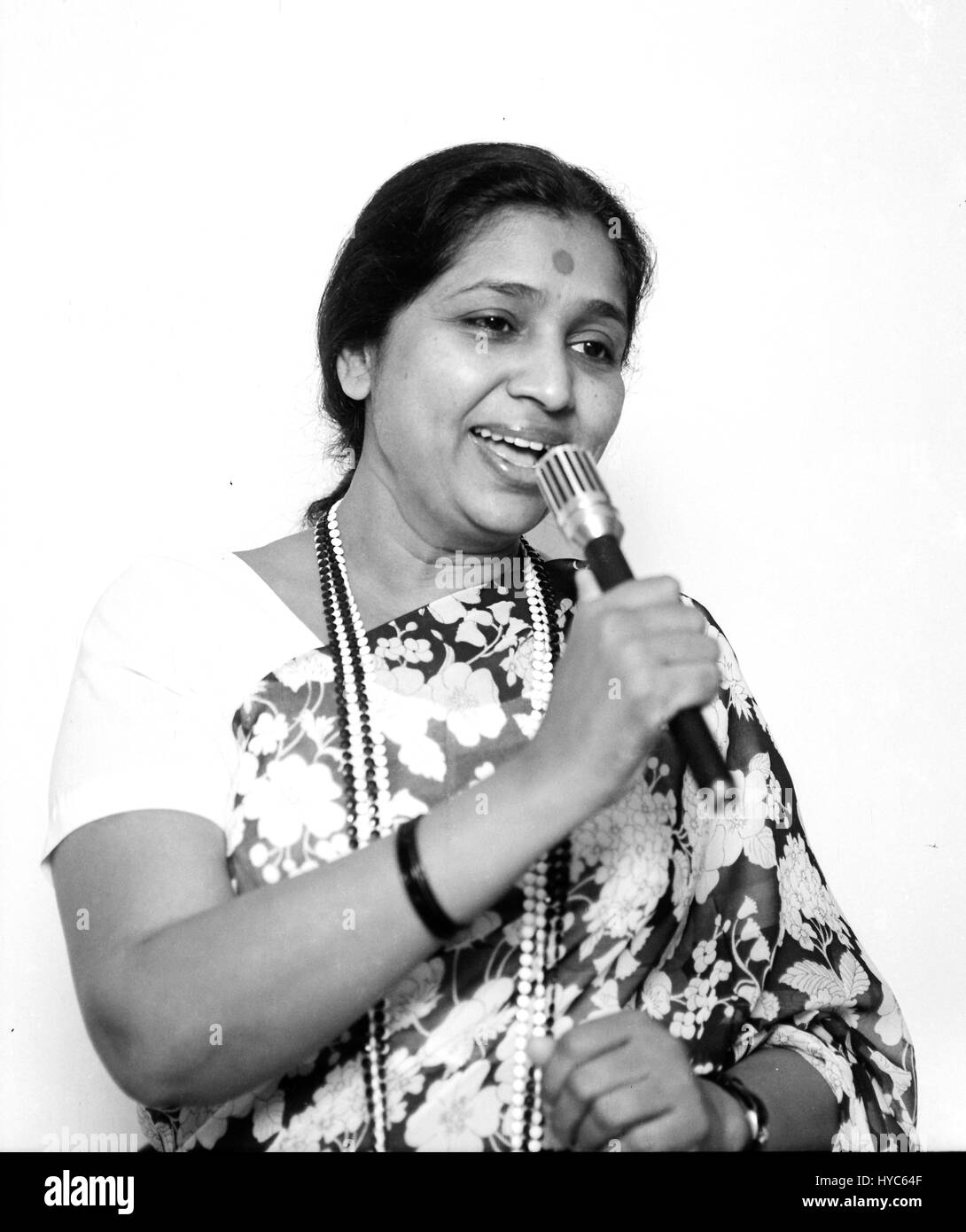
Asha Bhosle is one of the most prolific, versatile, and influential Indian playback singers in the history of Hindi and regional cinema. With a career spanning over seven decades, she has recorded thousands of songs across film soundtracks, traditional ghazals, pop albums, and international collaborations, earning her an official Guinness World Record as the most recorded artist in music history.
Early Life and the Foundations of a Legend
Asha Bhosle (née Mangeshkar) was born on August 8, 1933, in the small village of Goar in the Sangli district of present-day Maharashtra, India. She was born into a musical family; her father, Pandit Deenanath Mangeshkar, was an accomplished classical singer and theater actor who introduced his children to the rigors of Hindustani classical music from an early age. Following the untimely death of her father in 1942, the family relocated to Pune and later to Mumbai, where Asha and her elder sister, Lata Mangeshkar, began singing and acting in films to financially support their family.
Bhosle’s early entry into the film industry was shaped by necessity rather than immediate stardom. She sang her first movie song—"Chala Chala Nav Bala"—for the Marathi film Majha Hoshil in 1943. Her Hindi film debut came shortly after in 1948 with the song "Saawan Aaya" for the movie Chunariya.
During the late 1940s and early 1950s, the Hindi film playback landscape was dominated by established voices such as Shamshad Begum, Geeta Dutt, and her sister Lata Mangeshkar. As a newcomer, Bhosle was frequently assigned songs rejected by primary playback singers, often performing for low-budget B-grade films, vamps, cabarets, or secondary character roles. Rather than limiting her, this period served as an intensive workshop. It forced Bhosle to adapt to diverse musical styles, high-tempo rhythms, complex vocal range adjustments, and dramatic vocal expressions that set the stage for her later breakthroughs.
- Mangeshkar Musical Lineage
- Pandit Deenanath Mangeshkar (Father / Classical Vocalist)
- Lata Mangeshkar (Elder Sister / Playback Icon)
- Asha Bhosle (Playback Icon & Multi-Genre Artist)
- Meena Khadikar (Sister / Composer & Singer)
- Usha Mangeshkar (Sister / Playback Singer)
- Hridaynath Mangeshkar (Brother / Composer & Vocalist)
The Evolution of the Asha Bhosle Sound: Versatility and Craft
What separates Asha Bhosle from her contemporaries is her unmatched vocal adaptability and range. While traditional Hindi film playback of the mid-20th century favored sweet, pristine, and uniform soprano voices for lead heroines, Bhosle introduced a textured, dynamic, and emotionally elastic vocal timbre. Her voice could effortlessly shift between seductive cabaret numbers, melancholic ghazals, soul-stirring classical compositions, and high-energy pop-rock tracks.
Vocal Agility and Microtonal Precision
Bhosle’s training in Hindustani classical music provided her with a foundation in swara (pitch) and laya (rhythm). This classical training allowed her to execute intricate murkis (rapid melodic ornaments), harkats (vocal embellishments), and taans (fast melodic runs) even in Western-style compositions. Her microtonal precision meant she could hold micro-notes accurately while singing at fast tempos—a requirement when working with composers who integrated jazz, funk, and Latin percussion into Indian cinema.
Breath Control and Vocal Expression
Unlike many studio singers who relied heavily on uniform volume, Bhosle used breath control as a dramatic instrument. She introduced stylistic whispers, rhythmic gasps, vocal slides (meend), and subtle tonal shifts to convey character emotions directly through audio. In songs featuring complex choreography, her vocal delivery matched the rhythmic pacing of dance on screen, making her the preferred voice for dance-heavy tracks, cabaret sequences, and modern, independent female characters.

Major Musical Collaborations That Defined Her Career
Asha Bhosle’s career trajectory was built on dynamic artistic partnerships with India’s top music directors. Each collaboration highlighted a different facet of her voice, expanding the boundaries of Indian film music.
1. The O.P. Nayyar Era: Rhythm, Romance, and Independence
The partnership between Asha Bhosle and legendary composer O.P. Nayyar during the 1950s and 1960s established her as a mainstream superstar. Nayyar, who notably never recorded with Lata Mangeshkar, made Bhosle the primary voice of his compositions. Together, they created a distinctive sound characterized by horse-trot rhythms, Punjabi folk influences, breezy melodies, and sensual cabaret tracks.
Key soundtracks from this partnership include Naya Daur (1957), Howrah Bridge (1958), Kashmir Ki Kali (1964), and Pran Jaye Par Vachan Na Jaye (1974). Tracks like "Aaiye Meherban" (Howrah Bridge) and "Uden Jab Jab Zulfen Teri" (Naya Daur) highlighted Bhosle’s ability to handle intricate rhythmic syncopation while maintaining a relaxed, seductive vocal delivery.
2. The S.D. Burman and R.D. Burman Collaborations: Innovation and Modernity
Bhosle’s work with Sachin Dev Burman (S.D. Burman) gave her classical credibility in films like Sujata (1959) and Bandi (1957). S.D. Burman utilized her voice for soulful, folk-infused compositions that required emotional depth and restraint.
However, it was her association—and eventual marriage—with S.D. Burman’s son, Rahul Dev Burman (R.D. Burman / Pancham), that sparked an aesthetic revolution in Indian film music from the late 1960s through the 1980s. R.D. Burman brought rock, jazz, funk, disco, and Latin soundscapes into Bollywood, and Bhosle was his ultimate vocal interpreter. Tracks such as "Dum Maro Dum" (Hare Rama Hare Krishna, 1971), "Piya Tu Ab To Aaja" (Caravan, 1971), "Chura Liya Hai Tumne" (Yaadon Ki Baaraat, 1973), and "O Haseena Zulfonwali" (Teesri Manzil, 1966) redefined youth culture in India.
Together, R.D. Burman and Asha Bhosle pioneered the use of non-verbal vocalizations, scatted rhythms, pitched breathing, and multi-track vocal layering in Indian recording studios.
Historical Sound Evolution of Asha Bhosle:
- 1950s: Folk & Classical Adaptation (O.P. Nayyar, S.D. Burman)
- High-pitch syncopation, Punjabi folk rhythms, playful duets
- 1960s-1970s: Western Fusion & Cabaret Pioneer (R.D. Burman)
- Integration of Jazz, Rock, Funk, scatting, and breath-control dynamics
- 1980s: Classical Ghazals & Nuanced Restraint (Khayyam)
- Lower vocal register, microtonal nuances, Mujra and Urdu poetry
- 1990s-2000s: Modern Pop & Electronic Fusion (A.R. Rahman, Indy-Pop)
- High-energy contemporary beats, global collaborations, studio remasters
3. Khayyam and Umrao Jaan: The Ghazal Masterclass
By the late 1970s, critics often categorized Bhosle primarily as a singer of fast-paced, westernized, or sensual numbers. That perception changed radically in 1981 with the release of Muzaffar Ali’s period masterpiece Umrao Jaan, scored by composer Khayyam.
Khayyam took a strategic creative step: he asked Bhosle to lower her vocal pitch by half an octave to match the reflective, mature persona of the 19th-century courtesan Umrao Jaan. The resulting ghazals—including "Dil Cheez Kya Hai," "In Aankhon Ki Masti Ke," "Justuju Jiski Thi," and "Yeh Kya Jagah Hai Dosto"—showcased a low, resonant, and emotionally expressive voice. Her performance on the album won her the National Film Award for Best Female Playback Singer and solidified her reputation as a master of Urdu poetry and ghazal interpretation.
4. A.R. Rahman and the 1990s Reinvention
While many singers of her generation retired or saw reduced demand as music styles changed, Asha Bhosle reinvented herself in the 1990s. Composer A.R. Rahman tapped into her vocal energy for the landmark soundtrack Rangeela (1995). Songs like "Tanha Tanha" and "Yai Re" became major hits, demonstrating her ability to sound modern alongside new electronic arrangements. She continued this success with Rahman in films like Taal (1999) and Lagaan (2001), connecting her music to a new generation of listeners.
Comparative Analysis: Key Discography Milestones
The table below outlines landmark tracks across Asha Bhosle’s discography, highlighting the variety of genres, music directors, and technical demands of her work:
| Song / Album Title | Film / Non-Film | Year | Music Director / Collaborator | Primary Genre / Style | Key Musical & Technical Feature |
|---|---|---|---|---|---|
| "Uden Jab Jab Zulfen Teri" | Naya Daur | 1957 | O.P. Nayyar | Punjabi Folk / Romantic | Fast rhythmic syncopation with horse-trot percussion patterns. |
| "Aaiye Meherban" | Howrah Bridge | 1958 | O.P. Nayyar | Torch Song / Jazz Ballad | Soft vocal dynamics, sensual pitch slides, and subtle microtonal inflections. |
| "O Haseena Zulfonwali" | Teesri Manzil | 1966 | R.D. Burman | Rock & Roll / Big Band Jazz | High-energy vocal projection, complex duets, and fast-tempo brass accompaniment. |
| "Piya Tu Ab To Aaja" | Caravan | 1971 | R.D. Burman | Cabaret / Funk | Innovative use of rhythmic breathing, groaning, and syncopated vocal cues. |
| "Dum Maro Dum" | Hare Rama Hare Krishna | 1971 | R.D. Burman | Psychedelic Rock / Pop | Iconic vocal hooks, pitch stability, and modern rock phrasing. |
| "Chura Liya Hai Tumne" | Yaadon Ki Baaraat | 1973 | R.D. Burman | Acoustic Pop / Soft Rock | Subtle vocal intimacy, breath control, and interplay with acoustic guitar notes. |
| "Dil Cheez Kya Hai" | Umrao Jaan | 1981 | Khayyam | Traditional Ghazal / Classical | Lowered vocal register, precise Urdu pronunciation (talaffuz), and classical ornamentation. |
| "Mera Kuchh Saamaan" | Ijaazat | 1987 | R.D. Burman | Blank Verse / Free-Form Ghazal | Conversational delivery of non-rhyming lyrics; earned her a second National Film Award. |
| "Tanha Tanha" | Rangeela | 1995 | A.R. Rahman | Contemporary Pop / Fusion | Vibrant rhythmic agility over modern synth-driven percussion. |
| "You've Stolen My Heart" | Non-Film Album | 2005 | Kronos Quartet | Classical / Western Chamber Fusion | Re-interpretation of R.D. Burman classics with a Western string quartet; nominated for a Grammy Award. |
Non-Film Repertoire, Indipop, and International Projects
Asha Bhosle’s artistic footprint extends far beyond playback singing for Hindi cinema. She was a pioneer in expanding the commercial market for non-film studio albums, ghazals, and international collaborations in India.
Private Albums and Indipop
In the late 1980s and 1990s, Bhosle embraced the emerging Indipop movement. Her private albums transformed the non-film music landscape:
Meraj-E-Ghazal (1983): A collaboration with Pakistani ghazal maestro Ghulam Ali, establishing her expertise in traditional, non-film ghazal recitations.
Dil Padosi Hai (1987): A double album composed by R.D. Burman with lyrics by Gulzar, showcasing poetic, experimental non-film compositions.
Janam Samjha Karo (1997): A major Indipop release whose title track won widespread MTV Video Music Awards recognition and topped music charts across Asia.
Rahul and I (1996): An album of remixed classics celebrating the compositions of R.D. Burman, bridging historical Bollywood sounds with modern studio production.
Asha Bhosle's Multi-Genre Portfolio
- Film Playback (Classical, Cabaret, Funk, Psychedelic)
- Private Albums & Pop (Meraj-E-Ghazal, Indipop, Janam Samjha Karo)
- Global Collaborations (Kronos Quartet, Boy George, Code Red, Sarah Brightman)
Global Collaborations and Recognition
Bhosle’s vocal flexibility attracted cross-genre interest from international artists:
- In 1997, the British band Cornershop released the tribute song "A Brimful of Asha," which became an international hit (especially the Norman Cook/Fatboy Slim remix), paying homage to her cultural influence.
- She collaborated with British singer Boy George on the track "Bow Down Mister" (1991) and recorded with the boy band Code Red.
- In 2005, she collaborated with the renowned American string ensemble Kronos Quartet on the album You've Stolen My Heart: Songs from R.D. Burman's Bollywood. The album featured reworked chamber-music arrangements of R.D. Burman compositions and earned a nomination for Best Contemporary World Music Album at the 48th Annual Grammy Awards.
Awards, Honors, and Official Records
Asha Bhosle’s contributions to music have been recognized with major national awards, lifetime achievement honors, and global records.
- Key Career Honors Timeline
- 1979: Retires from Filmfare competitive nominations after 7 wins
- 1981: National Film Award for Best Female Playback Singer (Umrao Jaan)
- 1987: National Film Award for Best Female Playback Singer (Ijaazat)
- 2000: Dadasaheb Phalke Award (India's highest cinema honor)
- 2005: Grammy Award Nomination (With Kronos Quartet)
- 2008: Padma Vibhushan (India's second-highest civilian honor)
- 2011: Official Guinness World Record (Most Recorded Artist in Music History)
Guinness World Record
In October 2011, Asha Bhosle was officially recognized by the Guinness World Records as the most recorded artist in music history. The record acknowledged her for having recorded over 11,000 solo, duet, and chorus-backed songs across more than 20 Indian languages since 1947.
Major National and Industry Awards
- Dadasaheb Phalke Award (2000): Awarded India's highest recognition in cinema for lifetime contribution to Indian film culture.
- Padma Vibhushan (2008): Conferred with India’s second-highest civilian honor by the Government of India for her exceptional service to the arts.
- National Film Awards: Won two National Film Awards for Best Female Playback Singer for Umrao Jaan (1981) and Ijaazat (1987).
- Filmfare Awards: Won the Filmfare Award for Best Female Playback Singer seven times (1968, 1969, 1972, 1973, 1974, 1975, 1979). In 1979, she voluntarily withdrew her name from future competitive Filmfare nominations to give emerging singers a chance to win. She was later honored with the Filmfare Lifetime Achievement Award in 1996 and a Special Award for Rangeela in 1996.
Technical Vocal Analysis: What Made Her Voice Unique?
To understand Asha Bhosle's lasting impact, it helps to examine the technical mechanics of her vocal performance.
1. Diction and Phonetic Clarity Across Languages
Recording in over 20 languages—including Hindi, Marathi, Bengali, Gujarati, Punjabi, Tamil, Telugu, Malayalam, Assamese, and Urdu—required extraordinary phonetic precision. Indian playback singers must convey lyric-driven storytelling clearly. Bhosle was known for studying the regional nuances of her lyrics before entering the recording booth, ensuring native pronunciation and accurate emotional emphasis.
2. Timbre Modulation and Character Acting Behind the Mic
Unlike singers who maintain a consistent personal voice, Bhosle modified her vocal timbre to suit specific on-screen actors and scene contexts:
- For Helen and Bindu (the leading dance and cabaret icons of Bollywood), she added breathy textures, crisp percussive attacks, and dynamic volume shifts.
- For Rekha in Umrao Jaan, she deepened her tonal chest voice to project restraint, classicism, and melancholy.
- For young, contemporary lead actors in the 1990s (like Urmila Matondkar in Rangeela), she adopted a bright, high-energy head-voice timbre.
3. Studio Technique and Microphone Placement
During the analog recording era (1950s–1980s), singers had to capture entire songs live alongside full orchestras on single-track or limited multi-track tapes. Errors by either the singer or orchestra required a full re-take. Bhosle mastered microphone dynamics, moving closer for delicate whispers and stepping back for high-volume belt notes. This skill minimized distortion and eliminated the need for heavy modern studio compression.
Frequently Asked Questions
What is Asha Bhosle's official Guinness World Record?
In October 2011, Asha Bhosle was officially recognized by the Guinness World Records as the most recorded artist in music history, having recorded over 11,000 solo, duet, and chorus-backed studio songs across more than 20 languages.
How does Asha Bhosle's singing style differ from her sister Lata Mangeshkar's?
While Lata Mangeshkar was known for a pure, serene, high-pitched soprano voice often used for virtuous lead heroines, Asha Bhosle developed a versatile, textured, and rhythmically agile style. Bhosle excelled at fast-tempo numbers, jazz, cabaret, blues, western fusion, and low-register ghazals, bringing a dramatic, expressive vocal range to her performances.
Which composers played the most influential role in Asha Bhosle's career?
O.P. Nayyar established her as a lead mainstream singer in the 1950s with rhythmic, folk-infused melodies. R.D. Burman transformed her sound through the 1960s, 70s, and 80s by introducing Western genres such as rock, funk, and disco. Khayyam highlighted her classical ghazal abilities in Umrao Jaan, while A.R. Rahman successfully updated her voice for modern pop in the 1990s.
Did Asha Bhosle ever win a Grammy Award?
Asha Bhosle was nominated for a Grammy Award in 2005 for her collaboration with the American string ensemble Kronos Quartet on the album You've Stolen My Heart: Songs from R.D. Burman's Bollywood in the Best Contemporary World Music Album category.
Why did Asha Bhosle stop accepting competitive Filmfare Awards after 1979?
After winning seven Filmfare Awards for Best Female Playback Singer between 1968 and 1979, Bhosle voluntarily withdrew her name from future competitive nominations. She took this step to encourage younger, emerging female playback singers in the Indian film industry.
Practical Recommendations for Exploring Her Music
For listeners, musicologists, and audiophiles interested in exploring Asha Bhosle's vast musical catalog, the following path provides a comprehensive introduction to her career:
- Start with the Essential Classics (1950s–1970s): Listen to tracks composed by O.P. Nayyar (Naya Daur, Howrah Bridge) and R.D. Burman (Teesri Manzil, Caravan, Yaadon Ki Baaraat). This demonstrates her pioneering work in introducing modern rhythms and Western fusion to Indian popular music.
- Explore Her Classical and Ghazal Mastery: Listen to the soundtrack of Umrao Jaan (1981) alongside her private album Meraj-E-Ghazal (with Ghulam Ali). Pay close attention to her lower vocal register, microtonal inflections, and Urdu poetic delivery.
- Study Her Experimental and Non-Film Albums: Listen to Dil Padosi Hai (composed by R.D. Burman, written by Gulzar) and her 1990s Indipop album Janam Samjha Karo to understand how she adapted to non-filmi studio formats.
- Examine Global Fusion Work: Stream You've Stolen My Heart by Asha Bhosle and the Kronos Quartet. This project offers a helpful case study in how Indian playback arrangements can be transcribed for Western classical string arrangements without losing their original melodic identity.
Image Gallery
Select an image to open it in a new tab.
Declan O'Connor
Higher Education and Campus Culture Reporter
