
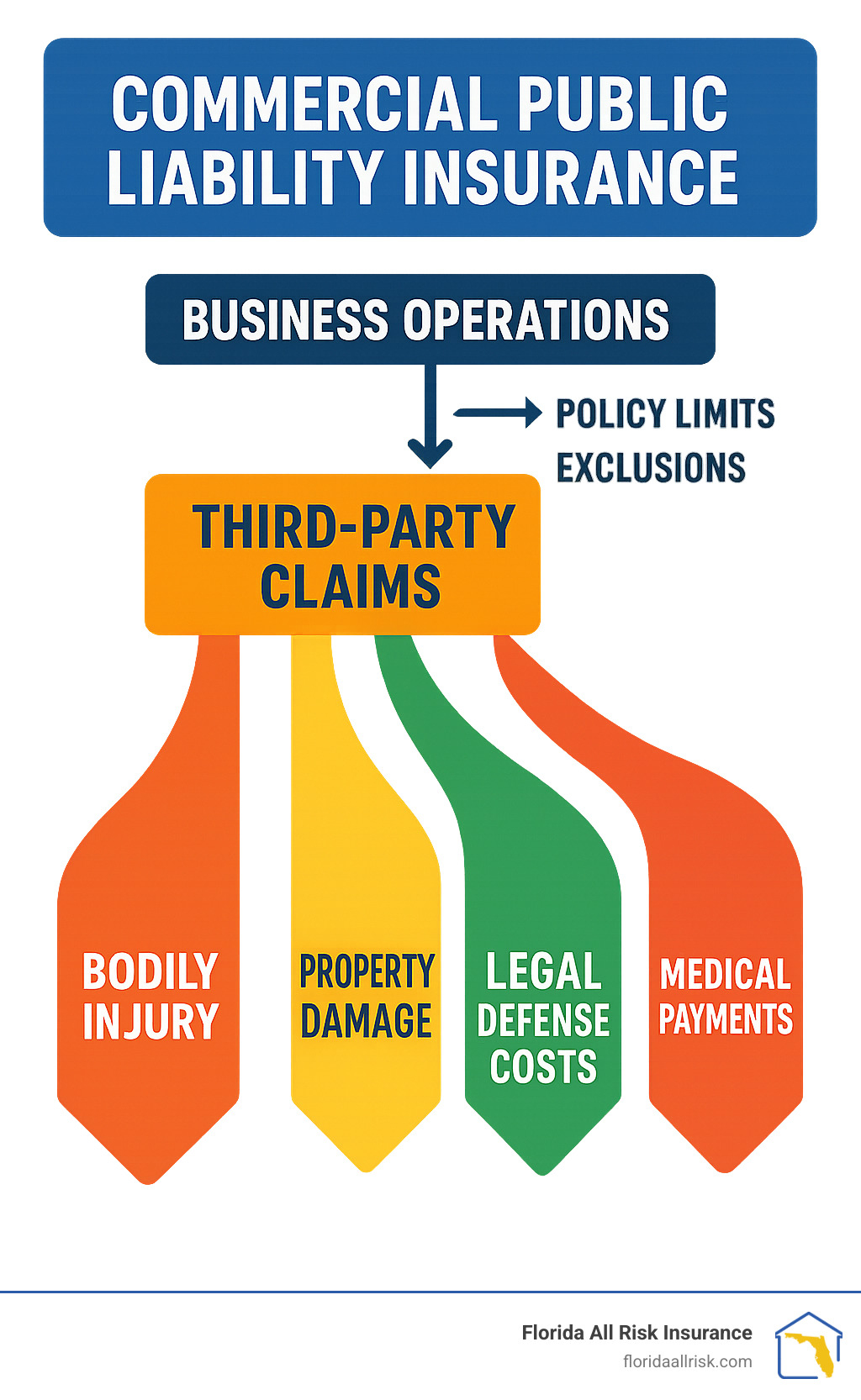
Commercial General Liability (CGL) insurance serves as the foundational risk management tool for businesses, providing essential coverage against claims of bodily injury, property damage, and personal or advertising injury. By transferring the financial burden of legal defense and potential settlements to an insurer, CGL policies allow companies to operate with protection against common third-party liability exposures.
The Core Purpose of Commercial General Liability Insurance
At its most basic level, a Commercial General Liability policy is designed to protect a business from "slip-and-fall" accidents and other common occurrences that result in harm to someone else. Because business owners are often held responsible for the safety of their premises and the outcomes of their operations, the risk of litigation is ever-present. Without this insurance, a single successful lawsuit—even one based on a minor accident—could result in financial losses that threaten the viability of a small or mid-sized enterprise.
The policy functions by establishing a contract between the insured (the business) and the insurer. In exchange for premium payments, the insurer agrees to indemnify the business against covered claims. This includes not just the costs of a settlement or court judgment, but also the significant expense of hiring legal counsel to defend the business against allegations, even if those allegations are ultimately found to be groundless.
Anatomy of CGL Coverage: What Is Protected?
CGL policies are typically structured into three primary "coverage parts." Understanding these sections is essential for ensuring a business has adequate protection for its specific risk profile.
Coverage A: Bodily Injury and Property Damage
This is the heart of the CGL policy. It covers the business if a third party—such as a customer, a delivery person, or a passerby—is physically injured on the business premises or as a result of business operations. It also covers damages to another person’s tangible property.
- Bodily Injury: Includes medical expenses, loss of services, and resulting death.
- Property Damage: Covers the physical loss of use or physical injury to tangible property.
Coverage B: Personal and Advertising Injury
This section protects the business against non-physical injuries that often arise from communication or business practices. This includes coverage for claims regarding:
- Libel and slander.
- Copyright infringement in advertising.
- The use of another’s advertising idea.
- Malicious prosecution or false arrest.
Coverage C: Medical Payments
Unlike the other coverage parts, Coverage C is a "no-fault" provision. It allows the insurer to pay for reasonable medical expenses for bodily injury caused by an accident on the business premises, regardless of whether the business is legally liable. This is often used to resolve small, minor injuries quickly, which can prevent them from escalating into more expensive, formal lawsuits.
Understanding Policy Limits and Deductibles
When selecting or reviewing a CGL policy in 2026, business owners must pay close attention to the dollar limits defined in the declarations page. These limits are typically categorized into two types:
- Each Occurrence Limit: The maximum amount the insurance company will pay for a single claim or incident.
- General Aggregate Limit: The total maximum amount the insurer will pay for all covered claims combined during the policy period, which is usually one year.
It is common for businesses to carry a $1 million per-occurrence limit and a $2 million aggregate limit, though high-risk industries may require higher thresholds. Businesses should also be aware of the deductible—the amount the business must pay out-of-pocket before the insurer’s coverage obligations begin. While a higher deductible can lower the annual premium, it requires the business to maintain sufficient liquid cash reserves to cover that initial expense if a claim occurs.
Exclusions: What Is Not Covered?
A common mistake business owners make is assuming CGL coverage is an "all-risk" policy. In reality, CGL policies are highly specific and contain numerous exclusions. Understanding what is not covered is as important as understanding what is.
- Professional Liability: CGL does not cover errors or omissions in professional services (e.g., a lawyer giving bad legal advice or an accountant miscalculating taxes). This requires separate Professional Liability or Errors and Omissions (E&O) insurance.
- Intentional Acts: Damage or injury caused intentionally by the insured is strictly excluded.
- Employee Injuries: Work-related injuries to employees are covered by Workers’ Compensation insurance, not CGL.
- Automobile Liability: Accidents involving business-owned or operated vehicles are typically excluded and require a Commercial Auto policy.
- Contractual Liability: While some contractual obligations are covered, liabilities assumed under a contract that would not exist in the absence of that contract are often excluded unless specifically endorsed.
Comparing CGL Coverage Options
The following table provides a high-level comparison of how CGL interacts with other common business insurance needs.
| Insurance Type | Primary Focus | Covered Event Example |
|---|---|---|
| CGL | Third-party bodily injury/property damage | Customer slips in store; accidental damage to client equipment. |
| Professional Liability | Financial loss due to professional negligence | Consulting error leading to client financial loss. |
| Workers' Compensation | Employee injury/illness | Employee injured on a job site while operating tools. |
| Commercial Auto | Vehicle accidents | Delivery truck involved in a collision with another vehicle. |
The Claims Process: Steps to Follow
If a business faces an incident that could trigger a CGL claim, prompt action is required to ensure eligibility for coverage.
- Immediate Documentation: Take photographs of the scene, document the names and contact information of witnesses, and, if applicable, obtain a police or incident report.
- Notify the Insurer: Report the incident to the insurance carrier as soon as possible. Even if a lawsuit has not been filed yet, most policies require notification of any "occurrence" that could reasonably lead to a claim.
- Preserve Evidence: Do not dispose of damaged property or alter the site of an accident until the insurer has had an opportunity to inspect it.
- Cooperate with Defense Counsel: If a lawsuit is filed, the insurer will assign legal counsel. It is crucial to remain transparent with these professionals, as withholding information can compromise the defense.
- Avoid Admitting Fault: Never admit liability or offer settlement payments to the injured party without consulting the insurer. Doing so may violate the "conditions" section of the policy and jeopardize coverage.
Verifying Policy Status and Renewals
In 2026, verification of insurance status is often required by clients, landlords, or government agencies. Businesses should ensure they can readily provide a Certificate of Insurance (COI). This document serves as summary proof of coverage.
When preparing for policy renewal, take the opportunity to perform a "needs assessment." Have business operations changed? Has the business expanded into new locations, or has the revenue significantly increased? These factors influence the risk profile and may necessitate an adjustment in limits or the addition of specific endorsements (riders) to close potential coverage gaps. Always consult with a licensed insurance broker or agent to conduct this review, as they can provide guidance tailored to local legal requirements and industry-specific trends.
Frequently Asked Questions
Does a Commercial General Liability policy cover cyber-related incidents? Generally, no. Standard CGL policies are triggered by physical bodily injury or tangible property damage. Cyber events, such as data breaches or ransomware attacks, typically require specific Cyber Liability insurance policies.
What is the difference between "claims-made" and "occurrence" policies? An "occurrence" policy covers incidents that happen during the policy period, regardless of when the claim is filed. A "claims-made" policy only covers claims made against the business while the policy is active. Most small businesses use occurrence policies for their simplicity and long-term protection.
Can a CGL policy be customized for my specific industry? Yes. Insurers often use "endorsements" to modify the standard CGL policy. For example, a construction company might add an endorsement for "completed operations" coverage, while a restaurant might need specialized coverage for liquor liability.
Does CGL cover damage to the building I rent? CGL policies usually include "Damage to Premises Rented to You" coverage, which provides limited protection for fire-related damage to the space you occupy. However, this is distinct from full property insurance, which protects your business assets (inventory, equipment) within that space.
What if I am a home-based business? A personal homeowner’s policy rarely covers business activities. If you run a business from home, you likely need a separate business owner’s policy or a specific liability rider to ensure your professional activities are covered.
Next Actions for Business Owners
The most critical next step for any business owner is to audit their existing CGL policy against their current operational risks. Locate your policy’s "Declarations" page and verify the current limits and the scope of the exclusions. If you are uncertain whether a particular activity—such as an expansion into e-commerce or the hiring of independent contractors—is covered, schedule a meeting with your insurance agent. Request a written interpretation of how your policy applies to your current business model. Documentation of this conversation provides a clear audit trail and ensures your risk management strategy remains aligned with your 2026 business goals.

Image Gallery
Select an image to open it in a new tab.



Celine Dubois
Contemporary Living and Global Arts Columnist
