Analyzing Russia’s Sphere of Influence: Geopolitics, Security, and Regional Dynamics

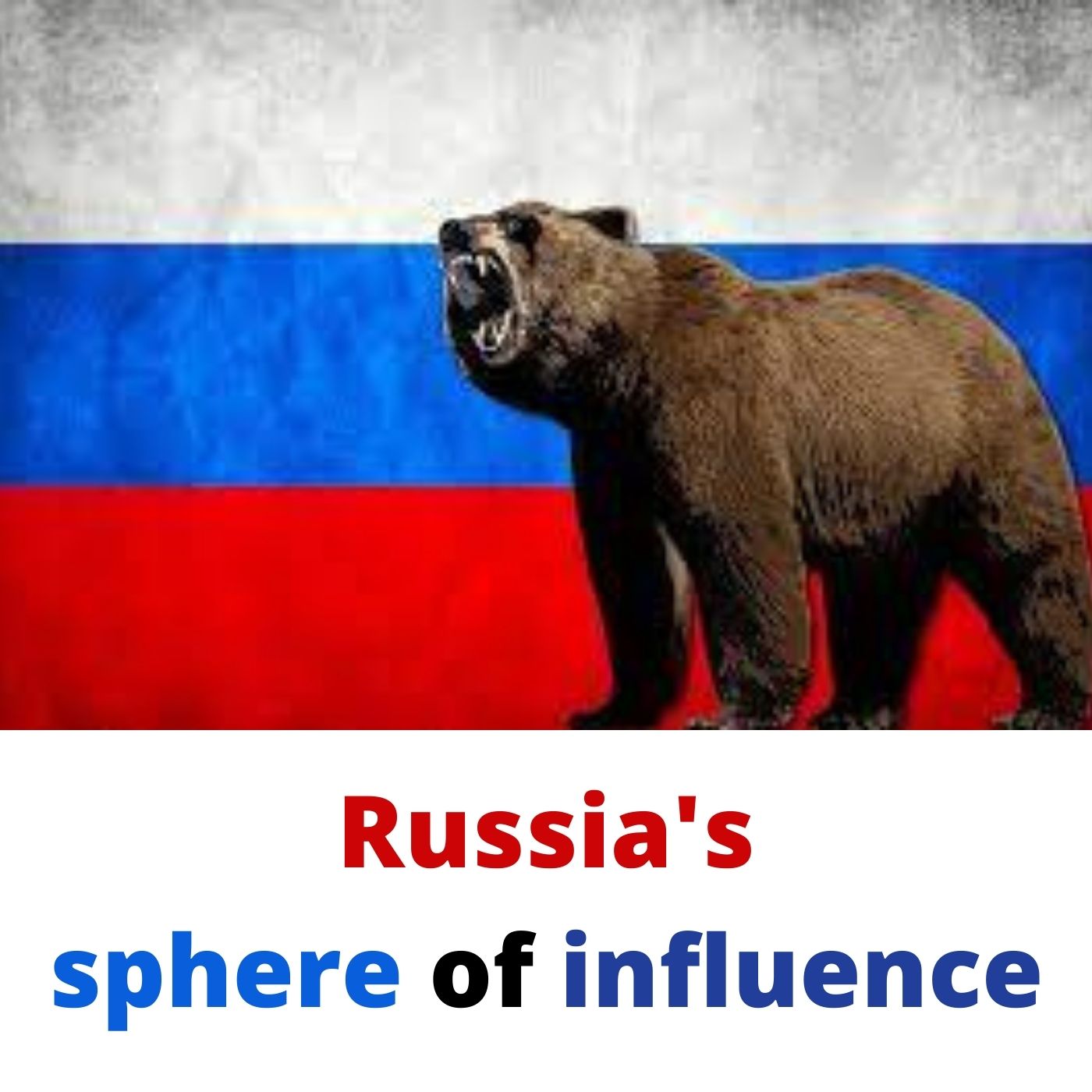
Russia’s sphere of influence encompasses the geopolitical, economic, security, and cultural dominance that the Russian Federation exerts over its near abroad—primarily former Soviet republics across Eastern Europe, the Caucasus, and Central Asia. This complex domain is maintained through a combination of institutional frameworks, military presence, energy dependencies, and strategic interventions designed to counter Western integration.
Defining the Concept of a Sphere of Influence in Modern Geopolitics
The concept of a sphere of influence refers to a spatial region or designated territory over which a powerful state wields predominant economic, military, political, or cultural control, often explicitly or implicitly recognized by other global powers. In the context of the Russian Federation, this sphere is historically rooted in the dissolution of the Soviet Union in 1991. The collapse of the USSR left fifteen newly independent states struggling with state-building, economic transition, and the definition of their foreign policies.
Moscow has consistently viewed these adjacent territories as vital to its national security, treating them through the lens of a defensive and offensive strategic buffer. In Russian strategic doctrine, the near abroad—often termed Blizhnee Zarubezhe—is not merely a collection of sovereign neighbors, but a historical security perimeter. The primary objective within this domain is preventing the expansion of Western political and security architectures, specifically the North Atlantic Treaty Organization (NATO) and the European Union (EU), into territories that Moscow considers vital to its core defense architecture.
To sustain this influence, Russian statecraft relies on a multi-dimensional toolkit. Unlike traditional colonial empires governed by direct administrative rule, modern Russian influence operates through asymmetric leverage, structural dependencies, and bilateral or multilateral agreements. Understanding this dynamic requires examining the institutional structures, economic mechanisms, and military instruments that bind these regions to Moscow, as well as the local resistances and geopolitical counter-pressures that challenge Russian hegemony.
Institutional Frameworks and Regional Integration Organizations
To formalize and institutionalize its leadership in the post-Soviet space, Moscow has constructed a series of multilateral organizations designed to integrate security, trade, and political policies. These institutions serve as the diplomatic backbone of Russia's regional strategy, providing a legalistic and cooperative facade for what is fundamentally hierarchical power management.
The Collective Security Treaty Organization (CSTO)
The CSTO is a Russia-led military alliance comprising several post-Soviet states, designed to guarantee collective defense for its members. Established on the basis of the 1992 Tashkent Treaty, the organization acts as a regional counterpart to NATO.
- Core Mandate: Mutual military assistance in the event of external aggression, joint counter-terrorism operations, and cooperative border security.
- Operational Limitations: Internal disputes among member states (such as clashes between Armenia and Azerbaijan) and varying national priorities have historically limited the CSTO's cohesion and rapid deployment capabilities.
- Strategic Utility: It provides Moscow with a legal framework to maintain military bases and troop deployments on sovereign territories within the member states.
The Eurasian Economic Union (EAEU)
Launched in 2015, the EAEU is an economic integration project intended to establish a single market for goods, services, capital, and labor among member states. Heavily modeled on the early stages of European integration, it creates a customs union with unified tariffs and regulatory frameworks.
- Member States: Russia, Belarus, Kazakhstan, Armenia, and Kyrgyzstan.
- Economic Asymmetry: The Russian economy represents the overwhelming share of the EAEU's collective GDP, giving Moscow structural dominance over trade rules, supply chains, and external trade negotiations.
- Geopolitical Function: The EAEU acts as an economic counterweight to the European Union's Eastern Partnership, forcing neighboring states to choose between Western integration and Eurasian economic alignment.
| Institution | Primary Focus | Key Members | Strategic Objective for Moscow |
|---|---|---|---|
| CSTO | Collective Security & Defense | Russia, Belarus, Kazakhstan, Kyrgyzstan, Tajikistan | Prevent Western military presence; maintain regional security dominance |
| EAEU | Economic Integration & Customs Union | Russia, Belarus, Kazakhstan, Armenia, Kyrgyzstan | Centralize trade flows; counter EU economic outreach in the near abroad |
| CIS | Post-Soviet Political Coordination | Most former Soviet republics | Maintain baseline diplomatic dialogue and historical administrative ties |

Energy Geopolitics and Economic Leverage
Beyond formal treaties, economic instruments—specifically control over critical energy infrastructure—form the most durable pillars of Russia’s regional dominance. For decades, the flow of Russian crude oil and natural gas functioned as both an economic lifeline and a political pressure point for neighboring states.
Historically, post-Soviet states inherited energy grids and pipeline networks engineered exclusively to transport resources toward Russia or through Russian distribution hubs. This infrastructural monopoly allowed Moscow to implement tiered pricing structures, offering subsidized energy rates to compliant political regimes while imposing market-rate spikes or supply cutoffs on governments pursuing independent foreign policies.
Beyond energy, economic leverage is maintained through labor migration and remittance dependencies. Millions of workers from Central Asian nations such as Tajikistan, Kyrgyzstan, and Uzbekistan migrate seasonally or permanently to the Russian Federation for employment. The remittances sent home represent substantial percentages of these countries' gross domestic products. Consequently, any shift in Russian immigration policy, currency stability, or labor regulations exerts immediate macroeconomic pressure on governments in the region, aligning their compliance calculations with domestic economic stability.
Military Presence, Conflicts, and Frozen Disputes
Military power remains the ultimate guarantor of Russia's sphere of influence. Moscow maintains a network of military bases, peacekeeping contingents, and rapid-reaction forces deployed throughout the post-Soviet space. These deployments serve to deter external adversaries, reassure friendly autocracies, and project power directly into contested borderlands.
A key methodology in preserving this influence has been the cultivation and management of "frozen" or active regional conflicts. By maintaining unresolved territorial disputes—such as those in Transnistria (Moldova), Abkhazia and South Ossetia (Georgia), and the broader ongoing conflict in Ukraine—Moscow ensures that its neighbors cannot fulfill the territorial integrity requirements necessary for full integration into Western security structures like NATO.
- Buffer Zones: Localized conflicts create permanent instability, forcing local governments to rely on Russian mediation or military protection.
- Passportization: The widespread distribution of Russian passports to residents of separatist regions establishes a legal pretext for Moscow to intervene militarily under the banner of protecting Russian citizens abroad.
- Permanent Stationing: Unilateral military deployments bypass local sovereignty, anchoring Russian strategic assets directly inside sovereign national boundaries.
Sub-Regional Dynamics: Eastern Europe, the Caucasus, and Central Asia
The nature and effectiveness of Russia's influence vary significantly across different sub-regions, shaped by local political cultures, geographic positioning, and alternative geopolitical attractors.
Eastern Europe
Eastern Europe represents the most fiercely contested zone of influence. Belarus has maintained deep economic and military integration with Russia, operating largely as a close ally, particularly following its heavy reliance on Moscow during domestic political crises in 2020. Conversely, Ukraine has pursued a definitive path toward European and Euro-Atlantic integration, leading to a profound geopolitical rupture and full-scale military conflict. Moldova balances its constitutional neutrality with pro-Western political governance, continually navigating internal vulnerabilities tied to the breakaway region of Transnistria and Russian energy reliance.
The Caucasus
The South Caucasus features a shifting geopolitical balance. Armenia, traditionally reliant on Russia for security guarantees against regional adversaries, has experienced severe strains in its alliance with Moscow, prompting Yerevan to seek diplomatic diversification toward Western partners. Georgia, despite fighting a brief war with Russia in 2008 and maintaining official aspirations for NATO membership, has experienced periods of complex political maneuvering where internal governance has sometimes favored pragmatic or non-confrontational stances toward Moscow to avoid economic retaliation. Azerbaijan pursues a fiercely independent, multi-vector foreign policy, leveraging its energy resources and strategic partnership with Turkey to limit external dominance.
Central Asia
Central Asian republics—Kazakhstan, Uzbekistan, Turkmenistan, Kyrgyzstan, and Tajikistan—manage multi-vector foreign policies designed to balance relations among multiple global powers. While these nations participate in Russian-led organizations like the CSTO and EAEU, they simultaneously cultivate deep economic, technological, and diplomatic ties with China, the European Union, the United States, and Turkey. China has emerged as the dominant economic and infrastructural partner in Central Asia via the Belt and Road Initiative, gradually eclipsing Russia's traditional economic monopoly while Moscow remains the primary security provider of last resort.
Challenges, Resistance, and the Evolution of Russian Power
The viability of Russia’s sphere of influence faces unprecedented structural challenges in the twenty-first century. The primary driver of this erosion is the persistent desire among populations and younger political elites in the near abroad for national sovereignty, institutional modernization, and integration with Western or alternative global markets.
Furthermore, over-reliance on coercive tactics—such as economic embargoes, cyber warfare, and direct military interventions—has alienated societies within the near abroad, driving public opinion firmly away from pro-Russian alignments. The long-term economic sanctions imposed by Western nations on the Russian Federation have also degraded Moscow's capacity to subsidize regional allies or finance large-scale infrastructure projects across the post-Soviet space.
At the same time, new regional actors are actively contesting Russian hegemony. China’s economic footprint in Central Asia, Turkey’s growing diplomatic and military influence in the Caucasus and Central Asia, and the proactive diplomatic engagement of the European Union provide regional governments with viable strategic alternatives. Consequently, Russia's sphere of influence is transitioning from a framework of voluntary or semi-voluntary integration toward a more brittle system enforced primarily through hard coercion, dependency management, and bilateral pressure.
Frequently Asked Questions
What does "Russia's sphere of influence" mean?
It refers to the geopolitical, economic, and security dominance that Russia seeks to maintain over former Soviet republics in Eastern Europe, the Caucasus, and Central Asia to protect its national security and project regional power.
Which countries are traditionally included in Russia's sphere of influence?
The region primarily includes post-Soviet states, often referred to as the near abroad, including Belarus, Ukraine, Moldova, Armenia, Georgia, Kazakhstan, Kyrgyzstan, Tajikistan, Turkmenistan, and Uzbekistan, though the degree of Russian influence varies widely among them.
How does Russia maintain its influence over neighboring countries?
Moscow uses a combination of institutional frameworks (such as the CSTO and EAEU), control over critical energy supplies and pricing, economic leverage through labor remittances, diplomatic pressure, and military presence or intervention in regional conflicts.
Why do neighboring countries resist Russian dominance?
Many post-Soviet states seek full national sovereignty, democratic governance, economic modernization, and integration with Western structures like the European Union and NATO to escape historical domination and ensure long-term security.
How has China impacted Russia's sphere of influence in Central Asia?
China has largely superseded Russia as the dominant economic and infrastructural partner in Central Asia through the Belt and Road Initiative, though Russia often retains its traditional role as the primary regional security provider.
Conclusion and Next Actions
To understand contemporary international relations, analysts, policymakers, and researchers must continuously monitor how regional governments negotiate their autonomy between Moscow and competing global centers of power. Reviewing official strategic documents from the EAEU, tracking bilateral trade agreements across Central Asia, and analyzing updates from regional security forums will provide deeper, real-time insight into the shifting boundaries of Russia's geopolitical reach.
Image Gallery
Select an image to open it in a new tab.




Simon Caldwell
Enterprise Technology and Systems Editor
