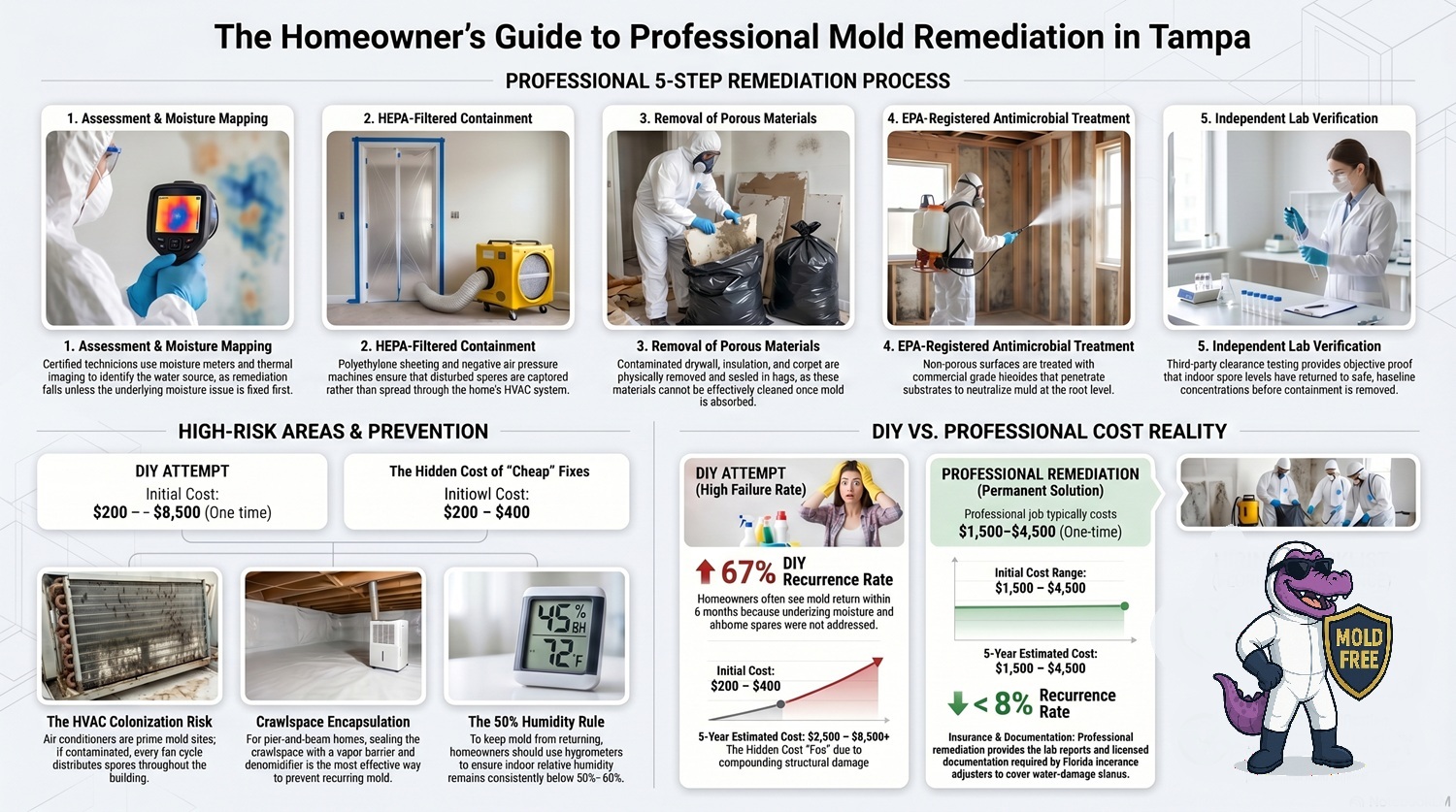
Wisconsin homeowners frequently encounter mold issues due to the state’s humid summers, rapid seasonal transitions, and cold winters that cause condensation inside tightly sealed homes. Mold remediation involves identifying moisture sources, containing the affected zone, physically removing or cleaning contaminated materials, and applying antimicrobial agents to restore safe indoor air quality.
Dealing with mold in a Wisconsin home requires understanding local climate challenges, recognizing common varieties, navigating professional standards, and knowing when to hire certified remediation specialists. Because Wisconsin's building stock includes historic properties with unique moisture vulnerabilities as well as modern energy-efficient homes prone to trapped humidity, addressing mold effectively protects both structural integrity and indoor health.
Understanding Wisconsin’s Unique Climate and Mold Risks
Wisconsin experiences a continental climate characterized by warm, humid summers and freezing winters. These distinct seasonal swings create optimal conditions for mold growth if moisture control fails. During spring, melting snow and heavy rains challenge basement waterproofing systems. In summer, high relative humidity combined with air conditioning can cause condensation on cool basement walls and ductwork.
Winter presents a different vulnerability. Modern Wisconsin homes are tightly insulated to retain heat. Without adequate ventilation, indoor humidity generated by daily activities—such as cooking, showering, and laundering—becomes trapped. When warm interior air hits cold exterior walls, particularly in attics and crawlspaces, condensation forms, providing the moisture mold requires to colonize building materials.
Common mold genera found in Wisconsin residential properties include Cladosporium, Penicillium, Aspergillus, and Stachybotrys chartarum (often referred to as toxic black mold). While Cladosporium and Penicillium thrive on damp textiles, wood, and wallpaper even in cooler temperatures, Stachybotrys requires prolonged moisture saturation on cellulose-rich materials like drywall and fiberboard.
Health Impacts and Identifying Contamination
Mold reproduces by releasing microscopic spores into the air. When inhaled or touched by sensitive individuals, these spores can trigger allergic reactions, asthma attacks, and other respiratory complications. According to the Wisconsin Department of Health Services, common symptoms of indoor mold exposure include nasal congestion, throat irritation, coughing, wheezing, and skin or eye irritation.
Homeowners should look for both visual indicators and sensory cues of contamination:
- Visual Signs: Discoloration on walls, ceilings, baseboards, or window sills ranging from white and green to brown and black. Peeling, bubbling, or cracking paint often hides active colonies underneath.
- Odor: A persistent musty, earthy, or damp smell that does not dissipate with ventilation or cleaning typically indicates hidden growth behind walls, beneath flooring, or inside HVAC systems.
- Water Damage History: Recent roof leaks, plumbing failures, ice damming incidents, or basement flooding episodes that were not dried thoroughly within 24 to 48 hours.
Professional Remediation Standards vs. DIY Cleanup
Not all mold problems require a commercial contractor. The United States Environmental Protection Agency (EPA) recommends that if the total affected area is less than roughly 10 square feet (about a 3-foot by 3-foot patch), homeowners can typically handle the cleanup themselves using appropriate personal protective equipment (PPE) and cleaning agents.
However, professional remediation is necessary when contamination exceeds 10 square feet, when mold results from sewage or contaminated floodwater, or when occupants suffer from chronic respiratory health conditions. In Wisconsin, the state does not currently license mold remediators specifically, making it vital for homeowners to hire contractors certified by recognized industry bodies such as the Institute of Inspection Cleaning and Restoration Certification (IICRC) or the National Organization of Remediators and Mold Inspectors (NORMI).
| Approach | Typical Scope | Safety Gear Needed | Estimated Cost Range | Best Used For |
|---|---|---|---|---|
| DIY Cleanup | Under 10 sq. ft. | N95 respirator, gloves, goggles | $20 – $100 | Surface mold on non-porous items, small bathroom patches |
| Professional Remediation | Over 10 sq. ft., HVAC contamination | Full-face respirator, HEPA suit, containment | $1,500 – $6,000+ | Large structural colonies, hidden mold, sewage backups |
Step-by-Step Professional Mold Remediation Process
When hiring a certified mold remediation company in Wisconsin, homeowners can expect a rigorous, multi-phase process designed to eliminate the colony and prevent recurrence.
1. Assessment and Moisture Source Identification
A qualified inspector uses moisture meters, thermal imaging cameras, and sometimes air or surface sampling to map the extent of contamination. Crucially, a remediator must identify and fix the underlying moisture source—such as a leaking pipe, a cracked foundation, or poor attic ventilation—before cleaning begins. Treating mold without stopping the water leak guarantees that the growth will return.
2. Containment
To prevent spores from spreading to unaffected areas of the home during cleanup, technicians isolate the work zone. This involves erecting heavy-duty polyethylene plastic barriers and establishing negative air pressure using HEPA (High-Efficiency Particulate Air) exhaust fans. These fans vent air outside the home, ensuring that dust and spores cannot drift into living spaces.
3. Air Filtration and HEPA Vacuuming
Continuous air scrubbing with industrial HEPA filtration units captures airborne spores released during disturbance. Technicians then HEPA-vacuum all contaminated and adjacent surfaces to remove loose spores, dust, and debris before applying liquids.
4. Demolition and Disposal
Porous materials heavily infested with mold, such as drywall, insulation, and carpeting, cannot be effectively sanitized and must be removed. Technicians bag these materials in heavy-duty polyethylene bags while still inside the containment zone, seal them, and dispose of them according to local Wisconsin municipal waste regulations.
5. Cleaning, Antimicrobial Application, and Drying
Semi-porous and non-porous structural elements, such as framing lumber and concrete, are scrubbed with specialized antimicrobial or antifungal solutions. Once cleaned, the area is thoroughly dried using commercial dehumidifiers and high-velocity air movers. Structural drying usually takes between 48 and 72 hours.
6. Post-Remediation Verification (Clearance Testing)
An independent industrial hygienist or a certified inspector who was not involved in the physical cleanup performs clearance testing. This verifies that spore counts inside the containment zone have returned to normal, baseline outdoor levels before the containment barriers are removed.
Prevention Strategies for Wisconsin Homes
Preventing mold growth is far more cost-effective than remediation. Wisconsin homeowners can protect their properties through targeted seasonal maintenance:
- Control Indoor Humidity: Maintain relative indoor humidity below 50% year-round. Use air conditioning in the summer and whole-home or portable dehumidifiers in basements.
- Inspect Basements and Crawlspaces: Ensure sump pumps are fully operational, weeping tile systems are clear, and foundation walls are sealed against groundwater seepage.
- Manage Attic Ventilation: Check that soffit and ridge vents are unobstructed by insulation. Proper attic airflow prevents ice dam formation in winter and reduces condensation risks during cold snaps.
- Vent High-Moisture Areas: Always run exhaust fans in bathrooms during and for 20 minutes after showers. Ensure clothes dryers vent directly to the outdoors, never into crawlspaces or attics.
- Prompt Water Mitigation: Dry any water leaks, spills, or damp basement seepage within 24 to 48 hours to prevent spores from germinating.
Frequently Asked Questions
Does homeowners insurance cover mold remediation in Wisconsin?
Most standard Wisconsin homeowners insurance policies exclude mold remediation unless the mold is the direct result of a covered "perudened" peril, such as a sudden burst pipe. Damage caused by long-term humidity, neglected maintenance, or gradual basement seepage is typically excluded from coverage. Homeowners should review their specific policy endorsements or speak with their insurance agent.
Can I use bleach to kill mold on drywall?
Using standard chlorine bleach on porous materials like drywall is generally ineffective. Bleach contains water, which is absorbed by the porous substrate while the chlorine stays on the surface, allowing mold roots deep within the material to survive and regrow. Scrubbing with detergent and water, followed by thorough drying, is more effective for non-porous surfaces, while heavily infested porous materials must be discarded.
How much does mold remediation cost in Wisconsin?
The cost of professional mold remediation in Wisconsin varies widely depending on the scale of the infestation, accessibility, and whether structural demolition is required. Minor targeted remediations may cost between $500 and $1,500, while extensive basement, crawlspace, or HVAC remediation projects frequently range from $2,000 to over $10,000.
Are mold inspections required when buying a home in Wisconsin?
Mold inspections are not legally mandatory during a standard Wisconsin real estate transaction, but they are highly recommended, particularly for older homes, properties with finished basements, or houses showing signs of past water damage. A standard home inspector may note visual signs of mold, but a dedicated mold inspection requires specialized testing equipment.
Is black mold more dangerous than other types of mold?
All molds have the potential to produce allergens, irritants, and in some cases, mycotoxins. While Stachybotrys chartarum (black mold) receives significant media attention due to its association with mycotoxin production, any dense mold colony left unaddressed can cause adverse health effects and structural decay. Health risk depends more on individual sensitivity and total exposure level than the specific color or genus of the mold.
Next Actions for Homeowners
If you suspect or have confirmed mold growth in your Wisconsin home, assess the total square footage of the affected area. For patches under 10 square feet without underlying structural damage, proceed with careful DIY cleaning while wearing proper protective gear and addressing the moisture source. If the contamination is widespread, located within the HVAC system, or linked to sewage, contact a certified remediation professional to conduct a comprehensive assessment and execute safe containment and removal.
Image Gallery
Select an image to open it in a new tab.
Omar Farooq
EdTech Innovation and Virtual Pedagogy Journalist
