
Managing an HVAC system in Arizona requires a specialized approach due to the state’s extreme temperatures, low humidity, and intense ultraviolet radiation. Residents must balance high cooling demands during the summer with moderate heating requirements in winter, all while protecting equipment from the harsh desert environment, including dust, debris, and accelerated material degradation.
The Unique Challenges of the Arizona Climate
Arizona’s climate is defined by its arid environment and extreme heat. In many parts of the state, summer temperatures frequently exceed 110 degrees Fahrenheit, placing significant stress on mechanical cooling components. Unlike climates with high humidity, where the primary challenge is moisture removal, Arizona HVAC systems are designed for high-sensible-heat environments.
The primary challenge is the sheer duration of cooling demand. Systems that might rest for weeks in more temperate climates are pushed to their operational limits for several months consecutively in Arizona. This constant load leads to higher rates of "wear and tear," shorter compressor lifespans, and a necessity for more frequent preventative maintenance to avoid catastrophic system failures during peak summer heat.
Additionally, the desert landscape introduces environmental hazards. Fine, wind-blown dust acts as an abrasive, clogging coils and coating internal electrical components, which can lead to overheating or short circuits. Furthermore, the high intensity of the sun degrades rubber seals, plastic components, and even the paint on outdoor units, necessitating the use of specialized coatings or protective measures.
Key Components of Arizona HVAC Systems
To operate efficiently in the Southwest, equipment must be sized and specified correctly. A system that is too small will run indefinitely without cooling the home, while a system that is too large will cycle on and off too frequently, failing to dehumidify effectively or remove heat properly.
The Condenser Unit
The outdoor condenser is the workhorse of your system. In Arizona, the placement of this unit is critical. It should ideally be located in a shaded area away from direct afternoon sun, although this is often difficult to achieve in modern housing developments. To maximize efficiency, homeowners often use specialized "sun shades" or lattice structures to block direct solar radiation, provided these structures allow for unrestricted airflow.
Air Handlers and Evaporator Coils
The indoor portion of the system—the air handler and the evaporator coil—is responsible for circulating air through the home and cooling it via the refrigerant cycle. In arid climates, keeping these coils clean is paramount. A thin layer of desert dust can act as an insulator, drastically reducing the heat transfer capability of the copper or aluminum coils and forcing the system to work harder to achieve the same set point.
SEER2 Ratings and Efficiency Standards
As of 2026, the Department of Energy mandates specific Seasonal Energy Efficiency Ratio 2 (SEER2) ratings for new installations. In the Southwest, higher-efficiency systems are not just a matter of lower utility bills; they are a mechanical necessity. Units with variable-speed blowers and two-stage or modulating compressors can maintain a steady, lower-power output, which is generally more reliable and effective than the "all or nothing" approach of single-stage units in extreme desert heat.
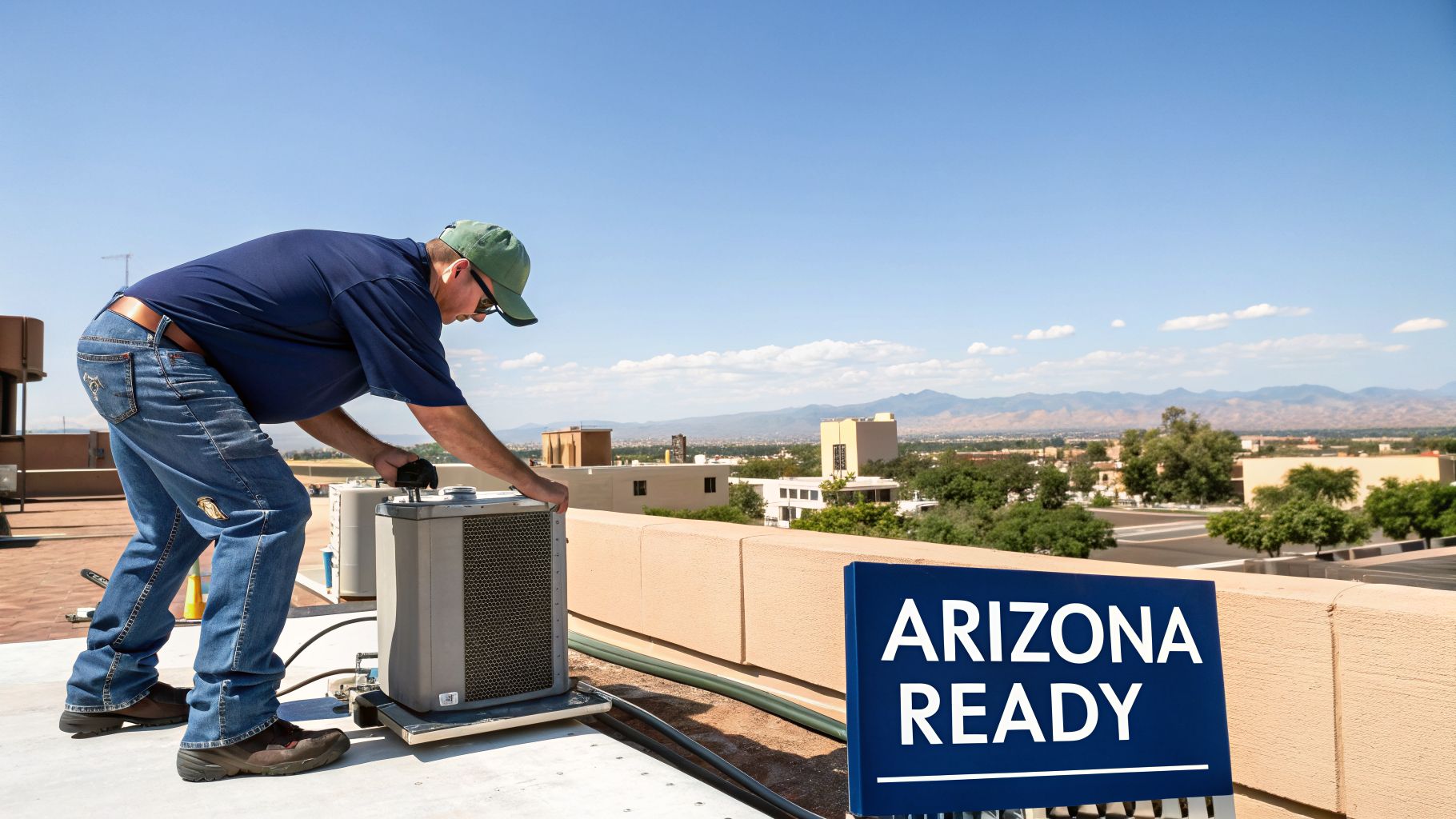
Comparison of Common HVAC System Types in Arizona
When replacing or upgrading a system, homeowners have several options. The following table compares standard technologies used across the state.
| System Type | Best For | Pros | Cons |
|---|---|---|---|
| Split-System Central Air | Standard residential | Familiar, widely serviced, reliable. | Requires ductwork, less efficient if ducts leak. |
| Heat Pump | Desert heating/cooling | Versatile, energy-efficient for mild winters. | Performance drops in extreme deep freezes. |
| Ductless Mini-Split | Additions/Retrofits | High efficiency, no duct leakage loss. | Higher upfront cost per square foot. |
| Evaporative Cooler | Low-humidity days | Very low energy usage, adds moisture. | Ineffective during monsoon/high humidity. |
Maintenance: The Survival Protocol
Preventative maintenance is the most critical factor in extending the life of an HVAC system in Arizona. Because the environment is so demanding, waiting for a system to break—often referred to as "reactive maintenance"—is a financial risk that often results in emergency service calls during the most expensive times of the year.
Seasonal Filter Replacement
Dust levels in the desert are high. Filters should be checked monthly. If you have pets or live near dirt roads, you may need to replace high-efficiency pleated filters every 30 days. A clogged filter creates back-pressure that can burn out the blower motor and freeze the evaporator coil.
Coil Cleaning and Debris Removal
At least once a year, the outdoor condenser unit must be professionally cleaned. Technicians use specialized coil cleaners to break down the buildup of minerals and dust. Additionally, ensure the area around the unit is kept clear of landscaping, rocks, and debris to maintain the necessary "clearance" for proper heat dissipation.
The "Monsoon" Preparation
Monsoon season brings unique threats: sudden downpours, high-speed winds, and blowing debris. Before the season begins, ensure that the outdoor unit is secured to its mounting pad and that no loose roof tiles or landscaping items can become projectiles during a storm. If the system experiences a power surge or outage during a storm, wait a few minutes before manually resetting the thermostat to allow the pressures in the system to equalize.
When to Seek Professional Assistance
While homeowners can change filters and clear debris from around the unit, complex tasks should be left to licensed professionals registered with the Arizona Registrar of Contractors.
- Refrigerant Issues: If your system is blowing warm air, it may have a leak. Refrigerant is a closed-loop substance; if it is low, there is a leak that must be identified and sealed.
- Electrical Failures: Arizona's heat can cause capacitors—the small components that help the motor start—to swell and fail. This is a common, inexpensive repair that requires technical knowledge to perform safely.
- Ductwork Integrity: Over time, ducts in attics (which can exceed 140 degrees in summer) can develop leaks. Professional duct sealing can often lead to a 15–20% improvement in system performance.
Frequently Asked Questions
Why does my AC freeze up when it is 110 degrees outside?
Surprisingly, an AC unit can freeze when it is extremely hot. This is usually caused by restricted airflow, such as a clogged filter or a dirty evaporator coil. When the air cannot move across the cold coil, the moisture on the coil freezes, eventually turning into a block of ice that stops all cooling.
Should I turn my AC off when I leave the house for the day?
In Arizona, it is generally recommended to raise the thermostat setting by 5–7 degrees rather than turning the system off entirely. This prevents the house from becoming a "heat sink," where walls, furniture, and floors store heat that the AC must work twice as hard to remove once you return.
What is the ideal temperature for an Arizona home?
The Department of Energy suggests 78 degrees Fahrenheit for efficiency, but many Arizonans find this uncomfortable due to the intensity of the heat. Most residents aim for 74–76 degrees, but the key is consistency. Keeping the temperature stable prevents the system from running at maximum capacity to "catch up."
How often should I have a professional tune-up?
You should have a professional maintenance visit at least twice a year: once in the spring before the heat spikes, and once in the fall before the heating season begins.
Can I use a shade cover over my outdoor unit?
Yes, but with caution. It must be a "breathe-able" material or a structure that allows air to flow freely. Never wrap the unit in plastic or solid tarps, as this will trap heat and cause the compressor to overheat, leading to catastrophic failure.
Is an extended warranty worth it?
In Arizona, where units are used intensely, extended warranties can provide peace of mind, especially as the system ages past the five-year mark. Verify if the warranty covers labor and refrigerant, as these are often the most expensive parts of a repair.
Next Steps for Homeowners
To ensure your HVAC system remains operational, perform a visual inspection of your outdoor unit this week. Check for clear air pathways, ensure the disconnect box is securely closed, and verify your filter status. If you suspect your system is struggling, contact a licensed contractor for a pre-summer inspection before the peak temperatures arrive. Consistent, proactive care is the best strategy to survive the Arizona heat.
Image Gallery
Select an image to open it in a new tab.

Zara El-Hashem
Sociocultural Dynamics and Academics Writer
