Don Nelson Basketball: A Legacy of Innovation and the Evolution of the Modern Game
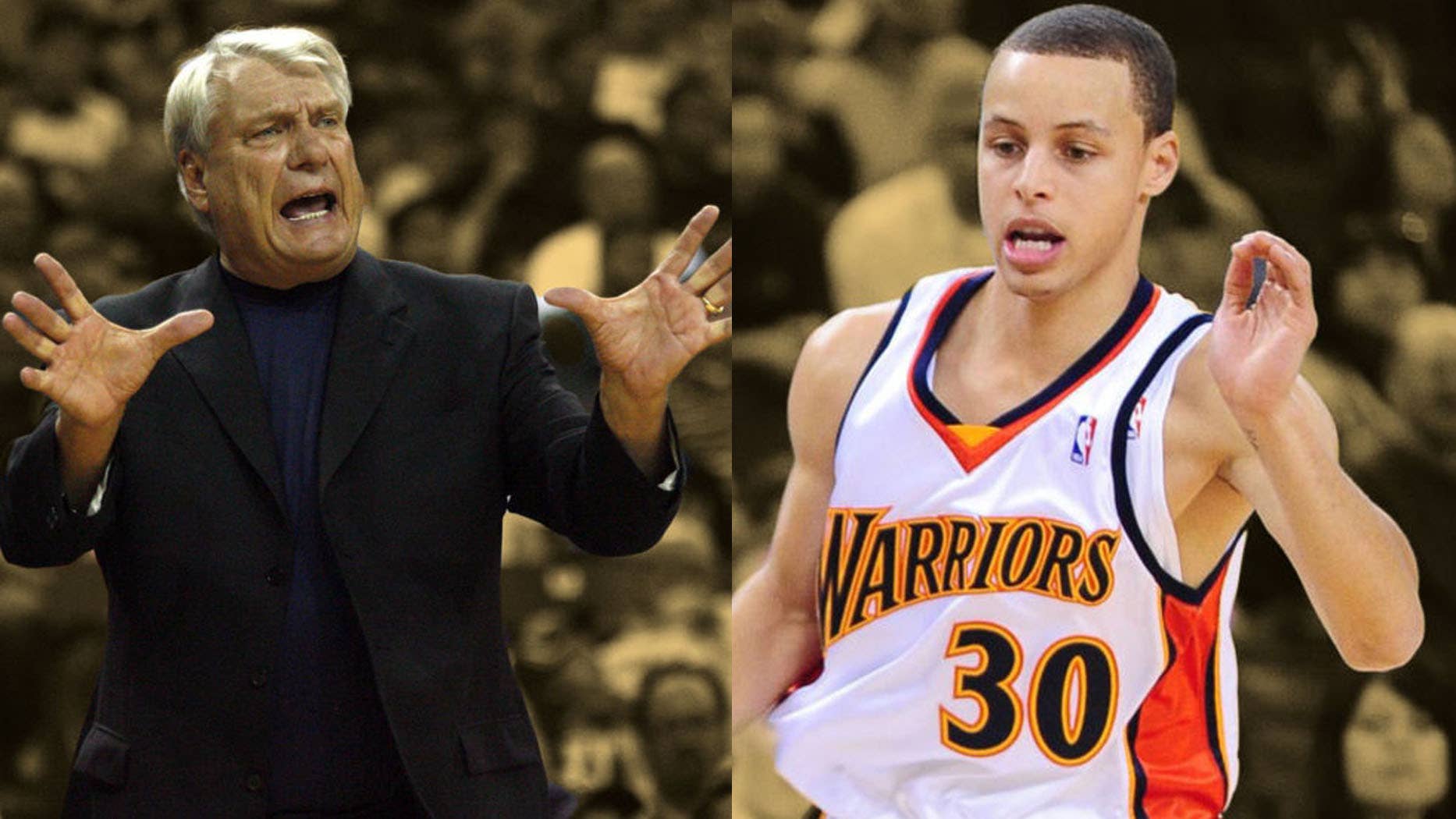
Don Nelson’s basketball legacy is defined by his role as the primary architect of modern "positionless" basketball. Through his "Nellie Ball" philosophy, he pioneered the point forward, small-ball lineups, and the intentional use of mismatches. His innovations transformed the NBA from a stagnant, post-up league into a high-paced, perimeter-oriented spectacle.
For decades, professional basketball followed a rigid structure: two guards, two forwards, and a center, each with strictly defined responsibilities. Don Nelson viewed these boundaries not as rules, but as suggestions. As a coach, he prioritized speed, versatility, and unconventional matchups to exploit the weaknesses of more traditional opponents. By the time he retired, Nelson had amassed more wins than any coach in NBA history (a record later surpassed by Gregg Popovich), but his true contribution lies in the DNA of the modern game. In 2026, when we see seven-footers bringing the ball up the court and teams playing without a traditional center, we are seeing the ultimate fruition of Nelson’s vision.
The Core Philosophy: Understanding "Nellie Ball"
At the heart of Don Nelson’s coaching career was "Nellie Ball," a style of play that prioritized offensive efficiency and transition scoring over the slow-down, defensive-grind tactics of the 1980s and 90s. The goal was simple: create a "mismatch" on every possession. If a team played a slow, heavy center, Nelson would counter by playing a smaller, faster forward at the center position. This forced the opponent's big man to defend on the perimeter, away from the basket, where they were uncomfortable and ineffective.
Nellie Ball was characterized by a high number of three-point attempts, long before the "analytics revolution" made it standard practice. Nelson understood the mathematical advantage of the three-point shot and the spacing it created. By spreading the floor, his teams opened up driving lanes for smaller, quicker guards. While critics often argued that this style was too chaotic to win championships, Nelson’s teams were consistently among the highest-scoring and most entertaining in the league, forcing the rest of the NBA to adapt or be left behind.
The philosophy also relied heavily on "secondary breaks." Instead of waiting for the defense to set, Nelson’s players were instructed to push the ball immediately after a rebound or a turnover. This required every player on the floor—regardless of height—to be able to pass, dribble, and shoot. This "positionless" approach is the direct ancestor of the modern NBA’s offensive systems.
Redefining Roles: The Invention of the Point Forward
One of Nelson’s most enduring tactical innovations was the creation of the point forward. In the traditional basketball hierarchy, the point guard was the primary ball-handler and playmaker. However, during his tenure with the Milwaukee Bucks in the 1980s, Nelson realized he had a unique talent in Paul Pressey. Pressey was a 6'5" forward with the vision and passing ability of a guard.
By making Pressey the primary playmaker, Nelson accomplished two things:
- Defensive Confusion: Opposing small forwards were unaccustomed to defending the pick-and-roll or chasing a playmaker around screens.
- Size Advantage: It allowed the Bucks to play larger lineups without sacrificing ball-handling. If the point guard was being pressured, the ball could simply go to the forward to initiate the offense.
This concept paved the way for future stars like Scottie Pippen, Grant Hill, LeBron James, and Luka Dončić. The point forward role effectively broke the mold of what a "forward" was expected to do, leading to the high-IQ, multi-functional players that dominate the league in 2026. Nelson’s willingness to experiment with Pressey was a gamble that changed the geometry of the basketball court forever.

The Small-Ball Revolution: Speed Over Size
Long before the Golden State Warriors utilized the "Death Lineup" to win titles in the 2010s, Don Nelson was experimenting with small-ball configurations. Nelson frequently abandoned the traditional two-big-men frontcourt in favor of three guards or three small forwards. His logic was that if his team could score faster and more efficiently than the opponent, the defensive trade-off in the paint was worth it.
In 1991, with the Golden State Warriors, Nelson unleashed the "Run TMC" trio—Tim Hardaway, Mitch Richmond, and Chris Mullin. This lineup was the epitome of small-ball innovation. They played at a breakneck pace, averaged over 110 points per game, and relied on skill and shooting rather than brute strength. Nelson’s teams often struggled with rebounding, but they made up for it by forcing turnovers and creating transition opportunities.
The most famous modern application of Nelson’s small-ball theory occurred during the 2007 NBA Playoffs. As the coach of the #8-seeded Golden State Warriors, Nelson orchestrated one of the greatest upsets in sports history against the #1-seeded Dallas Mavericks. By playing "small" and using versatile defenders like Baron Davis and Stephen Jackson to swarm the Mavericks' MVP, Dirk Nowitzki, Nelson proved that a specialized, unconventional lineup could dismantle a traditional powerhouse.
Tactical Disruption: Hack-a-Shaq and Mismatch Hunting
Don Nelson was not just a proponent of "pretty" basketball; he was a master of the "dark arts" of coaching. He is widely credited with the systematic use of the "Hack-a-Shaq" strategy. While the concept of fouling poor free-throw shooters existed before him, Nelson was the first to use it as a formal tactical weapon.
In a 1997 game against the Chicago Bulls, Nelson instructed player Bubba Wells to foul Dennis Rodman repeatedly to disrupt the Bulls' offensive rhythm and force a poor shooter to the line. Later, he famously applied this against Shaquille O'Neal. Nelson’s rationale was purely mathematical: if a player shoots less than 50% from the free-throw line, intentionally fouling them yields a lower "expected points per possession" than allowing a high-powered offense to run its sets.
Beyond intentional fouling, Nelson’s tactical mind was always focused on mismatch hunting. He was one of the first coaches to use the "stretch four"—a power forward who could shoot three-pointers. By moving a player like Dirk Nowitzki (whom Nelson drafted and mentored) to the perimeter, he forced opposing centers and power forwards to leave the paint. This tactical move is perhaps the single most influential change in individual player development over the last 30 years.
| Era/Team | Primary Innovation | Key Personnel | Impact on the Game |
|---|---|---|---|
| Milwaukee Bucks (1976–1987) | Point Forward | Paul Pressey, Sidney Moncrief | Shifted playmaking duties to versatile forwards. |
| G.S. Warriors (1988–1995) | Run TMC / Pace | Hardaway, Richmond, Mullin | Proved that extreme pace could be a sustainable strategy. |
| Dallas Mavericks (1997–2005) | The Stretch Big | Dirk Nowitzki, Steve Nash | Developed the blueprint for the modern 7-foot shooter. |
| G.S. Warriors (2006–2010) | Small-Ball Upset | Baron Davis, Stephen Jackson | Validated small-ball as a legitimate playoff strategy. |
Key Eras of Innovation: From Milwaukee to Golden State
To understand Nelson’s legacy, one must examine the specific environments where his innovations were born. Each stop in his coaching career added a new layer to the "Nellie Ball" encyclopedia.
The Milwaukee Foundation
In Milwaukee, Nelson was a three-time NBA Coach of the Year. He inherited a team in transition and turned them into a perennial contender. His focus here was on defensive versatility. Because he lacked a dominant superstar center after the Kareem Abdul-Jabbar era, he relied on "team defense" and unconventional lineups. The Bucks of the early 80s were tactical chameleons, often switching every screen—a tactic that has become the standard defensive scheme in 2026.
The Golden State Transformation
His first stint with the Warriors was a laboratory for offense. Nelson gave Tim Hardaway the "green light" to push the tempo to extremes. It was during this time that he experimented with Manute Bol, a 7'7" center, shooting three-pointers. While it looked like a gimmick at the time, Nelson saw the value in pulling a rim protector away from the basket. This era proved that fans gravitated toward high-scoring basketball, which helped shape the league's later rule changes to favor offensive freedom.
The Dallas Renaissance
In Dallas, Nelson took a moribund franchise and built a powerhouse around Steve Nash and Dirk Nowitzki. He recognized that Nowitzki was not a traditional back-to-the-basket center but a perimeter assassin. By allowing Nowitzki to play like a shooting guard, Nelson broke the mold for European players and "big men" in general. The Nash-Nowitzki pick-and-roll became the most efficient play in basketball, serving as the precursor to the modern spacing-and-shooting era.
The Influence on Modern Coaching and the 2026 NBA Landscape
As we look at the NBA in 2026, Don Nelson’s fingerprints are everywhere. Coaches like Steve Kerr, Erik Spoelstra, and Tyronn Lue utilize "Nelsonian" principles daily. The "stretch five," the "inverted pick-and-roll" (where a guard screens for a forward), and the reliance on advanced shooting metrics all trace back to Nelson’s experiments.
Nelson was often criticized during his career for never winning an NBA championship as a head coach. However, his five rings as a player under Red Auerbach in Boston provided him with a deep understanding of what traditional winning basketball looked like. He chose to innovate because he saw the limitations of the old system. In 2026, the league has essentially become an "All-Nellie" league. The distinction between positions has nearly vanished, and the emphasis on three-point shooting has reached the heights Nelson predicted forty years ago.
His legacy is also found in the "coaching tree" he left behind. Numerous former players and assistants have gone on to lead their own teams, carrying forward his spirit of experimentation. Nelson taught his protégés to look at the roster not for what players couldn't do, but for the unique problems their specific skills could create for an opponent.
Practical Lessons from Nelson’s Coaching Career
For students of the game and aspiring coaches, Nelson’s career offers several practical takeaways regarding innovation and leadership:
- Adapt to Talent: Nelson never forced a "system" on players who didn't fit. Instead, he built the system around the specific strengths of his roster.
- Question Convention: Just because basketball had been played with two traditional big men for 50 years didn't mean it was the most efficient way to play.
- Risk Management: Nelson understood that "Nellie Ball" was a high-risk, high-reward strategy. He was comfortable with the trade-offs required to gain a tactical edge.
- Empowerment: He gave his players the freedom to make decisions on the fly, which fostered a high-IQ basketball culture.
Frequently Asked Questions
What exactly is "Nellie Ball"?
Nellie Ball is an offensive-minded basketball philosophy created by Don Nelson. It emphasizes extremely fast play, frequent three-point shooting, and the use of "small" lineups to create speed and skill advantages. The goal is to force the opposing team’s slower, larger players into uncomfortable defensive positions on the perimeter.
Did Don Nelson ever win an NBA championship?
As a player, Don Nelson won five NBA championships with the Boston Celtics (1966, 1968, 1969, 1974, and 1976). As a head coach, he never won a championship, although he reached the Conference Finals multiple times and held the record for the most regular-season wins for many years. His impact is measured more by tactical influence than by coaching trophies.
Why is the "Point Forward" so important to modern basketball?
The point forward position, pioneered by Nelson with Paul Pressey, allows a team to initiate its offense through a player with the size of a forward and the passing skills of a guard. This creates massive defensive problems, as traditional forwards are often not trained to defend high-level playmaking and pick-and-roll actions. This role is now the standard for modern superstars like Giannis Antetokounmpo and LeBron James.
How did Don Nelson influence the development of Dirk Nowitzki?
Nelson was instrumental in Dirk Nowitzki's career. He recognized that Dirk’s greatest asset was his perimeter shooting and mobility, rather than post-up strength. Nelson moved Dirk to the "four" and "five" spots but allowed him to play on the outside, effectively creating the "stretch big" archetype that dominates the NBA in 2026.
What was the "We Believe" Warriors team?
The 2006-2007 Golden State Warriors, coached by Nelson, were known as the "We Believe" team. They were the first #8 seed to beat a #1 seed in a seven-game series (the Dallas Mavericks). Nelson used an extreme small-ball lineup to neutralize MVP Dirk Nowitzki, proving that tactical innovation could overcome a significant talent gap in the playoffs.
Moving Forward: Embracing the Nelsonian Mindset
To truly appreciate "Don Nelson basketball," one must look beyond the box scores and win-loss records. Nelson’s career was a decades-long masterclass in disruptive thinking. For fans and analysts in 2026, the "innovation" he brought to the court is no longer a radical alternative—it is the standard.
If you want to apply Nelson’s legacy to your own understanding of the game, focus on mismatches. Whether you are coaching a youth team or analyzing a professional game, look for the player who is being defended by someone who doesn't match their skill set. Nelson taught us that the greatest strength in basketball is not being the biggest or the fastest, but being the most "difficult to categorize." His legacy is a reminder that in basketball, as in life, the most successful path often involves breaking the rules that everyone else is following.
Image Gallery
Select an image to open it in a new tab.




Akira Tanaka
International Academic Trends Correspondent
