
Writing a formal request to cancel your auto insurance policy is a critical task that requires precision to ensure your coverage is terminated correctly and your financial obligations are settled. By providing a clear, written notice containing your policy number, effective cancellation date, and explicit intent, you prevent unauthorized renewals and potential lapses in your insurance history.
Understanding the Importance of a Formal Cancellation Request
While many insurance carriers now offer digital portals to manage accounts, submitting a formal cancellation letter remains a best practice. A written document provides an undeniable audit trail. If a dispute arises regarding a premium charge or an alleged policy renewal occurring after you requested termination, a timestamped or receipt-confirmed letter serves as your primary evidence of the contract's end.
Automated systems can occasionally experience synchronization errors. By sending a structured letter, you remove ambiguity from the process. Furthermore, if you are cancelling because you have switched to a new provider, the letter ensures that your previous insurer does not continue to report your policy as "active" to state regulatory databases, which could inadvertently complicate your registration or licensing status.
Prerequisites Before You Begin
Before you draft your correspondence, gather the necessary documentation to ensure the cancellation process proceeds without administrative delays.
- Policy Declarations Page: Retrieve your current policy document. You will need your exact policy number and the legal name of the insurance company as it appears on the contract.
- Effective Date Determination: Confirm the exact date you wish for the coverage to terminate. If you have already secured new insurance, ensure the cancellation date aligns with the start date of your new policy to avoid any gaps in coverage, which can lead to higher future premiums or legal penalties in states with mandatory insurance laws.
- Proof of New Insurance (If Applicable): Some states or specific insurers require proof that you have secured a new policy before they will release you from your current contract. Keep a copy of your new binder or declarations page ready.
- Submission Method: Decide whether you will send this via certified mail, secure email, or through the insurer's official online portal. Certified mail provides a return receipt, which is the gold standard for documentation.
Essential Components of a Cancellation Letter
A professional cancellation letter must be concise and fact-heavy. Avoid adding unnecessary explanations regarding why you are leaving, such as complaints about pricing or customer service, unless specifically required by the insurer's terms and conditions.
- Header: Include your full legal name, current address, phone number, and email.
- Recipient Details: Use the address designated for "Correspondence" or "Cancellations" found on your bill or the insurer’s website.
- Clear Statement of Intent: Start the body of the letter with a definitive sentence, such as: "Please accept this letter as formal notice that I am cancelling my auto insurance policy, effective [Date]."
- Policy Identification: Clearly state the policy number.
- Request for Confirmation: Explicitly ask for a written confirmation of the cancellation and an explanation regarding any prorated premium refunds due to you.
- Signature: Ensure the letter is signed and dated.
Sample Template for Auto Insurance Cancellation
You may copy and customize the following template for your specific needs. Ensure all placeholders in brackets are replaced with accurate data.
[Your Full Name] [Your Address] [City, State, Zip Code] [Your Phone Number] [Your Email Address]
[Date]
[Name of Insurance Company] [Department, e.g., Policy Services/Cancellations] [Street Address of Insurance Company] [City, State, Zip Code]
RE: Cancellation of Auto Insurance Policy #[Insert Policy Number]
To Whom It May Concern,
Please accept this letter as formal notification that I am cancelling my auto insurance policy, number [Insert Policy Number], effective [Insert Date]. Please consider this my final day of coverage.
I request that you cease all automatic premium withdrawals from my bank account or credit card as of the effective date mentioned above. Furthermore, please send written confirmation of this cancellation to the address provided above, or via email to [Insert Email Address].
If there is any unearned premium remaining on my account, please process the prorated refund to my original method of payment or send a check to my address on file.
If you require any further information to process this request, please contact me immediately at [Insert Phone Number].
Thank you for your prompt attention to this matter.
Sincerely,
[Your Signature]
[Your Printed Name]
Comparing Submission Channels
The method you choose to submit your letter can impact the speed and verification of the cancellation.
| Submission Method | Pros | Cons |
|---|---|---|
| Certified Mail | Provides a physical receipt; strongest legal evidence. | Slowest; requires a trip to the post office. |
| Secure Email | Fast; instant digital timestamp. | Can be filtered as spam; requires confirmation. |
| Online Portal | Immediate confirmation; no paper trail needed. | Risk of "system error" if site is undergoing maintenance. |
| Fax | Provides a transmission report. | Declining technology; some insurers no longer accept faxes. |
Navigating Potential Challenges
Even with a well-drafted letter, you may encounter resistance or administrative hurdles.
Pro-Rating and Refunds
If you paid your premium in full for a six-month or annual term, you are legally entitled to a pro-rated refund of the unused portion of your premium (minus any administrative fees permitted by state law). If you do not receive a statement reflecting this refund within 30 days of your cancellation date, follow up with a copy of your original, sent letter.
Automatic Payments (EFT)
If you have set up recurring Electronic Funds Transfers (EFT) or credit card billing, the cancellation letter acts as a revocation of authorization. If the insurer continues to charge you after the effective date, contact your financial institution immediately to place a stop-payment order on that specific merchant and provide them with the copy of your sent cancellation letter as proof that the contract was terminated.
Early Cancellation Fees
Some policies contain "short-rate" cancellation provisions, which may charge you a penalty for cancelling before the end of the policy term. Review your policy’s "Conditions" section to determine if such fees apply. Understanding these costs in advance prevents unexpected financial hits during the transition.
Frequently Asked Questions
1. Do I need to provide a reason for cancelling my insurance? No. You are not legally required to provide a reason, such as price or dissatisfaction, to cancel your policy. Keep the letter professional and focused solely on the intent to cancel to minimize the chance of a retention specialist pressuring you to stay.
2. Should I cancel my old insurance before or after getting a new policy? Always secure your new policy first. If you cancel your old policy before the new one is active, you risk a "lapse in coverage." A lapse can lead to significant premium increases on your next policy and may result in fines or license suspension in states that mandate insurance reporting.
3. What if I am on an installment payment plan? Even if you pay monthly, you still must provide written notice. If you simply stop paying, the insurer may initiate a formal cancellation for non-payment, which can negatively impact your CLUE (Comprehensive Loss Underwriting Exchange) report and hurt your credit-based insurance score. Always request an official cancellation to ensure your record shows "Policyholder Requested Cancellation" rather than "Cancelled for Non-Payment."
4. How long does the cancellation process usually take? Most insurers process cancellations within 3 to 5 business days, provided the request is clear and includes all necessary identifying information. If you do not receive an email or letter confirming the cancellation within one week, call the customer service department to verify the status.
5. Can I cancel a policy over the phone? While many insurers allow cancellation over the phone, it is highly recommended to follow up with a written letter. Phone calls are not always recorded or archived in a way that is easily retrievable for the customer. A written document provides a verifiable record that protects your interests.
Next Steps and Recommendations
If you are preparing to switch insurance providers, prioritize the alignment of dates. Ensure your new policy coverage begins on the exact same day the old one terminates. Once you have sent your cancellation letter via certified mail or through an official portal, save the confirmation number or the digital receipt in a dedicated folder. Monitor your bank statements for the next two billing cycles to confirm that no additional charges have been processed by your former insurer. If you find an error, use your saved confirmation of the cancellation letter as the basis for a formal dispute with your bank or credit card company.
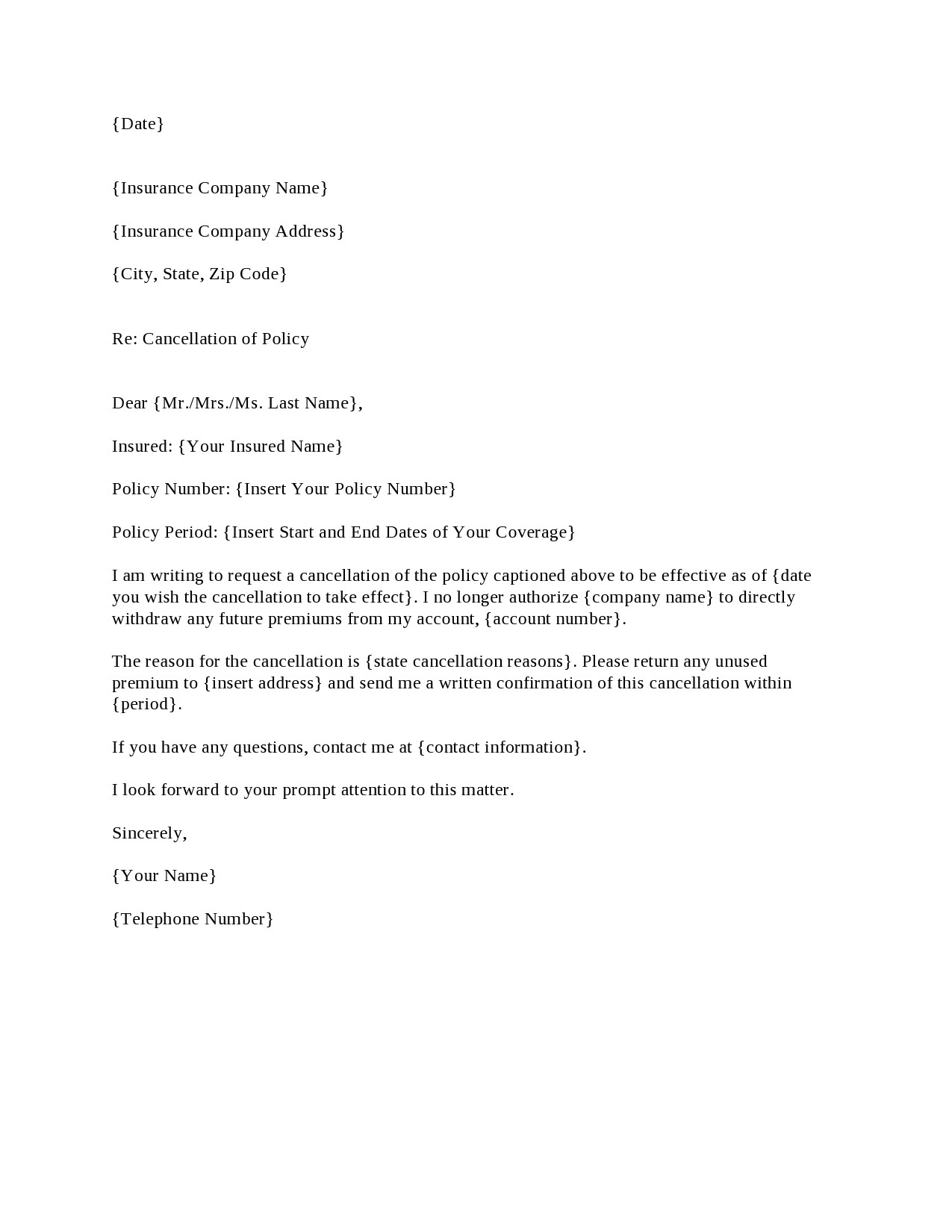
Image Gallery
Select an image to open it in a new tab.


Mateo Castillo
Decentralized Finance and E-Payments Strategist
