The History of Mission San Diego de Alcalá: Foundations of California

Mission San Diego de Alcalá serves as the historic birthplace of Christianity in California and the first of the twenty-one Spanish missions established in the region. Founded in 1769, it represents a complex nexus of indigenous displacement, Spanish colonial expansion, and the architectural evolution of the American Southwest. Today, the mission stands as an active Catholic parish and a national historic landmark.
The Genesis of the Alta California Mission System
The establishment of Mission San Diego de Alcalá was not an isolated event but a strategic maneuver in the broader geopolitical game played by the Spanish Empire. In the mid-18th century, the Spanish Crown grew increasingly concerned about Russian exploration and territorial encroachment in the Pacific Northwest. To secure their claims on the California coast, King Charles III authorized an expedition to colonize Alta California, combining military outposts (presidios) with religious outposts (missions).
Don Gaspar de Portolá led the land expedition, while Father Junípero Serra—a Franciscan friar—accompanied the party to manage the religious conversion of the indigenous Kumeyaay people. On July 16, 1769, Father Serra officially founded the mission on a hill overlooking what is now known as Mission Bay. This initial site, near the Presidio of San Diego, was chosen for its proximity to a reliable water source and the native population, yet it faced immediate environmental and logistical challenges.
Relocation and Transformation: 1774 to 1775
The mission’s original location proved inadequate. The soil was poor for farming, and the distance between the mission and the Presidio caused constant tension between the friars and the soldiers. In August 1774, Father Luis Jayme, who had arrived to support the mission's operations, oversaw the move of the entire establishment approximately six miles up the San Diego River valley to its current location.
This new site, known as Nipaguay by the Kumeyaay, offered significantly better agricultural conditions, including fertile bottomland that was crucial for sustaining the mission's livestock and crops. However, the mission’s growth also signaled an existential threat to the traditional lifestyle of the Kumeyaay. The rapid introduction of foreign livestock, which consumed native plant resources, and the restrictive nature of mission life created a boiling point of resentment among the local tribes.

The 1775 Uprising and Resilience
The most significant event in the mission's early history occurred on the night of November 4, 1775, when a coalition of Kumeyaay warriors attacked the mission. The rebellion was driven by the perceived abuses of the Spanish colonial authorities and the forced cultural assimilation enforced by the mission system. During the assault, the mission buildings were burned to the ground.
Father Luis Jayme was killed during the violence, becoming the first Catholic martyr in Alta California. Despite the destruction, the Spanish military and the Franciscan friars were undeterred. They rebuilt the mission, fortifying it with stronger walls and implementing a stricter administrative structure. This resilience defined the mission's character for the next several decades as it grew into a self-sustaining agricultural hub, producing wheat, corn, beans, and livestock that supported the wider colonial network.
Daily Life and Infrastructure at the Mission
By the early 19th century, the mission had evolved into a sprawling complex. The architecture shifted from simple wooden structures to the iconic adobe brick style, characterized by thick walls and red-tiled roofs designed to provide insulation from the heat. The quadrangle structure facilitated both religious life and economic production.
Operational Components of the Mission
- The Church: The spiritual center where liturgical services were held daily.
- The Quadrangle: A central courtyard surrounded by workshops, storage rooms, and living quarters for the friars and the baptized Kumeyaay (often referred to as neophytes).
- The Irrigation System: An extensive network of flumes and dams, most notably the Old Mission Dam, built to channel water from the San Diego River to the fields.
- Agricultural Fields: Large swaths of land devoted to viticulture (grapes for sacramental wine), cereal crops, and orchards.
Life at the mission was strictly regulated by the tolling of bells, which dictated the schedule for prayer, labor, and meals. While the Spanish friars viewed the mission as a "civilizing" force, the reality for the indigenous population was one of extreme hardship, including the mandatory abandonment of their language, diet, and spiritual practices, as well as high mortality rates due to the introduction of European diseases to which the native population had no immunity.
Secularization and Decay
The Mexican War of Independence, which concluded in 1821, marked the beginning of the end for the mission system. Mexico, having gained its independence from Spain, viewed the missions as relics of colonial oppression and inefficient land management. In 1834, the Mexican government passed the Secularization Act, which stripped the Franciscan order of its administrative control over mission properties.
The land was broken up into ranchos and distributed to private citizens. Mission San Diego de Alcalá fell into severe disrepair during this period. The church roof collapsed, the walls eroded, and the site was temporarily repurposed by the U.S. Army after the United States acquired California in 1848 following the Mexican-American War. For several years, the mission served as a barracks for soldiers, which further accelerated the physical degradation of the structure.
Restoration Efforts in the 20th Century
It was not until the early 20th century that interest in preserving California’s mission heritage grew. Organizations such as the Landmarks Club began to advocate for the stabilization of the ruins. By the 1930s, significant restoration efforts were underway to bring the church back to its former state.
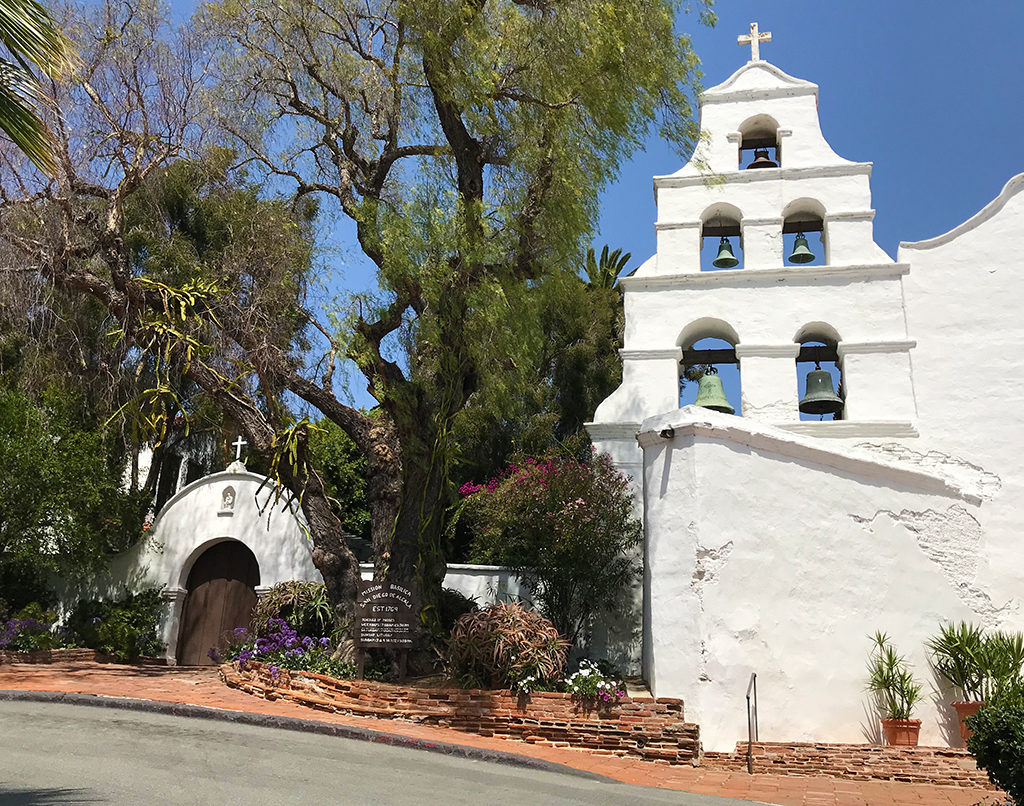
A comprehensive reconstruction of the church, including the iconic facade and the bell tower, was completed in 1931. This effort was guided by archaeological surveys and original architectural blueprints, ensuring that the restored mission honored its historical design. Today, the mission is recognized as a Minor Basilica and continues to serve as an active parish, bridging the gap between colonial history and modern religious practice.
Comparative Overview of California Missions
The following table contextualizes Mission San Diego de Alcalá within the broader framework of the California mission system.
| Feature | Mission San Diego de Alcalá | Significance in the Chain |
|---|---|---|
| Founding Date | July 16, 1769 | First of 21 missions |
| Order | Franciscan | Founding religious order |
| Original Role | Religious and Colonial outpost | Strategic anchor in the South |
| Current Status | Active Catholic Parish/Museum | Landmark and pilgrimage site |
| Water Source | San Diego River | Essential for agrarian economy |
Addressing Misconceptions and Historical Realities
Modern scholarship on the history of Mission San Diego de Alcalá has shifted significantly from the romanticized narratives often told in the mid-20th century. Earlier accounts frequently minimized the agency and suffering of the Kumeyaay people. Current historical interpretation emphasizes the "clash of cultures," acknowledging that while the mission was a marvel of architectural and agricultural development for its time, it was simultaneously a site of profound trauma for the indigenous inhabitants.
The mission today acknowledges this history through educational exhibits and memorials dedicated to the indigenous people who lived and died on the site. Visitors are encouraged to engage with the complex legacy of the mission, viewing it not just as a monument to Spanish achievement, but as a site of memory for the original inhabitants of the San Diego region.
FAQ: Frequently Asked Questions
Why is Mission San Diego de Alcalá called the "Mother of the Missions"? It is known as the "Mother of the Missions" because it was the very first mission founded by Father Junípero Serra in 1769. It established the template for the system that would eventually stretch from San Diego to Sonoma.
Can members of the public visit the mission today? Yes, the mission is open to the public daily as a museum and historical site. It remains an active parish, so visitors are advised to respect ongoing religious services.
What happened to the Kumeyaay population after the mission was secularized? Following secularization, many of the indigenous people remained in the region but were displaced from their ancestral lands. Many integrated into the emerging ranching economy or sought refuge in the inland mountains, maintaining their cultural practices despite the immense pressure from settlers.
How authentic is the current structure of the mission? The current structure is a 20th-century reconstruction. While it adheres closely to the original architectural footprints and uses many original materials where possible, it serves as a functional reconstruction meant to replace the buildings that deteriorated after the 1834 secularization.
What is the significance of the "Old Mission Dam"? The Old Mission Dam, located nearby in Mission Trails Regional Park, is a masterpiece of Spanish colonial engineering. It was built between 1813 and 1816 to provide a reliable water supply for the mission's crops and livestock, demonstrating the sophisticated irrigation techniques brought to California.
Recommendations for Visitors and Researchers
For those planning to visit or study the site in 2026, it is recommended to start by reviewing the official digital archives provided by the Archdiocese of San Diego. These records offer the most accurate documentation regarding the mission’s property status and historical timelines.
- Preparation: Check the official mission website for current tour hours and admission fees, as these may vary based on parish events or holiday schedules.
- Contextual Learning: Visit the onsite museum before touring the grounds; the exhibits provide essential context regarding the Kumeyaay impact that is not immediately visible in the architecture alone.
- Exploration: Visit the nearby Mission Trails Regional Park to view the original dam and aqueduct ruins, which provide a fuller picture of the mission’s extensive agricultural infrastructure.
- Etiquette: Remember that the mission functions as a living church. If a mass is in progress, maintain silence and avoid restricted areas marked for worshipers.
By approaching the history of Mission San Diego de Alcalá with an awareness of both its monumental architecture and the human cost associated with its creation, visitors can gain a balanced understanding of one of California’s most pivotal landmarks.
Image Gallery
Select an image to open it in a new tab.


Celine Dubois
Contemporary Living and Global Arts Columnist
