Understanding IMSI Catchers: Technology, Functionality, and Security Implications

An IMSI catcher is a specialized telecommunications device designed to intercept cellular traffic and track the location of mobile devices by masquerading as a legitimate base station. By exploiting weaknesses in mobile network protocols, these units force nearby phones to connect to them, allowing the operator to capture unique identifiers, log movement patterns, and potentially monitor communication metadata.
The Technical Foundations of Mobile Identification
To understand how an IMSI catcher functions, one must first understand the International Mobile Subscriber Identity (IMSI). The IMSI is a unique, fifteen-digit number provisioned on a Subscriber Identity Module (SIM) card that identifies a specific user within a mobile network. Unlike a public phone number, which is used for routing calls and messages, the IMSI is the "true" identity of the subscriber in the eyes of the network operator.
In standard cellular network operations, mobile devices are programmed to connect to the strongest available signal from a legitimate cell tower. An IMSI catcher leverages this inherent "trust" mechanism. It functions as a rogue base station, broadcasting a signal that appears more attractive—often due to higher signal strength—than the signals broadcast by legitimate towers managed by cellular providers.
When a mobile device attempts to handshake with the rogue station, the IMSI catcher performs a process known as an "identity request." Because the mobile device follows the standard connection protocol, it complies with the request, transmitting its IMSI to the unauthorized unit. Once this handshake occurs, the device is effectively tethered to the catcher, which can then decide whether to forward the connection to the legitimate network or deny service, effectively turning the phone into a tool for surveillance.
Evolution Across Network Generations
The effectiveness and deployment of IMSI catchers have shifted significantly as mobile network standards have evolved. While the underlying vulnerability persists, the barriers to entry and the complexity of the hardware required have changed.
2G (GSM) Vulnerabilities
The most notorious exploits occur on 2G networks. In this architecture, mobile devices are required to authenticate themselves to the base station, but the base station is not required to authenticate itself to the device. This one-way authentication is a foundational flaw that allows an IMSI catcher to pose as a tower without the phone ever realizing the deception.
3G, 4G, and 5G Transitions
As mobile standards transitioned to 3G (UMTS), 4G (LTE), and now 5G (NR), designers introduced mutual authentication. In theory, this requires the network to prove its identity to the mobile device before a connection is fully established. However, backwards compatibility requirements often force modern devices to "downshift" to 2G or 3G protocols when they cannot find a high-speed signal. IMSI catchers frequently exploit this by using signal jamming or interference to force a device to downgrade its connection to a less secure, older protocol, effectively stripping away the protections offered by modern encryption.

Operational Capabilities and Surveillance Scope
An IMSI catcher is not merely a passive monitoring tool; its capabilities vary based on the hardware configuration and the sophistication of the software managing the interface.
- Subscriber Identification: The primary purpose is to harvest the IMSI, which can then be cross-referenced with databases to identify the specific owner of the mobile device.
- Location Tracking: By measuring the signal strength (timing advance) from a device to multiple points, operators can triangulate the precise physical location of a target, often within a few meters.
- Metadata Harvesting: Depending on the setup, a catcher can intercept call logs, timestamps, and the duration of connections.
- Denial of Service (DoS): By keeping a device connected to the rogue station, the operator can prevent the phone from making emergency calls or receiving legitimate communications, effectively isolating the user.
Table 1: Comparison of Security Protocols and Vulnerability
| Protocol | Mutual Authentication | Primary Risk Factor |
|---|---|---|
| 2G (GSM) | No | Absence of tower verification; easy spoofing. |
| 3G (UMTS) | Yes | Downshift attacks to 2G protocols. |
| 4G (LTE) | Yes | Downshift attacks and signal interference. |
| 5G (NR) | Improved | Complex implementation; potential for protocol-layer exploits. |
The Legal and Ethical Landscape
The deployment of IMSI catchers is strictly regulated in most jurisdictions. In the United States, the use of such devices is generally restricted to federal law enforcement agencies operating under judicial oversight, such as warrants issued under the Pen Register and Trap and Trace statutes.
However, the line between government use and unauthorized private use remains a significant concern for privacy advocates. Because the hardware components for building a rudimentary IMSI catcher have become more affordable, the risk of unauthorized use by private entities, corporate espionage agents, or foreign intelligence services has increased. Unauthorized operation of these devices typically violates radio frequency transmission regulations—such as those enforced by the Federal Communications Commission (FCC) in the U.S.—because they interfere with licensed spectrum and cellular service.
Defensive Strategies and User Awareness
For the average user, detecting an IMSI catcher is exceptionally difficult. Because the device mimics legitimate network infrastructure, there is rarely an obvious indicator on the phone's screen that a connection is being monitored.
However, certain patterns may indicate that a device is being targeted:
- Unexpected Network Downgrades: A phone that typically displays 5G or 4G consistently dropping to 2G or "Edge" (E) unexpectedly.
- Signal Instability: Frequent, inexplicable loss of service while in stationary locations where coverage is normally stable.
- Battery Drain: Some security researchers note that malicious interactions can cause abnormal battery usage due to the phone constantly re-handshaking with a rogue station.
Mitigation Steps
- Disable 2G/3G: Many modern Android and iOS devices allow users to toggle off support for older network standards in the cellular settings. By disabling 2G support, users eliminate the most common "downshift" vector.
- Use Encrypted Communications: End-to-end encrypted messaging applications prevent the content of messages from being read even if the connection metadata is intercepted by a rogue base station.
- VPN Usage: A Virtual Private Network (VPN) encrypts data traffic between the device and the internet, ensuring that even if a carrier connection is compromised, the application-layer traffic remains encrypted.
Common Myths vs. Technical Realities
A common misconception is that an IMSI catcher can remotely download the entire contents of a smartphone, including photos, emails, and contacts. In reality, while these devices are powerful tools for signal intelligence and traffic routing, they do not inherently provide full-device "jailbreak" access. Gaining deep access to a device usually requires secondary exploits delivered via malicious links or compromised network traffic, which are distinct from the base-station-spoofing function of the catcher.
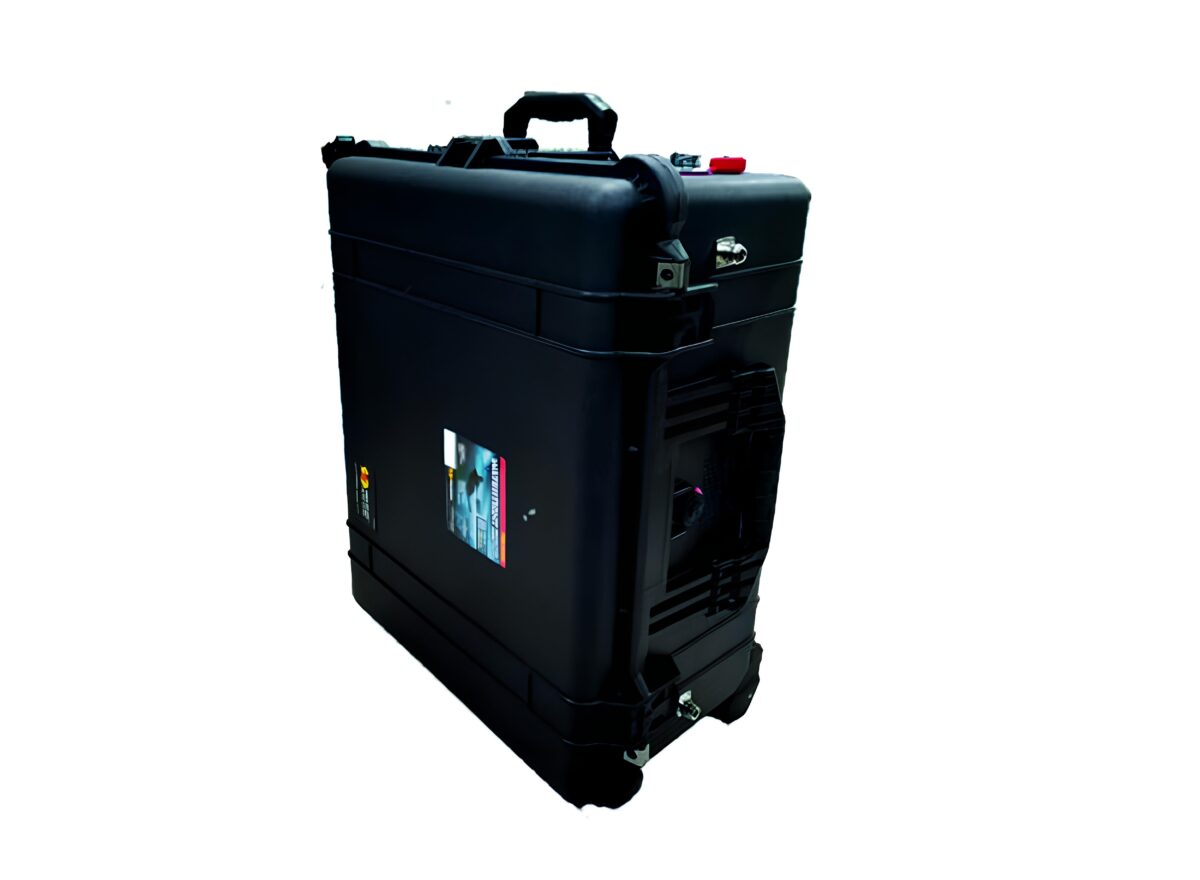
Another myth is that these devices are massive, truck-mounted pieces of equipment. While high-powered military versions may be large, handheld or "man-portable" units exist, allowing individuals to carry them in backpacks or hide them in small enclosures, making them difficult to detect in public urban environments.
Future Outlook and Hardware Security
As of 2026, the telecommunications industry continues to improve the security of the "Subscriber Identity" concealment. New 5G standards now include features designed to encrypt the IMSI (now called a SUCI, or Subscription Concealed Identifier) before it is transmitted over the air. This makes it much harder for a rogue base station to identify a specific user simply by "sniffing" the airwaves.
However, security researchers warn that the implementation of these features is not universal across all global network operators. As long as legacy networks exist to support older devices and roaming agreements, the fundamental vulnerabilities that allow IMSI catchers to function will remain a feature of the global mobile ecosystem.
Frequently Asked Questions
Can an IMSI catcher record my phone conversations? If a device is forced to connect to a rogue base station that acts as a "man-in-the-middle" relay, it is theoretically possible to intercept voice traffic. However, this requires the catcher to pass the data to the legitimate network, adding significant technical complexity.
How do I know if I am being targeted by an IMSI catcher? There is no reliable consumer-level software to definitively detect one. Sudden drops in signal quality or persistent downgrades to older network generations (2G/3G) in areas with known high-speed coverage are the most common signs, though these can also be caused by standard network outages.
Are IMSI catchers legal for private citizens? In almost all jurisdictions, the operation of an IMSI catcher by a private citizen is illegal. These devices interfere with licensed radio spectrum and violate privacy laws. Possession and operation often lead to severe federal charges regarding telecommunications fraud and unauthorized surveillance.
Does a VPN protect me from an IMSI catcher? A VPN provides a layer of encryption for the data moving over your internet connection. While it does not prevent the catcher from seeing your connection request or your IMSI, it prevents the interceptor from reading the content of the data you transmit once the connection is established.
What is the difference between a "Stingray" and an IMSI catcher? "Stingray" is a specific brand name for a common class of IMSI catchers manufactured by the Harris Corporation. The terms are often used interchangeably, but an IMSI catcher is the generic technical descriptor for the device category.
Next Steps for Enhanced Mobile Security
To minimize your risk profile, perform a security audit of your mobile device. Start by checking your cellular settings to ensure 2G support is disabled if your carrier and local infrastructure allow it. Ensure your operating system is updated to the latest available version, as manufacturers frequently patch vulnerabilities related to how base stations are verified. For sensitive communications, rely exclusively on platforms that utilize robust end-to-end encryption, and treat unexpected network connectivity drops as a prompt to move to a more secure location or switch your device to Airplane Mode.
Image Gallery
Select an image to open it in a new tab.


Mateo Castillo
Decentralized Finance and E-Payments Strategist
