The Olympic medal count serves as a high-stakes geopolitical scorecard, transforming individual athletic excellence into a proxy for national prestige, systemic efficiency, and ideological superiority. By codifying state success through rankings, the Olympics influence domestic policy, international soft power strategies, and historical narratives, turning the Games into a theater where soft power is measured in gold, silver, and bronze.
The Geopolitics of the Podium
At its core, the Olympic medal table is a reflection of a nation’s capacity to identify, nurture, and support talent. While individual athletes remain the agents of performance, the logistical infrastructure required to produce a gold medalist—ranging from sports science laboratories and state-sponsored academies to elite nutrition programs—is almost always provided by the nation-state. Consequently, the medal count acts as a visible metric of a country’s organizational prowess.
Historically, this has shifted from a display of physical robustness in the early 20th century to a data-driven assertion of "developmental health." When a nation dominates the medal count, it projects an image of societal stability and administrative competence. For global superpowers, maintaining a high position on the leaderboard is rarely seen as an optional extracurricular activity; it is a vital component of public diplomacy. The medal tally provides an objective, albeit reductive, ranking that the international media disseminates globally, providing a persistent image of which nations lead and which follow.
Historical Context: The Cold War and the Proxy Battle
The most potent example of the medal count shaping history occurred during the Cold War era. The Soviet Union’s re-entry into the Olympic movement in 1952 marked a shift where the Games became a central front for ideological competition. The United States and the USSR treated the medal count as a surrogate for nuclear and economic might.
During these decades, the medal count provided a psychological landscape for the Cold War. A win on the track or in the swimming pool was framed in state media as a validation of one political system over another. This historical period cemented the idea that "total medals" was a measure of national vitality. Even today, historians study the fluctuating numbers from the 1960s through the 1980s to understand how regimes mobilized human capital to project strength during periods of heightened international tension.

The Modern Metrics: Methodology and Misconceptions
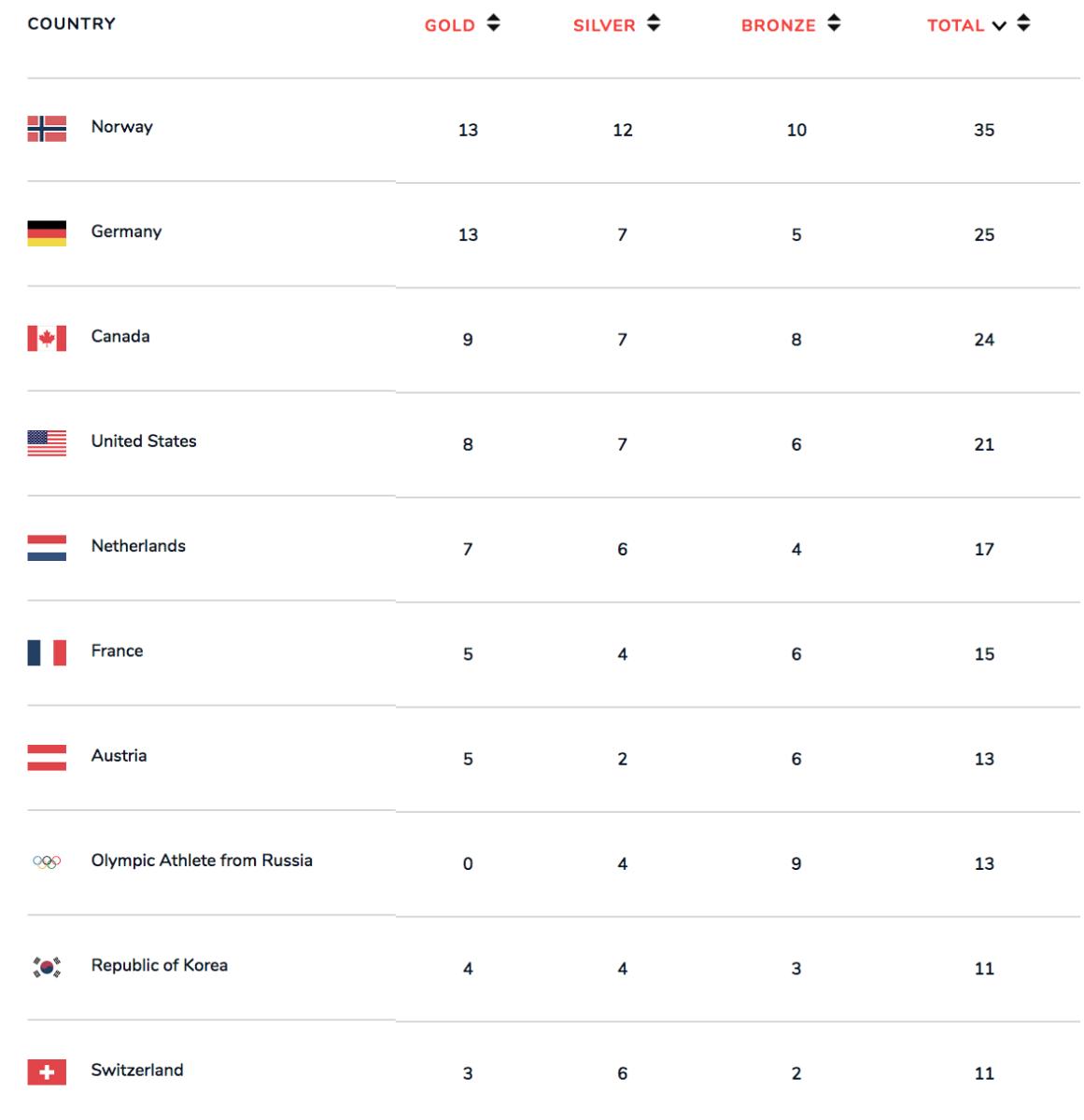
There is no single, universally mandated method for ranking countries. While the International Olympic Committee (IOC) does not officially rank countries—it maintains that the Games are a competition between athletes, not nations—the global media uses the "Gold First" system. This methodology, which prioritizes the number of gold medals won before considering silvers or bronzes, fundamentally shapes historical perception.
Comparing Ranking Methodologies
| Ranking System | Priority Metric | Strategic Impact |
|---|---|---|
| Gold First | Gold medals | Emphasizes elite excellence and "winning" top status. |
| Total Count | Sum of all medals | Emphasizes depth of talent and broad athletic infrastructure. |
| Weighted | Gold=3, Silver=2, Bronze=1 | Balances elite gold performance with broad podium presence. |
| Per Capita | Medals per population | Highlights disproportionate efficiency in smaller nations. |
The choice of ranking system dictates the historical narrative. A country like China might focus heavily on the "Gold First" table to demonstrate dominance, while a smaller nation with high athletic participation might point to "Total Count" or "Per Capita" statistics to argue that their athletic system is more efficient per citizen. By selecting the methodology that favors their specific performance profile, nations curate their own historical "success" stories.
Domestic Policy and Financial Incentives
The quest for a higher spot on the medal table directly influences how nations allocate public funds. In many countries, the Olympic medal count serves as a key performance indicator for national sports ministries. High performance is often correlated with increased government funding, whereas declining medal counts can trigger systemic audits, leadership changes in national sporting federations, and the redirection of resources from grassroots programs to elite training centers.
This creates a self-reinforcing cycle. When a government sees that a medal count elevates national pride—which often correlates with temporary boosts in domestic political approval—they are incentivized to invest more heavily in the next Olympic cycle. This fiscal commitment changes the professional landscape for athletes, turning what was once a pursuit of personal achievement into a government-managed career track.
Soft Power and Global Reputation
For many host nations, the medal count is inextricably linked to the success of the Games themselves. The historical narrative of a host country is often colored by whether their athletes performed well during the home Games. This phenomenon, often called the "host nation effect," highlights how nations leverage local home-field advantage to boost their medal tally, thereby burnishing their international reputation through a display of host-country excellence.
Soft power—the ability to influence others through attraction rather than coercion—is heavily influenced by these tallies. A nation that consistently sits atop the medal table is often viewed as a "successful" nation in the eyes of the global public. This perception can have downstream effects on tourism, foreign investment, and international alliances, as the perceived dynamism of a country’s youth is often extrapolated from its success in the Olympic arena.
The Intersection of Culture and Competition
The influence of the medal count extends into cultural identity. In countries where sports are deeply woven into the national fabric, the medal count becomes a source of collective emotional experience. During the Olympic window, the medal table acts as a focal point for national discourse.
However, this focus also introduces significant pressure. The history of the Games is littered with stories of athletes who faced immense public backlash for failing to secure a medal. This social pressure reveals the degree to which a nation’s citizenry has internalized the medal count as a measure of national worth. It transforms the athlete from a competitor into an ambassador whose failure or success is experienced collectively by millions.
Navigating the Future: 2026 and Beyond
As we move through 2026, the interpretation of the medal count continues to evolve. While the traditional "Gold First" ranking remains the dominant format in media, there is an increasing push toward incorporating metrics that account for population size and socioeconomic investment.
Advocates for more nuanced statistics argue that the "history" written by the medal table is biased toward large, wealthy nations. By looking at medals per capita or medals per unit of GDP, historians are beginning to tell a more complex story. This perspective allows for the recognition of smaller nations that achieve disproportionate success, effectively expanding our historical understanding of what it means to be a "successful" athletic nation.
Frequently Asked Questions
Does the IOC formally recognize national medal standings?
No, the International Olympic Committee does not maintain an official global ranking of countries. The medal tables published during the Games are produced by media organizations and individual national committees for public information.
Why is the "Gold First" system the standard for medal counts?
The "Gold First" system is used because it provides a clear hierarchy that rewards the highest level of achievement. It is a simple, intuitive ranking that generates interest and excitement, which is why it has become the default for global broadcasting.
How does hosting the Olympics affect a country's medal count?
Host nations typically see a "host nation effect," where they experience a statistically significant increase in medals won compared to their performance in previous Games. This is attributed to factors like larger quotas for athletes, familiarity with local facilities, and increased domestic funding leading up to the Games.
Can a medal count accurately reflect a country’s sports development?
While a medal count is a useful indicator of elite-level success, it is an imperfect measure of a country’s general health or grassroots sports development. It highlights the success of professionalized systems but may overlook the success of nations that prioritize community sports over elite, state-funded training.
Next Steps for Understanding Olympic History
To gain a more comprehensive view of how Olympic performance influences global perception, consider examining the archives provided by the Olympic World Library or the official reports released by national Olympic committees after each Games. By comparing these formal reports with the medal tables presented in international media, one can observe the gap between official athletic goals and the narrative constructed by public ranking systems. Understanding these discrepancies is essential for anyone interested in the intersection of sports, politics, and historical record-keeping.
Image Gallery
Select an image to open it in a new tab.




Declan O'Connor
Higher Education and Campus Culture Reporter
