Secure Big Data Computation in the Cloud: Technologies and Implementation Strategies for 2026
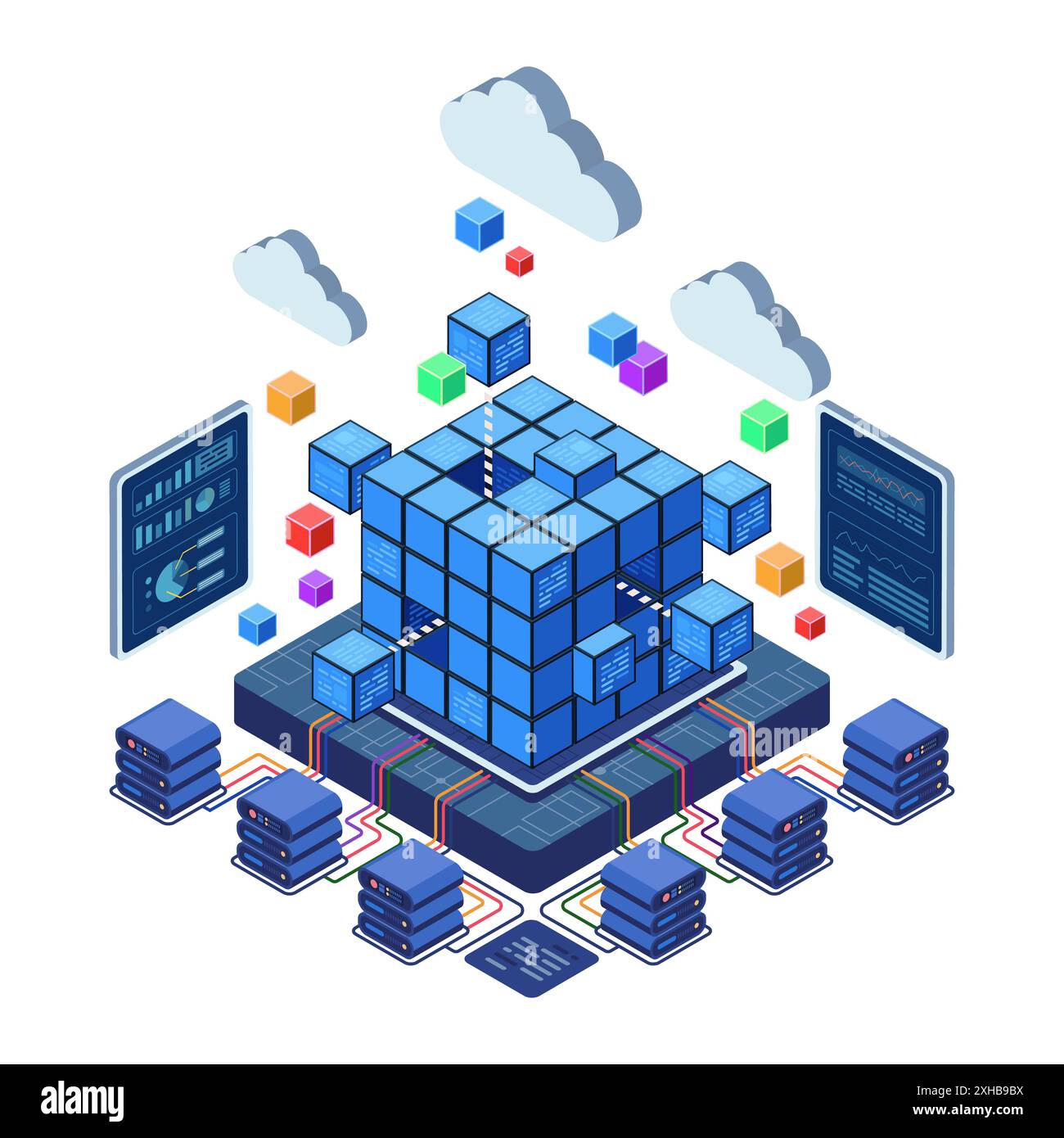
Secure big data computation in the cloud refers to the use of advanced cryptographic techniques, hardware-based isolation, and strict access controls to process massive datasets while ensuring data remains encrypted even during execution. By 2026, this is primarily achieved through Confidential Computing, Fully Homomorphic Encryption (FHE), and robust Zero-Trust architectures that protect sensitive information from cloud providers and external threats.
As organizations in 2026 continue to leverage massive datasets for artificial intelligence (AI), machine learning (ML), and predictive analytics, the challenge of maintaining privacy while utilizing the cloud's elastic power has become a central concern for Chief Information Security Officers (CISOs). Moving beyond simple "encryption at rest," modern secure computation ensures that data is never exposed in plaintext within the system's memory, effectively closing the final gap in the data security lifecycle.
The Evolution of Data Security in Cloud Computing
Historically, cloud security focused on two primary states: data at rest (stored on disks) and data in transit (moving across networks). While protocols like TLS and AES-256 effectively secured these states, the "data in use" phase remained a significant vulnerability. To process data, a CPU traditionally required that information be decrypted in the system's RAM, leaving it susceptible to memory scraping, rootkit attacks, or even unauthorized access by the cloud service provider (CSP) itself.
By 2026, the paradigm has shifted toward Confidential Computing. This approach utilizes hardware-based Trusted Execution Environments (TEEs) to create "enclaves" within the processor. Inside these enclaves, data is decrypted, processed, and re-encrypted without ever being visible to the underlying operating system, hypervisor, or administrative staff. This level of isolation is now a foundational requirement for regulated industries such as healthcare, decentralized finance (DeFi), and government intelligence.
Core Pillars of Secure Big Data Computation
To achieve a comprehensive secure computation environment, organizations must integrate multiple layers of defense. These pillars ensure that the scale of big data—often characterized by its volume, velocity, and variety—does not compromise the integrity or confidentiality of the underlying records.
1. Confidential Computing and TEEs
Trusted Execution Environments, such as Intel SGX, AMD SEV-SNP, and NVIDIA’s Confidential AI features, provide the hardware-level assurance required for big data. When running large-scale Apache Spark or Kubernetes clusters, TEEs allow each node to process sensitive shards of data in isolation. This is particularly vital in multi-tenant cloud environments where different organizations share the same physical hardware.
2. Privacy-Enhancing Technologies (PETs)
PETs encompass a suite of mathematical and algorithmic tools designed to protect privacy.
- Fully Homomorphic Encryption (FHE): This allows computations to be performed directly on encrypted data. While computationally expensive, advancements by 2026 have made FHE viable for specific high-value analytic tasks where data cannot be decrypted under any circumstances.
- Secure Multi-Party Computation (SMPC): This technique splits a dataset among multiple parties. No single party can see the whole dataset, but they can collectively compute a result. This is widely used in 2026 for cross-organizational data collaboration, such as banks detecting fraud without sharing individual customer names.
- Differential Privacy: By adding controlled mathematical "noise" to a dataset, organizations can share insights and patterns without revealing the presence or specifics of any single individual in the dataset.
3. Zero-Trust Architecture (ZTA)
In a secure big data environment, "never trust, always verify" is the operating principle. Zero-Trust ensures that every request for data access, regardless of whether it originates inside or outside the network perimeter, is authenticated, authorized, and continuously validated. In 2026, this is often managed through automated Identity and Access Management (IAM) policies that utilize short-lived credentials and attribute-based access control (ABAC).
Implementing Secure Workflows for Big Data
Transitioning to secure computation requires a structural rethink of the data pipeline. A standard implementation workflow in 2026 typically follows these stages:
Data Categorization and Governance
Before any computation occurs, data must be classified based on its sensitivity (e.g., PII, PHI, or trade secrets). Not all data requires the performance overhead of FHE or TEEs. By implementing a tiered security model, organizations can optimize costs by reserving secure computation for the most sensitive 10–20% of their data lake.
Attestation Procedures
Attestation is the process by which a system proves its integrity. Before a big data workload is deployed, the "verifier" service checks the hardware's status and the software's signature. If the environment has been tampered with, the decryption keys for the data are never released to the enclave. This ensures that computation only happens on "known-good" hardware.
Scalable Key Management
In big data environments, managing the thousands of keys required for different datasets is a complex task. Modern Key Management Services (KMS) in 2026 are integrated directly with TEEs. This allows keys to be injected into a secure enclave without the user or the cloud provider ever seeing the raw key material.
Comparison of Cloud Provider Secure Computation Services
As of 2026, the major cloud providers have matured their offerings to support secure big data at scale. The following table compares the primary features of the "Big Three" providers regarding secure computation.
| Feature | AWS (Nitro Enclaves) | Microsoft Azure (Confidential Computing) | Google Cloud (Confidential VMs) |
|---|---|---|---|
| Primary Hardware | AWS Nitro System | Intel SGX / AMD SEV-SNP | AMD SEV / Intel TDX |
| Isolation Level | Virtual Machine / Enclave | Hardware-encrypted RAM | Memory Encryption at VM level |
| Ease of Migration | High (Lift & Shift) | Medium (Requires SDK for SGX) | Very High (No code changes) |
| Big Data Integration | Amazon EMR / S3 Integration | Azure Databricks / Synapse | Google Cloud Dataproc |
| Attestation | AWS Key Management Service | Azure Attestation Service | Google Cloud Binary Authorization |
| Performance Overhead | Low (1-5%) | Variable (Up to 20% for SGX) | Low (2-8%) |
Managing Performance and Cost Trade-offs
Secure big data computation is not without its costs. While hardware-based isolation (TEEs) has become highly efficient by 2026, software-based methods like FHE still incur significant overhead.
- Computational Latency: Encrypting and decrypting data within a TEE, or performing operations on ciphertext in FHE, naturally takes longer than plaintext processing. Organizations must factor in a 5% to 15% increase in job completion times for large-scale MapReduce or Spark tasks.
- Resource Expenses: Confidential VM instances typically carry a premium price tag (often 10–25% higher than standard instances). When processing petabytes of data, these costs can accumulate.
- Complexity of Development: Developing for TEEs sometimes requires specialized SDKs (like Open Enclave or Graham). However, by 2026, many abstraction layers have been built into popular frameworks like Apache Spark, reducing the "security tax" on developer productivity.
Compliance and Regulatory Requirements in 2026
The legal landscape has become significantly more stringent. Secure computation is no longer just a technical preference; it is a compliance necessity.
- GDPR 2.0 and Beyond: European regulations now specifically recognize "data in use" protection as a valid technical measure to mitigate risk under Article 32.
- The AI Act (Evolution): For organizations training large language models (LLMs) on private user data, secure computation is often the only legal pathway to demonstrate that the training process respects individual privacy.
- Data Residency Laws: In jurisdictions with strict data sovereignty rules, secure cloud computation allows organizations to process data within a specific region while ensuring that even the local cloud administrators cannot access the content.
Common Challenges and Troubleshooting
Despite the advancements in 2026, IT teams often encounter hurdles during implementation:
- Attestation Failures: These often occur due to outdated firmware or mismatched software signatures. Ensuring a rigorous CI/CD pipeline that signs every build of the analytics code is essential.
- Memory Constraints in Enclaves: Hardware enclaves (specifically early generations of Intel SGX) have limited "protected memory" sizes. If a big data task exceeds this limit, the system may "thrash," leading to catastrophic performance drops. Modern developers use memory-efficient algorithms or switch to AMD SEV-SNP, which supports much larger encrypted memory footprints.
- Debugging Difficulties: Because the data is hidden from the OS, traditional debugging tools cannot see what is happening inside the enclave. Specialized "debug mode" enclaves must be used during development, though these must be strictly disabled in production.
Frequently Asked Questions
Does secure cloud computation protect against all types of data breaches?
No, while it effectively secures data "in use" and prevents cloud providers or hackers with root access from seeing the data, it does not prevent logic-based breaches. For example, if your application has a vulnerability that allows an unauthorized user to log in, they can still view the data that the application has legitimately decrypted for them.
What is the difference between data masking and secure computation?
Data masking or anonymization alters the data (e.g., replacing a name with "John Doe") so that the original information is lost. Secure computation keeps the original data intact but keeps it encrypted or isolated during the processing phase. Secure computation allows for much more accurate analysis because you are working with the real values, not approximations.
Is Fully Homomorphic Encryption (FHE) fast enough for real-time big data in 2026?
FHE has seen massive speed improvements, but for most "real-time" big data applications involving millions of transactions per second, it is still too slow. Most organizations in 2026 use FHE for "batch processing" of highly sensitive datasets and rely on TEEs (Confidential Computing) for real-time needs.
Can I use my existing big data tools like Hadoop or Spark with secure computation?
Yes. Most major cloud providers have released "Confidential" versions of their managed big data services (like Amazon EMR or Google Cloud Dataproc). These services automatically handle the provisioning of secure enclaves and the necessary attestation, allowing you to run your existing Spark or Hadoop scripts with minimal modifications.
How do I handle encryption keys in a secure computation environment?
In 2026, the best practice is to use a "Bring Your Own Key" (BYOK) or "Hold Your Own Key" (HYOK) model combined with a Hardware Security Module (HSM). The key is only released to the secure enclave after a successful hardware attestation check, ensuring the key never touches a non-secure environment.
Next Actions for Organizations
To successfully implement secure big data computation, organizations should start with a Data Privacy Impact Assessment (DPIA) to identify which datasets carry the highest risk. Following this, a pilot program should be established using Confidential VMs—offered by providers like Azure or GCP—as these require the least amount of code refactoring.
Once the team is comfortable with hardware-based isolation, they can explore more advanced techniques like Secure Multi-Party Computation for collaborative projects. Throughout this process, maintaining a close relationship between the DevOps and Security teams is vital to ensure that attestation and key management do not become bottlenecks in the data pipeline. For high-compliance sectors, consulting with legal experts to ensure that the chosen technical measures align with current 2026 data protection statutes is highly recommended.
Image Gallery
Select an image to open it in a new tab.
Akira Tanaka
International Academic Trends Correspondent
