
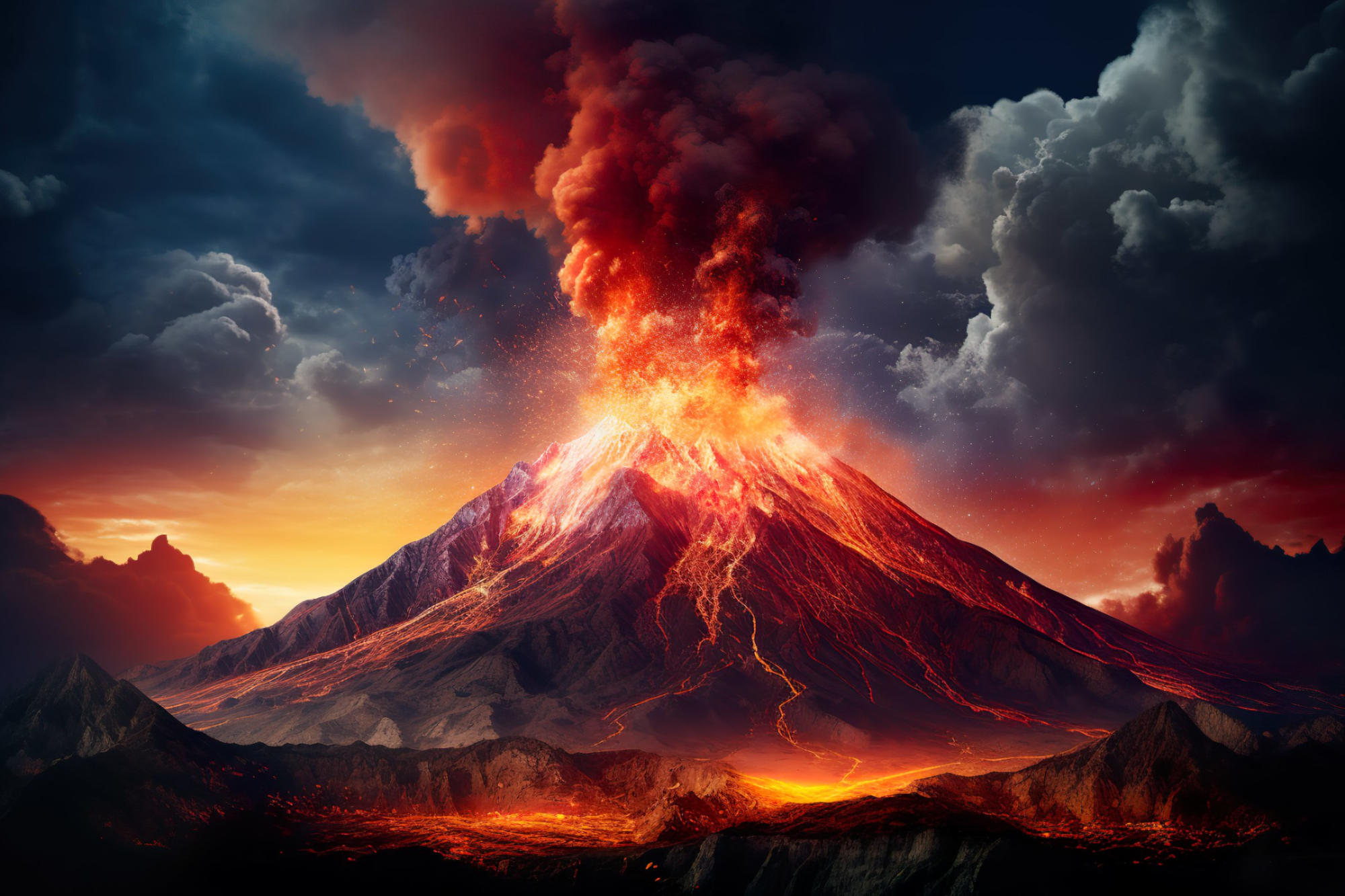
As of 2026, the question of when the next volcano will erupt is answered by the fact that volcanic activity is constant; approximately 40 to 50 volcanoes are actively erupting worldwide at any given moment. While exact "predictions" of dates remain scientifically impossible, modern monitoring of seismic swarms, gas emissions, and ground deformation allows volcanologists to forecast high-risk events in regions like Iceland, Italy, and the Pacific Ring of Fire with increasing accuracy.
The Reality of Constant Volcanic Activity
To understand when the next eruption will occur, one must first recognize that the Earth is in a state of perpetual volcanic flux. For the general public, an "eruption" often brings to mind a singular, catastrophic event like Mount St. Helens in 1980. However, for geologists and researchers at the Smithsonian Institution Global Volcanism Program, eruptions are categorized by their duration, intensity, and magma composition.
In 2026, we are witnessing a period of heightened crustal restlessness in specific corridors. The "next" eruption is likely already happening in a remote area of the Kuril Islands or deep along the mid-ocean ridges. For those concerned with societal impact—threats to aviation, local infrastructure, or climate—the focus shifts from "when" to "where" the next significant escalation will take place. Volcanology has moved away from the search for a "silver bullet" prediction toward a sophisticated model of probabilistic forecasting.
High-Risk Regions and Specific Volcanoes to Watch in 2026
Several geographical "hot zones" are currently exhibiting signs of unrest that suggest significant eruptions could occur within the coming months or years. These areas are monitored 24/7 by local observatories and satellite arrays.
The Reykjanes Peninsula, Iceland
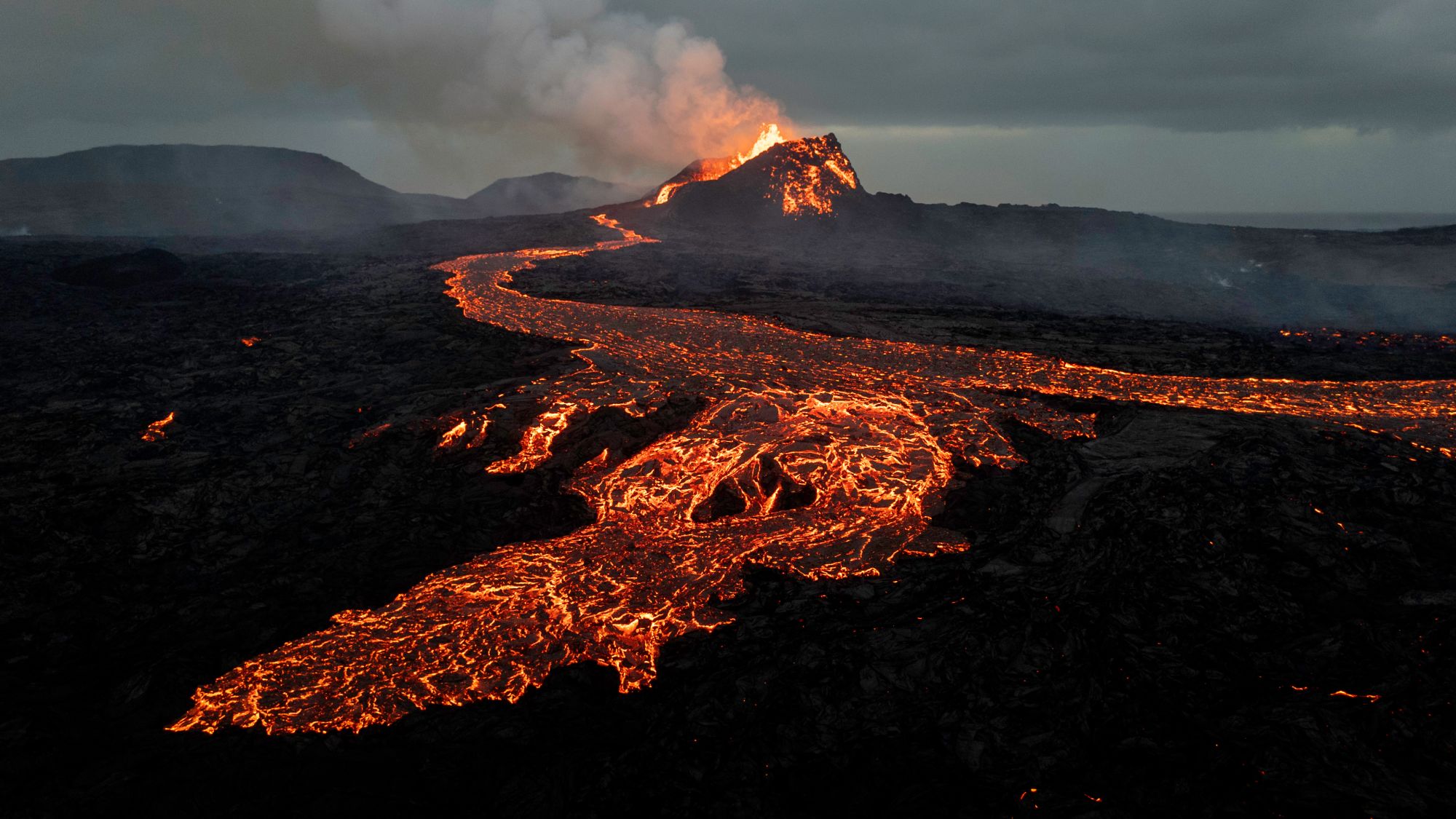
Iceland has entered a new volcanic era that began around 2021. After centuries of dormancy, the Reykjanes Peninsula—home to the Blue Lagoon and near the capital, Reykjavík—is now a site of frequent fissure eruptions. In 2026, the Sundhnúkur crater row and the area around Grindavík remain high-priority zones. The magma plumbing system here has shown a pattern of repeated filling and failure, leading to "curtain of fire" eruptions that can start with only a few hours of seismic warning. The Icelandic Meteorological Office (IMO) tracks these inflation cycles using GPS and InSAR (Interferometric Synthetic Aperture Radar) to provide real-time updates.
Campi Flegrei and Mount Etna, Italy
Italy hosts some of the world's most dangerous volcanoes due to their proximity to dense urban populations.
- Campi Flegrei: This massive caldera west of Naples has been experiencing "bradyseism"—a gradual lifting of the ground caused by underground pressure. In 2026, the increased frequency of micro-earthquakes suggests that the hydrothermal system is under significant stress. While it is a caldera rather than a traditional cone, a major eruption here would have continental consequences.
- Mount Etna: As Europe’s most active volcano, Etna is almost always in a state of paroxysm. Its frequent eruptions of ash and lava are well-documented by the Istituto Nazionale di Geofisica e Vulcanologia (INGV), and it remains the most likely candidate for the "next" visual spectacular in the Mediterranean.
The Ring of Fire: Indonesia and Japan
Indonesia contains the highest density of active volcanoes globally. Mount Merapi, Mount Semeru, and Ibu are frequently in states of eruption. These volcanoes are particularly dangerous because they produce "pyroclastic flows"—fast-moving clouds of hot gas and volcanic matter that are lethal to anyone in their path. In Japan, Sakurajima continues to produce daily ash explosions, maintaining its status as one of the most consistently active vents on the planet.

How Scientists Forecast Eruptions
The transition from "dormant" to "erupting" is rarely instantaneous. It is preceded by "volcanic unrest," a series of physical and chemical changes that scientists use to build forecast models.
1. Seismic Monitoring
Magma is viscous and dense. As it forces its way through the Earth's brittle crust, it cracks the rock, creating distinct seismic signals known as Volcano-Tectonic (VT) earthquakes. As the magma nears the surface, these sharp cracks often turn into "harmonic tremors"—long, low-frequency vibrations that indicate a continuous flow of fluid. In 2026, AI-driven seismic analysis allows researchers to filter out background noise and identify the exact depth and movement of magma bodies.
2. Ground Deformation
Before a volcano erupts, it often "inflates" like a balloon. Scientists use satellite-based radar (InSAR) and ground-based GPS stations to measure these changes down to the millimeter. If a flank of a volcano begins to bulge rapidly, it indicates that magma is accumulating in a shallow reservoir, increasing the likelihood of a localized breach.
3. Gas Geochemistry
Volcanoes "breathe" gases like carbon dioxide (CO2), sulfur dioxide (SO2), and hydrogen sulfide (H2S). Changes in the ratio of these gases can indicate that fresh, gas-rich magma is rising from deep within the mantle. An increase in SO2 emissions is often a sign that magma is very close to the surface, as this gas only escapes easily when the overlying pressure is reduced.
Understanding the Volcanic Explosivity Index (VEI)
Not all eruptions are created equal. To categorize the magnitude of the "next" eruption, geologists use the Volcanic Explosivity Index (VEI), which ranges from 0 to 8. This scale is logarithmic, meaning each step represents a tenfold increase in the volume of material ejected.
| VEI Level | Classification | Description | Ejecta Volume | Frequency | Example |
|---|---|---|---|---|---|
| VEI 0 | Effusive | Steady lava flow; minimal explosion. | < 10,000 m³ | Constant | Kilauea (Hawaii) |
| VEI 2 | Explosive | Moderate explosions; ash clouds. | > 1,000,000 m³ | Weekly | Yasur (Vanuatu) |
| VEI 4 | Catastrophic | Large ash columns; major destruction. | > 0.1 km³ | ~1 per year | Mount Mayon (Philippines) |
| VEI 6 | Colossal | Massive regional impact; global cooling. | > 100 km³ | ~1 per 100 years | Pinatubo (1991) |
| VEI 8 | Apocalyptic | Global climate shift; total devastation. | > 1,000 km³ | ~1 per 50,000 years | Yellowstone (Ancient) |
The Impact of Volcanic Eruptions on Society
When the next major eruption occurs, the primary concerns extend far beyond the immediate flow of lava. Modern civilization is highly sensitive to the secondary effects of volcanic activity.
Aviation and Infrastructure
Volcanic ash is not like wood ash; it is composed of pulverized rock and glass. When sucked into jet engines, it melts and creates a ceramic coating that can cause total engine failure. The 2010 eruption of Eyjafjallajökull demonstrated how a relatively small eruption could paralyze global economy by grounding flights across Europe. In 2026, the Volcanic Ash Advisory Centers (VAAC) use sophisticated dispersion models to keep airspace safe, but a large eruption in a major corridor would still cause significant logistical delays.
Climate and Agriculture
Significant eruptions (VEI 5 or higher) can inject sulfur dioxide into the stratosphere. This gas reacts with water vapor to form sulfuric acid aerosols, which reflect incoming sunlight and can lower the Earth's average surface temperature. While this provides a temporary "cooling" effect, it also disrupts rainfall patterns and can lead to crop failures in regions thousands of miles away from the volcano.
Lahars and Landslides
For communities living near snow-capped volcanoes, such as those in the Cascade Range (USA) or the Andes, the greatest threat is often a "lahar." These are volcanic mudflows triggered when heat from an eruption melts ice and snow instantly. These flows have the consistency of wet concrete and can travel at speeds of 40-50 mph, destroying everything in their path.
Why We Can't Give a Specific Date
The question "when is the next volcano eruption" remains difficult because volcanoes do not operate on a linear schedule. A volcano may show all the signs of an impending eruption—earthquakes, gas, and swelling—only for the magma to stall and cool underground, a phenomenon known as a "failed eruption."
Furthermore, some of the world's most dangerous volcanoes are "open-conduit" systems, meaning they can erupt with almost no seismic warning because the path to the surface is already clear. This unpredictability is why the USGS Volcano Hazards Program uses a color-coded alert system (Green, Yellow, Orange, Red) to communicate the level of risk rather than a specific countdown.
Technological Advancements in 2026
The year 2026 has seen remarkable leaps in our ability to monitor the "unseen" parts of volcanoes.
- Muon Tomography: Similar to an X-ray for mountains, this technology uses cosmic ray particles to "see" inside a volcanic cone, identifying the density of magma and the shape of the conduit.
- Drone Swarms: Observatories now deploy autonomous drones equipped with gas sensors and thermal cameras into active vents, providing data that would be too dangerous for humans to collect.
- Machine Learning (ML): ML algorithms can now process decades of historical seismic data to find subtle patterns that preceded past eruptions, helping to refine "short-term" forecasts from days down to hours.
Preparing for Volcanic Events
If you live in or are traveling to a volcanic region, "when" an eruption occurs is less important than being prepared for its arrival.
- Monitor Official Sources: Only rely on information from national geological surveys or local emergency management agencies. Social media is often a source of misinformation regarding "upcoming" eruptions.
- Understand the Hazard Zone: Know if you are in a flow path for lava or lahars. Most volcanic deaths are caused by flows, not the eruption itself.
- Have an Ash Plan: Even if you are 50 miles away, ashfall can collapse roofs, clog air filters, and irritate lungs. N95 masks and goggles are essential supplies in volcanic zones.
- Stay Informed on Aviation Status: If a major eruption is forecasted, expect disruptions to travel plans well outside the immediate area.
FAQ: Common Questions About the Next Eruption
Is Yellowstone going to erupt in 2026?
There is no evidence that Yellowstone is due for a "super-eruption" in 2026. While the area is seismically active and features constant hydrothermal activity (geysers and hot springs), the magma chamber is currently estimated to be mostly solid or too viscous to erupt. The USGS maintains that the probability of a VEI 8 event at Yellowstone in our lifetime is exceedingly low.
Which volcano is the most dangerous right now?
The "most dangerous" volcano is often defined by its proximity to people. Mount Rainier in Washington State, USA, is considered one of the most dangerous because a major eruption could send lahars through the heavily populated Puyallup Valley. In terms of immediate activity, Campi Flegrei in Italy is currently under the most intense scientific scrutiny due to its potential for a large-scale event.
Can we stop a volcano from erupting?
No. The energy involved in a volcanic eruption is orders of magnitude greater than any human technology. Attempts to "plug" a volcano would only cause pressure to build elsewhere, likely leading to a more violent explosion. Diversion of lava flows using sea water or barriers has had limited success in places like Iceland and Mount Etna, but stopping the eruption itself is impossible.
Does climate change cause more eruptions?
There is emerging evidence that the melting of glaciers (glacio-isostasy) can reduce the pressure on the Earth's crust, potentially making it easier for magma to reach the surface. This is particularly relevant in regions like Iceland and the Antarctic. While climate change doesn't "create" magma, it may influence the frequency of eruptions in glaciated areas over long periods.
Where can I see a live eruption safely?
In 2026, several "tourist-friendly" volcanoes like Mount Etna (Italy), Stromboli (Italy), and Kilauea (Hawaii) offer viewing opportunities from safe distances. Always check with local park rangers and use official viewing platforms, as volcanic gas and sudden explosions can be lethal even in "quiet" phases.
Final Recommendation
To stay updated on the next volcano eruption, the best course of action is to follow the Global Volcanism Program's Weekly Volcanic Activity Report. This resource provides a verified summary of new and ongoing unrest. For those in high-risk zones, ensure your local emergency alerts are active on your mobile device. While we cannot control the Earth's internal heat, the combination of satellite surveillance and ground-based sensors in 2026 ensures that we are rarely caught completely off guard by the planet's most powerful natural displays.
Image Gallery
Select an image to open it in a new tab.


Omar Farooq
EdTech Innovation and Virtual Pedagogy Journalist
