Comprehensive Guide to Financial Covenants: Understanding Debt Restrictions and Compliance in 2026

Financial covenants are legally binding clauses in a loan agreement or bond indenture that require the borrower to fulfill specific actions or refrain from certain behaviors. They act as a critical risk-management framework for lenders, ensuring the borrower maintains a stable financial profile and sufficient liquidity to meet debt obligations throughout the life of the credit facility.
The Strategic Role of Covenants in Corporate Finance
In the complex landscape of corporate lending and institutional credit, covenants serve as the primary mechanism for aligning the interests of the borrower and the lender. Without these contractual safeguards, a borrower might engage in high-risk activities—such as taking on excessive additional debt or liquidating core assets—that jeopardize the lender's ability to be repaid.
From a structural perspective, covenants are designed to provide an early warning system. If a company’s financial health begins to deteriorate, a covenant breach usually occurs well before the company actually runs out of cash. This allows the lender to intervene, renegotiate terms, or take corrective action while the business is still operational. As of 2026, the integration of real-time financial reporting has made covenant monitoring more precise, allowing lenders to track compliance with higher frequency than the traditional quarterly cycles.
Covenants are not merely "restrictions"; they are pricing tools. A loan with "tight" covenants (highly restrictive) generally carries a lower interest rate because the lender perceives lower risk. Conversely, "covenant-lite" loans, which offer the borrower more flexibility, typically command higher yields to compensate the lender for the reduced oversight.
Categorizing Covenants: Affirmative, Negative, and Financial
To understand how covenants function, one must distinguish between the three primary categories: affirmative, negative, and financial. Each serves a distinct purpose in the governance of a credit agreement.
Affirmative Covenants (Positive Covenants)
Affirmative covenants represent the "must-dos" of the agreement. They require the borrower to perform specific administrative or operational tasks to maintain the transparency and legality of the business. Common examples include:
- Financial Reporting: The requirement to provide audited annual financial statements and quarterly management reports.
- Maintenance of Collateral: Ensuring that any assets pledged as security for the loan are properly insured and maintained in good working order.
- Compliance with Laws: A broad requirement that the borrower continues to operate in accordance with environmental, tax, and labor regulations.
- Payment of Taxes: Ensuring the government does not place a lien on the company's assets due to unpaid tax obligations, which would move the lender's claim down in priority.
Negative Covenants (Restrictive Covenants)
Negative covenants are the "must-nots." These are often the most heavily negotiated aspects of a loan because they limit a management team’s autonomy. They prevent actions that could fundamentally change the company's risk profile, such as:
- Debt Incurrence: Restricting the company from taking on additional debt that would compete with the existing lender for repayment.
- Negative Pledge: Prohibiting the company from pledging the same assets as collateral to another lender.
- Asset Dispositions: Preventing the sale of major business units or essential machinery without lender approval, as this would shrink the "equity cushion" protecting the debt.
- Restricted Payments: Limiting the amount of cash that can be sent to shareholders via dividends or share buybacks, ensuring cash stays within the company to service debt.
Financial Covenants (Quantitative Ratios)
Financial covenants are the mathematical benchmarks a company must hit. These are usually tested quarterly. Unlike affirmative or negative covenants, which are binary (you either did it or you didn't), financial covenants are dynamic and based on the company's performance. They are generally split into "Maintenance Covenants" (must be met at all times) and "Incurrence Covenants" (only tested when a specific action, like a merger, is taken).
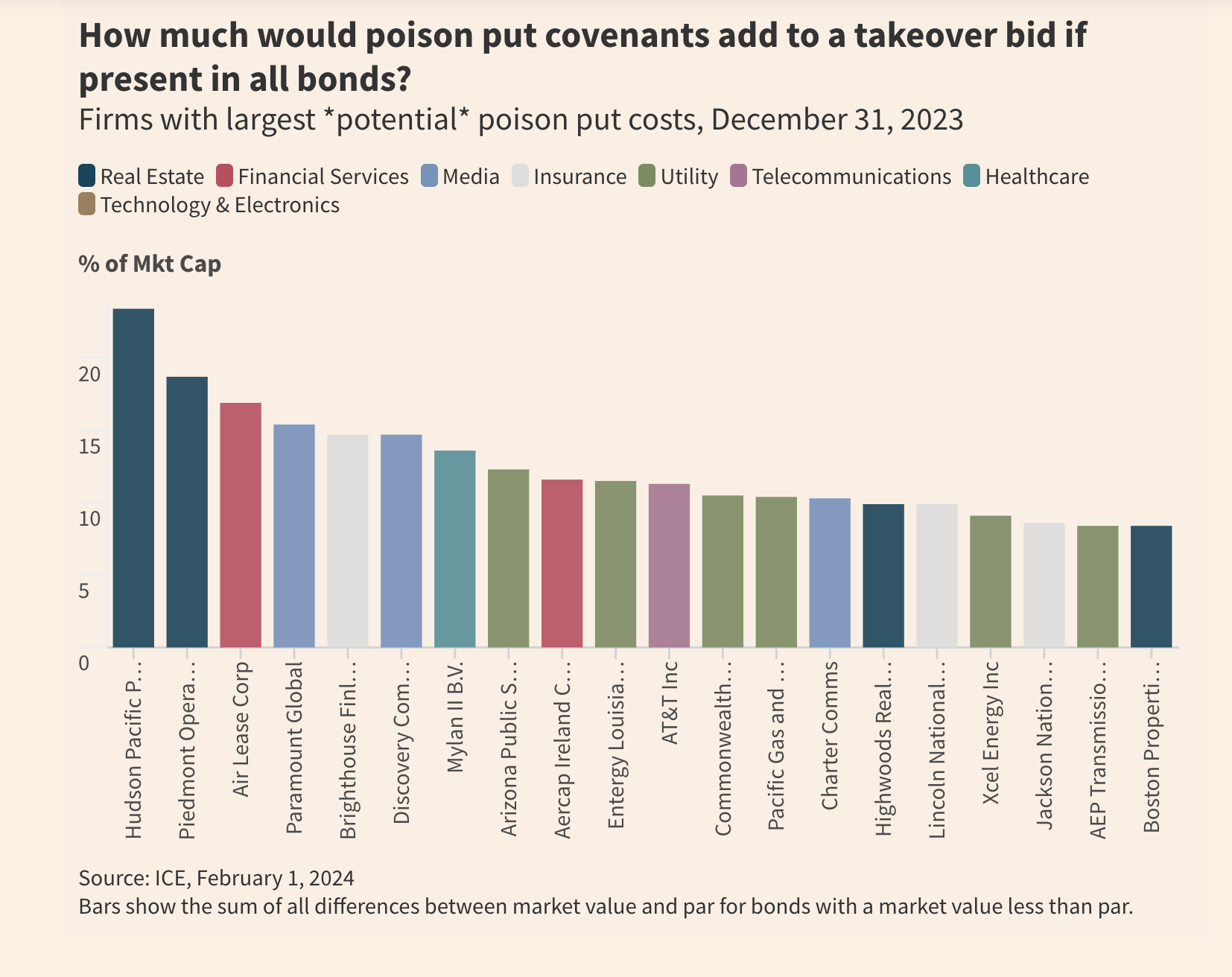
Key Financial Ratios and Their Implications
Lenders select specific ratios based on the industry and the borrower's capital structure. In 2026, while the fundamental ratios remain consistent, the definitions of components like "Adjusted EBITDA" have become highly standardized to prevent "creative accounting" during compliance checks.
| Covenant Type | Common Metric | Purpose |
|---|---|---|
| Leverage Ratio | Total Debt / EBITDA | Measures the company's total debt relative to its earnings power. High ratios indicate over-leveraging. |
| Interest Coverage | EBIT or EBITDA / Interest Expense | Ensures the company generates enough profit to pay the interest on its outstanding debt. |
| Debt Service Coverage (DSCR) | Net Operating Income / Total Debt Service | Used heavily in real estate; ensures cash flow covers both principal and interest payments. |
| Fixed Charge Coverage | (EBIT + Lease Pmts) / (Interest + Lease Pmts) | Vital for companies with significant equipment or property leases. |
| Current Ratio | Current Assets / Current Liabilities | Tests short-term liquidity to ensure the company can meet obligations due within 12 months. |
Deep Dive: The Leverage Ratio (Debt/EBITDA)
The Leverage Ratio is perhaps the most scrutinized covenant in corporate finance. Lenders typically set a "ceiling" (e.g., 4.0x). If the company's debt exceeds four times its annual EBITDA, it is in breach. In a 2026 market environment, lenders often look at "Net Debt," which subtracts the company's cash on hand from its total debt, acknowledging that cash is a direct hedge against liability.
Deep Dive: Interest Coverage Ratio
The Interest Coverage Ratio acts as a "floor." If a lender sets a minimum of 3.0x, the company must generate $3 in earnings for every $1 of interest owed. This provides a safety margin. If earnings drop or interest rates rise significantly (a relevant concern in 2026's fluctuating rate environment), this ratio warns the lender that the borrower’s "margin of safety" is evaporating.
The Mechanics of a Covenant Breach
A breach of a financial covenant is considered a "Technical Default." It is important to distinguish this from a "Payment Default," which occurs when a borrower fails to make a scheduled interest or principal payment.
The Notification and Cure Period
When a company realizes it will fail a covenant test, it must notify the lender. Many agreements include a "Cure Period" (often 10 to 30 days) for affirmative breaches. However, financial covenant breaches are rarely "curable" in the traditional sense unless the owners inject new equity capital into the business to pay down debt or boost the balance sheet—a process known as an "Equity Cure."
Consequences of Breach
If a breach is not cured, the lender gains significant leverage. Potential outcomes include:
- Waiver: The lender agrees to ignore the breach, usually in exchange for a "waiver fee" and perhaps a small increase in the interest rate (a "spread hike").
- Amendment: The parties renegotiate the covenant levels to be more realistic, often adding new restrictions or requiring additional collateral.
- Acceleration: The most severe outcome, where the lender demands immediate repayment of the entire loan balance. This often forces the company into restructuring or bankruptcy.
- Cross-Default: A breach in one loan agreement may trigger a default in all other debt agreements the company has, creating a "domino effect."
Trends in Covenant Structures: 2026 Perspective
The lending market in 2026 continues to see an evolution in how covenants are drafted. Two major trends dominate the landscape:
The Rise and Risks of "Covenant-Lite" Loans
Covenant-lite (or "cov-lite") loans are credit facilities that lack traditional maintenance covenants, relying instead on incurrence covenants. While these were once reserved for the most creditworthy borrowers, they have become more common in the leveraged loan market. For borrowers, this provides immense operational freedom. For lenders, it means they lose the "early warning system," often only realizing a company is in trouble when it misses a payment, by which time the recovery value of the assets may have diminished.
ESG-Linked Covenants
A significant development as of 2026 is the integration of Environmental, Social, and Governance (ESG) targets into loan documentation. "Sustainability-linked loans" include covenants that adjust the interest rate based on the borrower meeting specific ESG KPIs, such as carbon emission reductions or diversity targets. Failure to meet these does not always trigger a default, but it does increase the cost of capital, effectively serving as a "reputational and financial" covenant.
Practical Recommendations for Borrowers
Navigating covenants requires proactive management. Companies should not view covenants as a "set and forget" component of their debt.
- Model Forward-Looking Compliance: Finance teams should build "covenant triggers" into their rolling forecasts. If a forecast shows the company approaching a 3.8x leverage ratio against a 4.0x limit, management should take action months before the test date.
- Negotiate "Headroom": When signing a new deal, borrowers should push for "headroom"—a buffer between their current financial performance and the covenant limit. Typically, a 20% to 30% cushion is standard to account for market volatility.
- Maintain Transparency: Lenders are far more likely to grant a waiver or a favorable amendment if the borrower communicates a potential breach early. Surprising a lender with a breach during a quarterly filing destroys trust and limits negotiation options.
- Understand EBITDA Adjustments: The "definitions" section of a credit agreement is often more important than the ratios themselves. Ensure that "Adjusted EBITDA" includes non-recurring expenses, restructuring costs, and other one-time hits that would otherwise unfairly penalize the ratio.
Summary of Covenant Functions
For those managing or analyzing debt, the following table summarizes the primary objectives of the covenant framework:
| Objective | Primary Mechanism | Impact on Borrower |
|---|---|---|
| Capital Preservation | Dividend & Buyback Restrictions | Limits ability to return cash to shareholders. |
| Asset Protection | Negative Pledge & Asset Sale Limits | Prevents the "stripping" of valuable collateral. |
| Performance Monitoring | Interest Coverage & Leverage Ratios | Requires consistent profitability and debt discipline. |
| Operational Transparency | Financial Reporting Requirements | Increases administrative burden and audit costs. |
Frequently Asked Questions
What is the difference between a maintenance covenant and an incurrence covenant? Maintenance covenants are tested at regular intervals (usually quarterly) regardless of the company's actions. If the company's ratios fall below the limit at the end of the quarter, they are in breach. Incurrence covenants are only tested when the company takes a specific action, such as issuing more debt, making an acquisition, or paying a dividend. If the company does nothing, the incurrence covenant is never "triggered."
Can a company "cure" a financial covenant breach? Yes, but it typically requires an "Equity Cure." This involves the company's shareholders injecting new cash into the business as equity. This cash is then added to the EBITDA calculation or used to pay down debt for the purpose of the covenant test, "curing" the breach for that period. Most agreements limit the number of times an equity cure can be used (e.g., no more than twice in a four-quarter period).
Why would a lender ever agree to a "Covenant-Lite" loan? Lenders agree to covenant-lite terms primarily due to market competition. When there is more capital available to lend than there are high-quality borrowers, lenders compete by offering more borrower-friendly terms. In 2026, many institutional investors accept these terms in exchange for higher interest rates or "original issue discounts" (OID).
What happens to a company's stock price when a covenant breach is announced? Usually, the stock price drops. A covenant breach signals to the equity market that the company’s financial health is worse than expected and that the lender now has significant power over the company's future. It also raises the possibility of a "liquidity crunch" if the lender decides to accelerate the debt or charge high waiver fees.
Are covenants the same as "Representations and Warranties"? No. Representations and warranties are statements of fact made at the time the loan is signed (e.g., "the company is not currently being sued"). Covenants are ongoing promises about future behavior or performance (e.g., "the company will not take on more debt next year").
Disclaimer: This article is intended for informational purposes only and does not constitute legal, financial, or investment advice. Jurisdictional rules and specific contract language vary significantly; readers should consult with qualified legal and financial professionals regarding specific credit agreements.
Image Gallery
Select an image to open it in a new tab.


Ingrid Bjornson
Global Cyber Policy and Regulation Analyst
