
The Greek word logos (λόγος) traditionally translates to "word," "reason," or "discourse," yet its significance extends far beyond simple speech. In Western thought, it represents the rational principle governing the cosmos, the logical foundation of persuasive rhetoric, and the theological bridge between the divine and the material world across millennia.
Etymology and the Multi-Layered Meaning of Logos
To understand the legacy of logos, one must first deconstruct its linguistic roots. The term is derived from the Ancient Greek verb legô (λέγω), which originally meant "to gather," "to count," or "to pick out." By the classical period, this evolved into "to speak" or "to recount." However, the transition from "gathering" to "speaking" is crucial; it implies that speech is not merely a collection of sounds, but a structured, purposeful arrangement of thoughts.
As of 2026, etymological research continues to emphasize that logos was never a static term. In the Greek mind, the word was inextricably linked to the concept of proportion and ratio. When a Greek citizen spoke of logos, they might be referring to a mathematical proportion, a formal plea in a court of law, or the underlying structure of a story. This polysemy—the capacity for a word to have multiple meanings—allowed logos to become the primary vehicle for Western intellectual development.
The lexical breadth of logos can be categorized into four primary domains:
- Linguistic: Speech, word, story, or argument.
- Psychological/Rational: The human faculty of reason, thought, and deliberation.
- Mathematical: Ratio, proportion, and calculation.
- Cosmological: The universal law, order, or "divine reason" that directs the universe.
The Philosophical Evolution of Logos in Antiquity
The philosophical career of logos began in earnest with the Pre-Socratic thinkers of Ionia. Before logos was adopted by theologians, it was the tool of the first scientists and metaphysicians who sought to explain the world without relying solely on mythological narratives.
Heraclitus and the Universal Order
Heraclitus of Ephesus (c. 535 – 475 BC) is widely credited with being the first to elevate logos to a cosmic principle. For Heraclitus, the logos was a universal law that was "common to all," yet misunderstood by most. He famously claimed that "all things come to pass in accordance with this logos."
In the Heraclitean view, the world is in a state of constant flux (panta rhei), yet this change is not chaotic. It is governed by a hidden harmony or a rational structure—the logos. As we observe the world in 2026, the Heraclitean logos remains a foundational concept in the philosophy of science, mirroring the modern search for "laws of nature" that remain constant despite the changing states of matter.
The Sophists and the Power of Rhetoric
While Heraclitus looked at the stars, the Sophists of the 5th century BC brought logos down to Earth. For teachers like Gorgias and Protagoras, logos was the "mighty lord" of human affairs. It was the power of the word to persuade, to change minds, and to construct reality within the polis (city-state). In this context, logos was not necessarily about "truth" in an objective sense, but about the effectiveness of an argument. This tension between logos as "truth" and logos as "persuasion" would eventually lead to the development of formal logic.
Plato and Aristotle: Defining the Boundaries
Plato used logos to distinguish between mere opinion (doxa) and true knowledge (episteme). For Plato, a person truly knows something only when they can provide a "logos"—a rational account or definition—of it.
His student, Aristotle, further refined the term in his Organon and Rhetoric. Aristotle famously identified logos as one of the three modes of persuasion, alongside ethos (credibility) and pathos (emotion). In Aristotelian rhetoric, logos refers to the logical appeal; it is the use of syllogisms and inductive reasoning to prove a point. This tripartite model remains the gold standard for communication studies and debate as of 2026.
The Stoic Concept: The Fire that Breathes Life
The Stoic school, founded by Zeno of Citium around 300 BC, took the Heraclitean logos and integrated it into a comprehensive physical and ethical system. For the Stoics, the universe was a single, living organism, and the logos was its soul.
They introduced the concept of the Logos Spermatikos (Seminal Reason). This was the idea that the universe contains "seeds" of reason that cause things to grow and develop according to a rational plan. The Stoic logos was both immanent (present within the physical world) and providential. Because every human being possesses a fragment of this universal logos, the Stoics argued that all people are part of a global community (cosmopolis). This helped lay the groundwork for later concepts of natural law and universal human rights.
Logos in Hellenistic Judaism: Philo of Alexandria
A pivotal moment in the legacy of logos occurred in 1st-century Alexandria, where the Jewish philosopher Philo attempted to harmonize the Torah with Greek philosophy. Philo faced a theological dilemma: how can an infinite, transcendent God interact with a finite, material world?
His solution was the Logos. Philo described the Logos as God's "first-born son," the blueprint of the universe, and the intermediary through whom God created the world. In Philo’s writings, the Logos began to take on a personified quality, acting as a bridge between the Divine Mind and human perception. This synthesis was crucial because it provided the linguistic and conceptual framework that early Christian writers would soon adopt.
The Theological Shift: Logos in Early Christianity
The most famous utilization of the term occurs in the New Testament, specifically the Gospel of John. The opening line, "In the beginning was the Word (Logos), and the Word was with God, and the Word was God," fundamentally altered the trajectory of Western history.
The Johannine Prologue
In the context of the 1st century, John's use of Logos was a brilliant stroke of "contextualization." To a Greek reader, it signaled the rational principle of the universe. To a Jewish reader, it recalled the Memra (the Word of God) through which the heavens were made in Genesis. However, John introduced a radical new claim: "The Logos became flesh and dwelt among us" (John 1:14).
This "Incarnation of the Logos" moved the concept from an abstract principle or an intermediary force into a historical person—Jesus Christ. This shift initiated centuries of Christological debates that defined the early Church.
The Council of Nicaea and Beyond
By the time of the Council of Nicaea in 325 AD, the relationship between the Logos and the Father was the central question of Christian orthodoxy. The legacy of logos here is found in the development of the Trinity. The Greek Fathers, such as Athanasius and later the Cappadocians, used the precision of the Greek language to argue that the Logos was homoousios (of the same substance) with the Father. This solidified the role of logos as a cornerstone of Christian dogma, a status it maintains across denominations in 2026.
The Scientific and Linguistic Legacy of Logos
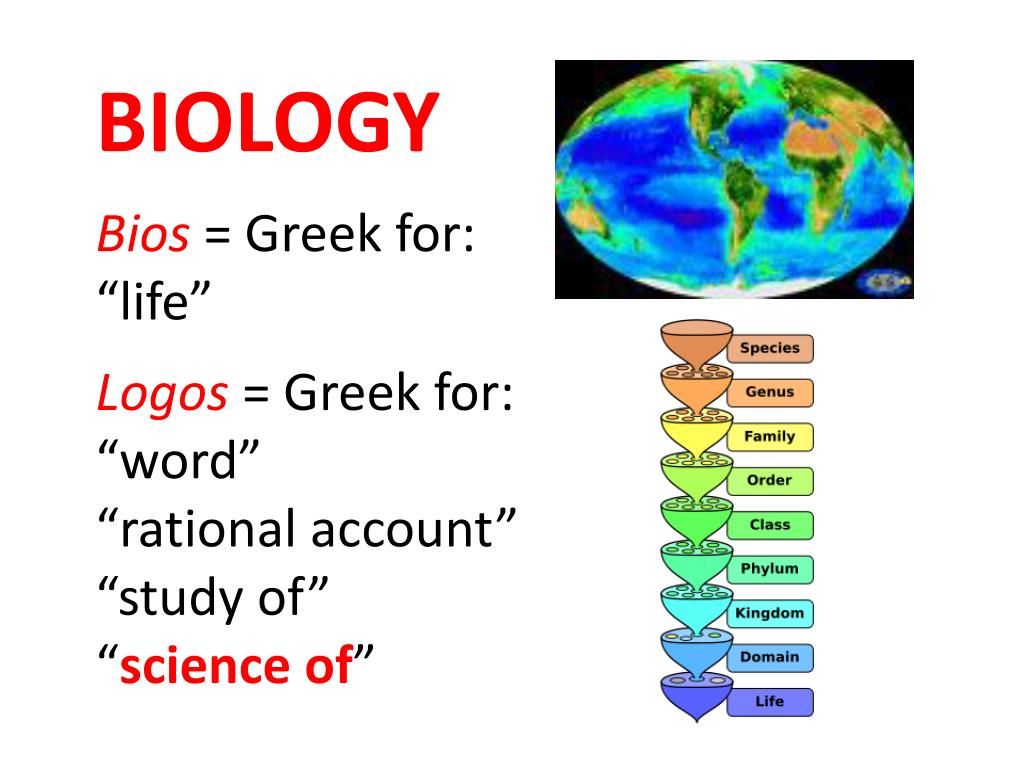
Beyond philosophy and religion, the legacy of logos is embedded in the very structure of modern language and science. The suffix -logy, which denotes a field of study, is a direct descendant of the Greek logia, meaning "a collection of sayings" or "the study of."
| Field of Study | Etymological Root (Logos) | Meaning in Practice |
|---|---|---|
| Biology | Bios (Life) + Logos | The rational study of living organisms and their systems. |
| Psychology | Psyche (Soul/Mind) + Logos | The systematic account of mental processes and behavior. |
| Logic | Logike (Art of Reason) | The formal study of valid inference and demonstration. |
| Geology | Geo (Earth) + Logos | The study of the Earth's physical structure and history. |
| Theology | Theos (God) + Logos | The rational investigation of the nature of the divine. |
| Sociology | Socius (Companion) + Logos | The systematic study of society and social interaction. |
As of 2026, the "logos" of a subject implies its internal logic and its adherence to empirical or rational standards. When we speak of "the logic of the market" or "the logic of a computer program," we are invoking the ancient Greek idea that systems are governed by discernible, rational rules.
Rhetorical Logos: The Pillar of Persuasion
In the contemporary landscape of 2026, the rhetorical legacy of logos is more relevant than ever. In an era of rapid information exchange and artificial intelligence, the ability to construct a "logical" argument remains the hallmark of effective communication.
Rhetorical logos involves:
- Data and Evidence: Utilizing statistics, facts, and historical precedents to support a claim.
- Structure: Ensuring that the argument follows a clear sequence (premise, evidence, conclusion).
- Clarity: Avoiding fallacies and ensuring that terms are defined—just as Plato demanded.
While pathos often dominates social media headlines, logos remains the requirement for scientific peer review, legal proceedings, and ethical philosophy. The legacy of the Greek word is found in every "if-then" statement in a line of code and every "therefore" in a legal brief.
Contemporary Interpretations: Logos in 2026
In modern philosophy, thinkers continue to grapple with the "Logocentrism" of Western thought. Jacques Derrida and other postmodernists famously critiqued the Western "desire" for a central, stabilizing logos that provides ultimate meaning. This critique suggests that our reliance on logos as a "transcendental signified" might limit our understanding of language's fluidity.
However, even the critique of logos must use logos to be coherent. This is the "hermeneutic circle" of the word; it is the very tool we use to examine itself. In 2026, whether in the context of cognitive science (mapping the "logic" of the brain) or in global ethics (finding a "common logos" for human values), the term remains indispensable.
Frequently Asked Questions
What is the literal translation of the Greek word logos? There is no single-word English equivalent that captures its full meaning. While "word" is the most common translation, "reason," "account," "ratio," and "discourse" are equally accurate depending on the context. In Ancient Greek, a logos was something you gave when you explained your actions or used when you argued a case.
Why is logos important in the Gospel of John? It serves as a bridge between two worlds. By using a term familiar to both Greek philosophers (who saw logos as cosmic reason) and Jewish theologians (who saw it as God's creative word), the author of John presented Jesus as the ultimate fulfillment of both traditions—the rational structure of the universe made human.
How does logos differ from ethos and pathos? According to Aristotle, logos is an appeal to the intellect (logic and evidence). Ethos is an appeal to the speaker's character or authority, and pathos is an appeal to the audience's emotions. A balanced argument typically uses all three, but logos is considered the most essential for discovering objective truth.
Is the modern word "logo" (a brand symbol) related to the Greek logos? Yes, it is a shortened form of "logogram" or "logotype." In this sense, it follows the Greek tradition of a single "mark" or "word" that represents a larger "account" or identity. A corporate logo is meant to communicate the entire "logic" or "story" of a brand in a single visual "word."
How did the Stoics use the concept of logos? The Stoics viewed logos as a physical, material force—a "divine fire" or "breath" (pneuma) that pervaded the universe. They believed that because the universe is governed by logos, everything happens for a reason, and the goal of human life is to live "in accordance with nature" (which is to say, in accordance with reason).
Summary and Next Steps for Study
The legacy of the Greek word for logos is nothing less than the history of Western rationality itself. From its beginnings as a term for "gathering" to its role as the "Divine Word" and the suffix of our sciences, logos has provided the scaffolding for how we think, speak, and organize our reality.
For those looking to deepen their understanding of this concept, the following actions are recommended:
- Primary Source Reading: Explore Heraclitus’s Fragments and Aristotle’s Rhetoric to see how the term was used in its original context.
- Theological Study: Compare Philo of Alexandria’s On the Creation with the Prologue of the Gospel of John to observe the transition from philosophy to theology.
- Etymological Mapping: Trace the use of the "-logy" suffix in various scientific disciplines to understand how the "rational account" of different subjects is structured.
- Modern Application: Practice identifying "logos" in contemporary political and scientific discourse to see how logical appeals are constructed or manipulated in the present day.
Image Gallery
Select an image to open it in a new tab.
Ingrid Bjornson
Global Cyber Policy and Regulation Analyst
