Understanding Life Insurance Using Superannuation: A Practical Guide
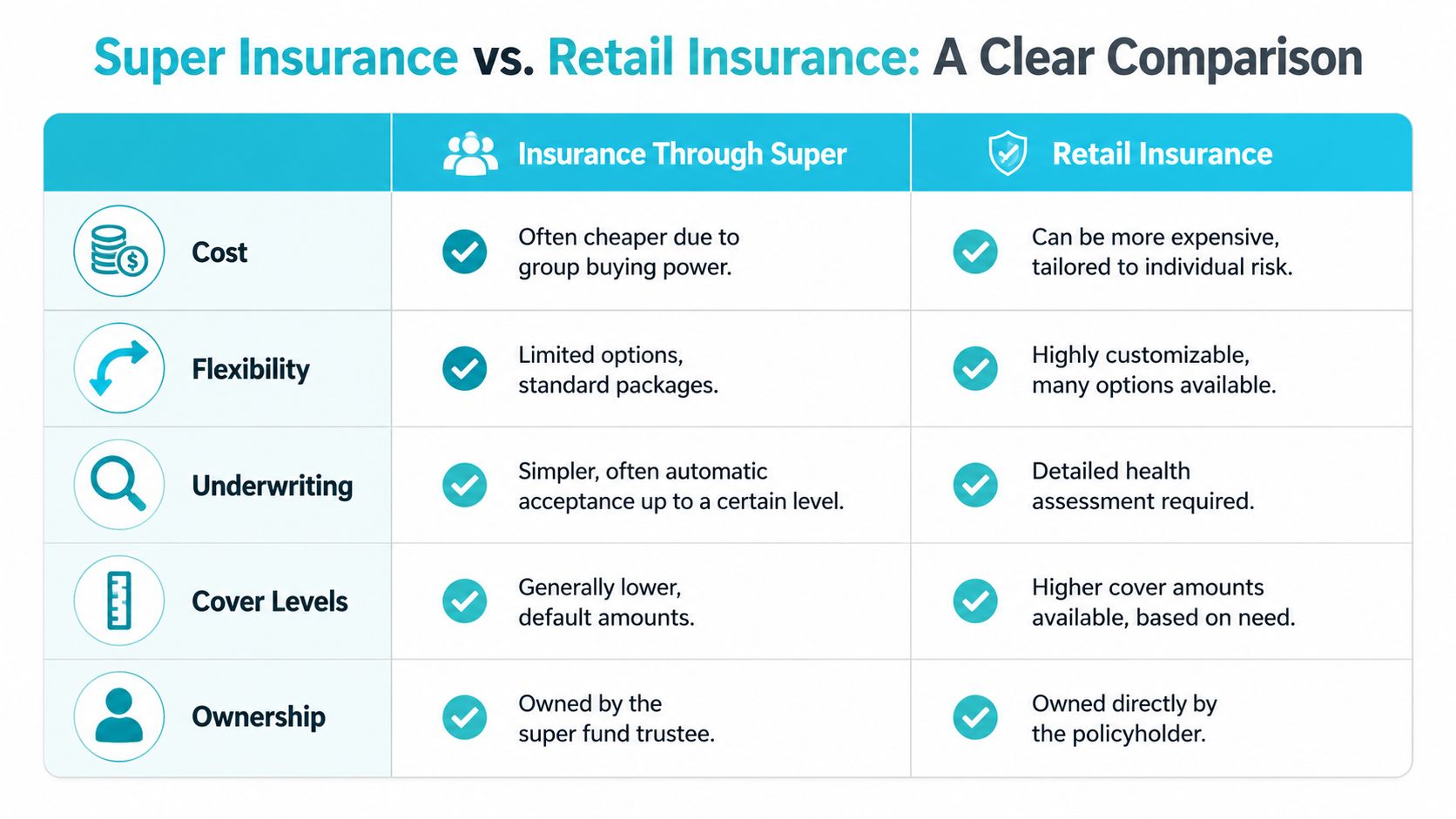
Securing life insurance through your superannuation fund allows you to pay for death, total and permanent disability (TPD), and income protection cover using your existing retirement savings rather than your take-home pay. This strategy can improve your immediate cash flow, although it may reduce your total retirement balance and is subject to specific regulatory and fund-level eligibility requirements.
The Mechanism of Super-Linked Insurance
In the Australian financial landscape, most large superannuation funds offer insurance as a default feature. When you hold life insurance through your super, the insurance policy is technically owned by the trustee of your superannuation fund, rather than by you personally.
Because the fund owns the policy, the premiums are deducted directly from your superannuation account balance. This means the cost of your premiums is effectively paid for with pre-tax contributions—or at the very least, funds that have already been deposited into the tax-advantaged environment of your superannuation. For many employees, this provides a significant benefit: it allows for the maintenance of essential insurance protection without reducing their net monthly take-home salary.
Types of Coverage Available via Super
When considering life insurance using super, it is important to distinguish between the three primary categories of cover typically offered:
- Death Cover (Life Insurance): Provides a lump sum payment to your beneficiaries or your estate if you pass away.
- Total and Permanent Disability (TPD) Cover: Provides a lump sum payment if you become ill or injured and are unlikely to ever work again.
- Income Protection (Salary Continuance): Provides a monthly benefit for a set period if you are temporarily unable to work due to illness or injury.
While these categories are standard, the specific definitions—particularly for TPD—can vary significantly between retail funds, industry funds, and self-managed super funds (SMSFs). Some policies require proof that you cannot perform your "own occupation," while others utilize an "any occupation" definition, which is generally more restrictive and harder to claim against.
Advantages of Funding Insurance Through Super
The primary driver for choosing this structure is cash flow management. By leveraging your superannuation balance, you preserve your liquid income for day-to-day living expenses, mortgage repayments, and other immediate financial commitments.
Furthermore, the tax implications can be advantageous. Superannuation funds pay tax on earnings at a concessional rate. When premiums are paid from your super account, they are effectively paid from money that was either taxed at a lower concessional rate (if contributed via salary sacrifice) or, in the case of employer contributions, paid from your pre-tax income. This is often more tax-efficient than paying for insurance premiums out of your personal after-tax "take-home" pay.
Potential Drawbacks and Considerations
While the cash flow benefits are clear, there are critical trade-offs that every member must evaluate before committing to this strategy:
- Impact on Retirement Savings: Every dollar spent on insurance premiums is a dollar removed from your retirement corpus. Over a 20- or 30-year career, the compounding effect of these premiums can be substantial, potentially leading to a lower final balance at retirement.
- Definition Constraints: Insurance held through super must comply with conditions of release under the Superannuation Industry (Supervision) Act 1993. This can sometimes lead to more complex claims processes compared to policies owned personally, as the payout must first be released to the super fund trustee before being distributed to you or your beneficiaries.
- Tax on Benefits: While death benefits paid to dependents for tax purposes (such as a spouse or minor child) are generally tax-free, benefits paid to non-dependents may be subject to tax.
- Cover Limitations: Some policies integrated with super funds have automatic acceptance limits, which may restrict the amount of cover you can hold without undergoing medical underwriting.
Comparing Super-Fund Insurance vs. Retail/Direct Insurance
Choosing between holding insurance inside super versus holding it outside (personally) involves balancing convenience against control.
| Feature | Insurance inside Super | Insurance outside Super |
|---|---|---|
| Premium Payment | Deducted from super balance | Deducted from personal bank account |
| Cash Flow Impact | Nil (decreases retirement savings) | Direct reduction to take-home pay |
| Tax Efficiency | Generally high (tax-effective) | Generally low (no tax deduction) |
| Claim Process | Subject to super trust law | Direct payment to policy owner |
| Policy Flexibility | Limited by fund rules | Highly customizable |
Eligibility and Verification Steps
Before you decide to rely on insurance through your super, you must verify your current status. Follow these steps to ensure you have the coverage you need:
- Check Your Annual Statement: Your most recent superannuation statement will detail the type and amount of cover currently held. It will also disclose the "cost of insurance" for the year.
- Verify Definitions: Contact your fund or download the Product Disclosure Statement (PDS). Look specifically at the TPD definition—"any occupation" versus "own occupation"—to ensure it matches your expectations for protection.
- Assess Sufficiency: Use the benefit amount listed in your statement to determine if it aligns with your financial obligations (e.g., debt levels, cost of living for dependents).
- Consider Salary Sacrifice: If you intend to keep your insurance within the super environment but are concerned about the erosion of your retirement balance, consider making additional voluntary super contributions to offset the cost of the premiums.
Common Mistakes to Avoid
A frequent error is "double-insuring" or holding inadequate cover. Many Australians are automatically opted into insurance when they start a new job. If you have had five different employers, you might inadvertently be paying five different sets of premiums across five different super accounts. This creates unnecessary fees and multiple, often insufficient, insurance policies.
Consolidating your superannuation is a standard strategy to prevent this. When you roll over your accounts into one, ensure you have reviewed the insurance policies in each account first. You do not want to inadvertently cancel a policy that offers better terms or lower premiums than your primary fund's default offer. Always verify that your new fund has accepted your insurance coverage before closing the old accounts.
Regulatory Context and Professional Advice
As of 2026, the Australian Prudential Regulation Authority (APRA) continues to emphasize the importance of ensuring that insurance held within superannuation funds does not "inappropriately erode" retirement balances. Funds are required to regularly review their insurance offerings to ensure they remain in the best interest of their members.
Because insurance involves complex legal and tax considerations, it is strongly recommended that you consult a qualified financial adviser. They can perform a "needs analysis" to determine if your existing super-held insurance is adequate or if you require additional cover held outside the super environment to ensure your specific occupation or health status is properly covered.
Frequently Asked Questions
Can I hold life insurance outside of my super if I already have it inside? Yes. You are not restricted to one or the other. Many individuals hold a "base" level of insurance inside their super for cost-efficiency while supplementing it with a retail policy held outside of super to ensure specific, customized protection that may not be available through the fund’s group policy.
What happens to my insurance if I change jobs? If you change employers but keep the same superannuation fund, your insurance generally continues. However, if you move your super balance to a new fund, your old insurance cover will typically be cancelled. Always check the PDS of the new fund to see if you can transfer your cover or if you need to apply for a new policy.
Are insurance premiums within super tax-deductible? For most individuals, premiums are paid by the fund. Because the funds used to pay these premiums have already been treated with tax concessions (or are part of employer contributions), you generally cannot claim an additional tax deduction for these premiums on your personal income tax return.
Can I choose the beneficiaries for my super-held insurance? Yes, but you must make a "binding death benefit nomination" with your super fund. If you do not have a valid nomination in place, the trustee of the super fund has the discretion to decide who receives the payout, which may not align with your wishes.
Is it possible to increase my cover within my super? Most funds allow you to apply to increase your cover. This usually requires completing a health questionnaire or undergoing medical underwriting. If you are accepted, the additional premium will simply be deducted from your account balance alongside your existing premium.
Next Steps
To take control of your financial protection, your immediate next step should be to log into your superannuation fund’s online portal or review your latest annual statement. Identify exactly what insurance you are paying for, the level of cover provided, and the total annual cost. If you find the cover inadequate or the cost excessive, contact your fund's member services or a financial adviser to discuss your options for adjusting your coverage or consolidating your accounts to streamline your protection.

Image Gallery
Select an image to open it in a new tab.


Zara El-Hashem
Sociocultural Dynamics and Academics Writer
