The General Data Protection Regulation (GDPR) is a comprehensive legal framework that governs the collection, processing, and storage of personal data belonging to individuals within the European Union and the European Economic Area. As the global gold standard for privacy, it mandates strict transparency, security, and accountability for any organization, regardless of location, that handles European data.
The Evolution and Scope of the GDPR Regime
The General Data Protection Regulation, officially known as Regulation (EU) 2016/679, became enforceable on May 25, 2018. By 2026, it has matured into a cornerstone of international law, influencing privacy legislation from California to Brazil. To understand "GDPR info" and the regime’s complexity, one must first recognize that it replaced the aging 1995 Data Protection Directive, moving from a set of guidelines that each EU member state interpreted differently to a single, directly applicable regulation across the entire bloc.
Material and Territorial Scope
The regime applies based on two primary factors: what is being processed and where the parties are located. Under Article 2 (Material Scope), the GDPR applies to the processing of personal data by automated means or manual files. Personal data is defined broadly as any information relating to an identified or identifiable natural person (the "data subject"). This includes names, ID numbers, location data, and online identifiers like IP addresses or cookies.
Under Article 3 (Territorial Scope), the regime’s reach is extraterritorial. It applies to organizations established within the EU, but more importantly, it applies to organizations outside the EU if they offer goods or services (even for free) to EU residents or monitor their behavior within the Union. This "targeting" principle means a software company in Singapore or a retailer in New York must comply with the GDPR if they actively cater to the European market.
Key Entities in the Data Ecosystem
The GDPR defines specific roles that determine an organization’s level of responsibility:
- Data Subject: The individual whose data is being processed.
- Data Controller: The entity that determines the "why" and "how" of data processing. They bear primary responsibility for compliance.
- Data Processor: A third party that processes data on behalf of the controller (e.g., a cloud service provider or a payroll firm).
- Data Protection Authority (DPA): The national regulatory body in each EU country responsible for enforcing the law.
The Core Principles of Data Processing
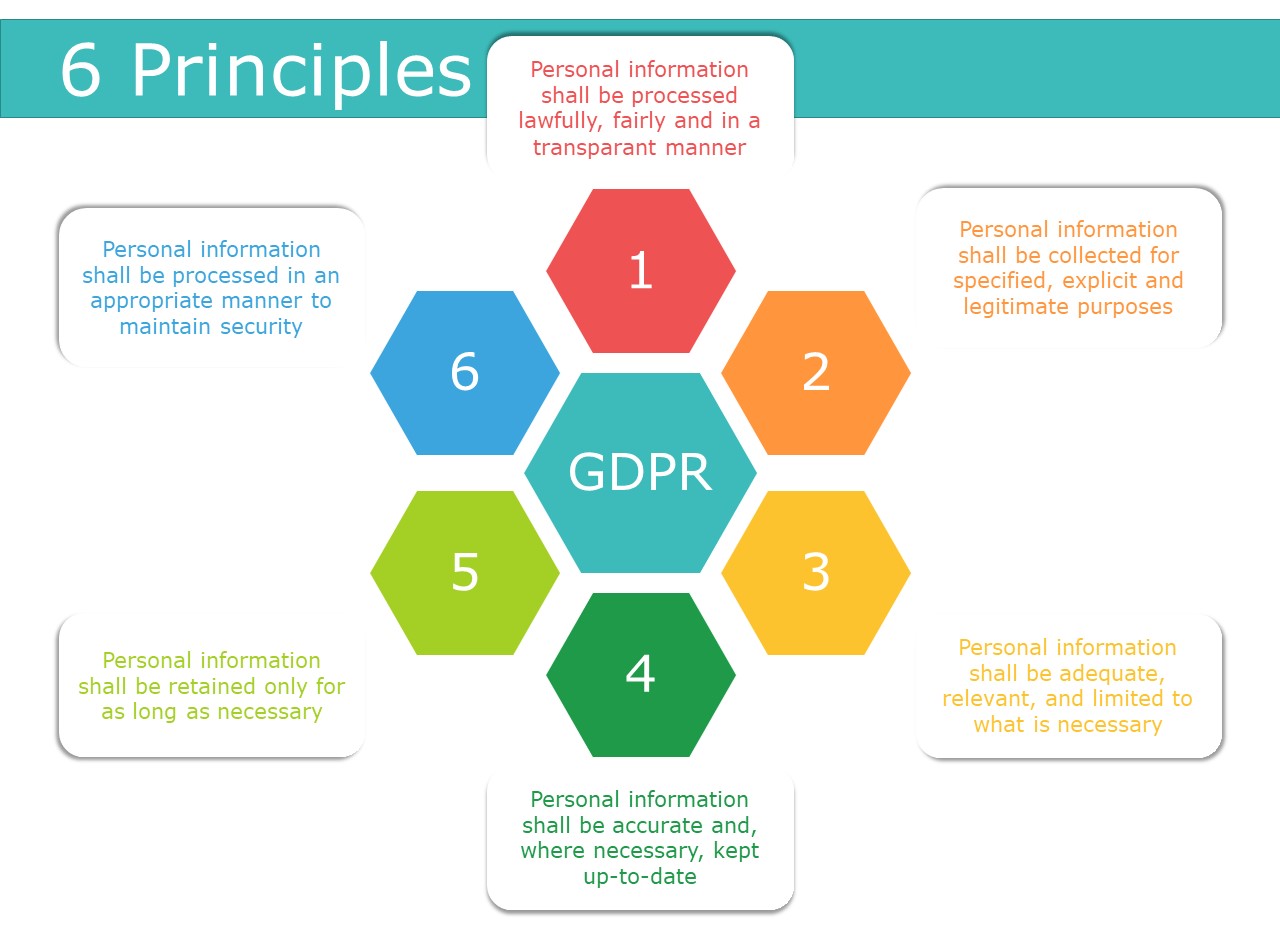
The heart of the GDPR regime lies in Article 5, which outlines seven fundamental principles. These are not merely suggestions but legal requirements that must underpin every data-related activity within an organization.
Lawfulness, Fairness, and Transparency
Processing must be based on a valid legal ground. Transparency requires organizations to inform individuals about how their data is used in a clear, concise, and accessible manner. In 2026, regulators look unfavorably on "legalese" and hidden clauses; privacy notices must be "easy to read" for the average consumer.
Purpose Limitation
Data must be collected for "specified, explicit, and legitimate purposes." You cannot collect email addresses for a newsletter and then suddenly decide to sell them to a marketing firm without a new legal basis and notification to the data subject.
Data Minimization
Organizations must only collect the data that is strictly necessary for the intended purpose. If an app only needs a zip code to provide a weather report, it should not request the user's full street address or GPS coordinates.
Accuracy and Storage Limitation
Data must be kept up to date, and inaccurate data should be erased or rectified without delay. Furthermore, the GDPR introduces the concept of "storage limitation," meaning data should only be kept for as long as it is needed. Organizations must establish clear retention schedules to ensure they are not hoarding "dark data" that serves no current purpose but increases security risks.
Integrity, Confidentiality, and Accountability
Integrity and confidentiality refer to security. Organizations must use appropriate technical and organizational measures (such as encryption and pseudonymization) to protect data from unauthorized access or accidental loss. Finally, the Accountability Principle is the most significant change from previous regimes; it requires organizations to prove they are compliant by maintaining detailed documentation of their processing activities.

Legal Bases for Processing Personal Data
Under Article 6, processing is only lawful if at least one of the following six conditions is met. Choosing the correct legal basis is critical because it determines which rights the data subject can exercise.
- Consent: The individual has given clear, affirmative consent for a specific purpose. Pre-ticked boxes or "silence" do not constitute consent.
- Contractual Necessity: The processing is necessary to fulfill a contract with the individual (e.g., processing an address to ship a purchased item).
- Legal Obligation: The processing is required by EU or member state law (e.g., tax reporting or employment law).
- Vital Interests: Processing is necessary to protect someone’s life (usually in emergency medical situations).
- Public Task: The processing is necessary for a task carried out in the public interest or by an official authority.
- Legitimate Interests: The processing is necessary for the legitimate interests of the controller or a third party, provided those interests are not overridden by the individual’s rights and freedoms. This requires a formal "balancing test."
| Legal Basis | Best Used For... | Key Constraint |
|---|---|---|
| Consent | Marketing, optional features | Can be withdrawn at any time; must be granular. |
| Contract | Service delivery, employment | Limited strictly to what is needed for the contract. |
| Legal Obligation | Tax, regulatory compliance | Must be based on a specific statute or law. |
| Legitimate Interest | Fraud prevention, internal admin | Requires a documented Balancing Test (LIA). |
Understanding Individual Rights (Data Subject Rights)
One of the primary goals of the GDPR info framework is to empower individuals. Articles 12 through 22 grant data subjects a suite of rights that organizations must facilitate, usually within 30 days of a request.
The Right of Access (Subject Access Requests)
Individuals can ask an organization if they are processing their data and, if so, receive a copy of that data along with supplementary information about the processing. This is one of the most common ways individuals interact with the GDPR.
The Right to Erasure (The Right to be Forgotten)
In certain circumstances, such as when data is no longer necessary or consent is withdrawn, individuals can request that their data be deleted. However, this is not an absolute right; if the data is needed for a legal obligation or a pending court case, the request may be denied.
Data Portability and Objection
The Right to Data Portability allows individuals to obtain their data in a structured, commonly used, and machine-readable format to move it from one service provider to another (e.g., switching music streaming services). The Right to Object allows individuals to stop their data from being used for direct marketing at any time.
Automated Decision-Making and Profiling
Article 22 provides protections against decisions made solely by automated means (like AI-driven credit scoring) that have "legal or similarly significant effects." Individuals generally have the right to request human intervention, express their point of view, and contest the decision.
Compliance Requirements for Organizations
To meet the high standards of the GDPR, organizations must implement specific structural changes and roles.
Data Protection Officers (DPO)
A DPO is mandatory for all public authorities and for companies that engage in "regular and systematic monitoring of data subjects on a large scale" or process "special categories" of data (e.g., health, religion, or political opinions). The DPO acts as an independent advisor and the point of contact for the regulator.
Data Protection Impact Assessments (DPIA)
Before launching a project that involves "high-risk" processing—such as large-scale surveillance or the use of new technologies like facial recognition—organizations must conduct a DPIA. This process identifies privacy risks and establishes measures to mitigate them.
Data Breach Notification
The GDPR regime enforces a strict timeline for security breaches. If a breach occurs that is likely to result in a risk to the rights and freedoms of individuals, the organization must notify the relevant DPA within 72 hours of becoming aware of it. If the risk is "high," the affected individuals must also be notified directly.
International Data Transfers in 2026
Transferring personal data outside the EU/EEA remains one of the most legally complex areas of the GDPR. Because the EU wants to ensure that the protections of the GDPR follow the data, transfers to "third countries" are restricted unless specific safeguards are in place.
- Adequacy Decisions: The European Commission can declare that a country (such as Canada, Japan, or the UK) has an "adequate" level of protection, allowing data to flow freely.
- Standard Contractual Clauses (SCCs): These are boilerplate legal contracts approved by the Commission that bind the data importer to EU standards.
- Data Privacy Frameworks: As of 2026, mechanisms like the EU-U.S. Data Privacy Framework provide a streamlined path for transfers to certified U.S. companies, though these remain subject to periodic legal challenges and reviews by the European Data Protection Board (EDPB).
Enforcement, Fines, and the Cost of Non-Compliance
The GDPR is famous for its "teeth." Regulators have the power to issue warnings, order the cessation of processing, and levy massive fines.
- Tier 1 (Lower): Up to €10 million or 2% of the firm’s global annual turnover (whichever is higher) for administrative errors or failure to integrate "privacy by design."
- Tier 2 (Higher): Up to €20 million or 4% of global annual turnover for violations of core principles, data subject rights, or international transfer rules.
Beyond financial penalties, the reputational damage and the potential for collective lawsuits (class actions) mean that GDPR compliance is a critical business priority in 2026. The EDPB ensures that DPAs across Europe apply the rules consistently, preventing companies from "forum shopping" for the most lenient regulator.
Frequently Asked Questions
Does the GDPR apply to small businesses or only large tech companies?
The GDPR applies to all organizations, regardless of size, that process personal data of EU residents. While small and medium-sized enterprises (SMEs) may have fewer obligations regarding record-keeping (Article 30 exemptions for some companies under 250 employees), they must still adhere to all core principles, security requirements, and data subject rights.
What is "Special Category Data" under the GDPR?
Special category data refers to sensitive information that requires higher levels of protection. This includes data revealing racial or ethnic origin, political opinions, religious beliefs, trade union membership, genetic data, biometric data for identification, and data concerning health or a person's sexual orientation. Processing this data is generally prohibited unless a specific exemption under Article 9 (like explicit consent or public health necessity) applies.
How does the GDPR interact with the EU AI Act in 2026?
The EU AI Act and the GDPR are complementary. While the AI Act focuses on the safety and transparency of AI models, the GDPR continues to govern the underlying personal data used to train and operate those models. Organizations must ensure that AI training data is collected legally and that individuals' rights regarding automated decisions are respected.
Can individuals sue companies for GDPR violations?
Yes. Under Article 82, any person who has suffered "material or non-material damage" as a result of an infringement of the GDPR has the right to receive compensation from the controller or processor. This has led to an increase in civil litigation and representative actions by consumer advocacy groups.
What is "Privacy by Design and by Default"?
Codified in Article 25, this requires organizations to consider data protection at the very beginning of a project (design) rather than as an afterthought. "Privacy by Default" means that, by default, only the personal data necessary for each specific purpose should be processed, and the most privacy-friendly settings should be the standard.
Practical Recommendations for Ongoing Compliance
To navigate the European data protection regime effectively in 2026, organizations should focus on the following actions:
- Conduct a Data Audit: Map all data flows to identify what you have, where it is stored, and who has access to it.
- Update Privacy Notices: Ensure your public-facing documentation accurately reflects current processing activities and is written in plain language.
- Train Staff: Human error remains the leading cause of data breaches; regular training is essential for anyone handling personal data.
- Review Vendor Contracts: Ensure all third-party processors are bound by GDPR-compliant Data Processing Agreements (DPAs).
- Establish a Response Plan: Have a clear, tested procedure for handling Subject Access Requests (SARs) and data breach notifications to meet the strict legal deadlines.
For authoritative updates and specific legal guidance, organizations should consult the official European Data Protection Board (EDPB) website or the website of their local national Data Protection Authority, such as the CNIL in France or the BfDI in Germany.
Image Gallery
Select an image to open it in a new tab.


Celine Dubois
Contemporary Living and Global Arts Columnist
