
Dr. Sun Yat-sen served as the first provisional president of the Republic of China, taking office on January 1, 1912. He was the primary architect of the Xinhai Revolution, which overthrew the Qing Dynasty and ended over two millennia of imperial rule. Known as the "Father of the Nation," Sun established the ideological foundation for modern China through his "Three Principles of the People."
The transition from a monarchical empire to a republic was one of the most significant geopolitical shifts of the 20th century. As we look back from the vantage point of 2026, Sun Yat-sen remains a rare unifying figure in the complex landscape of Chinese history, revered by both the People’s Republic of China (PRC) on the mainland and the Republic of China (ROC) in Taiwan. Understanding his rise to power, his short-lived presidency, and his profound political philosophy is essential for comprehending the modern Chinese identity.
The Revolutionary Origins of Sun Yat-sen
Sun Yat-sen was born in 1866 in Cuiheng, Guangdong Province. Unlike the traditional scholar-officials who governed the Qing Empire, Sun was a product of a globalized education. He moved to Hawaii as a teenager, where he was exposed to Western political thought and Christianity, later moving to Hong Kong to complete his medical studies. This background as a physician—earning him the title "Dr. Sun"—informed his view of China as a "sick man" that required radical "surgery" rather than minor reforms.
His revolutionary career began in earnest in the 1890s. Disillusioned by the Qing government’s inability to resist foreign imperialism and its failure to modernize, Sun founded the Revive China Society (Xingzhonghui) in Honolulu in 1894. Following a failed uprising in Guangzhou in 1895, he spent sixteen years in exile, traveling through Europe, the United States, and Japan to raise funds and recruit supporters among the overseas Chinese diaspora.
During this period, Sun’s influence grew through the Tongmenghui (United Allegiance Society), an umbrella organization for various revolutionary groups. His ability to bridge the gap between radical intellectuals, secret societies, and wealthy overseas donors made him the indispensable leader of the anti-Qing movement.
The 1911 Revolution and the Provisional Presidency
The collapse of the Qing Dynasty was triggered by the Wuchang Uprising on October 10, 1911. Curiously, Sun Yat-sen was not in China when the revolution broke out; he was on a fundraising tour in Denver, Colorado. He learned of the uprising from a newspaper and immediately headed to Europe to lobby Western powers for diplomatic recognition and to block loans to the Qing government before returning to China.
The Inauguration in Nanjing
Upon his arrival in Shanghai in December 1911, representatives from the revolting provinces elected Sun as the Provisional President of the Republic of China. On January 1, 1912, he was inaugurated in Nanjing. This moment marked the birth of the first republic in Asia.
However, the new government was fragile. The Qing military remained under the control of Yuan Shikai, a powerful general and diplomat. To avoid a prolonged civil war and ensure the peaceful abdication of the boy-emperor Puyi, Sun Yat-sen made a historic compromise. He agreed to step down from the presidency in favor of Yuan Shikai, provided that Yuan supported the republic and the Qing Emperor formally abdicated.
The Significance of the Brief Tenure
Sun’s presidency lasted only 45 days, but its symbolic weight was immense. He introduced the solar calendar, advocated for the end of foot-binding, and pushed for the modernization of the legal system. Most importantly, his willingness to relinquish power for the sake of national unity established a precedent of selfless leadership that defined his legacy, even if the subsequent years under Yuan Shikai devolved into authoritarianism and warlordism.
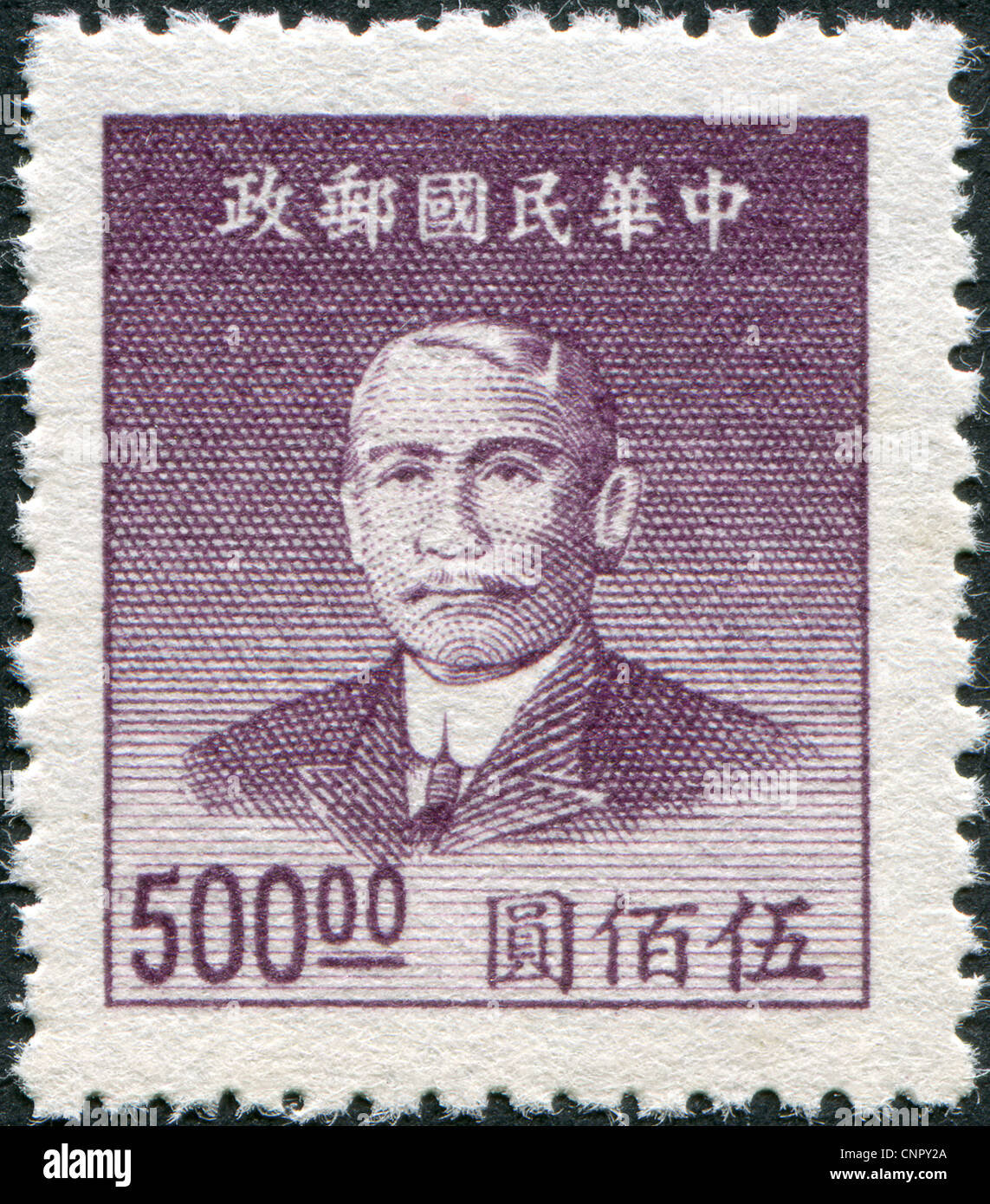
The Three Principles of the People (San-min Chu-i)
Sun Yat-sen’s most lasting contribution is his political philosophy, the Three Principles of the People. These principles were designed to transform China into a free, prosperous, and powerful nation. By 2026, these concepts continue to be studied as the foundational pillars of Chinese modernization.
1. Minzu (Nationalism)
For Sun, nationalism meant independence from foreign imperialist powers and the internal unity of the various ethnic groups within China. He initially focused on overthrowing the Manchu (Qing) rulers but later evolved his vision to "Five Races Under One Union" (Han, Manchu, Mongol, Hui, and Tibetan). He argued that China had been a "heap of loose sand" and needed a strong sense of national identity to survive in a world dominated by Western and Japanese imperialism.
2. Minquan (Democracy)
Sun’s vision of democracy was unique. He distinguished between "power" (the people’s right to control the government) and "ability" (the government’s capacity to manage the country). To balance these, he proposed a Five-Power Constitution. This system expanded the traditional Western three branches of government (Executive, Legislative, and Judicial) to include two traditional Chinese administrative functions:
- The Examination Yuan: Responsible for selecting civil servants through merit-based testing.
- The Control Yuan: An agency for auditing and impeaching corrupt or inefficient officials.
3. Minsheng (Livelihood)
Often translated as "socialism" or "people’s welfare," this principle focused on economic justice. Sun was heavily influenced by the American economist Henry George and his theories on land value taxation. Sun proposed "land to the tiller" and state-led industrialization to ensure that the benefits of modernization reached the common people, not just a wealthy elite. He sought a middle path between unbridled capitalism and Marxist class struggle.
A Comparison of Early Republican Leaders
To understand Sun Yat-sen’s role, it is helpful to compare him with the figures who immediate preceded and followed him in the early 20th-century power struggle.
| Feature | Sun Yat-sen | Yuan Shikai | Mao Zedong |
|---|---|---|---|
| Primary Role | Revolutionary Ideologue | Military Strongman | Communist Revolutionary |
| Political Goal | Constitutional Republic | Constitutional Monarchy/Autocracy | People's Republic (Socialist) |
| Power Base | Overseas Chinese & Intellectuals | Beiyang Army | Peasantry & Red Army |
| Economic View | Mixed Economy (Livelihood) | Traditional Bureaucratic | Planned Command Economy |
| View of Tradition | Selective Modernization | Preservation of Imperial Order | Radical Cultural Revolution |
The Post-Presidency Struggles and the KMT
After resigning the presidency, Sun Yat-sen did not retire from politics. He watched with dismay as Yuan Shikai attempted to declare himself Emperor and as China descended into the Warlord Era (1916–1928). In response, Sun reorganized his followers into the Kuomintang (KMT) or Nationalist Party.
In his final years, Sun realized that the KMT needed its own military force to reunify China. In 1923, after failing to secure aid from Western democracies, he entered into an alliance with the Soviet Union. This "First United Front" led to the reorganization of the KMT along Leninist lines and the establishment of the Whampoa Military Academy. It was during this period that many future leaders of both the KMT (like Chiang Kai-shek) and the CPC (like Zhou Enlai) worked together under Sun’s banner.
Sun Yat-sen died of liver cancer in Beijing in 1925, before he could see China unified. His deathbed message, "The revolution is not yet complete; all my comrades must strive on," became a rallying cry for decades to follow.
Sun Yat-sen’s Legacy in 2026: A Bridge Between Two Systems
In 2026, Sun Yat-sen holds a unique position as the only modern political figure who is universally honored in both Beijing and Taipei. This dual legacy provides a rare point of historical consensus.
Legacy in the People’s Republic of China (Mainland)
The PRC celebrates Sun as the "Forerunner of the Revolution." Mao Zedong often spoke of the Communist Party as the "true heirs" to Sun’s Three Principles, particularly the "Livelihood" principle and his anti-imperialist stance. Every October 1st (National Day), a massive portrait of Sun Yat-sen is displayed in Tiananmen Square, facing the portrait of Mao Zedong, symbolizing the continuity of the Chinese revolutionary process.
Legacy in the Republic of China (Taiwan)
In Taiwan, Sun is officially titled "Guofu" (Father of the Nation). The 1947 Constitution of the Republic of China, which remains in effect in Taiwan today, explicitly states that the republic is "founded upon the Three Principles of the People." His portrait remains in government offices and on currency, though his role has been subject to increased debate within Taiwan's vibrant democratic discourse over the last several decades.
International Influence
Sun Yat-sen's influence extended far beyond China’s borders. He was an inspiration for anti-colonial movements across Southeast Asia and Africa. His ability to blend Western constitutionalism with Eastern administrative traditions offered a model for developing nations seeking a path to modernity that did not involve total Westernization.
Frequently Asked Questions
Was Sun Yat-sen the first president of the People's Republic of China?
No. Sun Yat-sen was the first provisional president of the Republic of China in 1912. The People's Republic of China (PRC) was not established until 1949, with Mao Zedong as its primary leader (serving as Chairman).
Why is Sun Yat-sen called the "Father of the Nation" if he only served for 45 days?
His title is based on his decades of revolutionary leadership and his role as the primary architect of the ideology that ended imperial rule. His willingness to resign for national unity is viewed as a high moral act that defined the republican spirit, regardless of the length of his term.
What are the "Three Principles of the People" in simple terms?
They are Nationalism (independence from foreign control), Democracy (government by the people), and Livelihood (economic security and welfare for all citizens).
Did Sun Yat-sen support Communism?
Sun Yat-sen cooperated with the Soviet Union and the Chinese Communist Party late in his life to secure military aid, but his "Three Principles" are distinct from Marxist-Leninist ideology. He rejected the concept of class struggle and preferred a regulated capitalist system with strong social welfare protections.
Where is Sun Yat-sen buried?
He is buried in the Sun Yat-sen Mausoleum in Nanjing. The site is a major historical landmark and a place of pilgrimage for those interested in modern Chinese history.
Practical Guidance for Further Research
If you are interested in exploring the life and impact of Sun Yat-sen further, consider these steps:
- Visit Historical Sites: The Sun Yat-sen Museum in Hong Kong and the Sun Yat-sen Memorial Hall in Taipei offer extensive archives. For those in mainland China, the Nanjing Mausoleum provides insight into the grand scale of his posthumous veneration.
- Read His Primary Works: "The Three Principles of the People" (San-min Chu-i) is his most critical text. It is widely available in English translation.
- Analyze the Five-Power Constitution: For students of political science, comparing the ROC government structure in Taiwan today with Sun’s original "Five-Power" blueprints provides a fascinating look at political theory in practice.
- Explore the Diaspora Connection: Researching Sun’s time in Hawaii and the UK (including his famous kidnapping in London in 1896) reveals how the Chinese revolution was, from its inception, a global event.
Image Gallery
Select an image to open it in a new tab.
Celine Dubois
Contemporary Living and Global Arts Columnist
