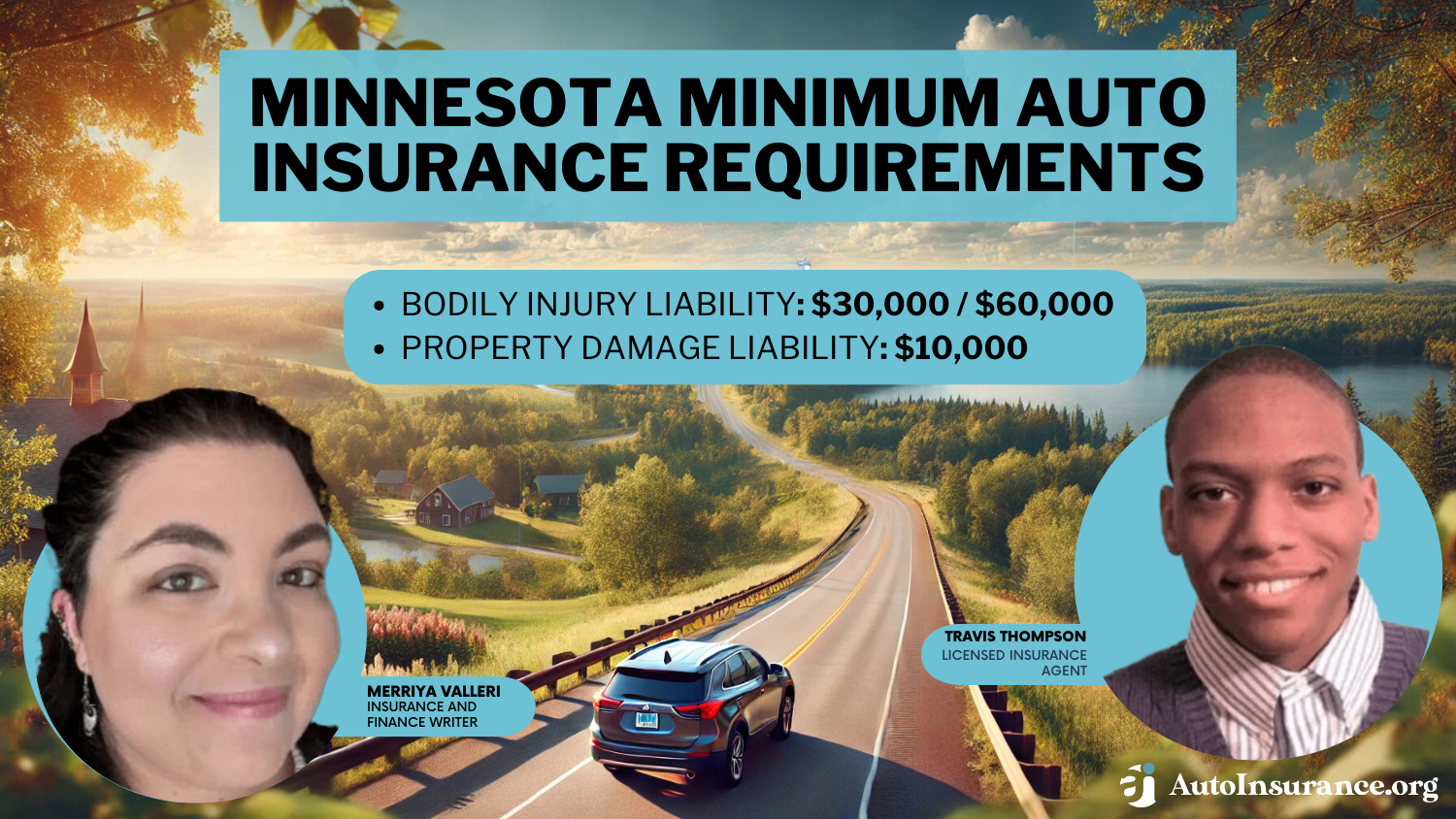
In Minnesota, drivers are legally required to maintain a "no-fault" automobile insurance policy that includes four specific components: Personal Injury Protection (PIP), Liability (Bodily Injury and Property Damage), Uninsured Motorist coverage, and Underinsured Motorist coverage. Operating a motor vehicle without these minimum coverages is a misdemeanor offense and can result in significant legal and financial penalties.
The Foundation of Minnesota Auto Insurance: The No-Fault System
Minnesota is one of a minority of states that utilizes a "no-fault" insurance system. This framework, established by the Minnesota No-Fault Act, is designed to ensure that individuals injured in motor vehicle accidents receive prompt medical treatment and financial support without the delays associated with determining who was at fault for the collision. In 2026, this system remains the cornerstone of driver financial responsibility in the North Star State.
Under the no-fault system, your own insurance company is responsible for paying your medical bills and certain non-medical expenses (like lost wages) regardless of who caused the accident. This is handled through a specific portion of your policy known as Personal Injury Protection (PIP). It is important to note that "no-fault" only applies to medical expenses and wage loss; it does not apply to damage to the vehicles or other property. Liability for property damage is still determined based on who caused the accident.
Personal Injury Protection (PIP) Requirements
As of 2026, every Minnesota driver must carry a minimum of $40,000 in PIP coverage per person for each accident. This amount is strictly divided into two categories:
- $20,000 for Medical Expenses: This covers hospital visits, surgeries, X-rays, dental work, prosthetic devices, and even necessary medical transportation. It applies to you, your relatives living in your household, and any passengers in your vehicle who do not have their own PIP coverage.
- $20,000 for Non-Medical Expenses: This category covers costs that arise because you are unable to work or maintain your household. This includes:
- Wage Loss: Reimbursement for a percentage of lost income if you cannot work due to your injuries.
- Replacement Services: Payment for someone to perform household tasks you can no longer do, such as snow removal, cleaning, or childcare.
- Funeral Expenses: Usually capped at a specific amount (often $2,000–$5,000 depending on the specific policy terms) if the accident results in a fatality.
The "no-fault" threshold is a critical concept for Minnesota drivers to understand. You generally cannot sue the other driver for "pain and suffering" unless your medical expenses exceed $4,000 or your injury results in permanent disfigurement, permanent injury, or death.
Mandatory Liability Coverage Limits
While PIP covers your own injuries, Liability insurance is what protects you if you are found responsible for causing an accident that harms others or their property. Minnesota law dictates specific "split limits" for liability. In 2026, the minimum required limits remain:
- $30,000 for Bodily Injury to one person: This is the maximum your insurance will pay for the medical bills and related costs of a single person you injure in an accident.
- $60,000 for Bodily Injury to two or more people: This is the total "per-accident" limit. If you injure multiple people, your insurance will pay up to $60,000 total, but still no more than $30,000 for any single individual.
- $10,000 for Property Damage: This covers the damage you cause to another person’s vehicle, fence, building, or other property.
Critical Analysis of Minimums: While $10,000 is the legal minimum for property damage, it is dangerously low in 2026. Given that the average cost of a new vehicle often exceeds $45,000 and even minor repairs on modern electric or luxury vehicles can easily surpass $10,000, drivers carrying only the minimum are frequently left personally liable for the difference in a major collision.
Uninsured and Underinsured Motorist Coverage (UM/UIM)
Minnesota is unique compared to some neighboring states because it mandates coverage for scenarios where the other driver is either uninsured or does not have enough insurance to cover your damages.
Uninsured Motorist (UM) Coverage
This protects you if you are hit by a driver who has no insurance at all, or if you are the victim of a hit-and-run accident where the driver cannot be identified. The mandatory minimum limits in Minnesota are:
- $25,000 for bodily injury to one person.
- $50,000 for bodily injury to two or more people.
Underinsured Motorist (UIM) Coverage
UIM coverage applies when the at-fault driver has insurance, but their liability limits are too low to pay for your total medical expenses and losses. For example, if you have $100,000 in medical bills but the other driver only carries the Minnesota minimum of $30,000, your UIM coverage would help bridge the gap. The minimum required limits are:
- $25,000 for bodily injury to one person.
- $50,000 for bodily injury to two or more people.
It is important to understand that UM/UIM coverage in Minnesota typically applies only to bodily injury, not property damage. Damage to your vehicle caused by an uninsured driver is handled through your Collision coverage (if you have it).
Proof of Insurance Requirements
Minnesota law requires drivers to provide proof of insurance in three specific scenarios: when requested by a law enforcement officer during a traffic stop, when involved in an accident, and when renewing vehicle registration.
The Minnesota Department of Public Safety (DPS) accepts both physical and electronic proof of insurance. Most major insurers provide mobile apps that display a digital ID card, which is legally valid in the state. However, it is highly recommended to keep a physical copy in the glovebox as a backup in case of phone battery failure or lack of cellular service in rural areas.
Falsifying proof of insurance is a major offense. In 2026, Minnesota’s electronic verification systems allow law enforcement to check the status of a policy in real-time, making it significantly harder for drivers to use lapsed or fraudulent documents.
Summary of Mandatory Insurance Limits in Minnesota
The following table summarizes the absolute minimum requirements for any driver operating a vehicle in Minnesota as of 2026.
| Coverage Type | Minimum Required Limit | Purpose |
|---|---|---|
| Personal Injury Protection (PIP) | $40,000 | Covers your medical bills and lost wages regardless of fault. |
| Bodily Injury Liability | $30,000 / $60,000 | Covers others' medical bills if you are at fault ($30k/person, $60k/accident). |
| Property Damage Liability | $10,000 | Covers damage you cause to others' property (cars, structures). |
| Uninsured Motorist (UM) | $25,000 / $50,000 | Covers your injuries if hit by a driver with no insurance. |
| Underinsured Motorist (UIM) | $25,000 / $50,000 | Covers your injuries if hit by a driver with insufficient insurance. |
Penalties for Non-Compliance
Driving without insurance in Minnesota is taken extremely seriously. The state views it as a matter of public safety and financial stability. If you are caught driving without the required coverage, you may face the following consequences:
- Fines and Jail Time: A first offense can result in fines ranging from $200 to $1,000 and up to 90 days in jail. Subsequent offenses within a certain timeframe often carry higher mandatory fines (up to $3,000) and longer potential jail sentences.
- License and Registration Revocation: The state will likely revoke your driver's license and vehicle registration. To get them back, you must provide proof of insurance and pay a reinstatement fee (which is $30 as of early 2026 but subject to legislative adjustment).
- SR-22 Requirement: In some cases, you may be required to have your insurance company file an SR-22 form with the state. This is a certificate of financial responsibility that proves you are maintaining the required insurance. It usually results in significantly higher premiums for three years.
- Impoundment: Law enforcement has the authority to impound your vehicle if you are caught driving without insurance.
Beyond the Minimum: Highly Recommended Optional Coverages
While the coverages listed above are the only ones you "must" carry to be legal, they rarely provide enough protection for the average driver. In 2026, most financial advisors and insurance experts in Minnesota recommend several additional options.
Comprehensive and Collision Coverage
If you are financing or leasing your vehicle, the lender will almost certainly require these.
- Collision pays for damage to your car resulting from a crash with another vehicle or object, regardless of fault.
- Comprehensive pays for damage caused by "acts of God" or events other than collisions, such as hail damage (common in Minnesota), deer strikes, theft, fire, or vandalism.
Full Glass Coverage
Minnesota's climate and road conditions—specifically the use of salt and sand in winter—make cracked windshields a frequent occurrence. Many Minnesota policies offer a "Full Glass" endorsement, which allows for windshield repair or replacement with a $0 deductible.
Gap Insurance
Since cars depreciate rapidly, you might owe more on your auto loan than the car is actually worth. If your vehicle is totaled, standard insurance only pays the current market value. Gap insurance covers the "gap" between that value and what you still owe the bank.
Frequently Asked Questions
Does Minnesota's no-fault insurance cover my car repairs?
No. The "no-fault" portion of Minnesota insurance (PIP) only covers medical expenses, lost wages, and replacement services for people. It does not cover property damage. If someone else hits your car and they are at fault, their Property Damage Liability will pay for your repairs. If you are at fault, your optional Collision coverage must pay for your repairs.
Can I be sued in Minnesota if I have no-fault insurance?
Yes. While the no-fault system limits small lawsuits, you can still be sued if the accident results in medical bills over $4,000, permanent injury, permanent disfigurement, or death. Additionally, there are no "no-fault" limits on being sued for property damage. If you cause $50,000 in damage to a luxury car and only carry the $10,000 minimum, the owner can sue you for the remaining $40,000.
Are motorcycles required to have the same insurance?
No. In Minnesota, motorcycles are not required to carry Personal Injury Protection (PIP) because they are not considered "motor vehicles" under the No-Fault Act. However, motorcyclists are still required to carry Liability, Uninsured Motorist, and Underinsured Motorist coverages. Motorcyclists are encouraged to purchase optional "MedPay" or separate PIP-like riders if they want medical coverage for themselves.
What happens if I move to Minnesota from a "Tort" state?
If you move to Minnesota from a state that does not use no-fault insurance (like Wisconsin or Iowa), you must update your policy to meet Minnesota’s specific PIP and UM/UIM requirements within 60 days of becoming a resident. Your out-of-state policy may not automatically provide the $40,000 in PIP coverage required by Minnesota law.
Does my insurance cover me if I hit a deer?
Standard mandatory insurance does not cover damage to your car from hitting a deer. You would need Comprehensive coverage for that. However, if you are injured in the crash, your mandatory PIP coverage would pay for your medical bills regardless of the fact that no other driver was involved.
Practical Recommendation for 2026 Drivers
If you are a driver in Minnesota, do not settle for the "state minimums" unless you have no other financial choice. The $10,000 property damage limit is insufficient for nearly any modern accident, and the $30,000 bodily injury limit can be exhausted by a single day in an intensive care unit.
To ensure you are fully protected, consider a policy with at least 100/300/100 limits ($100k per person, $300k per accident, and $100k for property damage). Additionally, ensure you have your proof of insurance saved in your phone’s digital wallet and a paper copy in your vehicle at all times to avoid unnecessary citations during traffic stops.
Image Gallery
Select an image to open it in a new tab.
Simon Caldwell
Enterprise Technology and Systems Editor
