When Was the Audi R8 First Released? The Complete History of a Supercar Icon

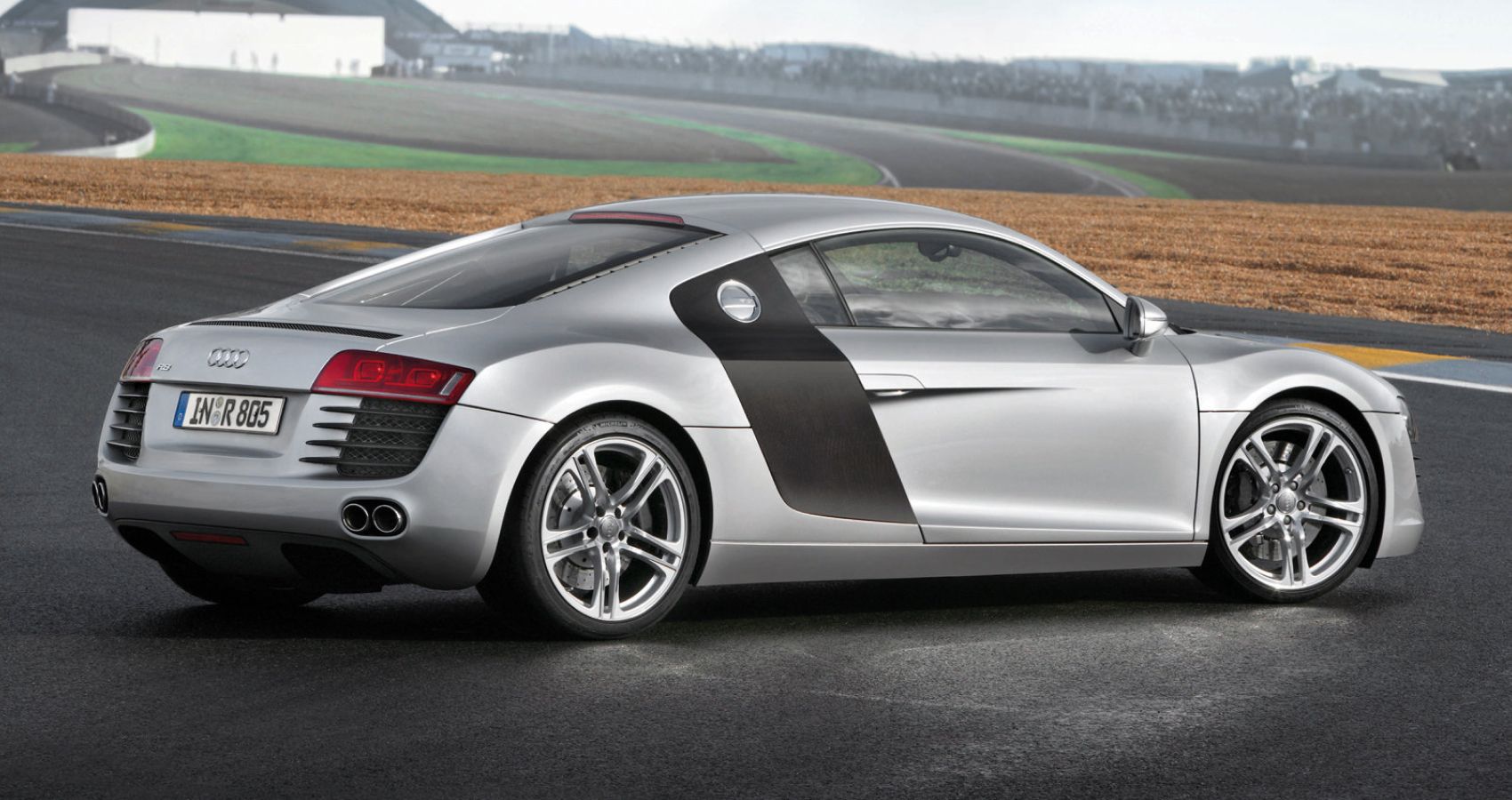
The Audi R8 was first officially released to the public at the Paris Motor Show on September 30, 2006. This mid-engine supercar transitioned from the "Le Mans quattro" concept car to a production reality for the 2007 model year, initially featuring a 4.2-liter V8 engine and Audi's signature quattro all-wheel-drive system.
The Origins of the Audi R8: From Concept to Production
The journey of the Audi R8 did not begin in 2006, but rather three years earlier. To understand the significance of its release, one must look back at the 2003 Frankfurt Motor Show. It was here that Audi unveiled the Audi Le Mans quattro concept, a design study intended to celebrate Audi's repeated successes at the 24 Hours of Le Mans.
The concept was a radical departure from Audi’s existing lineup of sedans and coupes. Developed by Audi’s high-performance private subsidiary, quattro GmbH (now known as Audi Sport GmbH), the car was designed to showcase the brand's technical prowess. The response from the public and the automotive press was so overwhelmingly positive that Audi green-lit a production version, which would eventually be named the R8, sharing its name with the highly successful R8 Le Mans Prototype race car.
The transition from concept to production was remarkably faithful. Most of the striking visual elements, such as the LED headlights (a production first) and the distinctive "sideblades"—vertical air intake panels behind the doors—were preserved. This design continuity helped the R8 establish an instant identity that was both futuristic and grounded in Audi’s racing heritage.
The Official Debut: Paris Motor Show 2006
When the production-spec Audi R8 finally rolled onto the stage at the Paris Motor Show in September 2006, it signaled a seismic shift in the supercar hierarchy. For decades, the mid-engine supercar market had been dominated by Italian manufacturers like Ferrari and Lamborghini, or the rear-engine mastery of Porsche. Audi, primarily known for premium executive cars and rally-bred all-wheel-drive systems, was now challenging the elite.
The first generation of the R8, internally designated as the Type 42, entered the market with several key objectives:
- To serve as a "halo car" for the entire Audi brand.
- To prove that a supercar could be used as a comfortable, reliable daily driver.
- To showcase the Audi Space Frame (ASF) aluminum construction technology.
Production began in late 2006 at the specialized Neckarsulm plant in Germany. Unlike mass-produced Audi models, the R8 was hand-assembled by small teams of specialists, emphasizing its status as a boutique high-performance machine.

Technical Specifications of the First-Generation Release
The initial release of the R8 focused on balance and handling rather than raw, overwhelming power. The primary powertrain was a high-revving V8 that had already proven its mettle in the Audi RS4.
The 4.2-Liter V8 FSI Engine
The heart of the first R8 was the 4.2-liter FSI V8. This naturally aspirated engine produced 420 metric horsepower (309 kW) and 317 lb-ft of torque. Because it featured Fuel Stratified Injection (FSI), the engine offered a high compression ratio and immediate throttle response.
One of the most critical engineering choices was the use of a dry-sump lubrication system. This allowed the engine to be mounted lower in the chassis, significantly lowering the center of gravity and ensuring consistent oil flow during high-G cornering—a necessity for a car designed for track performance.
Transmission Options: Manual vs. R-tronic
At launch, enthusiasts were given two choices for gear changes. The most iconic was the six-speed manual transmission, which featured a metallic gated shifter. This provided a tactile, clicking sensation that became a hallmark of the early R8 experience.
The alternative was the R-tronic automated manual. Unlike modern dual-clutch systems, the R-tronic was a single-clutch automated system. While it offered fast shifts at high speeds, it was often criticized for being "jerky" in low-speed urban environments. It wasn't until the 2013 facelift that Audi replaced this with the much smoother S-tronic dual-clutch transmission.
The Quattro System and Chassis
The R8’s all-wheel-drive system was specifically tuned for a mid-engine layout. Unlike the 50/50 or front-biased split found in Audi sedans, the R8’s quattro system was rear-biased, sending approximately 70% to 90% of torque to the rear wheels under normal conditions. This preserved the nimble handling characteristics of a rear-wheel-drive car while providing the "safety net" of front-wheel traction when the rear tires began to slip.
The chassis was built using the Audi Space Frame (ASF). This all-aluminum structure was incredibly light but rigid, providing the necessary platform for the sophisticated double-wishbone suspension. Another innovation available at release was Audi Magnetic Ride, which used magneto-rheological fluid in the dampers to adjust stiffness in milliseconds based on road conditions.
Comparing the Initial R8 Models (2007–2010)
Following the initial V8 release, Audi expanded the lineup to include the even more powerful V10 variant in 2009. The following table highlights the technical differences between these early production versions.
| Specification | 2007 Audi R8 V8 | 2009 Audi R8 V10 |
|---|---|---|
| Engine Type | 4.2L Naturally Aspirated V8 | 5.2L Naturally Aspirated V10 |
| Horsepower | 420 hp @ 7,800 rpm | 525 hp @ 8,000 rpm |
| Torque | 317 lb-ft @ 4,500 rpm | 391 lb-ft @ 6,500 rpm |
| 0–60 mph (0–100 km/h) | ~4.4 Seconds | ~3.7 Seconds |
| Top Speed | 187 mph (301 km/h) | 196 mph (316 km/h) |
| Curb Weight | ~3,439 lbs (1,560 kg) | ~3,571 lbs (1,620 kg) |
| Transmission | 6-speed Manual / R-tronic | 6-speed Manual / R-tronic |
The Impact: Defining the "Everyday Supercar"
The release of the R8 changed the automotive landscape by popularizing the concept of the "Everyday Supercar." Before 2006, owning a mid-engine exotic often meant sacrificing visibility, luggage space, and reliability.
The R8 challenged this by offering:
- Ergonomics: The cabin was spacious compared to a Ferrari F430 or a Lamborghini Gallardo, featuring MMI (Multi Media Interface) infotainment and high-quality materials from the Audi A8.
- Visibility: The large windows and relatively thin pillars made the R8 much easier to park and navigate in traffic than its rivals.
- Reliability: Using many components shared across the Volkswagen Group, the R8 didn't suffer from the "finiteness" or frequent service intervals typically associated with hand-built exotics of that era.
This approachable performance made the R8 a favorite among celebrities and appeared prominently in pop culture, most notably as the vehicle of choice for Tony Stark in the 2008 Marvel film "Iron Man." This product placement cemented the R8’s status as a tech-forward, modern icon.
Evolution and the Move to the V10
While the 2006 release focused on the V8, Audi knew they needed more power to compete at the highest levels. In December 2008, Audi announced the R8 5.2 FSI quattro, powered by a V10 engine derived from the Lamborghini Gallardo.
Released for the 2009/2010 model years, the V10 variant featured distinctive styling cues to separate it from the V8, including flared sideblades, unique "Y-spoke" wheels, and oval exhaust outlets. The V10 became the defining engine for the R8, eventually becoming the sole engine choice for the second generation of the car (released in 2015).
Maintenance and Common Issues for Early Models
As we look back from the year 2026, the early 2007–2010 Audi R8s have become sought-after modern classics. However, buyers and enthusiasts should be aware of several specific technical issues that plagued the first release:
- Magnetic Ride Leaks: The innovative magnetic dampers are prone to leaking over time. In 2026, many owners opt for aftermarket coilover conversions because official replacements are exceptionally expensive.
- Carbon Buildup: As with many early FSI (Direct Injection) engines, the V8 and V10 models can suffer from carbon deposits on the intake valves, which can reduce power and fuel efficiency. Periodic "carbon cleans" are a standard part of R8 maintenance.
- AC Compressor Failure: The air conditioning compressor in the early R8s is known to fail. Replacing it is a labor-intensive job because the engine often needs to be tilted or removed to access the unit.
- Frame Cracking (Early Models): A small number of very early 2007 and 2008 models experienced structural cracking near the front suspension towers. This was addressed in later production runs with reinforced plates, but it remains a critical inspection point for collectors.
Frequently Asked Questions
What was the base price of the Audi R8 when it was first released?
In 2007, the starting price for the Audi R8 V8 was approximately $109,000 in the United States and roughly £77,000 in the United Kingdom. However, with options like the carbon fiber sideblades and the R-tronic transmission, most units left the showroom for significantly more.
Is the first-generation Audi R8 a supercar or a sports car?
While "supercar" is a subjective term, the R8 is almost universally classified as a supercar because of its mid-engine layout, exotic materials (aluminum space frame), performance figures, and price point. Its ability to be driven daily led some to call it a "junior supercar," but its track capabilities firmly placed it in the higher category.
Who designed the original Audi R8?
The design was a collaborative effort under the direction of Walter de Silva. The exterior was primarily penned by Frank Lamberty and Tony Chen. De Silva famously called the R8 "the most beautiful car I have ever designed."
How many first-generation Audi R8s were produced?
Over its entire production run from late 2006 to 2015, approximately 28,600 units of the first-generation (Type 42) R8 were produced. This includes both the Coupé and Spyder variants, as well as the V8 and V10 models.
Does the first-generation R8 have a dual-clutch transmission?
No, the early R8s (2007–2012) utilized either a 6-speed manual or the R-tronic single-clutch automated manual. A 7-speed S-tronic dual-clutch transmission was not introduced to the R8 until the 2013 facelift.
Practical Advice for Prospective Owners in 2026
If you are looking to acquire a first-release Audi R8 in today's market, prioritize the 6-speed manual gearbox. While the R-tronic is a unique piece of history, the manual version is significantly more desirable among collectors and offers a more engaging driving experience that bypasses the maintenance complexities of the aging automated system.
Before purchasing, ensure a Pre-Purchase Inspection (PPI) is conducted by a technician familiar with the Audi Space Frame. Verifying the integrity of the suspension towers and the health of the magnetic ride system is essential to avoid five-figure repair bills shortly after acquisition. Despite these considerations, the R8 remains one of the most accessible and rewarding ways to enter the world of mid-engine supercar ownership.
Image Gallery
Select an image to open it in a new tab.

Lars Thomsen
Global Labor Markets and Economic Strategy Editor
