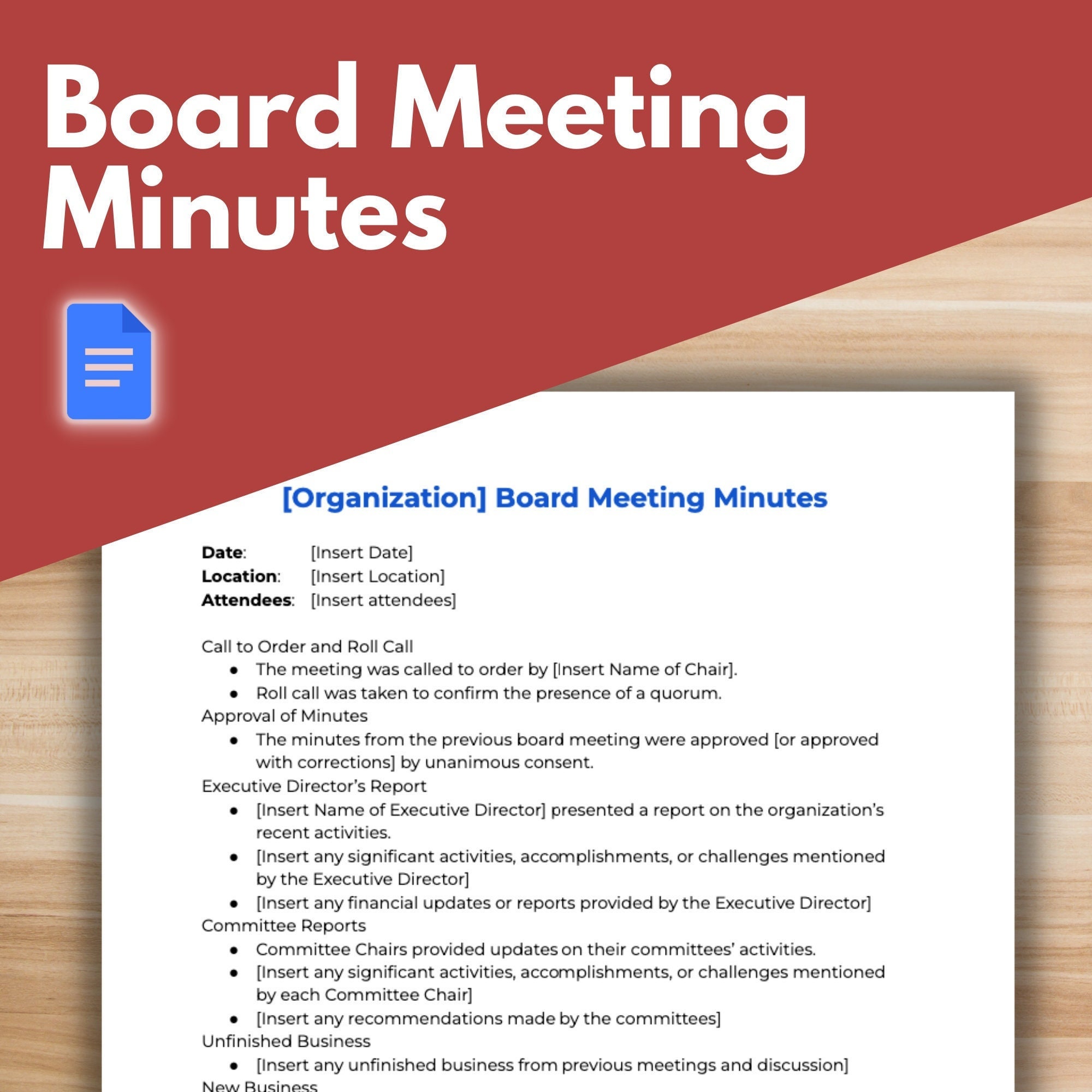
Meeting minutes keep a board of directors on track by providing a definitive legal record of decisions, assigning clear accountability for action items, and maintaining institutional memory. They ensure fiduciary compliance by documenting the deliberative process, preventing repetitive debates, and aligning the board’s strategic focus with long-term organizational goals.
The Role of Minutes as a Legal and Regulatory Foundation
The primary function of meeting minutes is to serve as the official, permanent record of a board’s actions and intentions. In 2026, corporate transparency remains under intense scrutiny from regulators, shareholders, and the public. Minutes are not merely notes; they are legal documents that can be admitted as evidence in a court of law. When a board is challenged on its decisions—whether regarding an acquisition, a leadership change, or a shift in corporate strategy—the minutes provide the proof that the directors acted in accordance with their fiduciary duties.
Fiduciary duties generally fall into two categories: the Duty of Care and the Duty of Loyalty. The Duty of Care requires directors to make informed, deliberate decisions. Minutes keep a board on track by documenting the materials reviewed, the questions asked of experts, and the duration of the debate. This documentation is essential for invoking the Business Judgment Rule, a legal principle that shields directors from liability if they can demonstrate they acted in good faith and with reasonable care. Without detailed minutes, a board has no "memory" to defend its process, leaving individual directors vulnerable to litigation.
For organizations operating in the United States, specific regulations like the Delaware General Corporation Law (DGCL) or the requirements of the Internal Revenue Service (IRS) for non-profits emphasize the necessity of contemporaneous records. For instance, IRS Form 990 specifically asks whether an organization contemporaneously documents its meetings. Failing to do so doesn’t just cause a lack of focus; it can jeopardize tax-exempt status or lead to regulatory penalties.
Driving Accountability Through Action Item Tracking
One of the most practical ways meeting minutes keep a board on track is through the formalization of "action items." In high-stakes environments, it is common for brilliant ideas or necessary tasks to be discussed and then forgotten once the meeting adjourns. Minutes prevent this "operational amnesia" by recording exactly what was decided, who is responsible for the execution, and the deadline for completion.
When the minutes from the previous meeting are reviewed and approved at the start of a new session, it serves as a built-in status report. If an action item remains unaddressed, it is immediately visible to the entire board. This transparency creates a culture of accountability. Directors and executives are more likely to follow through on commitments when they know their names are attached to specific tasks in a permanent record.
In 2026, many boards utilize integrated board portals where minutes are linked directly to task management systems. This integration ensures that the strategic goals discussed in the boardroom are translated into measurable actions. By providing a "single source of truth," minutes eliminate disputes over "who said what" or "who was supposed to do what," allowing the board to spend its limited time on forward-looking strategy rather than retroactive clarification.

Risk Mitigation and the Business Judgment Rule
Risk management is a core responsibility of any modern board. Meeting minutes keep a board on track by serving as a primary tool for identifying and documenting the mitigation of risks. When the board discusses potential threats—be they cybersecurity issues, market volatility, or ethical concerns—the minutes should reflect the depth of that discussion.
The Business Judgment Rule is the board's strongest defense against claims of negligence. However, this rule only applies when a board can prove it followed a rigorous process. Minutes help keep the board on track by ensuring that every major decision is preceded by a documented period of due diligence. For example, if a board approves a major capital expenditure, the minutes should record the presentation of financial forecasts, the questioning of the CFO, and the consideration of alternative options.
Furthermore, minutes are vital for documenting conflicts of interest. If a director has a personal stake in a transaction, the minutes must record their disclosure of that interest and their recusal from the vote. By strictly documenting these ethical safeguards, the minutes keep the board aligned with legal standards and protect the organization’s reputation from charges of self-dealing or cronyism.
Enhancing Institutional Memory and Continuity
Board compositions change. Directors retire, terms end, and new members are elected. Without robust meeting minutes, an organization loses its "institutional memory" every time a seasoned director departs. Minutes keep a board on track by providing a historical narrative of why certain decisions were made.
Consider a scenario where a board is asked to revisit a strategy that was rejected three years prior. Without minutes, the board might waste hours re-debating the same points. With well-maintained minutes, the current board can review the previous rationale, understand the context of the earlier rejection, and determine if the underlying conditions have changed. This continuity is essential for long-term strategic planning.
Institutional memory also aids in the onboarding of new directors. Reviewing the last two years of minutes is often the fastest way for a new member to understand the board’s culture, the ongoing challenges facing the organization, and the nuances of the relationships between the board and the executive team. This historical grounding ensures that the board remains focused on its long-term trajectory rather than getting distracted by recurring issues that have already been resolved.
Managing Executive Sessions and Sensitive Debates
Not every board discussion is intended for a wide audience. Executive sessions—meetings where management (including the CEO) is excluded—are critical for discussing sensitive topics like CEO performance, compensation, or internal audits. Meeting minutes are particularly important here to keep the board on track regarding its oversight of management.
While executive session minutes are often more concise to protect confidentiality, they must still demonstrate that the board is fulfilling its oversight role. By documenting that these sessions occurred and noting the general topics discussed, the minutes provide evidence of independent governance. This helps keep the board on track by ensuring that the relationship between the board and management remains balanced and that the board is not merely "rubber-stamping" the CEO's proposals.
Effective vs. Deficient Minute-Taking: A Comparison
To understand how minutes keep a board on track, it is helpful to contrast high-quality recording with poor practices. The following table outlines the differences and their impacts on board performance.
| Feature | Effective Minutes (Board on Track) | Deficient Minutes (Board at Risk) |
|---|---|---|
| Discussion Detail | Summarizes key arguments, concerns raised, and the "why" behind decisions. | Either a verbatim transcript (too much) or just "discussed X" (too little). |
| Action Items | Clearly defines the task, the owner, and the expected completion date. | Mentions tasks vaguely without assigning clear responsibility. |
| Voting Records | Records motions, seconds, and the outcome; notes recusals and dissents. | Simply states "the motion passed" without context or record of dissent. |
| Timeliness | Drafted and distributed within days of the meeting while memory is fresh. | Drafted weeks later, leading to inaccuracies and lost momentum. |
| Legal Protection | Demonstrates the board's "Duty of Care" through documented due diligence. | Fails to show that the board considered expert advice or alternatives. |
| Strategic Alignment | Ties decisions back to the organization’s mission and long-term goals. | Focuses on tactical minutiae rather than strategic outcomes. |
Common Pitfalls That Derail Board Progress
Even with the best intentions, certain minute-taking habits can actually hinder a board's progress. One common pitfall is the attempt to create a verbatim transcript. In 2026, while AI tools can easily provide a word-for-word account, this is generally discouraged for board meetings. Verbatim transcripts can be taken out of context in litigation and may stifle open, honest debate among directors who fear their every word will be scrutinized. Minutes keep a board on track best when they summarize the substance of the debate rather than the style.
Another pitfall is the "too little detail" approach. Minutes that only record the final vote (often called "minutes of resolution") fail to show the deliberative process. If a board is sued for a decision, "minutes of resolution" provide no evidence that the board was informed or diligent. To stay on track, a board must find the "Goldilocks zone": enough detail to show the process, but not so much that it creates unnecessary legal exposure.
Finally, a failure to review and approve minutes promptly can derail a board. If minutes are not reviewed until three months after the meeting, the opportunity to correct errors or clarify intent is often lost. This delay can lead to a "revisionist history" where members remember the meeting differently, leading to internal friction and a loss of strategic focus.
The Role of the Board Secretary in 2026
The Board Secretary (or Corporate Secretary) is the guardian of the board's record. In the current 2026 environment, this role has evolved into a strategic partnership. The Secretary doesn't just "take notes"; they ensure that the minutes reflect the board's adherence to its charter and the law.
They keep the board on track by:
- Ensuring Consistency: Using templates that align with the organization's governance standards.
- Managing Version Control: Ensuring that only the final, approved version of the minutes is stored in the official record.
- Facilitating Follow-up: Proactively reminding directors and executives of their assigned action items before the next meeting.
- Adhering to Retention Policies: Managing the destruction or archiving of notes and recordings once the official minutes are approved, as per the organization’s legal policy.
Frequently Asked Questions
Are meeting minutes legally required for all boards?
Yes, for most incorporated entities (both for-profit and non-profit), keeping minutes is a statutory requirement under state laws, such as the Delaware General Corporation Law. Even where not strictly required by a specific statute, they are a fundamental requirement of corporate governance and are necessary for tax compliance and liability protection.
How much detail should be included in the discussion summary?
Minutes should include enough detail to reflect the board's deliberative process. This includes the key factors considered, any expert reports reviewed, and the main reasons for a decision. It should capture "what was done" and "why," rather than "who said exactly what." Significant dissent or concerns raised by directors should be noted to show that the board considered multiple viewpoints.
Can we record board meetings instead of taking minutes?
While a board may record a meeting to assist the secretary in drafting minutes, the recording itself should not replace written minutes. Recordings are often discoverable in legal proceedings and can contain off-the-cuff remarks that do not reflect the board's final consensus. Most legal experts recommend destroying recordings once the written minutes have been formally approved.
What should happen if a director disagrees with the minutes?
Minutes should be distributed in draft form before the next meeting. If a director believes the record is inaccurate, they should propose an amendment during the "approval of minutes" portion of the meeting. The board then votes on whether to accept the amendment. Once approved, the minutes are the final, official record.
Is AI allowed to write board minutes in 2026?
AI is frequently used to create initial drafts from recordings or transcripts. However, it cannot be the final author. A human secretary or legal counsel must review the AI-generated draft to ensure it accurately reflects the nuances of the discussion, correctly identifies legal recusals, and maintains the appropriate tone for a legal document.
Recommendation for Moving Forward
To ensure your board of directors stays on track, implement a standardized minute-taking protocol that prioritizes both accountability and legal protection. Start by adopting a consistent template that includes sections for attendees, disclosures of conflicts, summaries of key discussions, and a dedicated table for action items with assigned owners and deadlines.
Furthermore, ensure that minutes are distributed to the board within 48 to 72 hours of the meeting’s conclusion. This promptness keeps the discussion fresh in the directors' minds and ensures that the momentum for action items is not lost. Finally, conduct an annual review of your minute-taking practices with legal counsel to ensure they align with the latest regulatory expectations and the specific needs of your organization’s governance structure.
Image Gallery
Select an image to open it in a new tab.


Vivian Cho
Executive IT and Emerging Technologies Reporter
