
Navigating the complexities of auto insurance in Thailand is a critical priority for any expatriate planning to get behind the wheel. In 2026, the Thai insurance market offers a structured two-tier system consisting of Compulsory Third Party Liability (CTPL) and various levels of Voluntary Insurance. For comprehensive protection, most expatriates opt for a "Type 1" voluntary policy, which covers own-vehicle damage, theft, and fire, in addition to third-party liabilities not fully met by the mandatory state coverage.
The Dual Framework of Thai Motor Insurance
To legally operate a vehicle in Thailand, you must understand that the system is split into a mandatory government-mandated portion and an optional private portion. Relying solely on the mandatory coverage is a common mistake among new arrivals, often leading to significant financial exposure in the event of an accident.
Compulsory Motor Insurance (Por Ror Bor)
Every motorized vehicle in Thailand is required by the Motor Victim Protection Act to carry Compulsory Motor Insurance, locally known as Por Ror Bor. Without the sticker proving this payment, you cannot renew your annual vehicle tax (the "square sign" displayed on the windshield).
As of 2026, the primary purpose of CTPL remains the provision of immediate medical compensation to victims of road accidents, regardless of who is at fault. However, the coverage limits are relatively low. It typically covers medical expenses up to 80,000 THB for injuries and up to 500,000 THB for death or permanent disability. Crucially, CTPL provides zero coverage for property damage—either to your car or the other party's vehicle.
Voluntary Motor Insurance
Since the compulsory insurance is strictly for bodily injury, voluntary insurance is where expatriates find true financial security. These policies are categorized into "Types" (1, 2, 2+, 3, and 3+). In the 2026 market, these tiers have become highly standardized, though digital-first providers have introduced more flexible "pay-per-mile" or "on-demand" options that appeal to expats who may not drive daily.
Understanding the Voluntary Insurance Tiers
Selecting the right tier depends on the age of your vehicle, your driving frequency, and your risk tolerance.
Type 1: Comprehensive Coverage
Type 1 is the gold standard for expatriate auto insurance. It is essentially "all-risks" coverage. It covers:
- Own Damage: Repairs to your vehicle regardless of whether a second party was involved (e.g., hitting a pole or a tree).
- Third-Party Liability: Coverage for bodily injury and property damage exceeding the limits of the CTPL.
- Theft, Fire, and Natural Disasters: Includes coverage for floods, which is a seasonal necessity in many parts of Thailand.
- Bail Bond: A critical feature for foreigners, providing funds to prevent detention following a serious accident while legal proceedings are pending.
Type 2 and Type 2+
Type 2 is rarely sold alone in 2026; instead, Type 2+ has become the popular middle-ground choice. Type 2+ covers everything Type 1 does, with one major caveat: it only covers damage to your own vehicle if the accident involves another land vehicle and the other party can be identified. If you scrape your car against a wall, a Type 2+ policy will not pay for the repairs.
Type 3 and Type 3+
Type 3 is the most basic, covering only third-party property damage and bodily injury. Type 3+ adds coverage for your own vehicle damage, provided there is a collision with another land vehicle. These are typically chosen for older vehicles (over 15 years) where the market value of the car doesn't justify a high Type 1 premium.

Key Considerations for Expatriates in 2026
When evaluating policies, expatriates should look beyond the premium price. Several factors unique to the Thai market can influence the quality of your coverage and the ease of the claims process.
Garage vs. Dealer Repairs
In Thailand, you must choose between "Dealer Repair" (Sorn Heang) and "Contract Garage Repair" (Sorn U).
- Dealer Repair: Allows you to take your car to the official brand service center. This is generally preferred for cars under five years old to ensure genuine parts and specialized technician work.
- Garage Repair: You must use the insurance company’s network of independent garages. While often high-quality, it may involve non-OEM parts for older vehicles.
The No-Claims Bonus (NCB) System
The Thai insurance industry utilizes a structured NCB system to reward safe drivers. This can lead to substantial savings over time:
- Year 1: 20% discount
- Year 2: 30% discount
- Year 3: 40% discount
- Year 4 onwards: 50% discount
Expatriates should ask their previous insurer in their home country for a "No Claims Letter." While not all Thai insurers accept foreign NCBs, specialized expat brokers in 2026 can often negotiate a starting discount based on your overseas driving record.
Dashcam Discounts
Since 2017, the Office of Insurance Commission (OIC) has mandated a discount of 5-10% for vehicles equipped with a functioning dashcam. In 2026, most insurers require video evidence to process "no-party" claims quickly, making a dashcam an essential tool for any expatriate driver.
Required Documentation for Insurance Applications
To secure a policy, you will generally need to provide digital copies of the following:
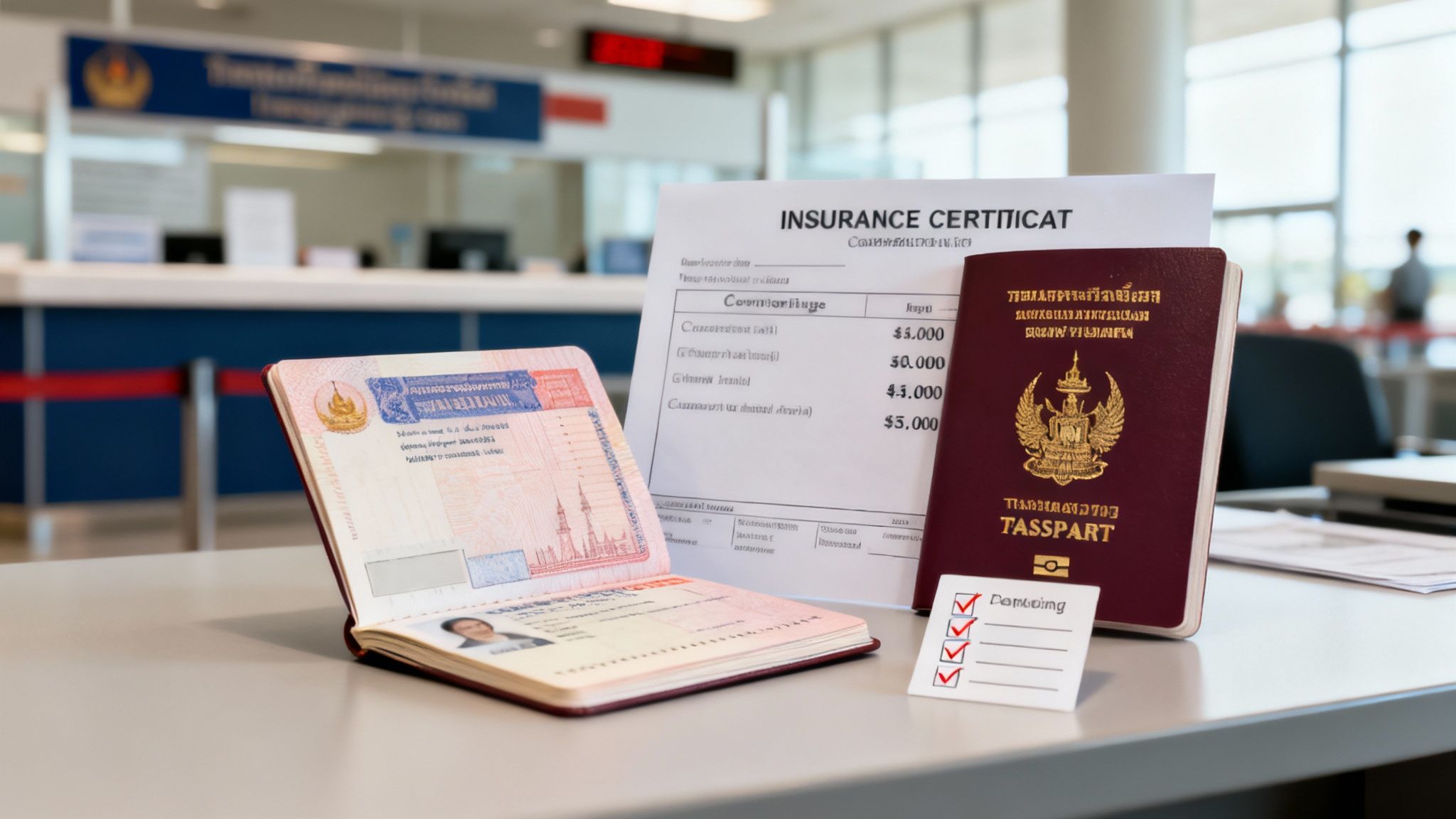
- Passport: The main photo page and your current visa page.
- Thai Driving License: While some insurers accept an International Driving Permit (IDP), having a Thai license often unlocks better rates and ensures there are no disputes during a claim.
- Vehicle Registration Book (Lem Tabian): Specifically the page showing the current owner’s details and the vehicle specifications.
- Previous Policy (if applicable): To prove your No-Claims Bonus status.
| Feature | Type 1 (Comprehensive) | Type 2+ | Type 3+ | CTPL (Compulsory) |
|---|---|---|---|---|
| Third-Party Bodily Injury | Yes | Yes | Yes | Yes (Limited) |
| Third-Party Property Damage | Yes | Yes | Yes | No |
| Own Damage (Collision) | Yes | Yes (Vehicle only) | Yes (Vehicle only) | No |
| Own Damage (No Partner) | Yes | No | No | No |
| Theft & Fire | Yes | Yes | No | No |
| Natural Disaster/Flood | Yes | Optional | No | No |
| Bail Bond Coverage | Yes | Yes | Yes | No |
| Average Cost (Sedan) | 12,000 - 25,000 THB | 6,000 - 10,000 THB | 4,000 - 7,000 THB | ~645 THB |
The Claims Process: What to Expect
The claims process in Thailand is unique and highly responsive. In 2026, most major insurers use GPS-enabled mobile apps to dispatch "surveyors" to the scene of an accident.
- At the Scene: Do not move the vehicles unless instructed by the police or your insurance surveyor. Use your phone to take photos of all angles and the surrounding road conditions.
- Call the Insurer: Use the emergency number provided on your policy card. Most top-tier insurers provide English-speaking operators for expatriates.
- The Surveyor's Arrival: A surveyor (usually on a motorbike) will arrive, often within 20-30 minutes in urban areas. They will inspect the damage, interview the parties, and issue a "Claim Slip."
- Repair Authorization: Take the claim slip and your car to your chosen garage or dealer. The garage will coordinate with the insurer for the final repair estimate and approval.
Common Pitfalls to Avoid
Even with a Type 1 policy, certain circumstances can void your coverage. Expatriates are frequently caught out by the following:
- Invalid License: If you are driving with an expired license or a license not valid for the class of vehicle (e.g., using a car license for a motorcycle), your insurer will likely deny any "own damage" claims.
- Alcohol Consumption: The legal blood alcohol limit in Thailand is 0.05% (50mg). However, many insurance contracts specify that if a driver has a blood alcohol content exceeding 0.50mg/100ml of blood, the policy is voided for own-vehicle damage.
- Commercial Use: If you use your personal vehicle for commercial purposes (like "Grab" or delivery services) without a commercial endorsement, your claims will be rejected.
- Modified Vehicles: Major modifications (engine swaps, suspension lifts, or expensive aftermarket rims) must be declared to the insurer. Failure to do so may result in the insurer only paying for the value of the original, stock parts.
Frequently Asked Questions
Do I need a Thai driving license to get auto insurance?
While you can often purchase insurance using an International Driving Permit (IDP) and your home country's license, it is highly recommended to obtain a Thai driving license. By 2026, insurers have become stricter regarding the 90-day rule: if you have been in Thailand for more than 90 days, your IDP may no longer be considered valid for insurance claims, necessitating a local license for full protection.
Does Thai auto insurance cover me if I drive to neighboring countries?
Standard Thai insurance policies are valid only within the borders of the Kingdom of Thailand. If you plan to drive to Laos, Cambodia, or Malaysia, you must inform your insurer and purchase a specialized "cross-border" extension. You will also need the "Purple Book" (a translation of your vehicle registration) to cross the border legally.
Is the premium higher for foreigners?
Generally, no. Premiums in Thailand are based on the vehicle's make, model, age, and value, as well as the driver's history. However, foreigners may end up paying more if they require specific "Expat Packages" that include premium English-language roadside assistance and legal support, which offer significantly more value than basic local-language policies.
What is the "Excess" or "Deductible" in a Thai policy?
There are two types of excesses. A voluntary excess is an amount you agree to pay per claim to lower your annual premium (common amounts are 3,000 or 5,000 THB). There is also a mandatory excess (usually 1,000 THB) that applies if you make a claim for damage where you cannot identify the other party or the exact time and place of the incident (e.g., finding a scratch on your car in a parking lot).
Can I transfer my insurance if I sell my car?
Yes, insurance in Thailand follows the vehicle, not just the driver. When you sell your car, you can either transfer the remaining balance of the policy to the new owner or cancel the policy and request a pro-rata refund from the insurance company.
Practical Recommendations for 2026
For most expatriates living in Thailand, the most prudent choice is a Type 1 policy with Dealer Repair and a Zero Voluntary Excess. While this carries a higher annual premium, it minimizes out-of-pocket expenses and ensures that language barriers do not complicate the repair process.
Always ensure your dashcam is operational, as this is your best defense in a legal environment where the "foreigner is always at fault" myth can sometimes still influence unofficial negotiations at the scene. Finally, always keep a physical or digital copy of your insurance policy card and the CTPL receipt in the vehicle at all times to present to authorities during routine checkpoints or in the event of an accident.
Image Gallery
Select an image to open it in a new tab.


Simon Caldwell
Enterprise Technology and Systems Editor
