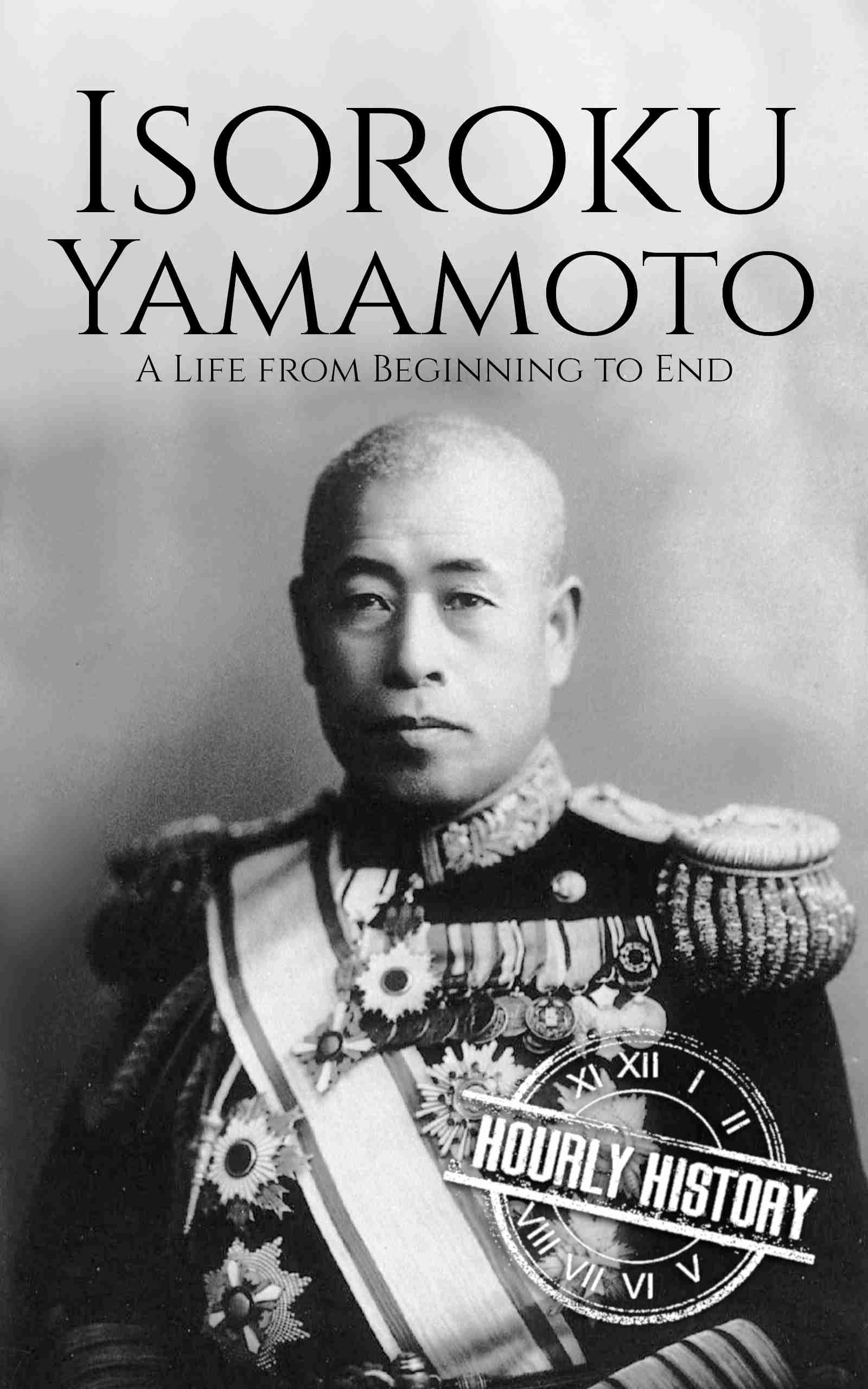
The rise of Isoroku Yamamoto to the position of Commander-in-Chief of the Combined Fleet was a pivotal development in modern history. A visionary strategist, Yamamoto transformed the Imperial Japanese Navy from a traditional battleship-centric force into a pioneer of carrier-based aviation, ultimately shaping the trajectory of World War II in the Pacific.
The Early Foundations of a Naval Icon
Isoroku Yamamoto was born Isoroku Takano on April 4, 1884, in Nagaoka, Japan. His birth name, "Isoroku," literally means "56," the age of his father at the time of his birth. He was later adopted into the Yamamoto family, a common practice in Meiji-era Japan to preserve distinguished samurai lineages. This transition provided him with a name that carried significant social weight, but his rise was defined far more by his intellect and combat performance than by his pedigree.
Yamamoto’s military career began at the Imperial Japanese Naval Academy at Etajima, where he graduated in 1904. His "baptism by fire" occurred during the Russo-Japanese War, specifically at the Battle of Tsushima in 1905. This conflict was a watershed moment in modern history, marking the first time an Asian power defeated a European one in contemporary warfare. During the battle, Yamamoto served as an ensign on the cruiser Nisshin. He lost two fingers on his left hand during the engagement, a physical mark of his service that he bore for the rest of his life.
The Battle of Tsushima also instilled in him the "Decisive Battle" doctrine (Kantai Kessen), which suggested that a single, massive naval engagement could determine the outcome of a war. While Yamamoto would later evolve his views on how to fight such a battle, the core concept of a sudden, overwhelming strike remained a cornerstone of his strategic thinking.
The American Influence and Harvard Years
One of the most critical aspects of Yamamoto’s rise was his exposure to the West, specifically the United States. Unlike many of his contemporaries in the Imperial Japanese Army (IJA) and Navy (IJN), Yamamoto spent significant time abroad. He studied at Harvard University from 1919 to 1921 and later served as a naval attaché in Washington, D.C.
During his time in the United States, Yamamoto did not just study language or politics; he studied American industry. He observed the massive oil fields of Texas, the burgeoning automotive assembly lines in Detroit, and the sheer scale of American resource extraction. This first-hand experience led him to a conclusion that would put him at odds with the Japanese high command for years: Japan could not win a prolonged war of attrition against the United States.
He famously noted that while Japan could achieve initial victories, the "sleeping giant" of American industry would eventually overwhelm any nation that did not possess similar logistical depth. This realization is essential to understanding his "rise"—he became a leader who advocated for peace and modernization not out of pacifism, but out of a cold, calculated assessment of national survival.
Revolutionizing Naval Doctrine: The Shift to Aviation
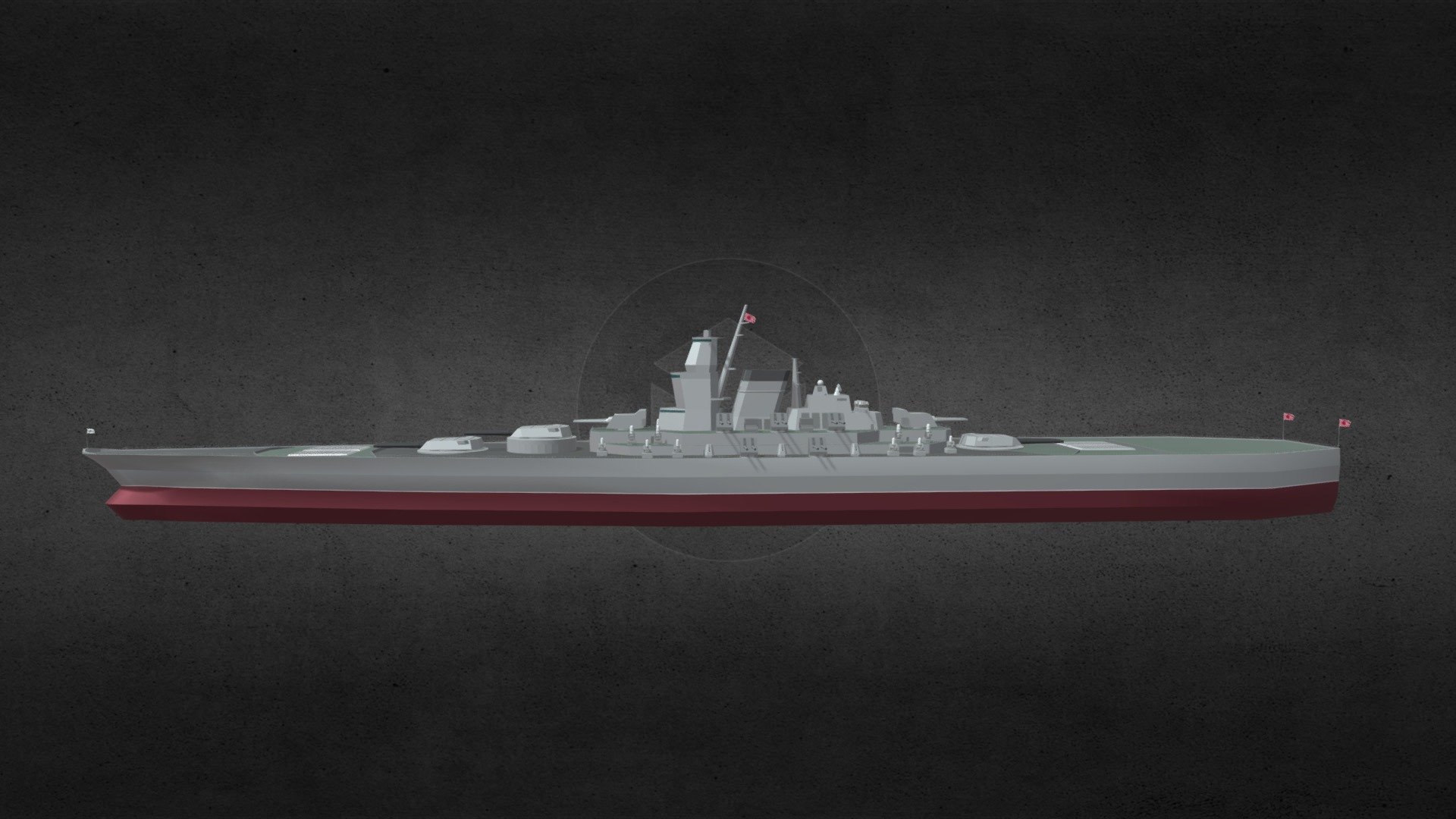
By the late 1920s and early 1930s, the naval world was dominated by "Big Gun" advocates who believed that massive battleships like the Yamato and Musashi would decide future wars. Yamamoto, however, rose to prominence as the leader of the "Aviation Club." He recognized that the range and striking power of aircraft launched from carriers far exceeded the reach of even the largest naval guns.
His appointment as the head of the Navy Aviation Bureau in 1935 allowed him to implement radical changes. He pushed for the development of high-performance aircraft that would become legendary, such as the Mitsubishi A6M Zero fighter and the Nakajima B5N "Kate" torpedo bomber.
Technical Innovations Under Yamamoto’s Leadership
- Long-Range Operations: Yamamoto demanded that Japanese planes have superior range compared to their Western counterparts, allowing carriers to strike from well beyond the horizon.
- Aerial Torpedo Evolution: He oversaw the technical refinement of the Type 91 torpedo, which featured aerodynamic fins allowing it to be dropped in the shallow waters of harbors—a direct prerequisite for the Pearl Harbor attack.
- Coordinated Carrier Strikes: He was instrumental in the creation of the First Air Fleet (Kido Butai), which grouped multiple aircraft carriers into a single, cohesive striking force rather than dispersing them as escorts for battleships.
This shift in doctrine was not merely a technical change; it was a total reimagining of naval power. Yamamoto’s rise within the IJN hierarchy was accelerated by his ability to bridge the gap between traditional naval honor and cutting-edge technology.
Political Resistance and the Rise to Command
The 1930s were a period of intense political instability in Japan, marked by "government by assassination." Yamamoto became a target for ultra-nationalist factions because of his outspoken opposition to the Tripartite Pact with Nazi Germany and Fascist Italy. He argued that such an alliance would inevitably lead to war with the United Kingdom and the United States—a war he believed Japan would lose.
His rise to the position of Commander-in-Chief of the Combined Fleet in 1939 was, ironically, a move intended to save his life. The Navy Minister, Admiral Yonai Masaichi, feared that Yamamoto would be assassinated if he remained in Tokyo. By sending him to sea as the head of the fleet, Yonai placed him in the most powerful military position in the country, effectively insulating him from domestic political violence.
Once in command, Yamamoto faced a strategic paradox. He was a man who hated the prospect of war with the U.S., yet he was now tasked with planning it. He concluded that if war was inevitable, Japan's only hope lay in a preemptive strike so devastating that the American people would lose the will to fight, leading to a negotiated peace.
The Strategy of the Pearl Harbor Attack
The planning of the Pearl Harbor attack represents the pinnacle of Yamamoto’s strategic rise. It was a high-risk gamble that flew in the face of traditional Japanese naval strategy, which favored waiting for the American fleet to cross the Pacific before engaging them in the Philippine Sea.
Yamamoto’s plan relied on three pillars of modern naval warfare:
- Surprise: Utilizing the northern route across the Pacific to avoid commercial shipping lanes.
- Massed Airpower: Deploying six fleet carriers to deliver over 350 aircraft in two waves.
- Specialized Ordnance: Using modified armor-piercing shells as bombs and the aforementioned shallow-water torpedoes.
While the attack on December 7, 1941, was a tactical masterpiece, it failed to achieve Yamamoto’s broader strategic goal. The American aircraft carriers were not in port, and the failure to strike the fuel oil tank farms and repair facilities allowed the U.S. Pacific Fleet to recover more quickly than anticipated.
| Key Milestone | Year | Impact on Modern History |
|---|---|---|
| Battle of Tsushima | 1905 | Solidified Japan as a world power; Yamamoto's first combat. |
| Harvard University Study | 1919-1921 | Developed his understanding of US industrial capacity. |
| Head of Navy Aviation Bureau | 1935 | Shifted IJN focus from battleships to aircraft carriers. |
| Commander-in-Chief Appointment | 1939 | Unified the Combined Fleet under a singular aviation-led vision. |
| Pearl Harbor Attack | 1941 | Launched the Pacific War and changed naval warfare forever. |
| Operation Vengeance | 1943 | The US assassination of Yamamoto; signaled the decline of the IJN. |
The Solomon Islands and the Attrition of the IJN
Following the initial successes in the Pacific, Yamamoto’s rise met the harsh reality of the industrial disparity he had long feared. The turning point at the Battle of Midway in June 1942 saw the loss of four irreplaceable Japanese carriers. Yamamoto, who had personally overseen the operation from the battleship Yamato, was forced to confront the failure of his "Decisive Battle" strategy.
The subsequent campaign in the Solomon Islands, specifically the struggle for Guadalcanal, became a "war of the many against the few." Yamamoto spent much of late 1942 and early 1943 attempting to stabilize the front. He launched "Operation I-Go," an aerial offensive intended to halt the Allied advance. However, the loss of experienced pilots—a resource Japan could not easily replace—began to hollow out the fleet he had spent decades building.
Operation Vengeance: The Fall of a Strategist
The rise of Yamamoto ended abruptly on April 18, 1943. Through the decryption of Japanese naval codes (Project Magic), U.S. intelligence learned that Yamamoto was planning an inspection tour of forward bases in the Solomon Islands.
President Franklin D. Roosevelt personally authorized "Operation Vengeance," a mission to intercept Yamamoto’s transport plane. Eighteen P-38 Lightning aircraft from the 339th Fighter Squadron flew a low-altitude, 400-mile circuitous route to avoid detection. They intercepted Yamamoto’s flight over Bougainville. His Mitsubishi G4M "Betty" bomber was shot down into the jungle, killing the Admiral instantly.
His death was a catastrophic blow to Japanese morale. He was the only leader who possessed both the respect of the sailors and the strategic foresight to understand the gravity of the war. In modern history, his death is often cited as the moment the Imperial Japanese Navy lost its "soul."
The Lasting Legacy of Yamamoto’s Military Philosophy
Isoroku Yamamoto remains one of the most studied figures in military history. His rise is not just a story of a soldier’s career, but a study in the conflict between traditionalism and innovation.
He is credited with proving that the aircraft carrier was the new "Queen of the Seas," a fact that has remained true through 2026. However, he is also criticized for his reliance on overly complex operational plans that often collapsed when faced with the "fog of war." His legacy is a complex tapestry of brilliant tactical innovation and strategic miscalculation regarding the political resolve of his enemies.
Today, Yamamoto is remembered in Japan and the West alike as a reluctant warrior. He was a man who foresaw his nation's doom, tried to prevent the conflict, but when called upon, used every tool of modern technology to fight it with unprecedented ferocity.
Frequently Asked Questions
Why did Yamamoto oppose the alliance with Germany? Yamamoto believed that Germany was an unreliable partner and that an alliance would inevitably draw Japan into a conflict with the United States and Great Britain. Having lived in the U.S., he knew that Japan lacked the natural resources and industrial capacity to win a long-term war against the Anglo-American powers.
Was Yamamoto a supporter of the battleship Yamato? Surprisingly, no. Despite the ship being named after his family line (and the ancient name of Japan), Yamamoto viewed the massive battleships as relics. He famously compared them to the elaborate religious scrolls of old—beautiful to look at but ultimately useless in a modern fight. He preferred to invest those resources into aircraft and carriers.
How did the U.S. know Yamamoto’s exact location in 1943? U.S. Navy codebreakers had cracked the Japanese naval code, known as JN-25. They intercepted a detailed itinerary of his inspection tour, including the exact times of departure and arrival. This allowed the U.S. Army Air Forces to plan a precise interception mission, one of the first "targeted killings" of a high-ranking military leader in modern history.
What was the "Yamamoto Doctrine"? While not an official term, it generally refers to his philosophy of using massed carrier aviation to strike the enemy’s center of gravity early in a conflict. He believed in offensive action and sought to achieve a psychological victory that would force a diplomatic settlement.
What happened to the Imperial Japanese Navy after his death? After Yamamoto’s death, the IJN lacked a leader with his level of influence and strategic vision. The command was passed to Admiral Mineichi Koga and later Admiral Soemu Toyoda, but the navy never regained the offensive momentum it had during Yamamoto’s tenure. By 1944, the IJN was effectively neutralized as a major fighting force.
Final Recommendation for Further Research
To fully grasp the "Rise of Yamamoto," students of history should focus on his early diplomatic cables from the 1930s. These documents reveal a man who was deeply aware of the shifting tides of the 20th century. For a practical next step, visiting the Nagaoka City Yamamoto Isoroku Memorial Museum or reviewing the declassified "Magic" intercepts provides a primary-source perspective on his strategic genius and the intelligence efforts that eventually brought his career to an end.
Image Gallery
Select an image to open it in a new tab.


Simon Caldwell
Enterprise Technology and Systems Editor
