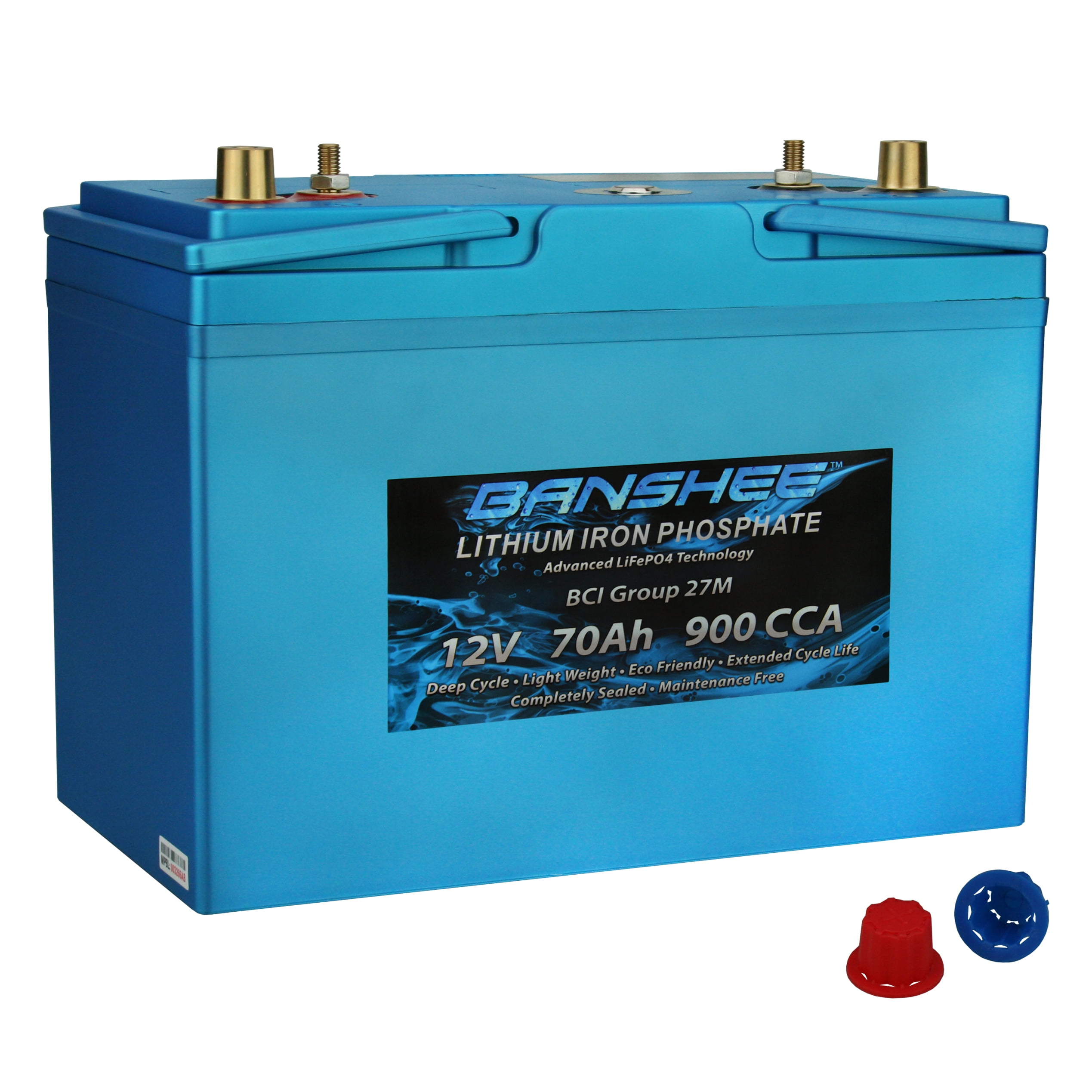
A Group 27 AGM deep cycle battery is a specialized lead-acid power source defined by its BCI physical dimensions (approximately 12.06 x 6.81 x 8.88 inches) and Absorbent Glass Mat (AGM) technology. Designed for sustained energy delivery over long periods, these batteries typically offer 85 to 105 Amp-hours (Ah) of capacity, making them the industry standard for marine house power, RV auxiliary systems, and off-grid solar storage in 2026.
Understanding the Group 27 BCI Standard
When discussing batteries, the "Group" number refers to the physical size and terminal orientation standardized by the Battery Council International (BCI). The Group 27 designation is one of the most popular sizes in the automotive, marine, and recreational vehicle industries because it strikes a balance between weight, footprint, and energy density.
Physically, a Group 27 battery typically measures 12.06 inches in length, 6.81 inches in width, and 8.88 inches in height. However, it is essential to note that slight variations occur between manufacturers. Some "Deep Cycle" versions may be slightly taller to accommodate thicker internal lead plates. For users in 2026, verifying the exact dimensions of your battery box or tray is the first step before purchase, as even a quarter-inch difference in height can prevent a lid from closing securely.
The Group 27 size is often considered the "middle brother" in the deep cycle family. It sits between the smaller Group 24 (approx. 70-85 Ah) and the larger, heavier Group 31 (approx. 100-125 Ah). For many boaters and RV owners, the Group 27 is the "sweet spot"—providing enough Amp-hours to run lights, pumps, and electronics overnight without the excessive weight or footprint of a commercial-grade Group 31 unit.
The Mechanics of AGM Technology
AGM, or Absorbent Glass Mat, represents a significant evolution over traditional flooded (wet cell) lead-acid batteries. In an AGM battery, the electrolyte (sulfuric acid) is not free-flowing. Instead, it is absorbed into very fine fiberglass mats sandwiched between the lead plates. This design change alters the battery's performance profile and maintenance requirements fundamentally.
Spill-Proof and Maintenance-Free Design
One of the primary reasons users choose AGM in 2026 is the "maintenance-free" aspect. Unlike flooded batteries, which require periodic topping off with distilled water to replace lost electrolyte, AGM batteries are Valve Regulated Lead Acid (VRLA) systems. They are sealed, and the oxygen produced during charging recombines with hydrogen inside the battery to reform water. This means you never have to check fluid levels, and there is no risk of acid spills, even if the battery casing is cracked or if the battery is mounted on its side.
Vibration Resistance
In marine and off-road RV applications, vibration is a battery killer. In traditional batteries, constant shaking can cause the active material on the lead plates to shed and settle at the bottom, eventually causing a short circuit. The compressed construction of an AGM battery—where the fiberglass mats tightly pack the plates—provides superior mechanical stability. This allows Group 27 AGM batteries to withstand the pounding of heavy seas or washboard roads much better than their flooded counterparts.
Lower Internal Resistance
The proximity of the electrolyte-soaked mats to the plates results in lower internal resistance. This allows for faster charging and the ability to deliver higher bursts of current when needed. While a "Deep Cycle" battery is primarily designed for slow discharge, an AGM version can often serve as a reliable starting battery in a pinch, provided its Cold Cranking Amps (CCA) rating meets the engine's requirements.
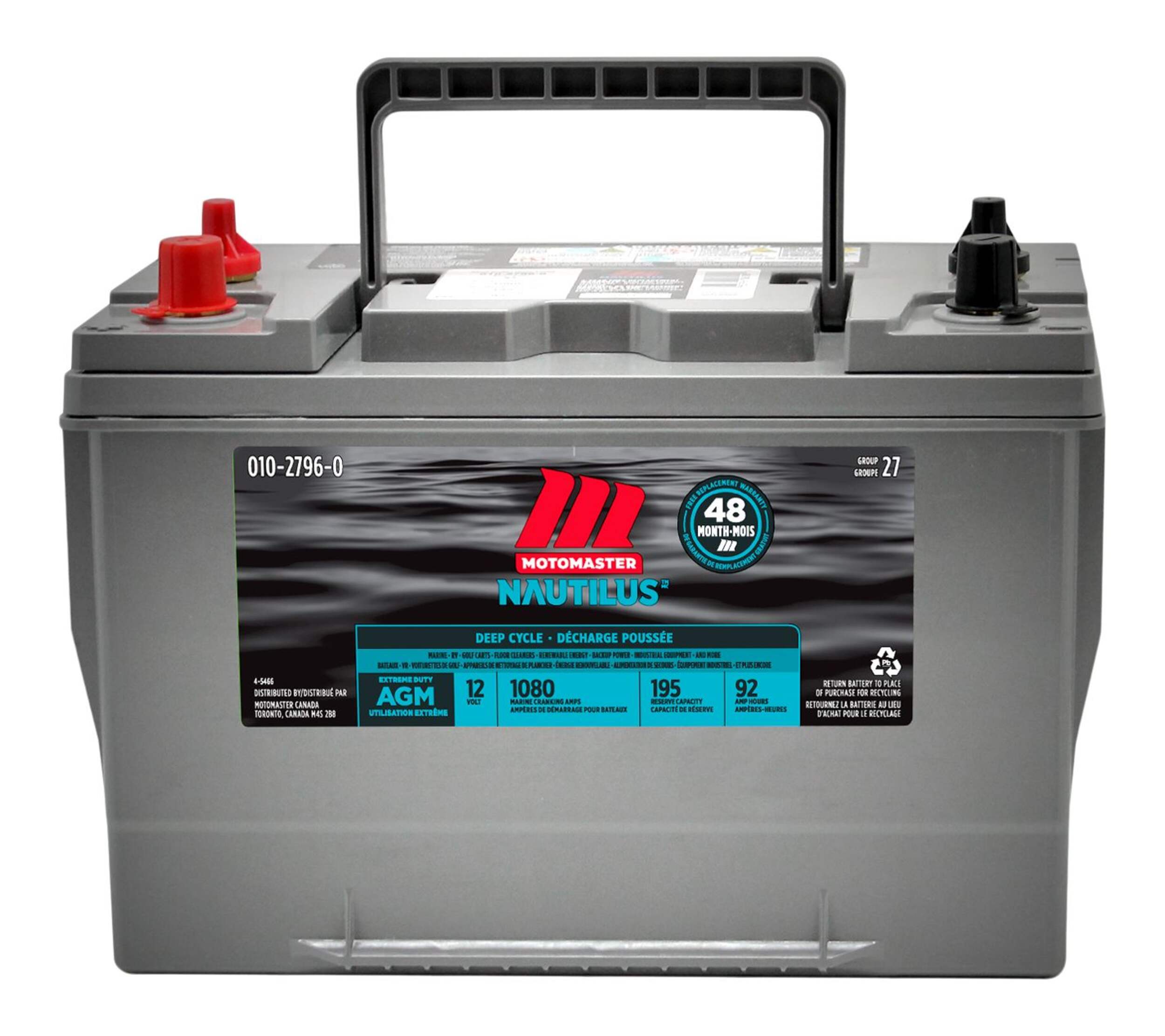
Deep Cycle vs. Starting: The Performance Curve
It is vital to distinguish a true deep cycle Group 27 AGM battery from a "Dual Purpose" or "Starting" battery. The internal architecture of a deep cycle battery is built for endurance rather than a quick sprint.
Deep cycle batteries utilize thicker, solid lead plates. These plates can survive hundreds of "deep" discharge cycles (down to 50% or even 20% state of charge) without significant degradation. In contrast, a starting battery uses many thin, porous plates to maximize surface area for a high-amperage burst to turn an engine. If you deeply discharge a starting battery, the thin plates warp and shed material rapidly, leading to premature failure.
In 2026, many manufacturers market Group 27 AGM batteries as "Dual Purpose." While these are versatile, they are often a compromise. For dedicated house power in a sailboat or a camper, a dedicated deep cycle AGM battery is preferred. It will provide a more consistent voltage floor throughout the discharge cycle, ensuring that sensitive electronics like GPS units, CPAP machines, or compressor refrigerators operate efficiently until the battery is ready for a recharge.
Technical Specifications and Capacity Ratings
When evaluating a Group 27 AGM battery, several technical metrics define its utility. Understanding these allows you to calculate how long your equipment will run.
- Amp-Hour (Ah) Capacity: This is the most critical metric for deep cycle use. A typical Group 27 AGM battery provides between 85Ah and 105Ah (at the 20-hour rate). This means it can theoretically deliver 5 Amps for 20 hours.
- Reserve Capacity (RC): This measures how many minutes a battery can deliver 25 Amps before the voltage drops to 10.5V. A high-quality Group 27 AGM usually boasts an RC of 160 to 190 minutes.
- Cycle Life: This indicates how many times the battery can be discharged and recharged. Quality AGM batteries in 2026 typically offer 500 to 800 cycles at a 50% Depth of Discharge (DoD).
- Self-Discharge Rate: AGM batteries have a very low self-discharge rate, often losing only 1-3% of their charge per month when stored at room temperature. This makes them ideal for seasonal vehicles.
| Feature | Group 24 AGM | Group 27 AGM | Group 31 AGM |
|---|---|---|---|
| Typical Capacity (Ah) | 70 - 85 Ah | 85 - 105 Ah | 100 - 125 Ah |
| Approx. Length | 10.25 inches | 12.06 inches | 13.0 inches |
| Approx. Weight | 45 - 55 lbs | 55 - 65 lbs | 65 - 75 lbs |
| Common Use | Small boats, Backup UPS | RV House, Trolling Motors | Heavy Duty Marine, Solar |
| Reserve Capacity | 130 - 150 min | 160 - 190 min | 190 - 230 min |
Primary Applications for Group 27 AGM Batteries
Marine Use and Trolling Motors
The marine environment is perhaps the most common home for the Group 27 AGM. For anglers, these batteries are the standard for 12V or 24V (two in series) trolling motor setups. Because they are spill-proof, they can be placed in tight compartments without worrying about acid fumes corroding nearby terminals or hardware. Their ability to deliver steady power for hours allows for a full day of "spot-lock" or slow trolling.
RV and Camper Van Auxiliary Power
In the RV world, the "House Battery" is responsible for everything from the water pump and LED lighting to the furnace fan and USB ports. A single Group 27 AGM provides enough capacity for a weekend of "boondocking" (off-grid camping) for a minimalist setup. For larger rigs, owners often wire two Group 27s in parallel to achieve roughly 200Ah of capacity, which is sufficient to run a 12V refrigerator for several days.
Solar Energy Storage
While larger battery banks often use Group 31 or L16 batteries, small-scale off-grid solar kits—such as those used for shed lighting, remote gate openers, or weather stations—frequently utilize the Group 27 AGM. Its resilience to varied temperature ranges and lack of maintenance makes it ideal for remote locations where checking water levels is impractical.
Charging Requirements and Longevity
The most common cause of premature failure in AGM batteries is improper charging. Even in 2026, many users mistakenly use chargers designed for old-school flooded batteries, which can lead to "cooking" the AGM.
The Three-Stage Charging Process
To maximize the life of a Group 27 AGM battery, a smart charger with an AGM-specific profile is required. This profile typically follows three stages:
- Bulk: The charger sends maximum current to the battery until it reaches roughly 80% capacity.
- Absorption: The voltage is held constant (typically between 14.4V and 14.7V) while the current tapers off, bringing the battery to 100%.
- Float: The voltage is reduced to a lower level (around 13.5V to 13.8V) to maintain the charge without overheating the battery.
Avoiding Overcharging
Because AGM batteries are sealed, they cannot "gassing" off excess pressure easily. If a charger applies too high a voltage, the internal pressure relief valve will open. Once the moisture escapes through this valve, it cannot be replaced, and the battery's capacity is permanently reduced. Always ensure your alternator regulator or solar charge controller is set to "AGM."
Temperature Compensation
AGM batteries are sensitive to ambient temperature. In high heat, the charging voltage should be slightly lowered to prevent thermal runaway. In freezing temperatures, the voltage must be raised to ensure the chemical reaction occurs. Quality chargers in 2026 include a temperature probe that attaches to the battery terminal to automate this adjustment.
Comparison: AGM vs. Lithium (LiFePO4) in 2026
As of 2026, Lithium Iron Phosphate (LiFePO4) batteries have become major competitors to the Group 27 AGM. However, AGM remains relevant for several reasons.
Cost: A Group 27 AGM battery generally costs significantly less upfront than a high-quality Lithium battery of the same size. For users who only use their boat or RV a few times a year, the lower investment of AGM often makes more financial sense.
Cold Weather Performance: While Lithium batteries cannot be charged below freezing without internal heaters, AGM batteries can be charged in much colder environments, though with reduced efficiency. This makes them a preferred choice for winter backup systems or northern maritime use.
Simplicity: AGM batteries are "drop-in" replacements for older systems. They do not require the specialized Battery Management Systems (BMS) or specific lithium-profile chargers that LiFePO4 batteries demand, though using a smart charger is still highly recommended for AGM.
Maintenance and Storage Best Practices
Although marketed as "maintenance-free," there are several steps you should take to ensure your Group 27 AGM battery lasts its full 4-7 year expected lifespan.
- Keep Terminals Clean: Use a wire brush and a mixture of baking soda and water to remove any oxidation or corrosion from the terminals. Apply a thin coat of dielectric grease to prevent future buildup.
- Tighten Connections: In high-vibration environments, terminal nuts can loosen. A loose connection creates resistance, heat, and can even melt the battery terminal or damage your equipment.
- Avoid 100% Discharge: While they are "deep cycle," discharging an AGM battery to 0% significantly shortens its life. Try to keep the state of charge above 50% for maximum longevity.
- Off-Season Storage: If you are storing your vehicle for the winter, fully charge the battery first. Disconnect the negative terminal to prevent "phantom loads" (clocks, sensors, etc.) from draining it. Because of the low self-discharge rate, a fully charged AGM battery can usually sit for 4-6 months without needing a top-up, though a dedicated battery tender is always better.
Troubleshooting Common Issues
If your Group 27 AGM battery is underperforming, the issue often lies with the charging system rather than the battery itself.
- Low Voltage After Charging: If the battery sits at 10.5V to 11V after a full charge cycle, it likely has a "dead cell." This is usually an internal mechanical failure, and the battery must be replaced.
- Swollen Casing: If the sides of the battery are bulging, it has been severely overcharged. The internal pressure caused by gassing has deformed the plastic. This battery is unsafe and should be recycled immediately.
- Rapid Voltage Drop Under Load: This indicates that the battery has "sulfated." Sulfation occurs when a battery is left in a discharged state for too long, causing lead sulfate crystals to harden on the plates. While some high-end chargers have a "desulfation" mode, it is not always successful for AGM batteries once the damage is severe.
Frequently Asked Questions
Can I mix an AGM battery with a flooded battery in the same bank?
No. You should never mix different battery chemistries (AGM and Flooded) or even different ages of the same battery in a single bank. Because they have different internal resistances and charging requirements, the charger will either undercharge the AGM or overcharge the flooded battery, leading to premature failure of both.
Is a Group 27 battery big enough for a 2000W inverter?
A single Group 27 AGM (approx. 100Ah) is generally too small for a 2000W inverter if you plan to run heavy loads (like a microwave or hair dryer). A 2000W load can pull over 150-200 Amps from a 12V system. This high discharge rate will trigger the Peukert Effect, significantly reducing the effective capacity of the battery and potentially causing a massive voltage drop. For a 2000W inverter, a minimum of two Group 27 batteries in parallel (200Ah) is recommended.
How heavy is a Group 27 AGM battery?
Expect a Group 27 AGM battery to weigh between 55 and 65 pounds (25-30 kg). The weight is a good indicator of quality; more lead generally means thicker plates and better deep-cycle performance. Always use the built-in carrying handle and practice proper lifting techniques.
Can I mount a Group 27 AGM battery on its side?
Yes. Because the electrolyte is absorbed in fiberglass mats and the battery is sealed, most AGM batteries can be mounted on their side. However, they should never be mounted upside down, as this can interfere with the operation of the safety pressure relief valves.
What is the lifespan of a Group 27 AGM battery?
With proper care and charging, a Group 27 AGM battery typically lasts between 4 and 7 years. Longevity is primarily determined by the number of discharge cycles and the depth of those discharges. Frequent 80% discharges will result in a shorter life than occasional 30% discharges.
Summary and Recommendations
The Group 27 AGM deep cycle battery remains a cornerstone of mobile and off-grid power in 2026. Its combination of standardized sizing, spill-proof safety, and robust vibration resistance makes it the ideal choice for most marine and RV enthusiasts.
When purchasing, prioritize brands that provide clear specifications for cycle life and Amp-hour ratings at the 20-hour rate. To protect your investment, ensure your charging system is compatible with AGM technology and avoid discharging the battery below 50% whenever possible. If you require more power than a single 100Ah unit can provide, consider wiring two Group 27s in parallel or stepping up to the larger Group 31 size if your battery compartment allows for the extra length.
Image Gallery
Select an image to open it in a new tab.


Simon Caldwell
Enterprise Technology and Systems Editor
