The best San Francisco architectural tour depends on your desired level of technical depth, but for most visitors and locals, San Francisco City Guides offers the premier experience through their specialized "Gold Dust to Glass Towers" and "Palace of Fine Arts" routes. For those seeking professional-grade technical analysis, the AIA San Francisco (AIASF) walking tours provide unparalleled insight into urban planning and structural design.
San Francisco’s skyline and residential streets represent a living museum of American architectural evolution. From the ornate gingerbread details of Victorian-era "Painted Ladies" to the daring Brutalism of the Hyatt Regency and the contemporary glass spires of the Transbay District, the city's built environment is a response to both its dramatic topography and its history of seismic resilience. In 2026, as the city continues to adapt its downtown core for post-pandemic utility, the narrative of its architecture has shifted toward sustainable reuse and high-density innovation.
Defining "Best": How to Choose Your Architectural Experience
"Best" is a subjective metric in a city with such varied styles. To find the tour that suits your interests, you must first determine whether you are looking for historical storytelling, technical architectural specifications, or aesthetic photography opportunities.
Historical Storytelling vs. Technical Depth
Most general walking tours focus on the "who and when"—the stories of the eccentric millionaires who built the Pacific Heights mansions or the 1906 earthquake that necessitated a total city rebuild. Conversely, technical tours focused on architecture delve into the "how"—the engineering behind base isolation systems that keep skyscrapers standing during tremors, or the transition from the "Manhattanization" of the 1970s to the transit-oriented development of the 2020s.
Neighborhood Specificity
San Francisco is a city of distinct neighborhoods, each acting as a pocket of a specific era.
- The Financial District (FiDi): Best for Beaux-Arts, Art Deco, and Modernist skyscrapers.
- Pacific Heights and Haight-Ashbury: Best for Victorian and Edwardian residential architecture.
- The Embarcadero and SoMa: Best for industrial adaptive reuse and 21st-century contemporary design.
- Civic Center: One of the finest collections of Beaux-Arts monumental architecture in the United States.
The Gold Standard: San Francisco City Guides
For over 40 years, San Francisco City Guides (a program of the San Francisco Public Library) has set the benchmark for walking tours. These tours are led by highly trained volunteers who must pass a rigorous multi-month certification process. While technically free, they operate on a donation basis, making them the most accessible high-quality option in 2026.
The "Landmark San Francisco" Route
This tour focuses on the quintessential structures that define the city’s identity. It often includes a deep dive into the Palace of Fine Arts, originally built for the 1915 Panama-Pacific International Exposition. Guides explain the transition of this structure from a temporary plaster-and-burlap construction to the permanent concrete monument designed by Bernard Maybeck.
"Skyscrapers and Urban Spaces"
For those interested in the evolution of the skyline, this route navigates the Financial District. It provides a comprehensive look at the Transamerica Pyramid, once reviled and now a beloved icon, and its 2024-completed renovation which revitalized the surrounding redwood park. The tour contrasts these older giants with the Salesforce Tower and the surrounding Transbay terminal area, explaining how the "San Francisco Beauty Contest" (a nickname for the city's strict discretionary review process) shaped these buildings.
Professional Depth: AIA San Francisco (AIASF)
If you are an architect, student, or serious design enthusiast, the tours organized by the American Institute of Architects San Francisco (AIASF) and the Center for Architecture + Design are the definitive choice. Unlike general tours, these are often led by practicing architects or architectural historians.
Architecture and the City Festival
While they offer year-round walking tours, their peak programming occurs during the annual "Architecture and the City" festival. In 2026, these tours frequently include "behind-the-scenes" access to new residential developments and commercial retrofits that are otherwise closed to the public.
Focus on Seismic Engineering
A unique aspect of AIASF tours is the focus on seismic retrofitting. San Francisco is a global leader in this field. Tours often highlight the San Francisco City Hall, which sits on over 500 lead-rubber base isolators. Understanding how a massive 1915 Beaux-Arts structure was lifted and placed on "springs" to survive the next "Big One" provides a level of technical satisfaction that general tours rarely match.
Speciality Tours: Victorians and Modernism
Beyond the major organizations, several boutique tours cater to specific architectural movements.
The Victorian Home Walk
San Francisco is synonymous with the Victorian style, specifically the Italianate, Stick, and Queen Anne variations. The Victorian Home Walk remains a top-rated choice for those who want to understand the "gingerbread" details. This tour avoids the overly crowded "Painted Ladies" at Alamo Square and instead takes participants into neighborhoods like Cow Hollow and Pacific Heights to see well-preserved examples of 19th-century craftsmanship.
Modernist and Brutalist Explorations
For many years, Brutalism was misunderstood in San Francisco. In 2026, there is a renewed appreciation for the city's "concrete giants." The Hyatt Regency San Francisco, designed by John Portman, features the world’s largest hotel lobby atrium. Architectural tours focused on this era explain the interior-facing "urban oasis" concept that defined 1970s hotel architecture.
Comparison of Leading San Francisco Architectural Tours
| Tour Provider | Primary Focus | Typical Duration | Cost Range (2026) | Technical Depth |
|---|---|---|---|---|
| SF City Guides | History & Landmarks | 1.5 – 2 Hours | Donation-based | Moderate |
| AIA San Francisco | Professional Design | 2 – 3 Hours | $30 – $50 | High |
| Victorian Home Walk | Residential Styles | 2.5 Hours | $30 – $35 | Moderate |
| Emperor Norton’s | Eccentric History | 2 Hours | $25 – $40 | Low |
| Context Travel | Scholar-led Deep Dives | 3 Hours | $100+ (Small Group) | Very High |
The Impact of the 1906 Earthquake on Architecture
You cannot understand San Francisco’s architecture without understanding the 1906 Earthquake and Fire. The disaster destroyed approximately 80% of the city, creating a "blank slate" that allowed architects to experiment with new materials.
Following the quake, there was a massive shift toward reinforced concrete and steel-frame construction. The "Best" tours will point out the "Fire Houses"—buildings that survived the fire due to their superior construction or sheer luck—such as the Sentinel Building (now Columbus Tower), which stands as a copper-clad Flatiron-style bridge between North Beach and the Financial District.
The rebuilding effort also led to the creation of the Civic Center, a planned district that serves as one of the best examples of the "City Beautiful" movement in America. Its centerpiece, City Hall, was designed by Arthur Brown Jr. (who also designed the Coit Tower) and features a dome that is taller than the United States Capitol.
Self-Guided Architecture: The Embarcadero and SoMa
For those who prefer to explore at their own pace, the South of Market (SoMa) district offers a masterclass in the 21st-century "Glass Age."
- Salesforce Transit Center: Often called the "Grand Central of the West," its rooftop park is a feat of landscape architecture. The undulating white perforated metal skin of the building is both an aesthetic choice and a functional element for ventilation.
- The East Bay Span of the Bay Bridge: While technically infrastructure, the self-anchored suspension bridge is a marvel of modern engineering visible from the Embarcadero.
- The San Francisco Museum of Modern Art (SFMOMA): The 2016 Snøhetta expansion, which wraps around the original Mario Botta building, is a study in contrasting textures—the original bold brick vs. the new rippling white facade inspired by the fog and waters of the San Francisco Bay.
Practical Considerations for 2026 Tours
When booking a tour in 2026, keep the following logistics in mind to ensure a smooth experience:
- Weather Patterns: San Francisco’s microclimates are legendary. A tour in the Financial District might be sunny, while a tour of the Victorian homes in the Haight can be shrouded in "Karl the Fog." Always dress in layers.
- Footwear: These are walking tours in a city famous for its hills. The incline on a Nob Hill or Pacific Heights tour can be significant. Wear athletic or professional walking shoes with good grip.
- Public Transit: Most tours start near major MUNI or BART hubs. In 2026, the Central Subway makes reaching the architectural gems of Chinatown and Union Square much faster than in previous decades.
- Booking Windows: AIA tours and specialized boutique tours often sell out weeks in advance, especially during the summer months and the October "Architecture and the City" festival.
Common Mistakes to Avoid
- Focusing Only on Alamo Square: While the "Painted Ladies" are iconic, they represent only a small fraction of the city's architectural heritage. Don't let your architectural exploration stop at a single postcard view.
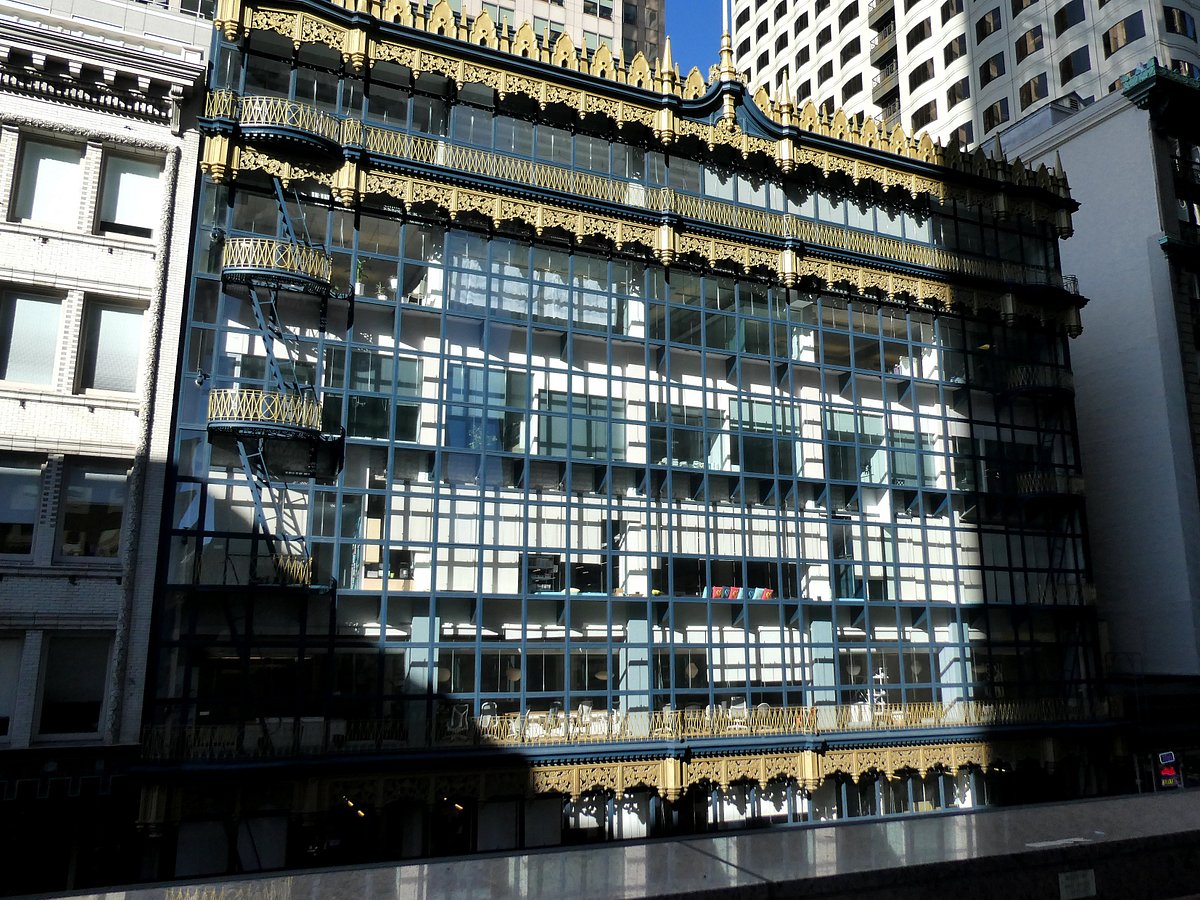
- Ignoring the Interiors: Some of the best architecture in San Francisco is hidden behind closed doors. Tours that offer "interior access"—such as those visiting the Hallidie Building (the world's first glass curtain wall building) or the Pacific Coast Stock Exchange—provide a much richer experience than those that stay strictly on the sidewalk.
- Underestimating the Wind: The "canyon effect" in the Financial District can make it feel 10 degrees colder than it actually is. Bring a windbreaker even if the sun is out.
Frequently Asked Questions
What is the most iconic architectural style in San Francisco?
While the city is famous for its Victorian homes (specifically the Queen Anne style), its most significant architectural contribution is arguably its Seismic Modernism. The city leads the world in implementing innovative structural engineering designs that allow high-rise buildings to withstand major earthquakes while maintaining aesthetic appeal.
Are there any free architectural tours in San Francisco?
Yes. San Francisco City Guides offers numerous architectural tours year-round that are free to the public, though they are supported by voluntary donations. These tours are excellent for those on a budget who still want a high-quality, historically accurate experience.
Can I see the "Painted Ladies" on an architectural tour?
Most general city tours and Victorian-specific tours will stop at Alamo Square to see the Painted Ladies. However, if you want a deeper understanding of why they were built and how they have been preserved, look for a tour that focuses on the Western Addition or Pacific Heights.
What is the newest architectural landmark in San Francisco?
As of 2026, the transformed Transbay District remains the newest landmark area, centered around the Salesforce Tower and the Transit Center. Additionally, the recent completion of several "mixed-use" skyscrapers near the Embarcadero has added new silhouettes to the skyline that emphasize green terraces and energy-efficient glass.
How do I find tours led by actual architects?
The AIA San Francisco (AIASF) is the best source for professional-led tours. You can visit their headquarters at the Center for Architecture + Design in the Hallidie Building to find a schedule of upcoming walks and lectures.
Next Steps for Your Architectural Journey
To get the most out of your visit, start by checking the SF City Guides schedule for your travel dates. If you are looking for a more formal, academic experience, browse the AIA San Francisco calendar. For those interested in the residential charm of the 1800s, booking a spot on the Victorian Home Walk early is recommended. Regardless of which you choose, you will gain a deeper appreciation for how San Francisco’s unique geography and turbulent history have dictated the rise of one of the world's most recognizable skylines.
Image Gallery
Select an image to open it in a new tab.
Ingrid Bjornson
Global Cyber Policy and Regulation Analyst
