Understanding MQ Messaging Queues: A Comprehensive Guide to Modern Architecture
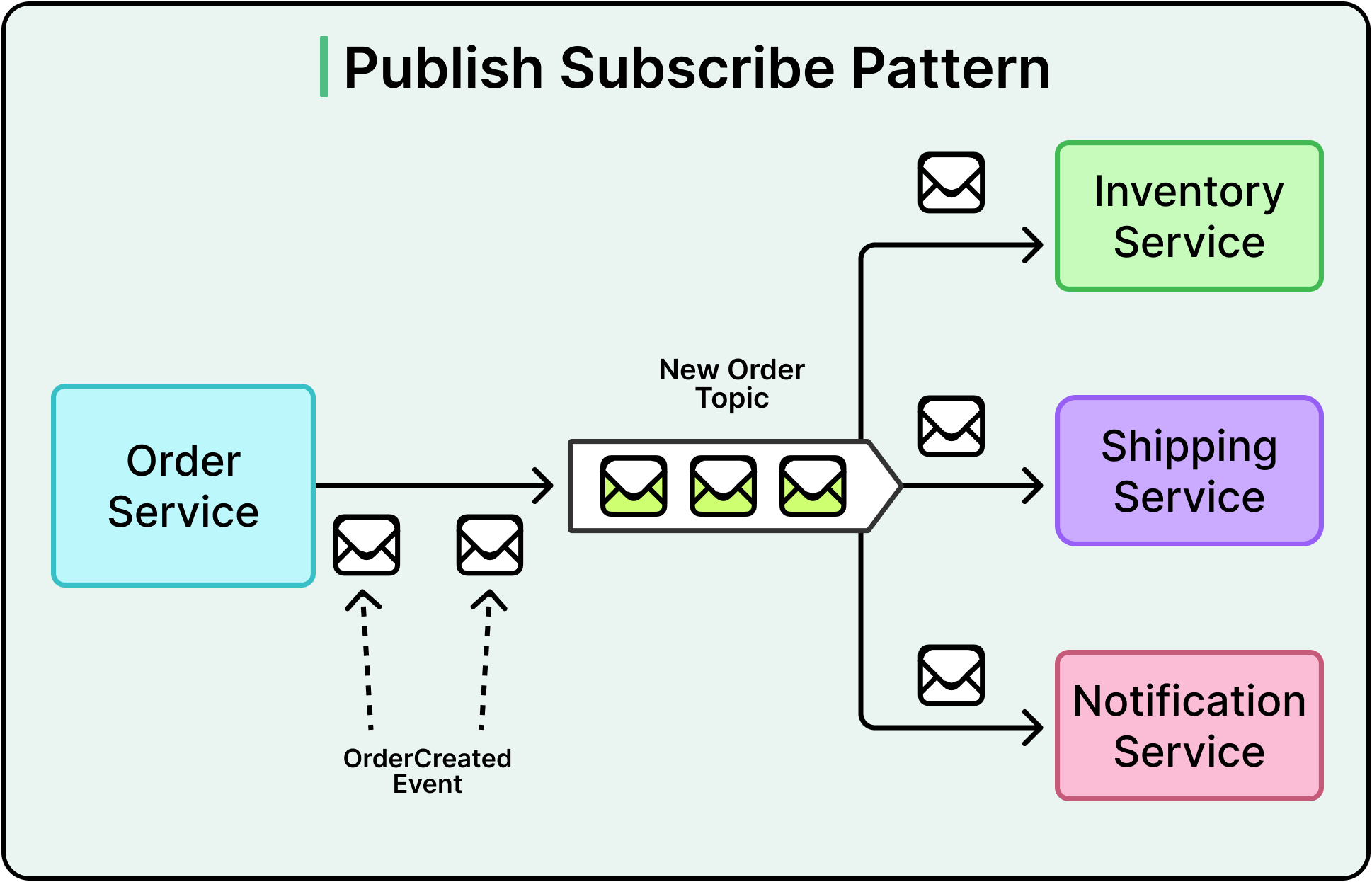
A message queue (MQ) is a foundational component of asynchronous service-to-service communication used in distributed systems and microservices architectures. It acts as a temporary buffer that stores messages sent by a "producer" application until a "consumer" application is ready to process them, ensuring reliable data delivery, system decoupling, and improved scalability across complex software environments.
The Fundamental Concept of Messaging Queues
To understand a messaging queue, one must first grasp the concept of asynchronous communication. In a traditional synchronous system, when Service A calls Service B, it must wait for Service B to finish its task and send a response before Service A can continue. This creates a "tightly coupled" environment where a failure or slowdown in Service B directly impacts Service A.
A message queue breaks this dependency. By introducing an MQ between the two services, Service A (the producer) simply drops a message into the queue and moves on to its next task. The message queue ensures the data is safely stored. Service B (the consumer) picks up the message whenever it has the processing capacity. In 2026, this architectural pattern is no longer an optional luxury; it is a requirement for building resilient, cloud-native applications that must handle unpredictable traffic loads and maintain high availability.
The Role of the Message Broker
While "message queue" refers to the data structure itself, the software that manages these queues is often called a message broker. The broker is responsible for receiving messages, validating them, routing them to the correct queue, and ensuring they are delivered to the intended recipients. Modern brokers also handle complex tasks like message persistence, which ensures that data is not lost even if the server crashes or restarts.
How Messaging Queues Work: A Step-by-Step Breakdown
The lifecycle of a message within an MQ system involves several distinct stages and entities. Understanding these is critical for any developer or architect looking to implement this technology effectively.
1. The Producer (The Sender)
The producer is the application or service that generates data. In a retail environment, this might be the "Order Service" that triggers every time a customer clicks "Buy." Instead of trying to talk directly to the inventory, shipping, and notification services simultaneously, the Order Service creates a message—usually in JSON or XML format—containing the order details and sends it to the message queue.
2. The Message
The message is the packet of data being moved. It consists of two parts: the payload (the actual data, like the order ID and customer name) and headers (metadata used by the broker for routing, such as a timestamp or a priority level).
3. The Queue (The Buffer)
The queue is a First-In-First-Out (FIFO) data structure. It holds the messages in the order they were received. In highly advanced systems, queues can be configured with priorities, allowing urgent messages (like a password reset) to jump ahead of routine messages (like a weekly newsletter update).
4. The Consumer (The Receiver)
The consumer is the service that waits for messages to arrive in the queue. Once a message is available, the consumer pulls it, processes it (e.g., updates a database or sends an email), and then sends an acknowledgment (ACK) back to the queue.
5. Acknowledgment and Deletion
The acknowledgment is a crucial safety feature. If a consumer pulls a message but crashes before finishing the task, the MQ will notice the lack of an ACK. The broker then puts the message back into the queue for another consumer to try again. Only after a successful ACK is the message permanently removed from the queue.
Key Benefits of Implementing MQ in 2026
As we navigate the technological landscape of 2026, the complexity of distributed systems has increased. Messaging queues provide several strategic advantages that address this complexity.
Improved System Decoupling
Decoupling is the practice of ensuring that services can function independently. By using an MQ, the producer does not need to know anything about the consumer’s location, its programming language, or even if it is currently online. This allows teams to update or replace individual services without disrupting the entire ecosystem.
Enhanced Scalability and Load Leveling
Traffic on the internet is rarely consistent. A sudden marketing "flash sale" might send a massive spike of orders to a system. Without a queue, the backend database might be overwhelmed and crash. With an MQ, the queue acts as a buffer. The orders pile up safely in the queue, and the consumer services process them at a steady, sustainable rate. This is known as load leveling or "smoothing the spikes." If the queue gets too long, administrators can simply spin up more instances of the consumer service to clear the backlog faster—a process called horizontal scaling.
Guaranteed Data Persistence and Resilience
In a world where 99.99% uptime is the standard, losing data is unacceptable. Most MQ solutions offer persistence, writing messages to physical disk storage. If a power failure occurs, the messages remain in the queue and are ready to be processed as soon as the system reboots. This ensures that a temporary failure in one part of the system does not result in lost customer orders or corrupted state.
Core Messaging Patterns
Not every communication requirement is the same. Message queues generally support two primary architectural patterns:
Point-to-Point (PTP)
In the PTP pattern, a message is sent to exactly one queue and consumed by exactly one consumer. Even if multiple consumers are listening to the same queue to share the workload, each individual message is only processed once. This is the standard pattern for task distribution, such as processing image uploads or generating invoices.
Publish/Subscribe (Pub/Sub)
The Pub/Sub pattern is used when a single piece of information needs to be shared with multiple different systems. Instead of a "queue," the producer sends the message to a topic. Multiple services can "subscribe" to that topic. For example, when a user changes their profile picture, a "User Update" message is published. The "Caching Service," the "Social Feed Service," and the "Analytics Service" all receive their own copy of that message simultaneously to update their respective records.
Popular MQ Technologies in 2026
Choosing the right messaging technology depends on your specific requirements for throughput, latency, and operational overhead. The following table compares the leading solutions available today.
| Feature | IBM MQ | RabbitMQ | Apache Kafka | Amazon SQS |
|---|---|---|---|---|
| Primary Category | Enterprise Middleware | General Purpose Broker | Event Streaming | Managed Cloud Service |
| Main Protocol | MQI, JMS, AMQP | AMQP 0-9-1, MQTT | Custom TCP | HTTP/JSON API |
| Persistence | Very High (Disk-based) | High (Configurable) | Permanent (Log-based) | High (Distributed) |
| Best Use Case | Financial Transactions | Complex Routing/Microservices | Real-time Analytics/Logs | Serverless/AWS Integration |
| Ordering | Strict FIFO | Strict FIFO | Guaranteed within Partitions | Best-effort (Standard) or FIFO |
| Complexity | High (Enterprise-grade) | Moderate | High (Cluster Management) | Low (Fully Managed) |
IBM MQ
IBM MQ remains the gold standard for enterprise-level messaging, particularly in the banking and insurance sectors. It offers unparalleled security features and "once-and-only-once" delivery guarantees, which are vital for financial transactions where a duplicated or lost message could result in significant financial error.
RabbitMQ
RabbitMQ is perhaps the most widely used open-source message broker. It is highly flexible and supports a wide variety of protocols (AMQP, MQTT, STOMP). It is favored by developers for its ease of use and its ability to handle complex routing logic through "exchanges."
Apache Kafka
While often categorized as an event streaming platform, Apache Kafka is frequently used for messaging. Unlike traditional queues that delete messages after consumption, Kafka keeps a permanent log of all messages. This allows consumers to "replay" events from the past, making it ideal for big data processing and real-time analytics.
Amazon SQS
For organizations heavily invested in the cloud, Amazon Simple Queue Service (SQS) offers a serverless approach. There are no servers to manage or clusters to scale; AWS handles all the underlying infrastructure, making it a highly cost-effective choice for modern web applications.
Common Challenges and Troubleshooting
While messaging queues solve many problems, they introduce new complexities that must be managed.
Handling "Poison Messages"
A poison message is a message that a consumer cannot process due to an error in the data (e.g., a missing required field). If the consumer fails, the MQ puts the message back. The consumer tries again, fails again, and the system enters an infinite loop. To solve this, developers implement Dead Letter Queues (DLQ). After a message fails a certain number of times, the broker automatically moves it to the DLQ, where it can be inspected by a developer without blocking the rest of the system.
Message Ordering
In a distributed environment with multiple consumers, maintaining the exact order of messages can be difficult. If Message A (Update Price) and Message B (Delete Item) are sent in that order, but Message B is processed first because its consumer was faster, the system will end up in an incorrect state. Solutions include using single-threaded consumers for specific queues or using "sharding" keys to ensure related messages are always sent to the same consumer.
Managing Latency
Every jump between a service and a broker adds a few milliseconds of latency. For most applications, this is negligible compared to the benefits. However, for high-frequency trading or real-time gaming, the overhead of a message queue might be too high. In 2026, many teams use "In-Memory" messaging modes or dedicated high-speed hardware to mitigate this issue.
Implementation Prerequisites
Before deploying an MQ solution, ensure your environment meets the following requirements:
- Network Stability: Brokers rely on steady connections; intermittent network drops can lead to "split-brain" scenarios in clustered brokers.
- Resource Allocation: Message brokers, especially those with high persistence requirements, need significant RAM and fast I/O (SSD) storage.
- Security Protocols: Ensure the broker supports TLS/SSL encryption for data in transit and robust authentication (like LDAP or OAuth) for services connecting to it.
- Monitoring Tools: You must have visibility into queue depths. If a queue grows too large, it indicates a bottleneck that could eventually lead to a system-wide failure.
Frequently Asked Questions
What is the difference between a message queue and a database?
A database is designed for long-term storage and complex querying of data. A message queue is designed for the transient movement of data between services. While you could use a database table as a queue (polling), it is highly inefficient at scale and lacks the native signaling and acknowledgment features of a dedicated MQ broker.
Can a message queue be used for real-time applications?
Yes, but "real-time" is relative. For most web and mobile applications, the millisecond-level latency of an MQ is effectively real-time. However, for sub-millisecond requirements, developers often look at "ZeroMQ" or specialized UDP-based protocols that remove the broker entirely to save time.
What happens if the message broker itself fails?
This is why modern MQ installations are "clustered." In a cluster, the queue is mirrored across multiple physical servers. If one server dies, another immediately takes over as the "leader," ensuring that the queues remain available and no data is lost.
Is MQ still relevant with the rise of Serverless and Lambda?
It is more relevant than ever. Serverless functions (like AWS Lambda or Google Cloud Functions) are ephemeral and have execution limits. Messaging queues like SQS or RabbitMQ are the primary way to trigger these functions and manage the flow of data between them, acting as the "glue" that holds serverless architectures together.
When should I choose RabbitMQ over Kafka?
Choose RabbitMQ if you need complex routing, strict FIFO ordering, and a "traditional" broker that manages message states. Choose Kafka if you need to process millions of messages per second, require a permanent audit log of events, or are building a data pipeline for analytics.
Final Recommendation
If you are just beginning to integrate messaging into your architecture in 2026, start by identifying your primary goal. For those building standard microservices or web applications, RabbitMQ or a managed service like Amazon SQS offers the best balance of features and ease of use. If your project involves financial data where message loss is catastrophic, IBM MQ remains the industry standard. For high-volume data streams and event sourcing, Apache Kafka is the undisputed leader. Regardless of the tool chosen, focus on implementing robust error handling and Dead Letter Queues early in the development cycle to ensure long-term system stability.
Image Gallery
Select an image to open it in a new tab.
Zara El-Hashem
Sociocultural Dynamics and Academics Writer
