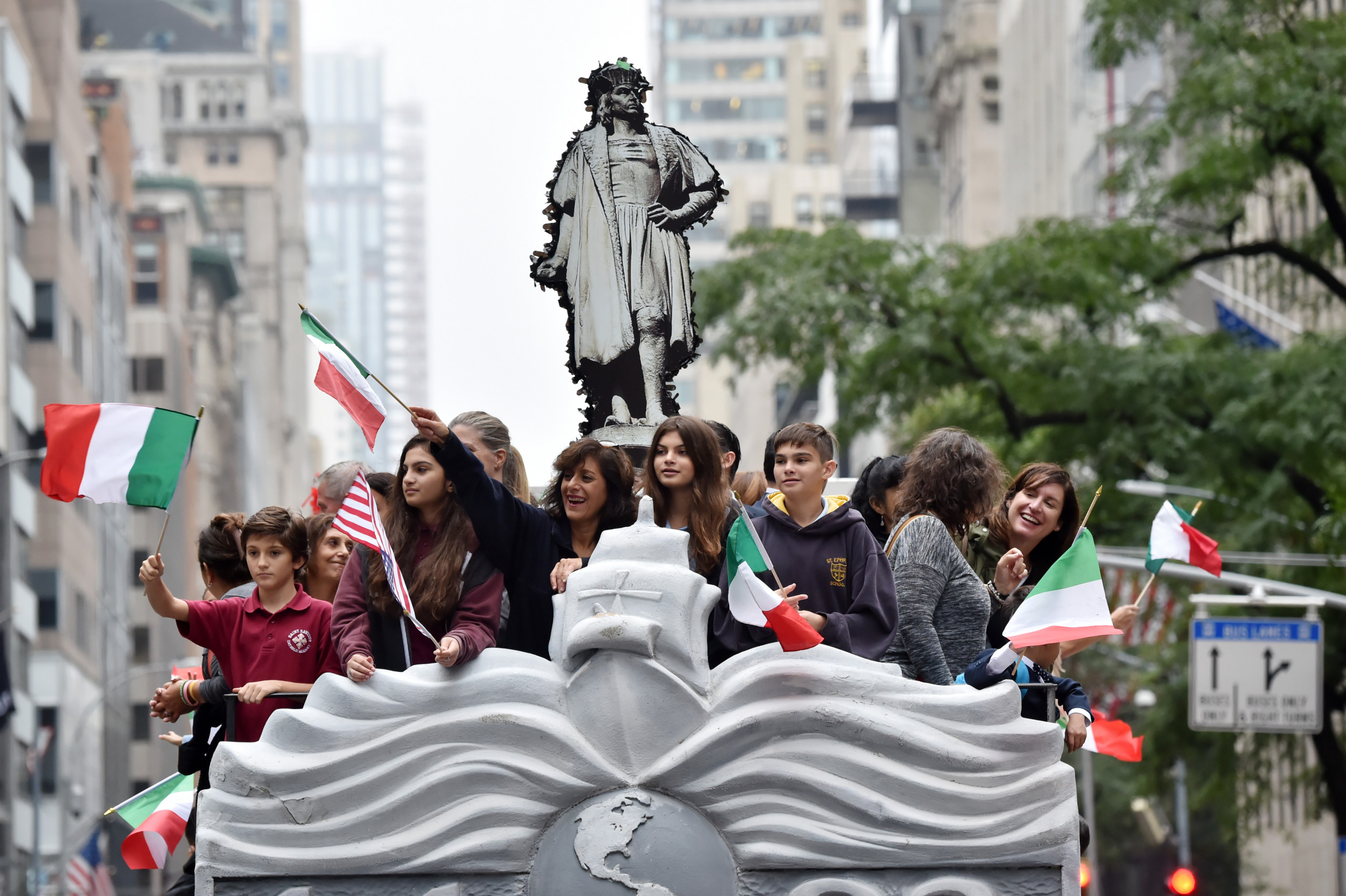
Christopher Columbus Day is celebrated to commemorate the arrival of the Italian explorer Christopher Columbus in the Americas on October 12, 1492. It serves as a federal holiday in the United States to honor the historical beginnings of European exploration in the Western Hemisphere and to recognize the cultural contributions and heritage of the Italian-American community.
The observance of Columbus Day has evolved significantly from its origins as a localized religious or ethnic celebration into a complex national holiday. To understand why we celebrate it in 2026, one must examine the intersection of 15th-century maritime history, 19th-century immigration struggles, and the 20th-century legislative efforts that solidified its place on the American calendar. While the holiday remains a subject of modern debate, its presence is rooted in a desire to acknowledge the "Discovery of America" and to provide a sense of belonging to immigrant populations who once faced systemic discrimination.
The Historical Significance of October 12, 1492
The primary historical driver for the holiday is the landing of the expedition led by Christopher Columbus on an island in the Bahamas. Though Columbus was not the first human to reach the Americas—Indigenous peoples had lived there for millennia—and likely not even the first European, his voyage initiated permanent contact between the Eastern and Western Hemispheres. This "Columbian Exchange" fundamentally altered global trade, diet, and demographics.
Columbus, sailing under the auspices of King Ferdinand II and Queen Isabella I of Spain, commanded three ships: the Niña, the Pinta, and the Santa María. His goal was to find a westward sea route to the "Indies" (Asia) to facilitate the spice trade. When he made landfall on October 12, he believed he had reached the East Indies. The subsequent reports of his journey sparked a wave of exploration, colonization, and migration that eventually led to the formation of the modern nations of North and South America.
From a 2026 perspective, the celebration of this date is often framed as a commemoration of the "Age of Discovery." Proponents of the holiday argue that Columbus’s voyages required immense bravery and navigational skill, marking a pivot point in human history where the world became truly interconnected. Without this specific historical event, the cultural and political landscape of the United States would not exist in its current form.
The Evolution of Early Commemorations
The first recorded celebration of Columbus Day in the United States occurred in 1792. This was the 300th anniversary of the landing, and the event was organized by the Society of St. Tammany (also known as the Tammany Society) in New York City. At this time, the young American republic was seeking to establish its own identity, independent of British colonial history. By celebrating Columbus—an Italian sailing for Spain—early Americans could honor a "founder" of the New World who was not linked to the English crown.
Throughout the 19th century, celebrations remained largely informal and local. However, the 400th anniversary in 1892 marked a major turning point. President Benjamin Harrison issued a commemorative proclamation for the occasion. This was not merely a historical gesture; it was a diplomatic and social response to a period of intense social unrest.
In 1891, a mob in New Orleans lynched 11 Italian immigrants, an event that caused a severe diplomatic rift between the United States and Italy. President Harrison used the 1892 Columbus quadricentennial as a way to ease these tensions and to signal that Italian Americans were a valued part of the national fabric. This proclamation encouraged citizens to observe the day with public ceremonies, emphasizing the patriotic duty of recognizing the explorer's contribution to the existence of the nation.
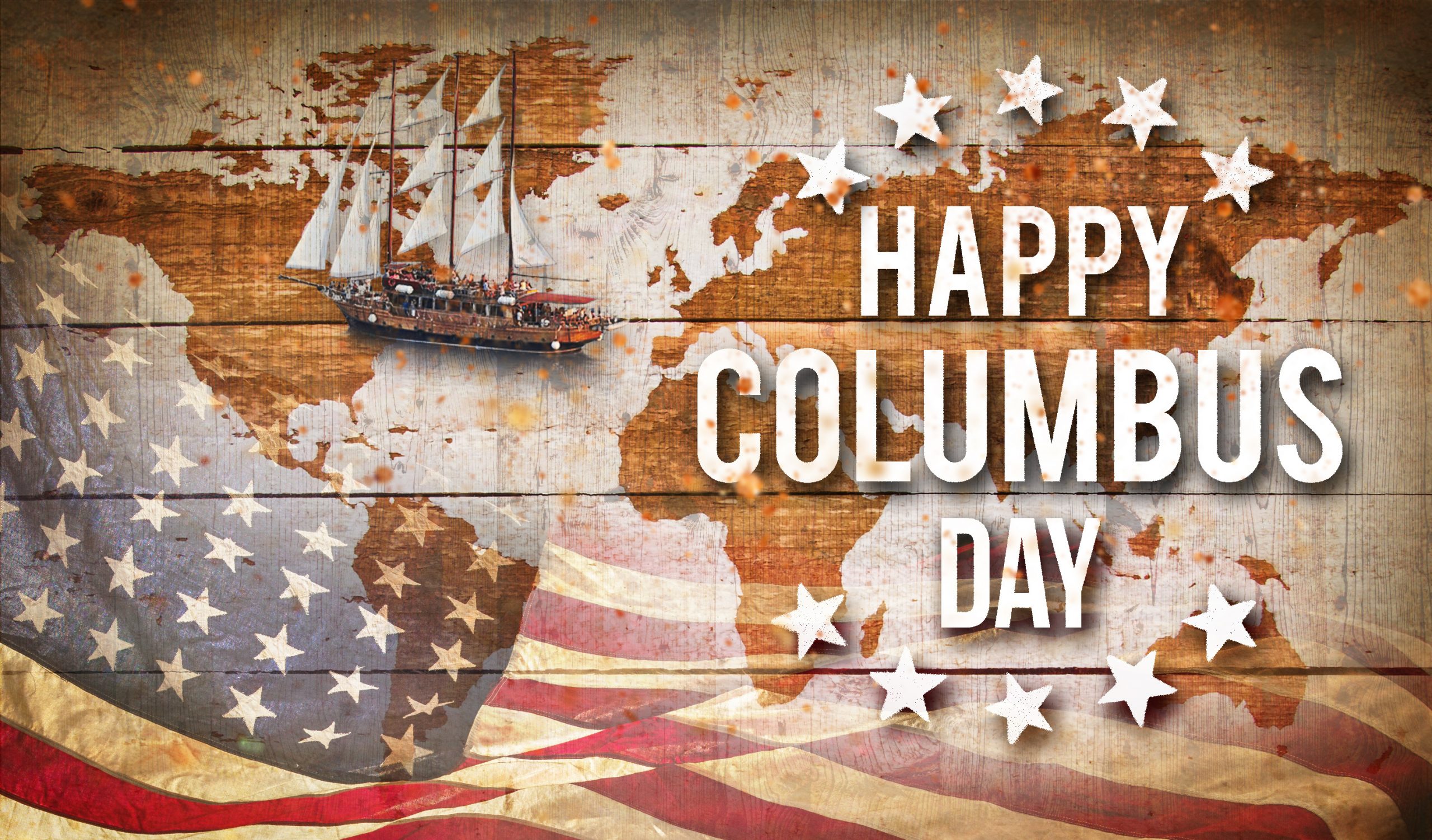
Italian-American Heritage and the Knights of Columbus
Perhaps the most significant reason the holiday exists today is the persistent lobbying of the Italian-American community, specifically the Knights of Columbus. Founded in 1882, the Knights of Columbus is a Catholic fraternal service organization. In the late 19th and early 20th centuries, Italian and Catholic immigrants faced widespread prejudice, often being viewed as "non-white" or "un-American" by the prevailing Nativist movements.
The Knights of Columbus saw Christopher Columbus as a powerful symbol to combat this discrimination. By elevating Columbus—a Catholic and an Italian—to the status of a national hero, the organization argued that Catholics and Italians had been present at the very beginning of the American story. They believed that if the "discoverer" of the continent was one of their own, then they could not be considered "outsiders."
The lobbying efforts were successful at the state level first. Colorado became the first state to designate Columbus Day as an official holiday in 1907, thanks to the work of Angelo Noce, an Italian immigrant. Over the next several decades, dozens of other states followed suit. The narrative of the holiday became inextricably linked to the "American Dream" of immigrants who sought to prove their loyalty and contribution to their new home.
The Path to Federal Holiday Status
Columbus Day did not become a federal holiday until the mid-20th century. In 1934, following another intense push by the Knights of Columbus and various Italian-American groups, Congress passed a resolution requesting the President to issue an annual proclamation for October 12. President Franklin D. Roosevelt signed this into law, though it was not yet a legal "public holiday" that granted federal employees time off.
The final step toward the modern version of the holiday occurred in 1968. President Lyndon B. Johnson signed the Uniform Monday Holiday Act, which aimed to provide federal employees with several three-day weekends throughout the year. As part of this act, Columbus Day was officially designated as a federal holiday. It was also moved from the fixed date of October 12 to the second Monday in October.
The law went into effect in 1971. The transition to a Monday holiday helped cement Columbus Day as a staple of the American calendar, alongside Labor Day and Memorial Day. For many, the holiday became less about the specific historical figure and more about a recognized break in the school and work year, though for the Italian-American community, the cultural significance remained paramount.
Contemporary Perspectives: Columbus Day vs. Indigenous Peoples' Day
In 2026, the celebration of Columbus Day is viewed through a lens of historical re-evaluation. While many still celebrate it as a day of Italian heritage, a significant portion of the population and several state governments have shifted their focus to Indigenous Peoples' Day. This movement highlights that Columbus’s arrival led to the displacement, enslavement, and death of millions of Indigenous people due to conflict and European diseases.
Critics of the traditional holiday argue that "celebrating" Columbus ignores the darker consequences of colonization. As a result, many cities and states have either replaced Columbus Day or added Indigenous Peoples' Day to the calendar to provide a more balanced historical perspective.
| State/Entity | Status of Columbus Day (as of 2026) | Observance of Indigenous Peoples' Day |
|---|---|---|
| Federal Government | Official Federal Holiday | Recognized by Proclamation |
| Alabama | Celebrates both concurrently | Recognized by Proclamation |
| Florida | Observed as a legal holiday | Not a state-wide replacement |
| Maine | Replaced with Indigenous Peoples' Day | Official State Holiday |
| New York | Observed; major parade in NYC | Local observances vary |
| South Dakota | Replaced with Native Americans' Day | Official State Holiday (since 1990) |
| Vermont | Replaced with Indigenous Peoples' Day | Official State Holiday |
Despite these shifts, the federal status remains unchanged. The White House continues to issue dual proclamations—one acknowledging the contributions of Christopher Columbus and Italian Americans, and another honoring the resilience and sovereignty of Tribal Nations.
How Columbus Day is Celebrated Today
In 2026, the celebration of Columbus Day manifests in several distinct ways, depending on the region and the community.
- Parades and Festivals: In cities with large Italian-American populations, such as New York City, Chicago, and Philadelphia, the holiday is marked by grand parades. These events are often more about celebrating Italian culture, food, and music than the specific deeds of the 15th-century explorer.
- Federal and Financial Closures: Because it is a federal holiday, the United States Postal Service does not deliver mail, and most federal government offices are closed. Many banks and the bond market also close, although the New York Stock Exchange typically remains open.
- Educational Curriculum: In schools, the holiday is often used as a teaching moment. In 2026, educators frequently use this time to discuss the "Age of Exploration," the Columbian Exchange, and the differing perspectives on Columbus's legacy, encouraging students to analyze history from multiple viewpoints.
- Religious Observances: Given the historical role of the Knights of Columbus, many Catholic parishes hold special masses or events on this day to honor the history of the faith in the Americas.
The Enduring Debate and Future of the Holiday
The reason we continue to celebrate Columbus Day, despite the controversy, is largely due to the "stickiness" of federal law and the deep cultural meaning it holds for the Italian-American community. For these citizens, the holiday is a hard-won symbol of acceptance in a country that once rejected them. To many, removing the holiday feels like an erasure of their specific contribution to American history.
Conversely, the growing adoption of Indigenous Peoples' Day reflects a national desire to address historical injustices. This tension has led to a "split" celebration in many parts of the country. As of 2026, the trend appears to be moving toward a more inclusive approach where both the European maritime achievements and the Indigenous survival and culture are acknowledged during the same timeframe.
Common Misconceptions About the Holiday
To fully understand the observance, it is necessary to clear up several common myths:
- Myth: Columbus proved the Earth was round. By 1492, most educated Europeans already knew the Earth was a sphere. Columbus’s disagreement with scholars was about the size of the Earth; he believed it was much smaller than it actually is.
- Myth: He was the first European in America. Leif Erikson and the Vikings established a settlement in Newfoundland (L'Anse aux Meadows) roughly 500 years before Columbus. However, the Viking settlements did not lead to permanent, continuous contact between the continents.
- Myth: The holiday has always been about Columbus’s character. For much of the 20th century, the holiday was more about the political power of immigrant groups and the desire for a secular national identity than it was a detailed biographical study of the man himself.
Frequently Asked Questions
Why is Columbus Day always on a Monday?
Columbus Day is observed on the second Monday in October because of the Uniform Monday Holiday Act of 1968. The goal of this legislation was to create more long weekends for federal employees to encourage travel and boost the economy. Before this act, the holiday was always observed on the fixed date of October 12.
Is Columbus Day a paid holiday for everyone?
No. While it is a federal holiday, it is not a mandatory paid holiday for private-sector employees. Whether or not an employee gets the day off depends on their employer's policy or union contract. State-level government employees' time off depends on whether their specific state recognizes it as a legal holiday.
Why did the Knights of Columbus lobby for the holiday?
The Knights of Columbus lobbied for the holiday to counteract anti-Catholic and anti-Italian sentiment in the late 19th and early 20th centuries. By making Columbus a national hero, they hoped to prove that Catholics and Italians were "real Americans" who played a foundational role in the continent's history.
Which states do not celebrate Columbus Day?
As of 2026, several states have officially replaced Columbus Day with Indigenous Peoples' Day or Native Americans' Day. These include Maine, Vermont, New Mexico, Alaska, Hawaii, Oregon, and South Dakota. Other states, like California and Texas, may recognize Indigenous Peoples' Day without necessarily abolishing the recognition of Columbus Day in all local jurisdictions.
Who was the first President to recognize Columbus Day?
The first President to issue a proclamation for the holiday was Benjamin Harrison in 1892, to mark the 400th anniversary. However, Franklin D. Roosevelt was the first to designate it as an annual observance in 1934.
Recommendation for Next Actions
If you are a student or a curious citizen wanting to learn more about the holiday in 2026, consider visiting the Library of Congress digital archives or the National Museum of the American Indian. These institutions provide primary source documents that offer a balanced view of both the maritime history of the 15th century and the lived experiences of the Indigenous peoples during the era of European contact. For those interested in the cultural aspect, local Italian-American heritage centers often host educational seminars during October that explain the history of the holiday's lobbying efforts in the United States.
Image Gallery
Select an image to open it in a new tab.
Mateo Castillo
Decentralized Finance and E-Payments Strategist
