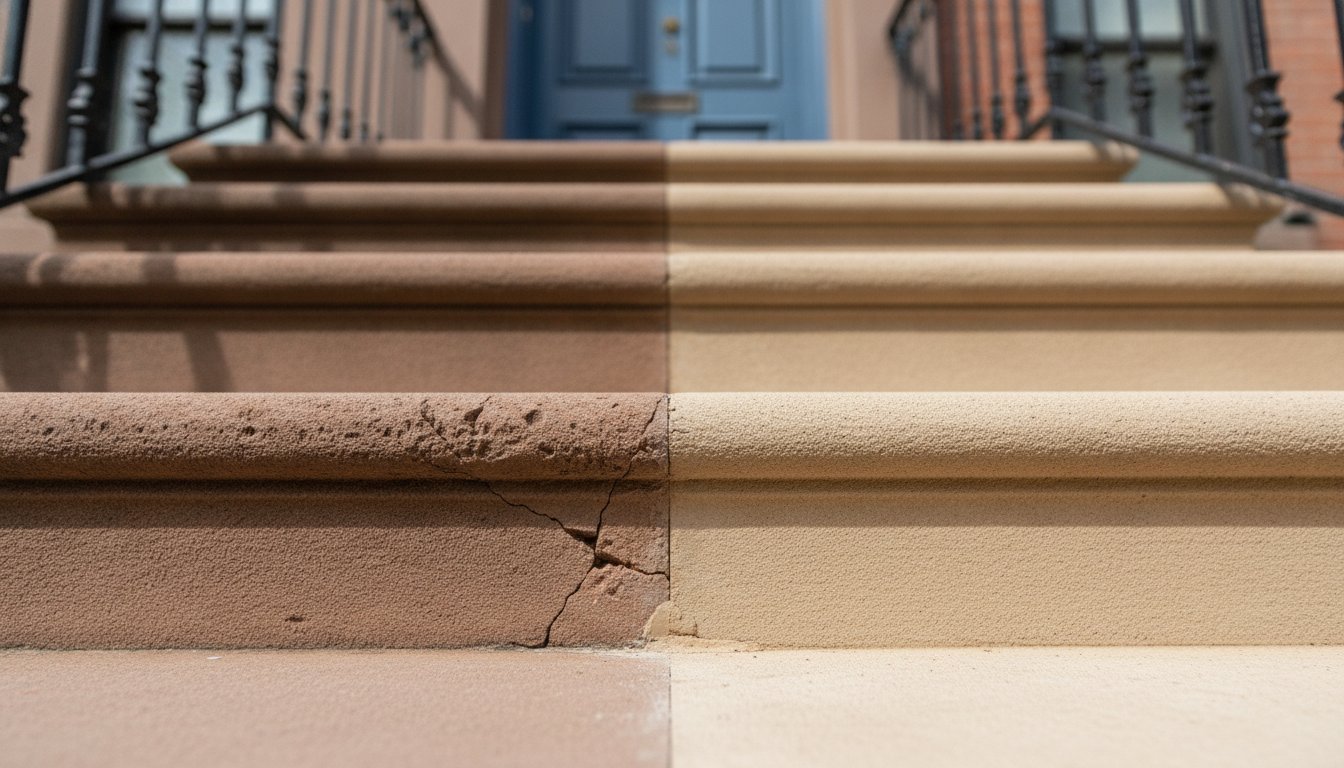
Brownstone foundation leaks are typically caused by deteriorating lime mortar in historic rubble stone walls or excessive hydrostatic pressure from poor exterior drainage. Repairing these leaks involves a combination of repointing with period-appropriate breathable masonry, applying specialized waterproofing parge coats, and managing groundwater through internal or external drainage systems to ensure long-term structural stability.
Understanding the Unique Anatomy of Brownstone Foundations
To effectively address leaks in a brownstone, one must first understand that these structures, predominantly built in the 19th and early 20th centuries, do not behave like modern poured-concrete foundations. Most brownstones sit on rubble stone foundations. These are composed of irregular fieldstones, granite, or schist blocks stacked and held together by lime-based mortar.
Unlike modern concrete, which is a monolithic barrier, a rubble stone foundation is a multi-component system. In 2026, many of these foundations have reached a critical age where the original lime mortar has transitioned from a solid binder to a sandy, friable substance. This degradation creates voids that act as conduits for groundwater. Furthermore, "brownstone" refers specifically to the soft, reddish-brown sandstone used for the facade; however, the foundation supporting that facade is often far more porous than contemporary homeowners realize.
The primary challenge in 2026 remains the breathability of the structure. Because these buildings were designed to "breathe," using modern, impermeable materials like high-strength Portland cement or certain plastic membranes can trap moisture within the wall, leading to the accelerated decay of the soft stone and internal joists.
Identifying the Root Causes of Foundation Infiltration
Before embarking on a repair, a forensic assessment of the leak is required. Water does not always enter through a visible hole; it often permeates through capillary action or structural shifts.
Hydrostatic Pressure
Hydrostatic pressure occurs when the soil surrounding the foundation becomes saturated. In urban environments like Brooklyn, Boston’s Back Bay, or Philadelphia, high-density construction means rainwater often has nowhere to go. This water exerts thousands of pounds of pressure against the foundation walls, forcing liquid through even the smallest microscopic fissures in the mortar.
Mortar Carbonation and Degradation
Historic lime mortar undergoes a chemical process called carbonation. Over a century, exposure to slightly acidic groundwater causes the lime to break down. When the mortar fails, the foundation loses its "gasket." You will often see this as efflorescence—a white, powdery salt deposit on the interior basement walls—which indicates that water is moving through the stone and evaporating, leaving minerals behind.
Subsidence and Lateral Earth Pressure
By 2026, many urban areas have seen significant shifts in the water table due to new high-rise construction and aging municipal sewer systems. These shifts cause the soil to expand and contract, leading to "stair-step" cracking in the foundation. These cracks are the most common entry points for heavy "gusher" leaks during seasonal storms.
Technical Methods for Repairing Brownstone Foundation Leaks
Repairing a brownstone foundation is an exercise in masonry restoration as much as it is in waterproofing. The following methods are the industry standards for 2026.
1. Repointing with Hydraulic Lime Mortar
The most critical repair for a leaking rubble foundation is repointing. This involves raking out the old, sandy mortar to a depth of at least two inches and replacing it with a new mortar. In 2026, professional masonry contractors prioritize Natural Hydraulic Lime (NHL).
NHL is superior for brownstone foundations because it allows moisture to pass through the mortar joints rather than forcing it into the stones themselves. If a hard Portland cement is used, the moisture is trapped, and the freeze-thaw cycles will cause the face of the foundation stones to "spall" or flake off.
2. Negative-Side Parging
If the exterior of the foundation is inaccessible—as is often the case with "party walls" shared with neighbors—contractors apply a parge coat to the interior (negative side). This is a thin layer of fiber-reinforced, waterproof mortar. Modern 2026 formulations often include crystalline waterproofing additives. These chemicals react with moisture to grow microscopic crystals that plug the pores of the masonry, effectively sealing the wall from the inside.
3. Interior Perimeter Drainage (French Drains)
When hydrostatic pressure is too high to be stopped by masonry alone, a drainage solution is required. This involves Jackhammering the perimeter of the basement floor, installing a perforated pipe in a bed of washed stone, and covering it with a vapor barrier. This system "collects" the water before it enters the living space and directs it to a sump pump system.
4. Carbon Fiber Reinforcement
In cases where leaks are accompanied by bowed walls or significant structural cracking, carbon fiber straps are utilized. These are epoxied directly to the foundation stones. They provide immense tensile strength, preventing further movement that would otherwise crack any new waterproofing seals.
Cost Analysis and Comparison of Repair Strategies (2026 Estimates)
Project costs vary based on the depth of the basement and the severity of the deterioration. Below is a comparison of common intervention strategies.
| Repair Method | Primary Benefit | Estimated Cost (Per Linear Foot) | Expected Lifespan |
|---|---|---|---|
| Lime Repointing | Restores structural integrity and breathability. | $80 – $150 | 30–50 Years |
| Interior Parge Coating | Stops seepage and improves aesthetics. | $40 – $70 | 15–20 Years |
| Interior French Drain | Relieves hydrostatic pressure; permanent fix. | $150 – $250 | 50+ Years |
| Crystalline Waterproofing | Blocks capillary moisture at a molecular level. | $30 – $50 | 10–15 Years |
| Exterior Excavation | Most effective; stops water before it hits the wall. | $500 – $1,200 | 75+ Years |
Note: Prices are based on 2026 labor and material averages in major metropolitan corridors. Permits and structural engineering fees are typically extra.
Step-by-Step Restoration Process
A professional brownstone foundation repair generally follows a specific sequence to ensure the seal is permanent.
- Preparation and Stripping: All previous "quick-fix" materials, such as hydraulic cement plugs or latex paints, must be mechanically removed. The stone must be clean and "open" to accept new materials.
- Void Filling: Large cavities where stones have shifted are filled with "small-stone" grout. This stabilizes the wall before the waterproofing layer is applied.
- Mechanical Keying: The surface of the stone is etched or roughened to ensure the parge coat or mortar achieves a mechanical bond.
- Application of Slurry: A crystalline waterproofing slurry is brushed onto the damp stone.
- Parging and Finishing: A final coat of lime-based or modified masonry cement is applied to create a smooth, clean surface that can be left exposed or painted with mineral-based, breathable paint.
The Risks of Improper Materials
One of the most common mistakes in brownstone repair is the use of non-breathable membranes. While a rubberized peel-and-stick membrane works wonders on a 2026 poured-concrete home, applying it to the interior of a historic rubble wall can be catastrophic.
When moisture is trapped behind a plastic sheet or "drylock" paint, it creates a "pressure cooker" effect. The moisture eventually finds its way to the top of the foundation wall, where it can rot the wood sills and floor joists of the parlor floor. Always ensure that any coating used is rated for High Vapor Permeability.
External Factors: Grading and Gutters
No foundation repair is complete without addressing the exterior environment. In many brownstone districts, the "areaway" (the small sunken courtyard at the front of the house) is a major source of leaks.
- Pitch and Grading: Ensure the concrete or bluestone in the areaway is pitched away from the house. Even a 1-degree slope toward the foundation can dump hundreds of gallons of water into the basement during a storm.
- Downspout Extensions: In 2026, many urban codes require downspouts to be tied directly into the storm sewer. If your downspout simply empties onto the sidewalk or into a small planter, it is likely the primary cause of your foundation leaks.
Frequently Asked Questions
Can I repair a brownstone foundation leak from the inside only?
Yes, in urban environments where exterior excavation is impossible due to sidewalks or adjacent buildings, interior (negative side) repairs are the standard. By using a combination of deep-void repointing and crystalline waterproofing, you can achieve a dry basement without ever digging up the street.
Is efflorescence on my basement walls a sign of structural failure?
Not necessarily. Efflorescence is a sign of "vapor drive"—moisture moving through the wall and evaporating. While it indicates that your mortar is being slowly leached of its minerals, it is usually a maintenance warning rather than a sign of imminent collapse. However, if the salts are accompanied by falling stones or large cracks, immediate structural intervention is required.
Do I need a permit for foundation leak repairs in 2026?
Generally, "minor repairs" like repointing do not require a permit in most jurisdictions. However, if you are installing an interior drainage system that involves a sump pump discharge or if you are performing structural underpinning, a building permit and an engineer's sign-off are typically mandatory.
How long does a typical brownstone foundation repair take?
A standard basement waterproofing and repointing project for a typical 20x45 foot brownstone usually takes between 7 and 14 days. This allows for the necessary curing time between the cleaning, pointing, and coating phases.
Why shouldn't I use "Drylock" or similar waterproof paints?
Standard waterproof paints are often acrylic-based and form a plastic-like skin. Because rubble stone foundations are inherently moist, this skin will eventually bubble and peel within 1–3 years. More importantly, it prevents the stone from drying out, which can lead to "internal erosion" of the mortar.
Professional Recommendation
If you are experiencing leaks in a historic brownstone, the most sustainable path forward in 2026 is a staged approach. Begin by verifying that your gutters and areaway drains are clear and pitching water away from the structure. If leaks persist, consult with a masonry restoration specialist who understands lime-based systems.
Avoid "basement waterproofing" franchises that only offer plastic liners and "one-size-fits-all" solutions; these often ignore the specific structural needs of 150-year-old masonry. A successful repair must balance the need for water exclusion with the physical requirement for vapor movement to protect the long-term health of your home's historic fabric.
Image Gallery
Select an image to open it in a new tab.
Akira Tanaka
International Academic Trends Correspondent
