The greatest Latino boxers in history include Roberto Durán, Julio César Chávez, and Salvador Sánchez, fighters who defined eras through technical mastery and relentless aggression. These legends, alongside icons like Alexis Argüello and Canelo Álvarez, represent a tradition of excellence that has dominated multiple weight classes for over a century.
Latino boxing is more than a sport; it is a cultural pillar. From the streets of Panama City to the mountains of central Mexico and the gyms of San Juan, boxing has served as a vehicle for national pride and personal redemption. As of 2026, the history of Latino boxing continues to be the standard by which all pound-for-pound greats are measured.
The Cultural Significance of the Latino Prize Fighter
To understand why Latino boxers dominate historical rankings, one must understand the environment that produces them. In many Latin American nations, boxing is the primary path to international recognition. The style often associated with these regions—particularly the "Mexican Style"—emphasizes high-volume punching, devastating body attacks, and a refusal to back down, even under extreme duress.
However, the "Latino style" is not a monolith. While Mexican fighters are often celebrated for their chin and pressure, Puerto Rican stylists are renowned for their surgical counter-punching and lateral movement. Panamanian and Nicaraguan legends have showcased a blend of raw power and defensive wizardry. This diversity of style has allowed Latino boxers to capture world titles in every weight class from Strawweight to Heavyweight.
Roberto Durán: "Manos de Piedra"
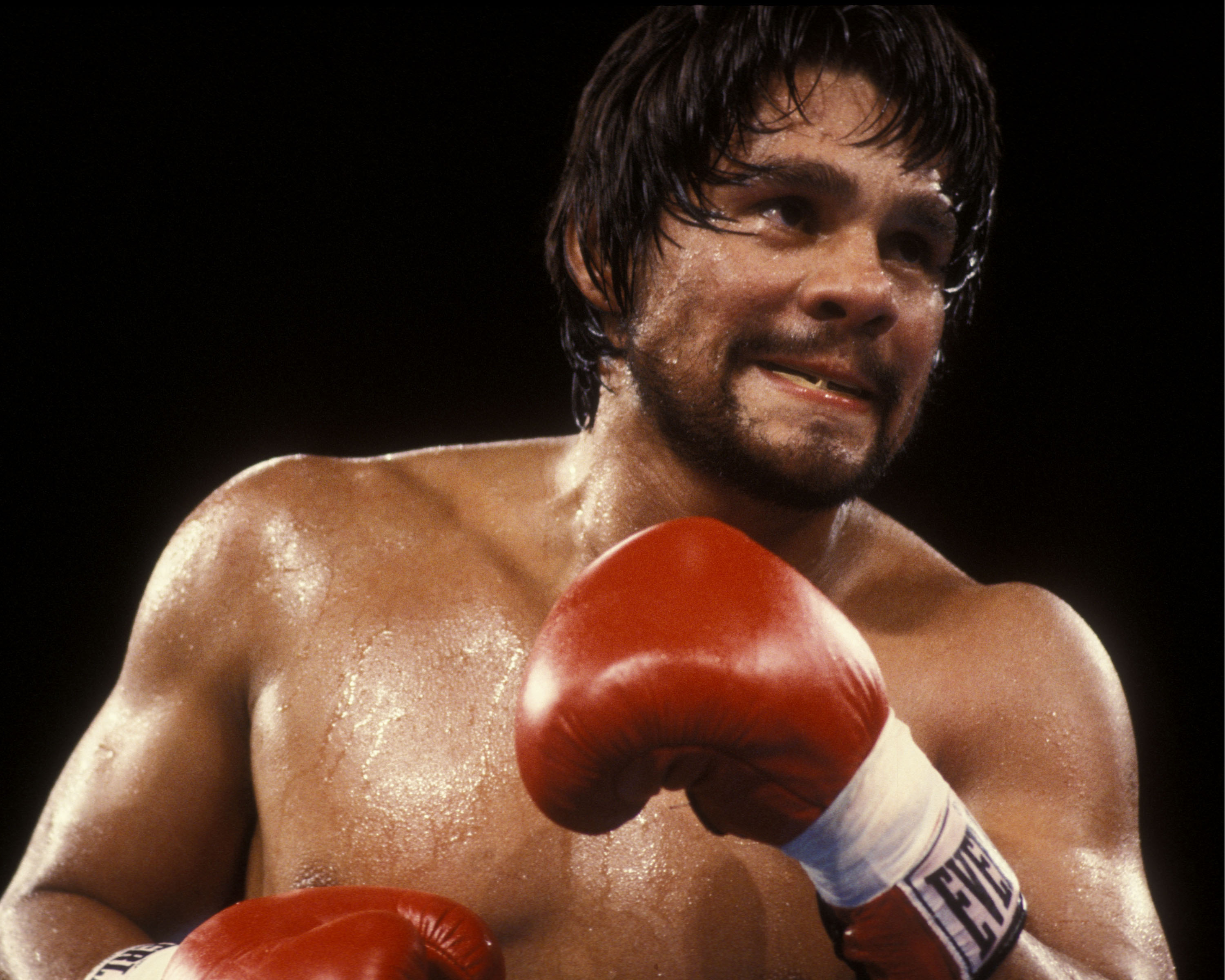
If there is a single name that stands at the pinnacle of Latino boxing, it is Roberto Durán. Hailing from Panama, Durán’s career spanned five decades, beginning in 1968 and ending in 2001. He is widely considered the greatest lightweight in the history of the sport, a division he ruled with an iron fist during the 1970s.
Durán was not merely a brawler. While his nickname "Hands of Stone" suggested raw power, he was a defensive genius who utilized subtle head movement and shoulder rolls to stay in the pocket. His victory over Ray Leonard in the 1980 "Brawl in Montreal" remains one of the highest-level displays of pressure fighting ever recorded. Durán's ability to move up from 135 pounds to win world titles at Welterweight, Light Middleweight, and Middleweight (defeating the much larger Iran Barkley) cements his status as a top-five all-time pound-for-pound great.
Julio César Chávez: The Great Mexican Champion
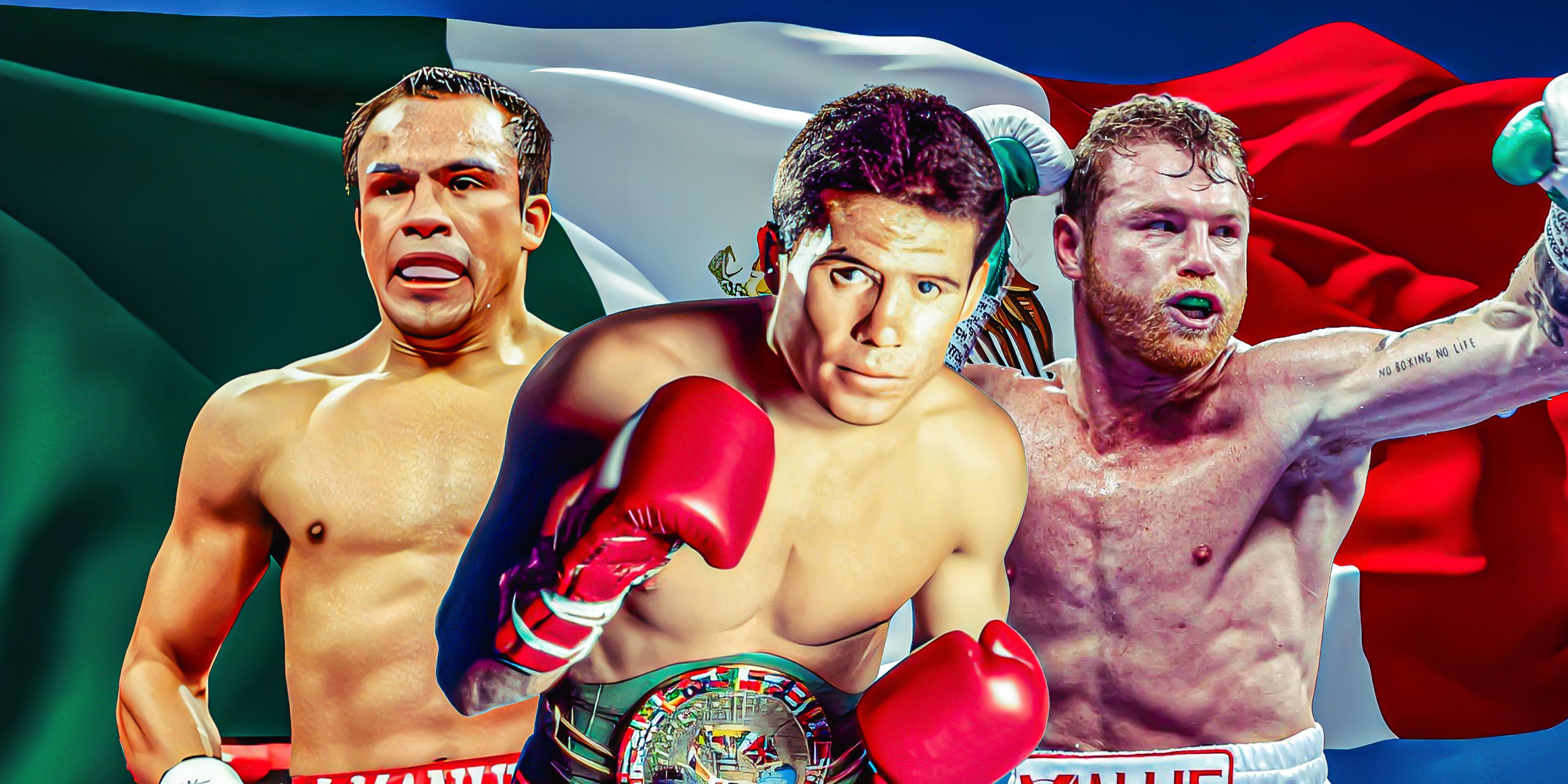
For many, Julio César Chávez is the definitive symbol of Mexican boxing. His career statistics are staggering: he remained undefeated for 90 professional fights, finishing his career with 107 wins. Chávez possessed perhaps the greatest chin in boxing history and was a master of the "left hook to the liver," a punch that became his signature.
Chávez’s peak occurred in the late 1980s and early 1990s. His 1990 victory over Meldrick Taylor is a legendary testament to his persistence; trailing on the cards with seconds left in the 12th round, Chávez forced a technical knockout that remains controversial yet iconic. Beyond the ring, Chávez was a unifying figure in Mexico, famously drawing over 132,000 spectators to the Estadio Azteca for his fight against Greg Haugen. As we look back from 2026, his record of 27 successful title defenses remains a benchmark for consistency.
Salvador Sánchez: The Unfinished Masterpiece
The history of Latino boxing is often marked by "what if" scenarios, and none is more poignant than that of Salvador Sánchez. Before his tragic death in a car accident at age 23 in 1982, Sánchez was the reigning WBC featherweight champion and appeared invincible.
Sánchez was a technical anomaly. He possessed limitless stamina and an uncanny ability to figure out his opponents' timing within three rounds. His knockout of the legendary Wilfredo Gómez in 1981 is considered one of the greatest performances in featherweight history. Gómez, a knockout artist from Puerto Rico, was heavily favored, but Sánchez dismantled him with surgical precision. Had Sánchez lived, many historians believe he would have challenged the all-time rankings of Durán and Muhammad Ali.
Alexis Argüello: The Explosive Thin Man
Nicaragua’s Alexis Argüello was the epitome of class both inside and outside the ring. A three-division world champion, Argüello was a tall, rangy puncher who utilized a devastating straight right hand and a clinical left hook.
Argüello’s battles with Aaron Pryor in the early 1980s are among the most celebrated in boxing history. Though he lost those encounters, his previous dominance in the Featherweight, Super Featherweight, and Lightweight divisions established him as a premier technician. He was never a "dirty" fighter; he relied on positioning and leverage to break opponents down. In Nicaragua, he is a national hero, serving as a reminder of the dignity a champion can carry.
The Puerto Rican Powerhouses: Gómez and Trinidad
Puerto Rico has produced more world champions per capita than almost any other nation. Two names stand out as the pillars of Boricua boxing: Wilfredo Gómez and Félix "Tito" Trinidad.
- Wilfredo Gómez: Known as "Bazooka," Gómez holds one of the most impressive streaks in history, winning 17 consecutive world title defenses by knockout. He ruled the Junior Featherweight division with a terrifying blend of speed and power.
- Félix Trinidad: Trinidad was a powerhouse at Welterweight and Light Middleweight. His wins over Oscar De La Hoya, Fernando Vargas, and Pernell Whitaker made him a global superstar. Trinidad’s power was equalized by his heart; he was frequently dropped early in fights, only to rise and stop his opponents late.
Ricardo "Finito" López: Perfection in the Smaller Weights
It is a common mistake to overlook the lower weight classes, but Ricardo López demands inclusion. The Mexican strawweight retired with an undefeated record of 51 wins, 0 losses, and 1 draw. He defended his world title 22 times.
López was perhaps the most technically "perfect" boxer on this list. His balance, footwork, and punch selection were flawless. He fought with a textbook style that coaches still use as a teaching tool today. Because he competed at 105 and 108 pounds, he did not always receive the mainstream media attention of a Chávez or a Durán, but among purists, "Finito" is a deity of the sport.
Comparisons of Legendary Latino Boxers
The following table compares the career highlights of these elite athletes to provide a clearer perspective on their dominance.
| Boxer | Country | Career Record | Divisions Won | Signature Win |
|---|---|---|---|---|
| Roberto Durán | Panama | 103-16 (70 KOs) | 4 | Ray Leonard (I) |
| Julio César Chávez | Mexico | 107-6-2 (85 KOs) | 3 | Meldrick Taylor (I) |
| Salvador Sánchez | Mexico | 44-1-1 (32 KOs) | 1 | Wilfredo Gómez |
| Alexis Argüello | Nicaragua | 77-8 (62 KOs) | 3 | Ruben Olivares |
| Ricardo López | Mexico | 51-0-1 (38 KOs) | 2 | Rosendo Álvarez (II) |
| Félix Trinidad | Puerto Rico | 42-3 (35 KOs) | 3 | Oscar De La Hoya |
| Canelo Álvarez | Mexico | 60+ Wins (2026) | 4 | Gennady Golovkin (II) |
Eder Jofre: The Golden Bantam
While Mexico and the Caribbean get much of the spotlight, Brazil produced one of the greatest bantamweights of all time: Eder Jofre. Competing largely in the 1960s, Jofre was a master technician with explosive power. He was rarely outboxed and possessed a defensive shell that was nearly impossible to crack. Jofre is often cited by historical experts as the greatest fighter ever to come out of South America, rivaling the impact of the Argentinian legends like Carlos Monzón.
Canelo Álvarez and the Modern Era
As of 2026, Saúl "Canelo" Álvarez has solidified his place in the pantheon of Latino greats. While his career was often scrutinized during his rise, his willingness to fight the best and his achievement as the first undisputed super middleweight champion in history cannot be ignored.
Canelo evolved from a straightforward power puncher into a high-level counter-puncher with elite head movement. His longevity and ability to jump between weight classes (from 154 to 175 pounds) mirror the career paths of Durán and Chávez. In the current landscape, he serves as the bridge between the classic era of the 20th century and the data-driven athleticism of the 21st century.
Common Characteristics of Latino Champions
While each fighter mentioned has a unique story, certain technical and psychological traits link the greatest Latino boxers:
- Body Investment: Latino boxers are taught from a young age that "if you kill the body, the head will fall." This focus on rib and liver shots is a hallmark of their success.
- High Volume and Pressure: The ability to maintain a high pace for 12 or 15 rounds is common among these legends, often stemming from rigorous high-altitude training in regions like Otomi, Mexico.
- Counter-punching Prowess: Despite the reputation for aggression, many, like Juan Manuel Márquez or Salvador Sánchez, were elite counter-punchers who used an opponent’s momentum against them.
Frequently Asked Questions
Who is considered the greatest Mexican boxer of all time?
Most historians and fans fluctuate between Julio César Chávez and Salvador Sánchez. Chávez is favored for his longevity and massive win count, while Sánchez is often cited as the most talented and technically gifted fighter the country ever produced, despite his shortened career.
Why are Latino boxers so dominant in the lighter weight classes?
Economic factors and regional demographics play a role. Boxing is a sport traditionally accessible to the working class in Latin America. Historically, average heights and weights in these regions aligned perfectly with the Flyweight through Welterweight divisions, leading to a massive talent pool and intense competition that sharpened these fighters from a young age.
How does Roberto Durán compare to modern fighters?
Durán’s style is timeless. His "inside game"—the ability to fight while chest-to-chest with an opponent—is a lost art in many modern gyms. Compared to fighters in 2026, Durán would likely still be a dominant force due to his psychological warfare and defensive nuances that modern "point-scoring" boxers often lack.
What is the "Mexican Style" of boxing?
The "Mexican Style" is characterized by walking forward, accepting a punch to give two, and focusing heavily on the opponent's torso. It is a style designed to break an opponent's will over the course of a fight. However, it also requires immense physical conditioning and a legendary "chin" (the ability to absorb punishment).
Who was the greatest Puerto Rican boxer?
This is a fierce debate between Wilfredo Gómez, Félix Trinidad, and Miguel Cotto. Gómez is often cited for his sheer dominance and knockout percentage at his peak, while Trinidad is beloved for his charisma and wins in higher-profile weight classes.
Final Recommendation for Fans and Historians
To truly appreciate the greatest Latino boxers in history, one should look beyond the win-loss records and study film from different eras. Start by watching Roberto Durán vs. Ray Leonard I for a lesson in controlled aggression. Then, view Salvador Sánchez vs. Wilfredo Gómez to witness technical perfection in the featherweight division. Finally, study the career of Ricardo López to see how a smaller fighter can dominate with textbook fundamentals. Understanding these legends provides a roadmap for what makes a complete fighter in any era of boxing.
Image Gallery
Select an image to open it in a new tab.
Zara El-Hashem
Sociocultural Dynamics and Academics Writer
