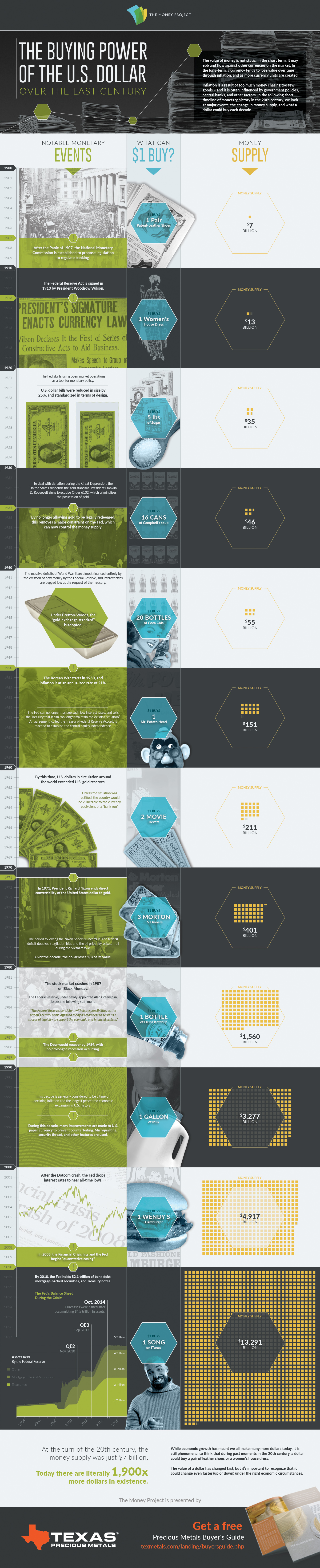
The buying power of the dollar represents the quantity of goods or services that one U.S. dollar can purchase at a specific point in time. It is essentially the "real value" of money; as prices for goods and services rise—a process known as inflation—the purchasing power of each individual dollar decreases, requiring more currency to acquire the same items.
When economists and consumers discuss the buying power of the dollar, they are fundamentally talking about the relationship between currency and the cost of living. Because the value of a currency is not fixed, $100 today does not command the same volume of commodities as it did a decade ago. Understanding this concept is critical for long-term financial planning, retirement savings, and understanding the broader health of the global economy.
The Core Mechanics: Inflation and Purchasing Power
The primary driver behind the changing buying power of the dollar is inflation. Inflation is defined as a sustained increase in the general price level of goods and services in an economy over a period of time. When the general price level rises, each unit of currency buys fewer goods and services; consequently, inflation reflects a reduction in the purchasing power per unit of money.
Demand-Pull vs. Cost-Push Inflation
To understand why buying power erodes, one must look at the two primary types of inflation:
- Demand-Pull Inflation: This occurs when the demand for goods and services exceeds their supply. In a growing economy, as consumers feel more confident and have more disposable income, they spend more. If production cannot keep pace with this demand, businesses raise prices. In this scenario, the "too much money chasing too few goods" phenomenon devalues the individual dollar.
- Cost-Push Inflation: This happens when the costs of production increase for companies. For example, if the price of crude oil rises significantly, the cost of transporting goods increases. Similarly, if wages rise rapidly without a corresponding increase in productivity, companies pass these costs on to consumers in the form of higher prices.
The Role of Monetary Policy
The Federal Reserve (the "Fed") plays a central role in managing the dollar's buying power. The Fed has a "dual mandate": to promote maximum employment and stable prices. In practice, the Fed targets a long-term inflation rate of approximately 2%. They argue that a small, predictable amount of inflation encourages consumers to spend rather than hoard cash, which stimulates economic growth. However, this intentional policy means that the dollar is designed to lose a small portion of its buying power every year.
Measuring the Decline: The Consumer Price Index (CPI)
The most common tool used to track the buying power of the dollar is the Consumer Price Index (CPI), published monthly by the Bureau of Labor Statistics (BLS). The CPI measures the average change over time in the prices paid by urban consumers for a market basket of consumer goods and services.
The "Market Basket"
The BLS tracks thousands of items across several major categories, including:
- Housing: Rent, mortgage equivalents, and fuels.
- Food and Beverages: Grocery items and dining out.
- Transportation: New and used vehicles, gasoline, and public transit.
- Medical Care: Insurance, hospital services, and prescription drugs.
- Apparel and Education: Clothing, tuition, and childcare.
When the CPI increases, it indicates that the cost of living has gone up, which is another way of saying the buying power of the dollar has gone down. For example, if the CPI increases by 3% in a year, a basket of goods that cost $100 last year now costs $103. Your dollar is effectively worth 3% less in terms of what it can actually acquire.

Historical Perspective: The Dollar’s Value Since 1913
To grasp the full scale of purchasing power erosion, it is helpful to look at historical data. The year 1913 is often used as a benchmark because it was the year the Federal Reserve was established.
According to historical BLS data, the purchasing power of $1.00 in 1913 would be equivalent to more than $30.00 today in 2026. This means the dollar has lost over 96% of its value in just over a century. While this sounds catastrophic, it is important to remember that nominal wages have also risen significantly during this time. The danger to the average person occurs when price inflation outpaces wage growth, leading to a decline in "real" income.
The End of the Gold Standard
A pivotal moment in the history of the dollar's buying power occurred in 1971, when President Richard Nixon ended the direct convertibility of the U.S. dollar to gold. This shifted the U.S. to a "fiat" currency system, where the dollar is not backed by a physical commodity but by the "full faith and credit" of the U.S. government. While this gave the government more flexibility to manage the economy, it also removed a natural constraint on the money supply, contributing to the significant inflationary periods seen in the late 1970s and early 1980s.
Purchasing Power of $100 Over Time (Comparative Analysis)
The following table illustrates how the buying power of $100 has shifted over the last several decades, adjusted to 2026 estimated equivalents.
| Year | Nominal Value | Estimated Buying Power (Relative to 2026 Dollars) | Historical Context |
|---|---|---|---|
| 1913 | $100 | ~$3,200.00 | Establishment of the Federal Reserve |
| 1945 | $100 | ~$1,750.00 | Post-WWII economic expansion |
| 1970 | $100 | ~$850.00 | Just before the end of the Gold Standard |
| 1990 | $100 | ~$250.00 | Period of relative price stability |
| 2010 | $100 | ~$145.00 | Recovery from the 2008 Financial Crisis |
| 2020 | $100 | ~$125.00 | Pre-pandemic price levels |
| 2026 | $100 | $100.00 | Current baseline |
Note: Figures are estimates based on historical CPI trends and projected inflation rates through early 2026.
Why Buying Power Matters for Your Personal Finances
Understanding buying power is not just an academic exercise; it is a practical necessity for financial survival. If you leave $10,000 in a standard savings account earning 0.5% interest while inflation is running at 3%, you are technically "losing" money. While your balance stays the same (or grows slightly), the real value of that money is shrinking because it will buy fewer groceries, less gas, and less housing in the future.
Impact on Retirement
Retirement planning is where the erosion of buying power is most dangerous. If a worker calculates they need $2 million to retire comfortably based on today’s prices, but they don't retire for another 25 years, that $2 million will likely have the buying power of only $1 million or less by the time they need it. Investors must target a rate of return that exceeds the rate of inflation to ensure their future purchasing power is preserved.
The "Money Illusion"
Economists often refer to the "money illusion," a cognitive bias where people think of currency in nominal terms rather than real terms. For example, getting a 3% raise feels like a win. However, if the cost of living (inflation) has increased by 5%, that person has actually received a 2% pay cut in terms of buying power. Recognizing this distinction is key to making informed decisions about employment contracts and investments.
Domestic vs. International Buying Power
It is important to distinguish between the dollar's domestic buying power and its international strength (exchange rate).
- Domestic Buying Power: This is what a dollar buys you at your local grocery store or for your rent. This is governed by local inflation and the CPI.
- International Strength (The U.S. Dollar Index): This is how many units of a foreign currency (like the Euro or Yen) a dollar can buy. A "strong dollar" on the international stage means you can buy more foreign goods or travel more cheaply abroad.
While the two are related, they are not the same. It is possible for the dollar to lose buying power domestically (due to local inflation) while simultaneously becoming "stronger" against other currencies if those foreign nations are experiencing even higher inflation or economic instability.
Strategies to Protect Your Buying Power in 2026
Given that the dollar naturally loses value over time, holding large amounts of cash is rarely a viable long-term strategy. To combat the loss of purchasing power, individuals typically turn to various asset classes that historically outpace inflation.
1. Equities (Stocks)
Historically, the stock market has provided returns that exceed the rate of inflation over long periods. Companies have the ability to raise prices for their products as their own costs rise, which can lead to higher nominal earnings and, consequently, higher stock prices.
2. Real Estate
Real estate is often considered a "natural hedge" against inflation. As the buying power of the dollar drops, the nominal value of property and the amount of rent that can be charged typically rise. Furthermore, for those with fixed-rate mortgages, inflation actually works in the borrower's favor, as they are paying back their debt with "cheaper" dollars.
3. Treasury Inflation-Protected Securities (TIPS)
TIPS are government bonds specifically designed to protect against inflation. The principal value of a TIPS bond increases with inflation (as measured by the CPI) and decreases with deflation. When the bond matures, you are paid the adjusted principal or the original principal, whichever is greater.
4. Commodities and Hard Assets
Assets like gold, silver, and even oil are often used as stores of value. Because these items have intrinsic utility and finite supply, their prices often rise when the currency used to buy them loses value.
Frequently Asked Questions
Does the buying power of the dollar ever go up?
Yes, this is known as deflation. Deflation occurs when the general price level of goods and services decreases. During deflationary periods, the buying power of the dollar increases, meaning you can buy more with the same amount of money. While this sounds beneficial for consumers, persistent deflation is generally considered harmful to the economy because it can lead to lower consumer spending (as people wait for prices to drop further) and increased real debt burdens.
Why doesn't the government just print less money to stop the value from dropping?
The money supply is a delicate balance. While printing too much money leads to hyperinflation, a stagnant or shrinking money supply can lead to a recession or depression. The Federal Reserve attempts to provide enough liquidity to support economic growth and employment while keeping inflation low and predictable.
How do interest rates affect the dollar's buying power?
Interest rates are the primary tool the Fed uses to control inflation. When inflation is too high (eroding buying power too quickly), the Fed raises interest rates. This makes borrowing more expensive, which slows down spending and investment, eventually cooling off price increases. Conversely, lowering interest rates stimulates the economy but can lead to higher inflation if kept too low for too long.
What is the difference between purchasing power and the standard of living?
Purchasing power refers specifically to what a unit of currency can buy. The standard of living is a broader measure that includes purchasing power but also factors in quality of life, access to healthcare, education, and technology. It is possible for purchasing power to decrease while the standard of living increases due to technological advancements that make life better even if goods cost more.
How does the dollar's buying power affect my debt?
Inflation (the loss of buying power) is generally good for debtors and bad for creditors. If you owe a fixed amount of money, such as a $300,000 mortgage, and inflation causes prices and wages to rise, your debt remains $300,000. However, that $300,000 represents a smaller portion of your labor and overall economic value than it did when you first borrowed it.
Moving Forward: Monitoring Your Real Wealth
To maintain financial health in 2026 and beyond, it is vital to shift your focus from nominal wealth (the number on your bank statement) to real wealth (what that number can actually provide). The buying power of the dollar will continue to fluctuate based on global supply chains, geopolitical stability, and central bank policies.
As a practical next step, individuals should review their investment portfolios to ensure they are not "over-weighted" in cash or low-interest fixed-income assets that fail to keep pace with the CPI. Consulting with a financial advisor to incorporate inflation-protected assets can help ensure that the dollars you save today will still hold significant value when you need them in the future.
Image Gallery
Select an image to open it in a new tab.

Declan O'Connor
Higher Education and Campus Culture Reporter
