Understanding the PA Workers Compensation Fee Schedule: A Comprehensive Guide for 2026
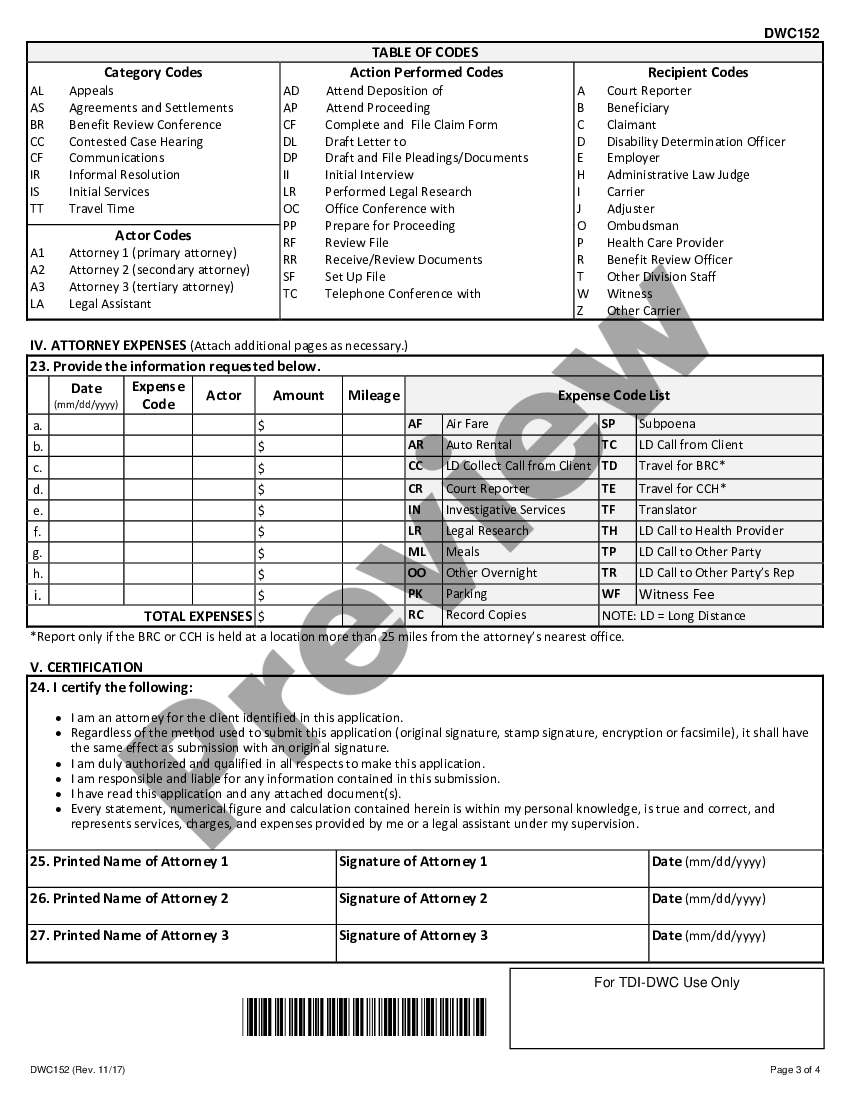
The Pennsylvania Workers’ Compensation Fee Schedule is a regulated system that establishes the maximum allowable reimbursement rates for medical providers treating injured employees. Managed by the Bureau of Workers’ Compensation (BWC), it primarily utilizes a formula based on 113% of the Medicare Resource-Based Relative Value Scale (RBRVS) to ensure cost control while maintaining access to quality care.
Medical billing within the Pennsylvania workers' compensation system is governed by a complex set of statutes and annual updates. Whether you are a healthcare provider, an insurance adjuster, or an attorney, navigating this landscape requires a deep understanding of the Pennsylvania Workers' Compensation Act, specifically the cost-containment provisions introduced in the early 1990s. As we operate in 2026, these regulations continue to define the financial boundaries of medical treatment for work-related injuries across the Commonwealth.
The Legal Foundation: Act 44 and Section 306(f.1)
To understand the current fee schedule, one must look back at the legislative shift that occurred with the passage of Act 44 in 1993. Prior to this landmark legislation, there were few restrictions on what medical providers could charge for treating work-related injuries, often leading to astronomical costs for employers and insurers. Act 44 amended the Pennsylvania Workers' Compensation Act to include Section 306(f.1), which implemented a reimbursement cap.
The primary goal of Section 306(f.1) was to create a "predictable and sustainable" medical cost environment. It mandated that providers could not charge more than 113% of the amount Medicare would pay for the same service. This link to Medicare was intentional; it allowed the Pennsylvania system to piggyback on the federal government's extensive research into the relative value of medical procedures, rather than the state having to invent its own values for thousands of different CPT (Current Procedural Terminology) codes.
In 2026, this legal framework remains the bedrock of medical billing. It prohibits "balance billing," a practice where a provider attempts to collect the difference between their standard rate and the fee schedule amount from the injured worker. Under Pennsylvania law, the provider must accept the fee schedule amount as payment in full, provided the injury is compensable.
How the Fee Schedule Calculation Works
The calculation of a specific reimbursement rate is not a simple fixed number. Instead, it is a dynamic formula that involves several variables adjusted annually by the Centers for Medicare & Medicaid Services (CMS) and then adopted with modifications by the Pennsylvania Bureau of Workers' Compensation.
The RBRVS Components
The Resource-Based Relative Value Scale (RBRVS) assigns a "Relative Value Unit" (RVU) to each medical service. These RVUs are split into three distinct categories:
- Work RVU: Measures the time, technical skill, and physical/mental effort required by the physician.
- Practice Expense RVU: Accounts for the overhead costs of running a facility, such as rent, equipment, and non-physician staff salaries.
- Malpractice RVU: Reflects the cost of professional liability insurance associated with a specific procedure.
The Geographic Practice Cost Index (GPCI)
Because it costs more to run a clinic in Philadelphia than in a rural county, the formula incorporates a Geographic Practice Cost Index (GPCI). This index adjusts the RVUs based on the specific region in Pennsylvania where the service was rendered. This ensures that providers in high-cost urban areas are not unfairly penalized by a statewide flat rate.
The Conversion Factor (CF)
The Conversion Factor is a dollar amount that converts the adjusted RVUs into an actual payment amount. For 2026, the BWC utilizes the updated Medicare conversion factors as the starting point. The final calculation follows this general path: [(Work RVU × Work GPCI) + (PE RVU × PE GPCI) + (Malpractice RVU × Malpractice GPCI)] × Medicare Conversion Factor × 1.13 = PA Workers' Comp Maximum Allowance.

Categorizing the Different Fee Schedules
The Pennsylvania BWC does not maintain just one list. Depending on the nature of the service, different schedules and rules apply. Understanding these distinctions is vital for accurate billing and auditing.
Professional Services (Part B)
This is the most common schedule, covering office visits, surgeries, physical therapy, and diagnostic tests like MRIs or X-rays. These are indexed strictly to the 113% Medicare rule. If a code does not exist in the Medicare database, the law requires payment at the "usual and customary" rate, which is often calculated as the 85th percentile of charges for that service in that specific zip code.
Inpatient and Outpatient Facility Fees
Hospitals and Ambulatory Surgery Centers (ASCs) operate under different constraints. Inpatient hospital stays are typically reimbursed based on Diagnosis Related Groups (DRGs). This means the hospital receives a flat fee based on the patient's diagnosis and the severity of the case, rather than a line-item bill for every aspirin or bandage used. Outpatient facilities use the Ambulatory Payment Classification (APC) system, which functions similarly to the professional fee schedule but is tailored for facility overhead.
Durable Medical Equipment (DME) and Orthotics
Items such as wheelchairs, braces, and crutches fall under the DMEPOS (Durable Medical Equipment, Prosthetics, Orthotics, and Supplies) schedule. Pennsylvania generally caps these at 113% of the Medicare DMEPOS fee schedule. In cases where the item is not listed, the reimbursement is often based on the provider's invoice cost plus a specific markup percentage defined by the Bureau.
Prescription Drugs and Pharmacy Reimbursement
The pharmaceutical fee schedule is perhaps the most contested area. Pennsylvania uses a formula based on the Average Wholesale Price (AWP). As of 2026, the standard reimbursement for brand-name drugs is often AWP minus a set percentage, plus a small dispensing fee. Generic drugs are reimbursed at a lower rate to encourage cost-saving measures.
Summary Table: Pennsylvania Medical Fee Benchmarks 2026
The following table outlines how different medical services are benchmarked against Medicare in the 2026 Pennsylvania Workers' Compensation environment.
| Service Category | Primary Benchmark | Multiplier | Notes |
|---|---|---|---|
| Professional Services | Medicare RBRVS | 113% | Based on CPT/HCPCS codes. |
| Inpatient Hospital | Medicare DRG | 113% | Flat rate per admission based on diagnosis. |
| Ambulatory Surgery | Medicare APC | 113% | Specific to outpatient surgical centers. |
| Durable Medical Equipment | Medicare DMEPOS | 113% | Covers braces, walkers, and supplies. |
| Prescription Drugs | Average Wholesale Price | N/A | Calculated as AWP minus (X)% plus dispensing fee. |
| Unlisted Services | Usual & Customary | 85th Percentile | Used when no Medicare code exists. |
The Annual Update Cycle and Accessing Data
The PA Workers' Compensation fee schedule is not static. It is updated annually to reflect changes in medical technology, inflation, and federal Medicare adjustments. The Bureau of Workers’ Compensation typically releases the updated Medical Fee Schedule (MFS) data files toward the end of each calendar year, with the new rates taking effect on January 1st.
For 2026, stakeholders must ensure they are using the "2026 Part B" or "2026 Outpatient" files. These are available through the Pennsylvania Department of Labor & Industry website. Accessing these files often requires specific software or a deep understanding of data file structures (such as .dat or .txt formats), as the Bureau provides the raw data rather than a simplified "search engine" for every code.
Providers must be careful to use the date of service, not the date of billing, to determine which year’s schedule applies. If a surgery was performed on December 28, 2025, but billed on January 5, 2026, the 2025 fee schedule rates apply.
Navigating Fee Disputes: The Medical Fee Review Process
Disagreements between providers and insurers regarding the correct payment amount are common. When an insurer pays less than what the provider believes is due under the schedule, the provider has a specific legal remedy: the Application for Fee Review (Form LIBC-603).
The 30-Day Window
A provider must file a fee review petition within 30 days of the date they received the notice of the disputed payment (the Explanation of Review or EOR). If the provider misses this window, they generally lose their right to contest the payment.
The Bureau’s Role
Once a petition is filed, the Bureau’s Medical Fee Review Section examines the billing, the EOR, and the applicable fee schedule. They issue an administrative decision. If either party disagrees with this administrative decision, they can request a "de novo" hearing before a Workers' Compensation Judge who specializes in fee disputes.
Common Dispute Triggers
- Downcoding: The insurer changes a high-level office visit code to a lower-level code, claiming the documentation doesn't support the higher charge.
- Unbundling: The provider bills for multiple procedures that the insurer claims should be "bundled" into a single, comprehensive code.
- PPO Reductions: Many providers sign contracts with Preferred Provider Organizations (PPOs) that allow the insurer to pay less than the 113% fee schedule. Disputes often arise when a provider claims they are not part of a specific PPO network.
The Role of Utilization Review (UR)
It is important to distinguish between a fee dispute and a medical necessity dispute. The fee schedule only determines how much is paid; it does not determine if the treatment is necessary. If an insurer believes a treatment is over-utilized or not related to the work injury, they must file for a Utilization Review (UR).
The fee schedule cannot be used as a reason to deny care, and conversely, a UR decision cannot be used to justify paying less than the fee schedule for a service deemed "reasonable and necessary." These are two separate tracks in the Pennsylvania system, and billing professionals must be careful not to confuse them.
Best Practices for Providers and Billing Departments
To ensure timely and accurate payment in 2026, medical offices should adhere to several key strategies:
- Verify Information Early: Ensure the claim number, date of injury, and insurer address are correct before the first bill is sent.
- Use Exact Coding: Ensure CPT and HCPCS codes are updated to 2026 standards. Using obsolete codes is the fastest way to trigger a rejection.
- Include Documentation: Per Section 306(f.1), a bill is not considered "submitted" until the required medical reports are included. For workers' comp, this usually means including the office notes for that specific date of service.
- Monitor EORs: Do not simply deposit checks. Review the Explanation of Review (EOR) to ensure the insurer is paying the full 113% and not taking unauthorized "silent PPO" discounts.
- Track the 30-Day Deadline: Maintain a log of when payments are received to ensure any necessary Fee Review petitions are filed within the strict 30-day window.
FAQ: Frequently Asked Questions
Can a doctor in PA charge an injured worker if the insurance pays less than the bill?
No. This is known as balance billing and is strictly prohibited under the Pennsylvania Workers' Compensation Act. If the treatment is for a recognized work injury, the provider must accept the fee schedule amount (or the PPO contracted rate) as payment in full. The only exception is if the treatment is determined to be unrelated to the work injury or is deemed unnecessary by a Utilization Review.
What happens if a CPT code is not on the PA Fee Schedule?
If a service is not covered by the Medicare-based schedule, the insurer must pay "usual and customary" charges. In Pennsylvania, this is defined as the 85th percentile of the charge for the service in the geographic area where it was performed. Providers may need to submit evidence of their standard charges to support this.
Does the fee schedule apply to "Trauma" cases?
There is a specific "Trauma Center" exemption in Pennsylvania law. If an injured worker is treated at a level I or level II trauma center for life-threatening or urgent injuries, the standard fee schedule may not apply to the initial emergency care. This is intended to ensure that trauma centers can afford to provide high-level, life-saving interventions without the constraints of Medicare-indexed caps.
How are travel expenses for medical appointments handled?
Travel expenses (mileage) for injured workers to attend medical appointments are not part of the provider fee schedule. Instead, they are a direct reimbursement to the injured worker. As of 2026, these are typically paid at the IRS standard business mileage rate, though the specific rate is updated annually.
Are physical therapy and chiropractic care subject to the same caps?
Yes. All professional medical services, including physical therapy, chiropractic adjustments, and occupational therapy, are subject to the 113% Medicare RBRVS cap. Furthermore, Pennsylvania has specific rules regarding the "number of visits" and documentation required for these types of ongoing conservative care.
Practical Recommendation
For medical providers operating in 2026, the most effective way to manage Pennsylvania Workers’ Compensation claims is to invest in specialized billing software that integrates the Bureau of Workers’ Compensation data files directly. Relying on manual calculations or general health insurance billing practices often leads to significant revenue leakage or legal non-compliance. If you encounter an underpayment, do not delay; the 30-day window for filing a Fee Review is one of the strictest deadlines in Pennsylvania law. Consistent auditing of Explanations of Review against the 2026 MFS Part B data will ensure your practice is receiving the maximum allowable reimbursement permitted by the Commonwealth.
Image Gallery
Select an image to open it in a new tab.


Lars Thomsen
Global Labor Markets and Economic Strategy Editor
