An Experian business credit report serves as a foundational assessment of your company’s financial reliability, influencing your ability to secure loans, negotiate favorable trade credit terms with suppliers, and attract potential business partners. By aggregating data on payment history, public records, and operational stability, this report provides lenders and vendors with a standardized view of your creditworthiness, directly impacting your organization's cost of capital and overall procurement power.
The Role of Business Credit in the Modern Economy
In the corporate world, credit operates differently than it does for individuals. While consumer credit is deeply tied to a Social Security number and personal financial behavior, business credit is tied to the legal entity itself—the corporation, limited liability company (LLC), or partnership. Experian, one of the primary commercial credit bureaus in the United States, collects vast amounts of data to produce a comprehensive report that functions as the "financial resume" of your company.
The importance of this report stems from the principle of risk mitigation. When a bank considers lending money to your business, or when a supplier decides to provide inventory on "net-30" or "net-60" terms, they are assuming a risk that they will not be paid. The Experian business credit report provides these entities with a quantifiable measure of that risk, helping them decide whether to extend credit and at what interest rate or limit.
Key Components of the Experian Business Credit Report
Understanding the report requires familiarity with the specific metrics Experian uses to grade your business. These indicators are not merely arbitrary numbers; they are derived from real-world financial interactions.
Experian Credit Score (Intelliscore Plus)
The Intelliscore Plus is the flagship product used to predict the likelihood of serious credit delinquency. Unlike consumer FICO scores, which range from 300 to 850, the Intelliscore Plus typically ranges from 1 to 100. A higher score indicates a lower risk of default. This score is calculated using hundreds of variables, including:
- Payment Trends: How consistently your business pays its bills on time versus late.
- Credit Utilization: The amount of credit currently in use relative to your available credit limits.
- Public Records: Information regarding bankruptcies, tax liens, and civil judgments against the business.
- Age of Credit History: The length of time your business has maintained active credit accounts.
Financial Stability Risk Rating
This component specifically assesses the likelihood that a business will experience financial distress or insolvency within the next 12 months. It is particularly crucial for long-term vendors and B2B partners who need to ensure that their counterparties will remain operational throughout the duration of a multi-year contract.
Trade Payment Data
Perhaps the most granular part of the report is the trade payment history. This tracks specific accounts with suppliers, utility companies, and lenders. It reveals not just whether you paid, but whether you paid early, on time, or late, and how many days past due those payments were.

Why Your Business Report Impacts Operational Costs
The impact of your credit report is not limited to whether you are approved for a loan. It fundamentally changes the cost of doing business. If your Experian report shows a high risk, lenders will often classify your business as a "subprime" borrower. This results in higher interest rates on equipment financing, lines of credit, and commercial mortgages. Over the lifespan of a business, these extra interest points can total tens or hundreds of thousands of dollars.
Furthermore, trade credit is a primary source of interest-free financing for many businesses. If your report is strong, you can negotiate better terms with suppliers—such as paying in 60 days instead of 30. This creates cash flow breathing room that allows you to reinvest in operations, inventory, or payroll. Conversely, if your Experian report indicates instability, suppliers may demand "cash on delivery" (COD), which ties up your liquid capital and restricts your growth potential.
Comparing Business Credit Reporting Services
While Experian is a dominant player, it is helpful to understand how its offerings compare to the broader market.
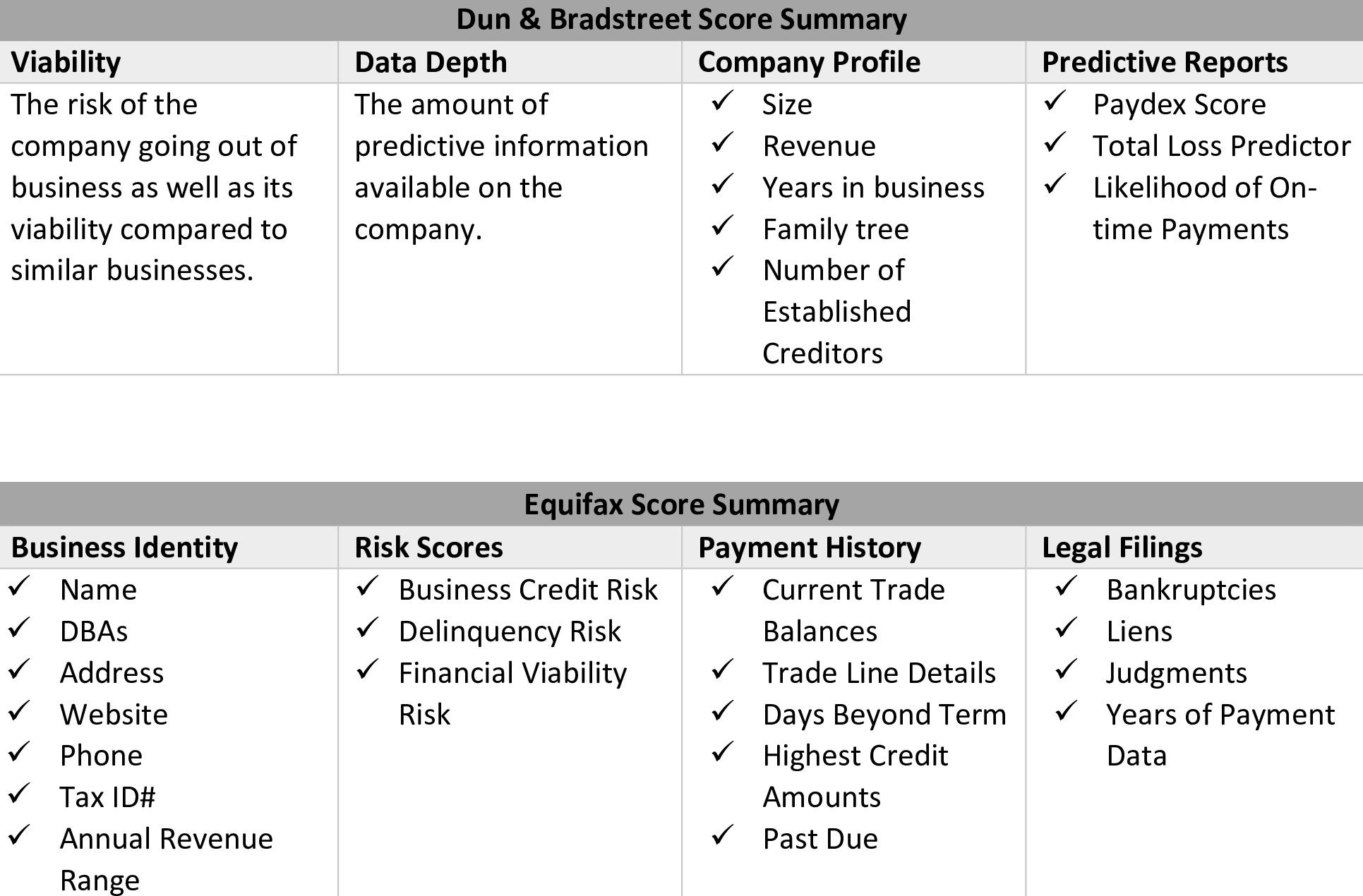
| Feature | Experian Business | Dun & Bradstreet | Equifax Business |
|---|---|---|---|
| Primary Identifier | Business Identity/Tax ID | D-U-N-S Number | Tax ID/Trade Data |
| Core Product | Intelliscore Plus | PAYDEX Score | Credit Risk Score |
| Data Scope | Broad commercial data | Strong international reach | High accuracy in banking |
| Best For | SME risk assessment | Global corporate partnerships | Large scale banking/lending |
Practical Steps to Monitor and Maintain Your Credit Report
Given the high stakes, ignoring your business credit report is a significant administrative error. You should proactively monitor your report to ensure accuracy.
- Establish Your Entity: Ensure your business is properly registered as a legal entity and has a federal Employer Identification Number (EIN).
- Verify Data: Periodically purchase your report directly from the official Experian business website. Do not rely on third-party aggregators that may offer outdated or synthesized information.
- Correct Discrepancies: If you find accounts listed that do not belong to you or late payments that were actually made on time, use the formal dispute process provided by Experian to correct the record.
- Manage Trade References: If you have vendors who do not report to credit bureaus, request that they provide trade references to Experian to build your history.
- Separate Finances: Never commingle personal and business expenses. Using business credit cards and loans—and paying them off timely—is the fastest way to build a robust business credit profile independent of your personal credit score.
Common Mistakes That Damage Business Credit
Many business owners inadvertently harm their credit by failing to understand how data is collected. One common mistake is the "late payment trap." Even if a bill is only a few days late, if a vendor reports that data to Experian, it can stay on your record for years. Another error is neglecting public records. If your business is sued or has a tax lien filed against it, that information becomes a matter of public record and will be picked up by Experian, often causing a sharp, immediate drop in your score regardless of your payment history.
Frequently Asked Questions
How does my personal credit affect my business credit report? While business credit is separate, many lenders will perform a "personal guarantee" check. In these cases, the lender looks at both your business credit report and your personal credit report. A poor personal score can sometimes lead to a denial of credit, even if the business itself has a decent record.
Can I opt out of being tracked by Experian? No. Experian aggregates public record data and trade information from thousands of sources as part of their business function. You cannot opt out, but you can influence the narrative by ensuring your reporting is accurate and your payments are timely.
How often should I check my business credit report? It is advisable to check your report at least twice a year, or immediately prior to applying for a significant loan or entering into a high-value contract. This ensures you are not blindsided by inaccurate information during a critical negotiation.
Does a new business have an Experian report? Not necessarily. It takes time for a business to generate enough data for a report. If your business is brand new, you may have a "thin file." To begin building credit, you must open accounts that report to the bureaus, such as a business bank account, a business credit card, or vendor accounts with office supply companies.
Is there a cost to fix errors on my report? No, the dispute process for inaccuracies on your Experian business report is free. If a company asks for a fee to "clean up" your credit report, be cautious, as these services cannot do anything that you cannot do yourself for free through the official Experian portal.
Next Action: Establish Your Monitoring Routine
To effectively manage your business reputation in 2026, start by accessing your company’s profile on the Experian Business credit portal. Review the current "Intelliscore" and cross-reference the trade payment history with your internal accounting records. If there are discrepancies, initiate the correction process immediately. Moving forward, treat your credit profile as a key performance indicator, reviewing it alongside your quarterly financial statements to ensure your business remains in the best possible position for growth and financing.
Image Gallery
Select an image to open it in a new tab.

Vivian Cho
Executive IT and Emerging Technologies Reporter
