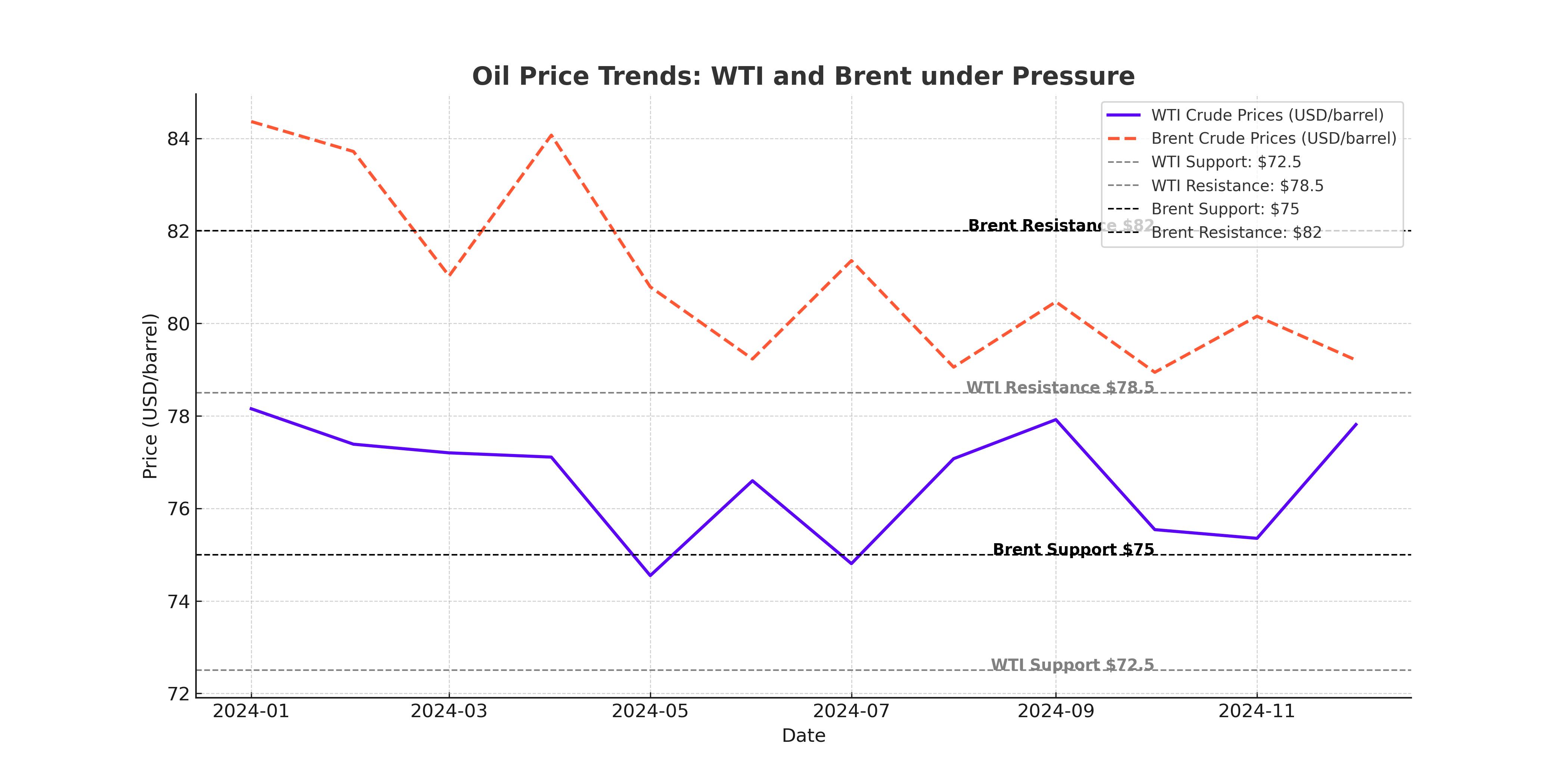
Brent Crude oil trading primarily takes place on the Intercontinental Exchange (ICE) and the Chicago Mercantile Exchange (CME). On the ICE, trading typically runs from 23:00 GMT Sunday to 22:00 GMT Friday, with a one-hour daily break from 22:00 to 23:00 GMT. These hours ensure near-continuous global access for energy hedgers and speculators.
Understanding the specific trading hours for Brent Crude is not merely a matter of knowing when the "shop is open." In the complex global energy market of 2026, timing influences liquidity, price volatility, and the execution of sophisticated hedging strategies. Brent Crude serves as the leading global benchmark for Atlantic Basin crude oils and is used to price two-thirds of the world's internationally traded physical oil supplies. Because it is a global commodity, its trading schedule must accommodate participants from Tokyo and Singapore to London, New York, and Houston.
The Primary Exchanges for Brent Crude
While Brent Crude originated in the North Sea, it is now traded digitally on a global scale. Two main exchanges dominate the futures market, each with its own specific operational window.
ICE Futures Europe (The Global Standard)
The Intercontinental Exchange (ICE) is the premier venue for Brent Crude futures. The ICE Brent Crude contract is the most liquid and widely watched version of this commodity. As of 2026, the electronic trading platform remains the primary driver of price discovery.
The ICE Brent Crude trading week begins on Sunday evening at 23:00 GMT (London time) and concludes on Friday evening at 22:00 GMT. Throughout the trading week, the market operates 22 to 23 hours a day. There is a critical daily maintenance break that occurs between 22:00 and 23:00 GMT. During this hour, trading is suspended, and the exchange processes settlements and clears the order books for the next session.
NYMEX Brent Crude (CME Group)
The Chicago Mercantile Exchange (CME), through its NYMEX division, offers a Brent Crude North Sea Last Day Financial Futures contract. While ICE is the "home" of Brent, many North American traders prefer the CME's Globex platform for its integration with WTI (West Texas Intermediate) trading.
Trading on the CME Globex platform follows a slightly different cadence, primarily centered on U.S. Eastern Time. The session typically opens on Sunday at 18:00 ET and closes on Friday at 17:00 ET. Similar to the ICE, there is a daily break from 17:00 to 18:00 ET.
Global Session Breakdown and Liquidity Cycles
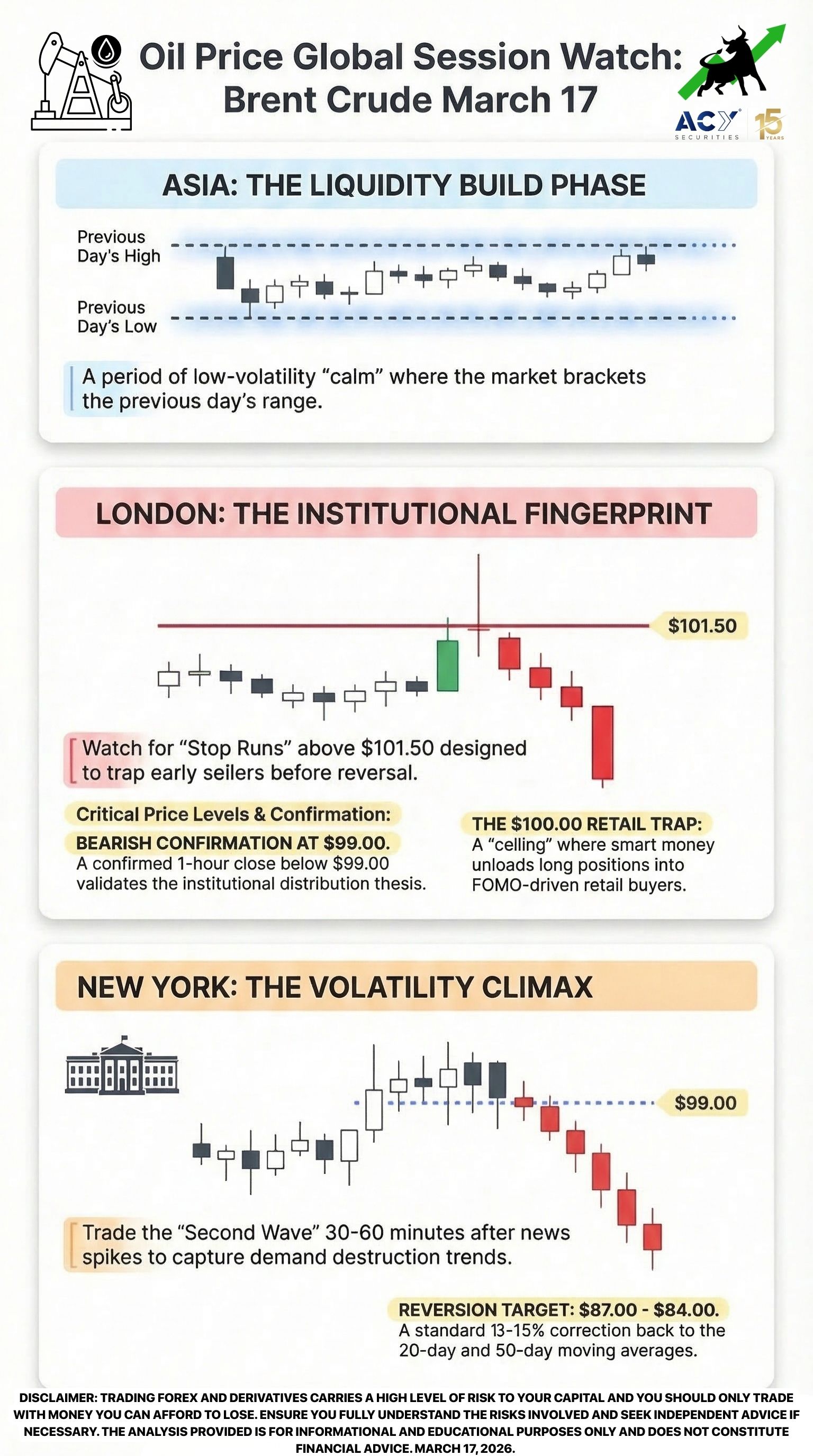
Trading hours are technically nearly 24/5, but market activity is not uniform throughout the day. A trader’s success often depends on identifying the "Golden Hours"—periods when volume is at its peak and bid-ask spreads are at their narrowest.
The Asian Session (Tokyo/Singapore)
The trading day effectively starts in the Asian markets. While volume is generally lower than in the European or North American sessions, the Asian open on Sunday night (GMT) is a critical time for reacting to weekend news. If OPEC+ makes an announcement on a Saturday or if geopolitical tensions flare up in the Middle East over the weekend, the first signs of price movement will appear during these hours. Traders in Singapore, a major physical oil hub, provide the initial liquidity for the day.
The European Session (London)
As London opens around 08:00 GMT, Brent Crude liquidity spikes significantly. Since Brent is a European-centered benchmark, the London session is arguably the most important for price discovery. Many physical oil contracts are benchmarked against the "London close" or specific "fixings" that occur during this window. Institutional hedgers and major oil companies are most active during these hours.
The North American Session (New York)
The New York open (08:00 or 09:00 ET) brings a massive influx of capital. This session overlaps with the latter half of the European session. The "overlap period" (typically 13:00 to 16:30 GMT) is the most volatile and liquid time to trade Brent Crude. This is when U.S.-based hedge funds and algorithmic traders enter the market, often reacting to U.S. economic data or the Weekly Petroleum Status Report from the U.S. Energy Information Administration (EIA).

Time Zone and Daylight Savings Considerations
One of the most common mistakes traders make is failing to account for Daylight Savings Time (DST) shifts. In 2026, as in previous years, the United Kingdom and the United States do not synchronize their clock changes perfectly.
For a few weeks in March and October/November, the time difference between London (GMT/BST) and New York (EST/EDT) shifts from five hours to four hours. This "shoulder period" can cause confusion regarding the timing of inventory reports and exchange opens. If you are trading Brent from a third location, such as Dubai or Hong Kong, it is essential to calibrate your platform to the Exchange Time (GMT for ICE) to avoid missing market-moving events.
| Feature | ICE Futures Europe (GMT) | CME Globex (US Eastern) |
|---|---|---|
| Weekly Open | Sunday 23:00 | Sunday 18:00 |
| Weekly Close | Friday 22:00 | Friday 17:00 |
| Daily Break | 22:00 - 23:00 | 17:00 - 18:00 |
| Primary Focus | Global/European Benchmark | US-Based Financial Hedging |
| Contract Unit | 1,000 Barrels | 1,000 Barrels |
| Settlement Type | Cash Settled (based on Index) | Financially Settled |
Significant Trading Events Within the Hours
Trading Brent Crude isn't just about the clock; it's about the calendar of events that occur within those hours.
- The EIA Inventory Report: Usually released on Wednesdays at 10:30 AM ET (15:30 GMT). Although this report focuses heavily on U.S. stocks (WTI), Brent Crude often reacts violently to these numbers because they reflect the overall health of global demand.
- The ICE Brent Index Publication: The ICE Brent Index is published daily. It represents the average price of the 1st month North Sea "Brent/Forties/Oseberg/Ekofisk/Troll/WTI Midland" (BFOETM) cash market. The timing of this publication is vital for those involved in the physical-to-futures convergence.
- OPEC+ Meetings: These meetings often conclude during the European afternoon or evening. In 2026, OPEC+ continues to be a major force in supply-side management. When these meetings occur, trading hours remain the same, but the "volatility per hour" can increase exponentially.
- Market on Close (MOC) Process: In the physical world, the "Platts Window" or MOC process occurs in the late afternoon in London. This is when physical cargoes are bid and offered, and it heavily influences the front-month futures price on the ICE.
Risks of After-Hours and Weekend Trading
While electronic platforms allow for nearly continuous trading, "after-hours" trading (specifically the late New York session and the early Asian session) carries unique risks.
Liquidity Gaps: During the late-night hours in London and New York, there are fewer participants. A large sell or buy order that would be easily absorbed during the London-New York overlap might cause a significant price "spike" or "slip" during the Asian session.
Weekend Risk: Brent Crude futures do not trade on Saturdays or most of Sunday. However, the world of geopolitics does not take a break. If a major pipeline is attacked or a sudden diplomatic breakthrough occurs over the weekend, the market will "gap" upon the Sunday open. A gap occurs when the opening price on Sunday is significantly different from the Friday closing price, potentially bypassing "stop-loss" orders and leading to larger-than-expected losses.
Electronic System Maintenance: While the daily break is only an hour, exchanges occasionally schedule longer maintenance windows on weekends. Traders should check the ICE Service Announcements or the CME Group's notice board for any planned 2026 outages.
Holiday Schedules
Brent Crude trading is subject to holiday closures, but because it is an international commodity, the market doesn't always close for every local holiday.
- U.S. Holidays (e.g., Thanksgiving, July 4th): The CME might have shortened sessions or be closed, and while ICE remains open, liquidity may be significantly thinner as American desks are away.
- UK/European Holidays (e.g., Bank Holidays): ICE may see reduced volume, even if the electronic platform is technically operational.
- Global Holidays: Christmas Day and New Year’s Day are the only times the market shuts down entirely across all major global exchanges.
In 2026, it is advisable to maintain a multi-exchange holiday calendar. When one major region (like the U.S.) is on holiday but the exchange is open, the lack of "market makers" can lead to erratic price behavior.
Strategic Recommendations for 2026
For those looking to trade Brent Crude effectively in 2026, the following operational guidelines are recommended:
- Align with Volume: If you are a day trader or scalper, focus your activity between 12:00 GMT and 16:30 GMT. This is the period of maximum participation where you will get the best fills and lowest slippage.
- Manage Overnight Exposure: Unless you are a long-term position trader, avoid holding heavy positions through the daily 22:00–23:00 GMT break or the weekend. The "gap risk" in the current geopolitical climate remains high.
- Monitor the Spread: Keep an eye on the Brent-WTI spread. Trading hours for both are similar, but the diverging fundamentals between the North Sea and the U.S. Permian Basin often create trading opportunities that are time-sensitive.
- Use Professional Tools: Ensure your charting software is set to the correct time zone (preferably UTC/GMT) to align with the ICE benchmark.
Frequently Asked Questions
Can I trade Brent Crude oil on the weekend?
No, the major futures exchanges (ICE and CME) are closed for Brent Crude trading on Saturdays and most of Sunday. Trading typically resumes on Sunday at 23:00 GMT (18:00 ET). While some "over-the-counter" (OTC) or decentralized platforms might claim to offer weekend trading, these lack the liquidity and regulatory oversight of the major exchanges and often have extremely wide spreads.
What is the daily break in Brent Crude trading?
The daily break is a one-hour period where trading is halted for administrative and clearing purposes. On the ICE, this occurs from 22:00 to 23:00 GMT. On the CME, it occurs from 17:00 to 18:00 ET. You cannot execute trades, and existing orders cannot be modified during this window until the "pre-open" state begins just before the market reopens.
Does the Brent Crude price change when the market is closed?
The "official" exchange price does not change when the market is closed. However, the perceived value of oil can change due to news events. This is why the market often "gaps" (opens at a higher or lower price than the previous close) as soon as trading resumes.
Why is the London session so important for Brent?
Brent Crude is a North Sea oil, and its physical pricing infrastructure is centered in London. The Platts MOC (Market on Close) process, which occurs in the London afternoon, is the primary window where physical oil prices are assessed. This physical activity directly feeds into the futures market, making the European session the "heart" of Brent price discovery.
How do holiday hours affect Brent Crude volatility?
On holidays like the U.S. Labor Day or UK Bank Holidays, trading volume drops. Lower volume means that it takes less capital to move the price. This can lead to "choppy" or "thin" markets where prices jump unexpectedly on small orders. Most professional traders reduce their position sizes or stay out of the market entirely during low-volume holiday sessions.
Final Practical Action
To optimize your trading performance, synchronize your trading station with Global Mean Time (GMT). Identify the 13:00 to 16:30 GMT window as your primary execution zone for high-liquidity trades. Always check the official ICE or CME holiday calendars at the start of each month to prepare for shortened sessions and prevent being caught in illiquid market conditions.
Image Gallery
Select an image to open it in a new tab.



Akira Tanaka
International Academic Trends Correspondent
