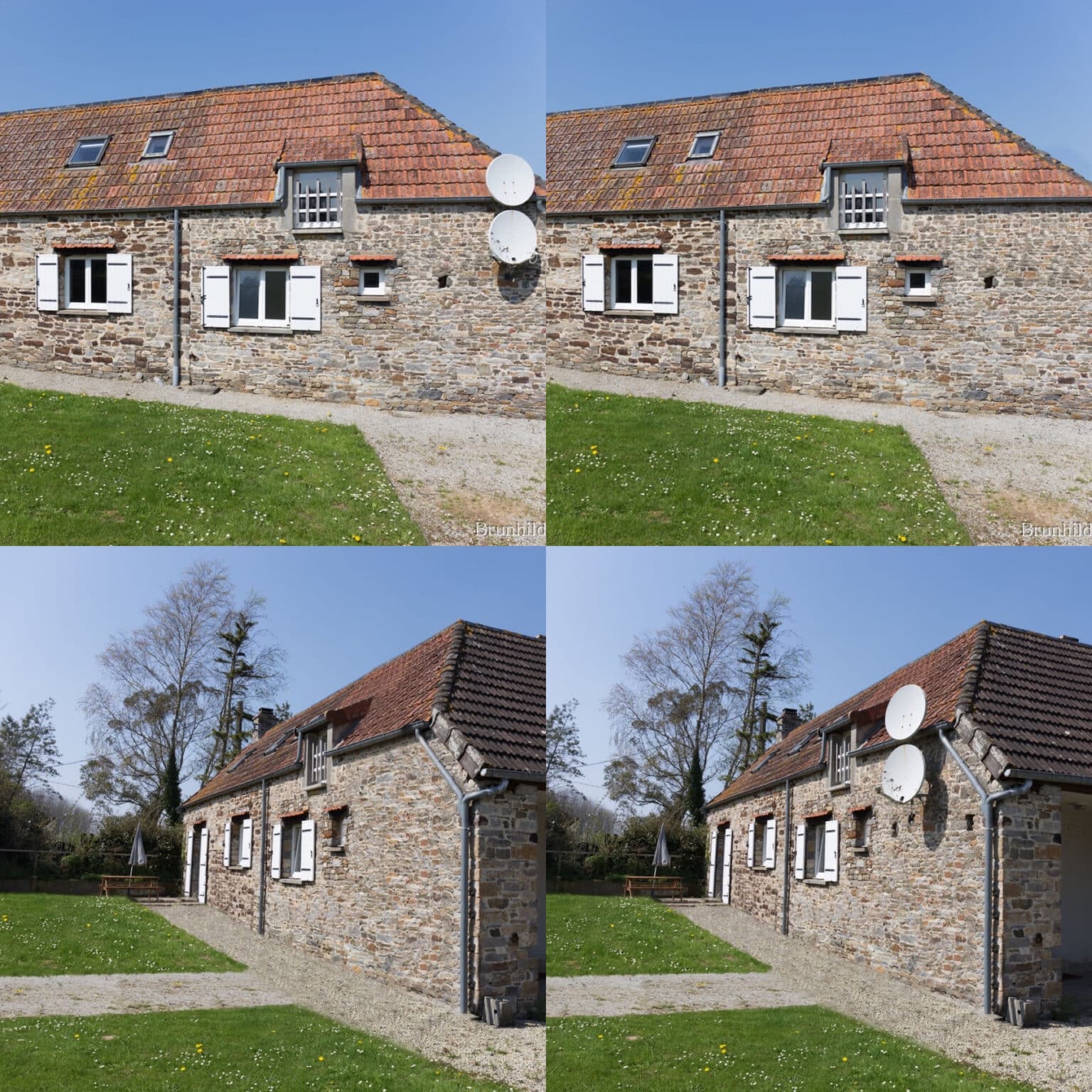
To ensure a stable and high-quality signal, you should place your satellite dish in a location with a completely unobstructed "line of sight" to the orbital arc. In the Northern Hemisphere, this typically means a clear view of the southern sky. Common mounting points include the roof, eaves, or a dedicated ground pole, provided there is no interference from trees, buildings, or geographical features.
Choosing the right location for a satellite dish is a precise technical task that balances signal physics, structural integrity, and local regulations. Whether you are installing a traditional geostationary system for television or a high-speed Low Earth Orbit (LEO) internet terminal like Starlink, the placement dictates the performance of the entire system. By 2026 standards, hardware has become more resilient, but the fundamental laws of radio frequency (RF) propagation remain the same: obstacles lead to packet loss, latency, and signal degradation.
Understanding the "Line of Sight" Requirement
The most critical factor in satellite dish placement is the line of sight (LOS). Unlike terrestrial cellular signals that can sometimes bounce off buildings or penetrate walls, satellite signals operate at high frequencies (Ku-band and Ka-band) that are easily absorbed or reflected by solid objects.
The Orbital Arc and Azimuth
For traditional satellite TV services (like DirecTV or Dish Network), the satellites are parked in geostationary orbit roughly 22,236 miles above the Earth's equator. Because these satellites stay in a fixed position relative to the ground, your dish must point at a specific coordinate.
- Azimuth: This is the horizontal compass bearing (e.g., 190° South-Southwest).
- Elevation: This is the vertical angle at which the dish "looks" up into the sky.
If a single branch of a tree enters the path between the dish and that specific point in the sky, you will experience "pixilation" or total signal loss, particularly during rain or wind when the branch moves.
The LEO Difference (Starlink and Kuiper)
In 2026, many users are deploying LEO satellite terminals. Unlike geostationary dishes, these terminals communicate with a constellation of satellites moving rapidly across the sky. Consequently, they require a much wider, conical field of view. While a TV dish needs a narrow "window," an internet dish needs a "clear dome." Any obstruction in this wider field of view will cause brief but frequent micro-outages as satellites pass behind the obstacle.
Selecting the Physical Mounting Location
Once you have identified the general direction of the signal, you must choose a physical structure to support the dish. The mount must be perfectly stable; even a few millimeters of vibration or sway can cause a significant drop in signal-to-noise ratios.
Roof Mounts
Roof mounting is the most common solution because it typically offers the highest vantage point, clearing most nearby obstacles like fences or vehicles.
- Tripod and Foot Mounts: These are bolted directly into the rafters. In 2026, high-quality sealants and flashing kits are mandatory to prevent moisture ingress.
- Non-Penetrating Roof Mounts (NPRM): Often used for flat roofs or commercial buildings, these use weighted ballast (usually concrete blocks) to hold the dish in place without drilling holes. These are ideal for renters or buildings with strict warranty requirements on the roof membrane.
Eave and Wall Mounts
If the roof is inaccessible or you wish to avoid penetrations through the shingles, mounting to the side of the house is a viable alternative.
- J-Mounts: These are versatile brackets shaped like the letter J. They can be attached to the wooden eave (fascia) or a structural wall stud.
- Pros: Easier access for maintenance and snow removal.
- Cons: Limited by the orientation of the house; if the wall faces North but the satellite is South, the arm may not be long enough to clear the roofline.
Ground Pole Mounts
For properties with dense foliage near the house, a ground pole mount is often the only way to find a "gap" in the trees.
- Digging: A hole typically 24 to 36 inches deep is required (below the frost line).
- Stability: The pole must be set in concrete and checked with a level to be perfectly "plumb." If the pole is even slightly tilted, the dish’s internal math for finding the satellite will be incorrect.
- Conduit: Cabling must be buried in a protective PVC conduit to prevent damage from lawnmowers or rodents.

Technical Specifications and Environmental Factors
The environment plays a massive role in how a dish performs over time. Placement should account for long-term weather patterns and local interference.
Rain Fade and Atmospheric Loss
Water is highly effective at absorbing microwave signals. While you cannot control the clouds, you can optimize placement to reduce "rain fade." Avoid placing the dish directly under a roof valley or gutter where concentrated water runoff will pour over the Low-Noise Block (LNB) during a storm.
Snow Accumulation and Heat
In colder climates, snow buildup on the face of the dish will kill the signal.
- Accessibility: Place the dish where you can safely reach it with a soft brush or choose a model with built-in heating elements (common in 2026 high-performance terminals).
- Heat Dissipation: Ensure the dish has adequate airflow. Modern high-speed satellite modems generate significant heat; mounting them in a "dead air" pocket against a hot dark wall can lead to thermal throttling.
Wind Load and Vibration
A satellite dish acts like a sail. In high-wind areas, a mount attached only to thin siding will vibrate, leading to jitter in the signal. Always ensure the mounting bracket is secured to structural members (studs, rafters, or joists).
Comparison of Common Mounting Methods
| Mounting Method | Stability | Obstacle Clearance | Ease of Installation | Aesthetic Impact |
|---|---|---|---|---|
| Standard Roof Mount | High | Excellent | Moderate | High Visibility |
| Eave / Fascia Mount | Moderate | Good | Easy | Low Visibility |
| Ground Pole | Very High | Variable | Difficult | High |
| Non-Penetrating (Ballast) | High | Excellent | Easy | Bulky / Industrial |
| Chimney Strap | Low | Excellent | Moderate | High Risk |
Note: Chimney mounts are generally discouraged in 2026 due to the risk of structural damage to the masonry and the corrosive effects of flue gases on the dish components.
The FCC OTARD Rule: Your Legal Rights
In the United States, the Federal Communications Commission (FCC) enforces the Over-the-Air Reception Devices (OTARD) rule. This is a critical piece of information for homeowners in Managed Communities or Homeowners Associations (HOAs).
The OTARD rule (47 C.F.R. Section 1.4000) prohibits local governments or HOAs from unreasonably delaying or preventing the installation of a satellite dish that is one meter (39.37 inches) or less in diameter. This means:
- You have the right to place the dish on property you "own or have exclusive use of" (like a balcony or patio).
- The HOA cannot force you to place the dish in a location that results in signal loss or significantly higher installation costs.
- While they can ask for "preferred" locations for aesthetic reasons, those locations must actually work.
Grounding and Electrical Safety
A satellite dish is a large metallic object often placed at the highest point of a structure, making it a target for lightning and static buildup. Proper grounding is not just a recommendation; it is a requirement of the National Electrical Code (NEC).
- Discharge Unit: A ground block should be installed where the coaxial cable enters the building.
- Grounding Wire: A 10 AWG (or larger) copper wire should connect the dish mast and the ground block to the house's central electrical grounding system.
- Purpose: This does not protect against a direct lightning strike (nothing really does), but it bleeds off static charges that can attract lightning and protects the internal electronics from surges caused by nearby strikes.
Steps for a Successful DIY Placement Survey
If you are determining the location yourself, follow this professional workflow:
- Use a Mobile App: Download a satellite "Augmented Reality" (AR) app. These tools use your phone's camera and GPS to overlay the satellite positions onto the live sky. Rotate your phone to see if trees or neighbors' houses intersect the signal path.
- Check for Future Growth: If you are pointing over a young oak tree, remember that in three years, that tree will be taller. Always allow for 5–10 feet of "growth clearance."
- Temporary Test: Before drilling holes, place the dish on a temporary tripod or have a partner hold it (safely) in the desired spot while you check the signal levels on your modem or receiver interface.
- Mark the Studs: Use a stud finder or "tap" method to ensure you are hitting solid wood. Do not rely on plywood sheathing or siding to hold the weight and wind load of a dish.
Frequently Asked Questions
Can I place my satellite dish behind a window?
No, standard window glass—especially modern energy-efficient glass with metallic Low-E coatings—will severely attenuate or completely block satellite signals. Even if the signal passes through, the refraction of the glass can cause signal errors. The dish must be outdoors.
Does the dish need to be high up?
Not necessarily. Height is only a benefit if it helps clear an obstruction. A dish placed on a ground pole in the middle of a clear field will perform exactly the same as a dish on a 50-foot tower. Only increase height if you need to "peek" over a roofline or tree.
What happens if my dish is slightly out of alignment?
Satellite signals are highly directional. Being off by even 1 or 2 degrees can result in a 50% drop in signal quality. This leads to "bit error rates" increasing, which manifests as slow internet speeds or "Searching for Signal" messages on your TV.
Can I paint my satellite dish to match my house?
You can paint the mast and the back of the dish, but you must be very careful with the "face" (the part reflecting the signal). Use only non-lead, non-metallic, non-reflective (matte) spray paint. Any metallic flakes in the paint will scatter the signal and ruin your reception.
Will heavy rain or snow affect my placement choice?
Yes. If you live in an area with heavy snowfall, do not place the dish in a spot where "roof avalanches" (snow sliding off the roof) can hit it. This is a common cause of bent masts and destroyed LNBs in mountainous regions.
Final Recommendation
For the most reliable service in 2026, prioritize a roof-peak mount or a dedicated ground pole with a clear 360-degree view if using LEO internet, or a clear southern view for TV. Always perform a site survey using an AR signal tool before finalizing the mounting hardware. If you are uncomfortable with heights or the electrical grounding requirements, hiring a professional installer is a worthwhile investment to ensure the structural integrity of your home and the longevity of your hardware.
Image Gallery
Select an image to open it in a new tab.
Celine Dubois
Contemporary Living and Global Arts Columnist
