
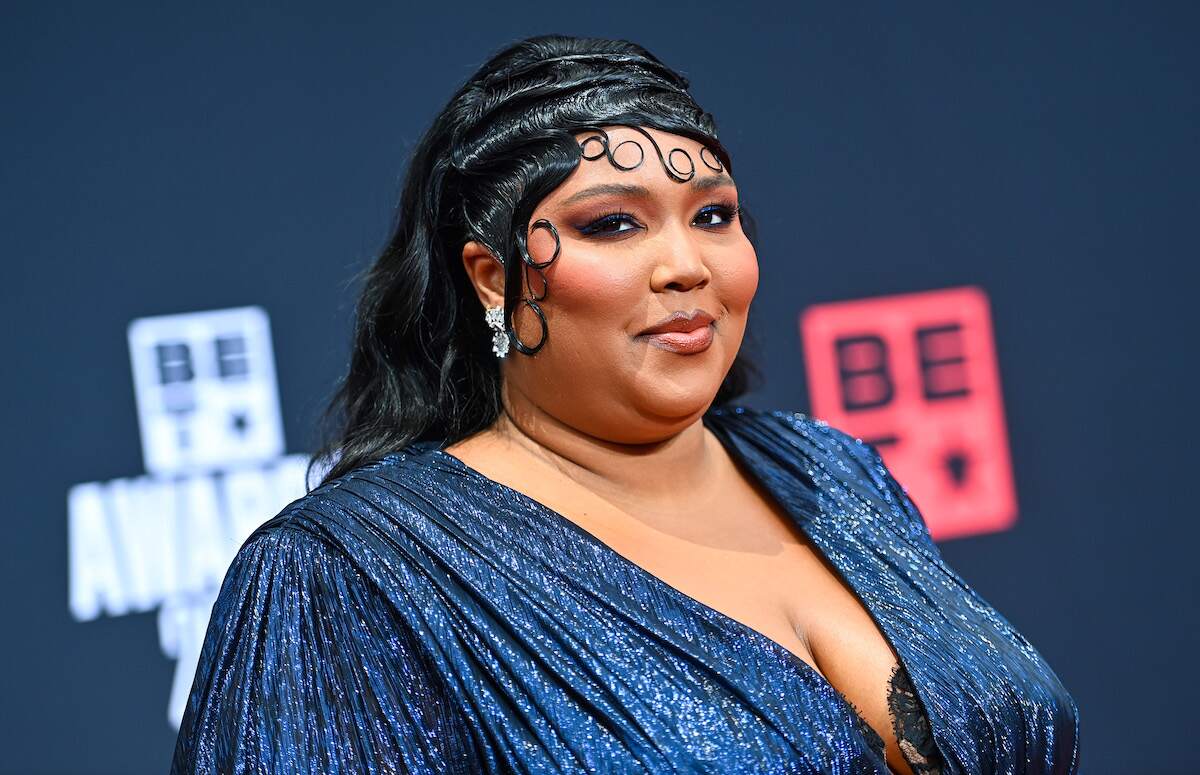
Lizzo’s significance extends far beyond her chart-topping hits and viral social media presence. Her career represents a fundamental shift in the entertainment industry’s approach to body liberation, intersectional representation, and the integration of classical musicianship into mainstream pop. By centering radical self-love as a political and social act, Lizzo has dismantled long-standing barriers for marginalized performers while redefining the visual and sonic expectations of a global superstar.
The Musical Architecture: Beyond the Viral Hook
To understand why Lizzo’s impact is substantial, one must first look past the infectious choruses of "About Damn Time" or "Truth Hurts" to the technical foundation of her artistry. Unlike many pop contemporaries whose identities are built solely through studio production, Melissa Viviane Jefferson—known professionally as Lizzo—is a classically trained virtuoso.
Classical Roots and the "Sasha Flute"
Her background as a flutist, studied under the tutelage of renowned instructors at the University of Houston, provides her music with a structural complexity often missing in standard pop. The flute, which she affectionately named "Sasha Flute," is not a gimmick; it is a core component of her live performances and studio arrangements. By bringing an orchestral instrument into the hip-hop and R&B space, Lizzo bridged the gap between "high art" institutions and popular culture. This matters because it challenges the elitist boundaries that often exclude Black artists from being recognized as "serious" musicians despite their immense technical proficiency.
Genre Fluidity as a Statement
Lizzo’s discography is a masterclass in genre-blending. She seamlessly weaves together gospel, funk, soul, rap, and disco. This fluidity is not merely an aesthetic choice; it is a reclamation of Black musical history. By drawing from the well of 1970s funk and 1990s hip-hop, she positions herself as a successor to legends like Aretha Franklin and Prince. In the context of 2026, we see how this versatility paved the way for a new generation of "unclassifiable" artists who refuse to be pigeonholed into single-genre radio formats.
Body Liberation vs. Body Positivity: A Crucial Distinction
While Lizzo is frequently cited as the face of the "body positivity" movement, her impact is more accurately described as a push for body liberation. While body positivity often focuses on the individual’s journey toward liking their own reflection, body liberation is a socio-political movement aimed at dismantling the systemic biases that penalize bodies—particularly fat, Black, and disabled bodies—in public spaces.
Challenging the "Commercialized" Beauty Standard
Before Lizzo’s mainstream ascent, the music industry typically relegated plus-sized talent to the role of the "powerhouse vocalist" who remained stationary or the "comic relief." Lizzo rejected these archetypes. By performing high-energy choreography, wearing high-fashion couture, and celebrating her physicality without apology, she forced the industry to decouple "talent" from "thinness."
The "Lizzo effect" has had a measurable impact on the fashion industry. Her shapewear brand, YITTY, which launched in 2022 and expanded significantly through 2024 and 2025, moved the needle from "corrective" shapewear to "expressive" shapewear. This shift treated larger bodies as canvases for fashion rather than problems to be hidden.
The Psychological Impact on the Audience
For her audience, the "Love Lizzo" sentiment is rooted in the psychological relief of visibility. Research into media representation suggests that seeing oneself reflected in positions of power and beauty reduces "symbolic annihilation"—the sense of non-existence that occurs when marginalized groups are absent from the cultural narrative. Lizzo’s presence acts as a counter-narrative to centuries of fatphobic and racist iconography.
The "Big Grrrls" and the Evolution of the Stage
One of the most concrete ways Lizzo has changed the industry is through the visibility of her backup dancers, the "Big Grrrls." Her Emmy-winning reality series, Lizzo's Watch Out for the Big Grrrls, was more than just a competition; it was a professional intervention.
| Impact Area | Traditional Industry Standard | The Lizzo Standard (Post-2022) |
|---|---|---|
| Dancer Archetypes | Uniformly thin, high-stamina performers. | Diverse body types with equal or higher stamina. |
| Touring Requirements | Limited costume sizing; standardized lighting. | Custom-engineered couture for all sizes; inclusive lighting. |
| Industry Representation | Plus-sized performers as "specialty acts." | Plus-sized performers as the primary aesthetic. |
| Media Narratives | Focus on weight loss or transformation. | Focus on athletic performance and artistry. |
By hiring plus-sized Black women as elite professional dancers, Lizzo proved that the "limitations" cited by talent agencies were actually systemic exclusions. This forced a massive shift in how major labels cast world tours, leading to more inclusive stages across the pop landscape by the mid-2020s.
Navigating Controversy and the Evolution of Accountability
No analysis of Lizzo’s cultural weight is complete without addressing the complexities of her public journey. In 2023, she faced significant legal and public relations challenges involving allegations from former employees. While these events dominated headlines, the long-term impact on her legacy in 2026 reveals a more nuanced picture of celebrity accountability.
The Shift from Idol to Human
The controversies served as a turning point where the public moved away from "idolizing" Lizzo as an infallible symbol and toward viewing her as a complex figure navigating the pressures of massive industry leadership. This transition was essential for the "Love Lizzo" movement to mature. It moved the conversation from a brand-based "positivity" to a more rigorous discussion about workplace culture, the ethics of empowerment, and the responsibilities of being a trailblazer.
Resilience and Rebranding
Lizzo’s response—focusing on transparency and internal restructuring—set a template for how modern celebrities handle internal crises. By 2026, her career had entered a "legacy phase," where her contributions to music and fashion are weighed alongside her personal growth, proving that an artist’s value is not erased by the challenges of leadership, but rather refined by how they address them.
The Intersectional Political Act of "Black Joy"
In a socio-political climate that often focuses on the trauma of marginalized groups, Lizzo’s insistence on "Black Joy" is a radical departure. She frequently uses her platform to highlight the importance of mental health, vulnerability, and the right to exist happily in a world that often demands struggle from Black women.
Advocacy Through Action
Beyond the music, her philanthropic efforts have focused on:
- Education: Supporting HBCU (Historically Black Colleges and Universities) music programs.
- Environmental Justice: Highlighting how climate change disproportionately affects marginalized communities.
- Voter Engagement: Utilizing her massive social reach to encourage civic participation among young voters.
This advocacy ensures that her "hype" is backed by tangible community support. When people "love Lizzo," they are often supporting a wider ecosystem of social change that she facilitates through her wealth and influence.
Why Technical Skill Sustains the Hype
A common criticism of viral stars is that they lack "staying power." Lizzo has defied this by consistently delivering high-quality live performances. In an era where "backing tracks" and "lip-syncing" are common, her ability to play a complex flute solo while maintaining vocal stability after a dance routine is a technical feat that earns the respect of musicologists and casual fans alike.
Her 2024 and 2025 releases further leaned into the "live band" sound, utilizing analog recording techniques and complex vocal harmonies that harkened back to the Motown era. This commitment to the craft ensures that once the social media trends fade, the recorded material remains a high-water mark for 21st-century production.
Frequently Asked Questions
Why is Lizzo’s flute playing considered significant in pop music?
Lizzo’s flute playing is significant because it reintegrates classical training into a contemporary pop and hip-hop context. Historically, pop music has prioritized synthesized sounds, but Lizzo uses her flute (often a 100-year-old instrument on loan from the Library of Congress) to demonstrate high-level technical skill. This challenges the notion that "pop stars" are manufactured and highlights the importance of music education.
How did Lizzo change the fashion industry for plus-sized individuals?
Through her brand YITTY and her red-carpet appearances, Lizzo moved plus-sized fashion away from "hiding" the body and toward "celebrating" it. She collaborated with high-fashion houses that previously did not offer extended sizing, forcing them to develop patterns and designs for larger bodies. This has led to a 2026 market where "inclusive sizing" is a standard expectation rather than a niche request.
What is the difference between Lizzo’s "Body Positivity" and "Body Liberation"?
Body positivity is often a personal psychological journey to feel better about one's own body. Body liberation, which Lizzo champions, is a social and political movement. It focuses on the rights of all bodies to exist without discrimination, harassment, or systemic barriers in healthcare, employment, and media. Lizzo’s presence "matters" because it advocates for the latter, demanding space rather than just asking for a compliment.
How has Lizzo influenced the structure of modern concert tours?
Lizzo’s influence is seen in the "Big Grrrls" movement, which proved that plus-sized dancers are elite athletes capable of performing rigorous, multi-hour world tours. This has led to a shift in the dance industry, with more agencies representing diverse body types and more artists following Lizzo's lead in creating inclusive stage environments.
Is Lizzo’s impact still relevant in 2026?
Yes. By 2026, Lizzo’s impact is viewed through her legacy as a trailblazer who broke the "glass ceiling" for plus-sized Black women in media. While she may not be the only artist in this space now, she was the primary catalyst for the systemic changes in how the industry handles representation, making her a permanent fixture in the history of cultural evolution.
Final Recommendation: Engaging with the Legacy
To truly appreciate why Lizzo matters, one must look at her work as a multi-disciplinary project. If you are a student of culture, music, or fashion, the next step is to examine her live performance recordings from the 2020s. Observe the intersection of breath control, instrumental precision, and physical stamina.
Support for Lizzo is often support for the idea that excellence is not tied to a specific body type. For those looking to apply her philosophy, the focus should be on "radical self-love" as a daily practice and a commitment to inclusivity in one's own professional or creative circles. Her career serves as a blueprint for how to use individual success to pull others through the door behind you.
Image Gallery
Select an image to open it in a new tab.
Declan O'Connor
Higher Education and Campus Culture Reporter
