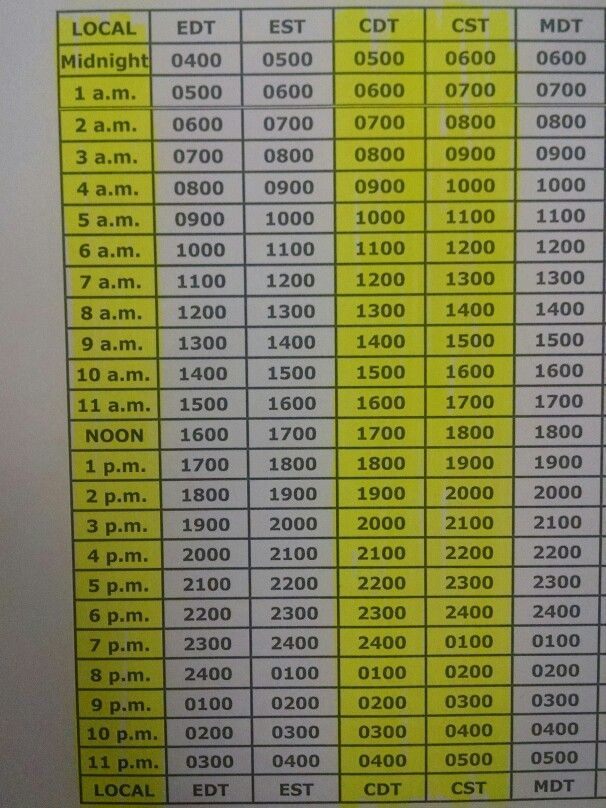
Zulu Time is a globally standardized time designation used by aviation, military, meteorology, and digital logistics to coordinate events across different time zones without confusion. It is functionally identical to Coordinated Universal Time (UTC) and Greenwich Mean Time (GMT), serving as a single, unchanging baseline that eliminates daylight saving time shifts and regional offsets.
Navigating a globally interconnected world often requires coordinating schedules across multiple time zones, which can quickly become confusing when factoring in regional boundaries, daylight saving time adjustments, and shifting offsets. Whether you are scheduling a virtual meeting with international clients, tracking a package shipping across continents, participating in a global online multiplayer game, or planning an amateur radio transmission, standard local time designations frequently introduce errors. To solve this problem, professionals and global citizens rely on a universal standard.
Understanding how to read, convert, and apply this universal time standard in everyday life transforms a seemingly technical concept into a practical tool for better global organization. This comprehensive guide explores what Zulu Time is, its origins, how it compares to standard local times, and how everyday individuals can seamlessly integrate it into their daily schedules.
What Is Zulu Time?
At its core, Zulu Time is the military and aviation designation for Coordinated Universal Time (UTC). The term originates from the phonetic alphabet used by the North Atlantic Treaty Organization (NATO) and international aviation. In this phonetic system, the letter "Z" stands for "Zulu."
Historically, global time zones are measured as offsets relative to the Prime Meridian, which runs through Greenwich, London, England. The time zone at the Prime Meridian is designated as Zone Zero, or "ZULU time," because it sits at an offset of zero hours and zero minutes from Coordinated Universal Time.
To prevent confusion when communicating across borders, military and aviation personnel replaced the spoken word "zero" or the letter "Z" with the phonetic word "Zulu" during voice radio transmissions. Over decades of operational use, the name stuck. Today, whenever you see a time ending with a "Z"—such as 1430Z—it indicates that the time is being expressed in Zulu Time, regardless of where the speaker or the listener is physically located on Earth.
The Relationship Between Zulu Time, UTC, and GMT
To fully grasp Zulu Time, it helps to clear up common misconceptions regarding its relationship with other time standards, specifically Greenwich Mean Time (GMT) and Coordinated Universal Time (UTC). While these terms are frequently used interchangeably in casual conversation, subtle technical distinctions separate them:
- Greenwich Mean Time (GMT): This is a traditional solar time standard originally established at the Royal Observatory in Greenwich, London. Because the Earth's rotation is slightly irregular, GMT is technically based on astronomical observations of the sun. For everyday practical purposes, GMT and Zulu Time share the exact same hour and minute values.
- Coordinated Universal Time (UTC): This is the primary international time standard by which the world regulates clocks and time. It is maintained by an atomic clock ensemble regulated by the International Bureau of Weights and Measures (BIPM). It incorporates leap seconds when necessary to account for the slowing of Earth's rotation.
- Zulu Time (Z): This is simply the military, maritime, and aviation designation for UTC. When a meteorologist, flight dispatcher, or military planner refers to Zulu Time, they are using UTC.
For all practical intents and purposes in everyday use, Zulu Time = UTC = GMT (for non-precision needs). They all represent the current time at the Prime Meridian (longitude 0°).
Why Zulu Time Matters in an Interconnected World
Local time zones are a human construct designed to align our daily schedules with the rising and setting of the sun. While local times are essential for waking up, eating, and conducting local commerce, they create significant friction when people across different regions try to collaborate.
Daylight saving time (DST) further complicates local timekeeping. Not all countries observe DST, and those that do change their clocks on different dates and by different rules. For instance, the United States often transitions to daylight saving time in mid-March, whereas European nations make the switch on a different schedule. During the transition weeks, the time difference between New York and London shifts by an hour, catching many international travelers and remote workers off guard.
Zulu Time eliminates these variables entirely:
- No Daylight Saving Time: Zulu Time never shifts forward or backward. It remains constant 365 days a year.
- Universal Reference Point: Everyone across the globe references the exact same clock. If an event occurs at
1800Z, it happens at that exact physical moment whether you are in Tokyo, London, Chicago, or Sydney. - Elimination of AM/PM Ambiguity: Zulu Time is almost universally expressed using the 24-hour clock format (often called military time). This removes any possible confusion between morning and evening hours.
How to Read and Write Zulu Time
Reading Zulu Time requires familiarity with the 24-hour clock and the standard formatting conventions used by global institutions. Unlike standard 12-hour local time, which splits the day into two 12-hour blocks (AM and PM), the 24-hour clock runs continuously from 0000 to 2359.
Formatting Conventions
When writing Zulu Time, standard formatting places the letter "Z" immediately after the four-digit time string without a space.
0000Zrepresents midnight (12:00 AM) at the Prime Meridian.0630Zrepresents 6:30 AM at the Prime Meridian.1200Zrepresents noon (12:00 PM) at the Prime Meridian.2359Zrepresents one minute before midnight (11:59 PM) at the Prime Meridian.
The 24-Hour Clock Breakdown
If you are unaccustomed to the 24-hour clock, converting standard PM times to Zulu formatting requires a simple addition rule: for any time from 1:00 PM to 11:59 PM, add 12 hours to the hour value.
| 12-Hour Local Format | 24-Hour / Zulu Format | Description |
|---|---|---|
| 12:00 AM (Midnight) | 0000Z |
Start of the UTC day |
| 03:15 AM | 0315Z |
Early morning in London |
| 08:00 AM | 0800Z |
Morning operations |
| 12:00 PM (Noon) | 1200Z |
Midday at the Prime Meridian |
| 03:30 PM | 1530Z |
Afternoon (12 + 3:30) |
| 08:45 PM | 2045Z |
Evening (12 + 8:45) |
| 11:59 PM | 2359Z |
End of the UTC day |
Converting Zulu Time to Your Local Time
To use Zulu Time effectively in everyday life, you must master the conversion between UTC and your local time zone. Every location on Earth falls into a specific time zone offset relative to UTC, denoted as either a positive or negative number of hours (e.g., UTC-5 or UTC+2).
Step-by-Step Conversion Process
- Determine your local time zone offset: Identify whether your region is ahead of or behind UTC. (Note: Account for whether your region currently observes daylight saving time).
- Apply the offset:
- If your local time is behind UTC (such as North American time zones), you subtract the offset hours from Zulu Time to find your local time. To convert local time to Zulu Time, you add the offset.
- If your local time is ahead of UTC (such as Central European or Asian time zones), you add the offset hours to Zulu Time to find your local time. To convert local time to Zulu Time, you subtract the offset.
- Adjust the date if necessary: If adding or subtracting hours pushes the time past midnight (
0000) or backward past2359, remember to advance or roll back the calendar date by one day.
Common Regional Offsets (Standard Time vs. Daylight Saving Time)
| Region / Time Zone | Standard Offset (Winter) | Daylight Saving Offset (Summer) |
|---|---|---|
| Eastern Standard Time (North America) | UTC-5 | UTC-4 (EDT) |
| Central Standard Time (North America) | UTC-6 | UTC-5 (CDT) |
| Pacific Standard Time (North America) | UTC-8 | UTC-7 (PDT) |
| Greenwich / United Kingdom | UTC+0 | UTC+1 (BST) |
| Central European Time | UTC+1 | UTC+2 (CEST) |
| Japan Standard Time | UTC+9 | No DST (UTC+9) |
Example Calculation: Suppose you are living in New York during standard time (UTC-5), and an international webinar is scheduled to begin at 2100Z.
- Take the Zulu time: 21:00.
- Apply the standard New York offset (-5 hours): 21 - 5 = 16.
- Convert to 12-hour format: 16:00 is 4:00 PM.
- Result: The webinar starts at 4:00 PM EST.
Everyday Applications for Zulu Time
While Zulu Time originated to serve military navigation and flight planning, modern technology has integrated it into numerous everyday hobbies, professions, and digital workflows.
Aviation and Flight Tracking
If you track commercial flights using applications like Flightradar24 or listen to Air Traffic Control (ATC) radio feeds, every schedule, flight plan, and meteorological report (METAR) is stamped in Zulu Time. Pilots fly across multiple time zones within a single shift; using a universal time standard prevents severe scheduling and navigation errors.
Amateur Radio (Ham Radio)
Amateur radio operators communicate across global boundaries using shortwave frequencies. Because radio contacts (QSOs) must be logged accurately for licensing and award verification, operators standardize all logbooks in UTC/Zulu Time. This ensures that an operator in Tokyo and an operator in Berlin record the exact same timestamp for a contact, regardless of local time zones or seasonal clock changes.
Remote Work and Global Project Management
Distributed teams working across North America, Europe, Asia, and Australia often find local time conversions cumbersome. Forward-thinking project managers coordinate project deadlines, software deployments, and milestone releases using UTC or Zulu Time in team calendars. By setting calendar reminders to a universal baseline, team members avoid confusion caused by overlapping daylight saving time transitions in different hemispheres.
Online Gaming and Global Events
Massively Multiplayer Online (MMO) games, global esports tournaments, and virtual streaming events frequently publish patch notes, server maintenance windows, and tournament start times in UTC. Gamers who participate in international raids or community events use Zulu Time converters to ensure they log in at the exact moment servers open.
Best Practices and Tools for Tracking Zulu Time
Mastering Zulu Time does not require mental math every time you need to check the clock. Several digital tools, physical accessories, and habits can simplify your workflow.
1. Dual-Time and GMT Watches
Many watch enthusiasts wear mechanical or digital timepieces featuring a "GMT hand" or dual-time capability. A GMT watch features an extra 24-hour hand that can be independently set to point at Zulu Time (UTC) while the primary watch hands display local time. This allows you to glance at your wrist and read both local time and Zulu Time simultaneously.
2. Setting Digital Devices to UTC
Modern smartphones, computers, and operating systems allow users to display multiple clocks on their lock screens or taskbars. Adding a widget or secondary clock set to "Coordinated Universal Time" or "GMT" provides instant access to Zulu Time without manual calculations.
3. Using Reliable Conversion Utilities
When planning complex international schedules, relying on mental math increases the risk of scheduling errors. Bookmark reliable time conversion utilities or use world clock applications built into your operating system that support UTC references.
Common Mistakes to Avoid
When incorporating Zulu Time into your daily routine, watch out for these frequent pitfalls:
- Forgetting Daylight Saving Adjustments: Remember that while Zulu Time never changes, your local offset likely does if your region observes daylight saving time. Failing to account for a shift in your local offset will throw your calculations off by exactly one hour.
- Confusing AM/PM with 24-Hour Time: Mistaking
1300Zfor 1:00 AM instead of 1:00 PM is a classic conversion error. Always remember that any hour value above 12 in a 24-hour clock represents afternoon or evening hours. - Mixing Up Date Boundaries: When converting times across wide offsets (such as converting between the Americas and Asia), crossing midnight in UTC means the local date in your region might be a day ahead or a day behind. Always double-check the calendar date when converting across the Prime Meridian.
Conclusion
Zulu Time is much more than a specialized tool for pilots and military tacticians; it is a practical, rock-solid standard for anyone navigating a borderless digital world. By understanding its phonetic roots, mastering the 24-hour clock format, and calculating your regional offset, you can eliminate scheduling errors, coordinate international projects effortlessly, and engage with global communities with total confidence. Embracing Zulu Time brings clarity and precision to your daily routine, ensuring you are always on the right page at the exact right moment.
Image Gallery
Select an image to open it in a new tab.
Lars Thomsen
Global Labor Markets and Economic Strategy Editor
