The Samsung Galaxy S3 Mini, released in late 2012, is a compact mid-range smartphone designed to capture the design language and core user experience of its larger flagship sibling, the Galaxy S3, in a smaller and more affordable form factor featuring a 4.0-inch Super AMOLED display, a dual-core processor, and Android 4.1 Jelly Bean.
Introduction to the Galaxy S3 Mini
When Samsung launched the Galaxy S3 in 2012, the device quickly became a cultural and commercial phenomenon, redefining consumer expectations for Android flagships. However, the smartphone market of that era still contained a substantial segment of users who preferred smaller screens that could easily be operated with one hand or slipped into a tight pocket. To cater to this audience, Samsung introduced the Samsung Galaxy S3 Mini (model designation GT-I8190).
Rather than simply building a budget device from scratch, Samsung engineered the S3 Mini as a miniaturized reflection of its flagship. It adopted the signature "inspired by nature" pebble-inspired aesthetic, curved contours, and rounded physical home button of the original S3. While it was positioned as a mid-range alternative with scaled-down hardware specifications to match a lower price point, it played a pivotal role in Samsung’s strategy to dominate both the high-end and mid-tier Android markets. Understanding the architecture, capabilities, and historical standing of the Galaxy S3 Mini provides valuable insight into how the mobile industry approached compact smartphone design during the early 2010s.
Design, Build, and Display Specifications
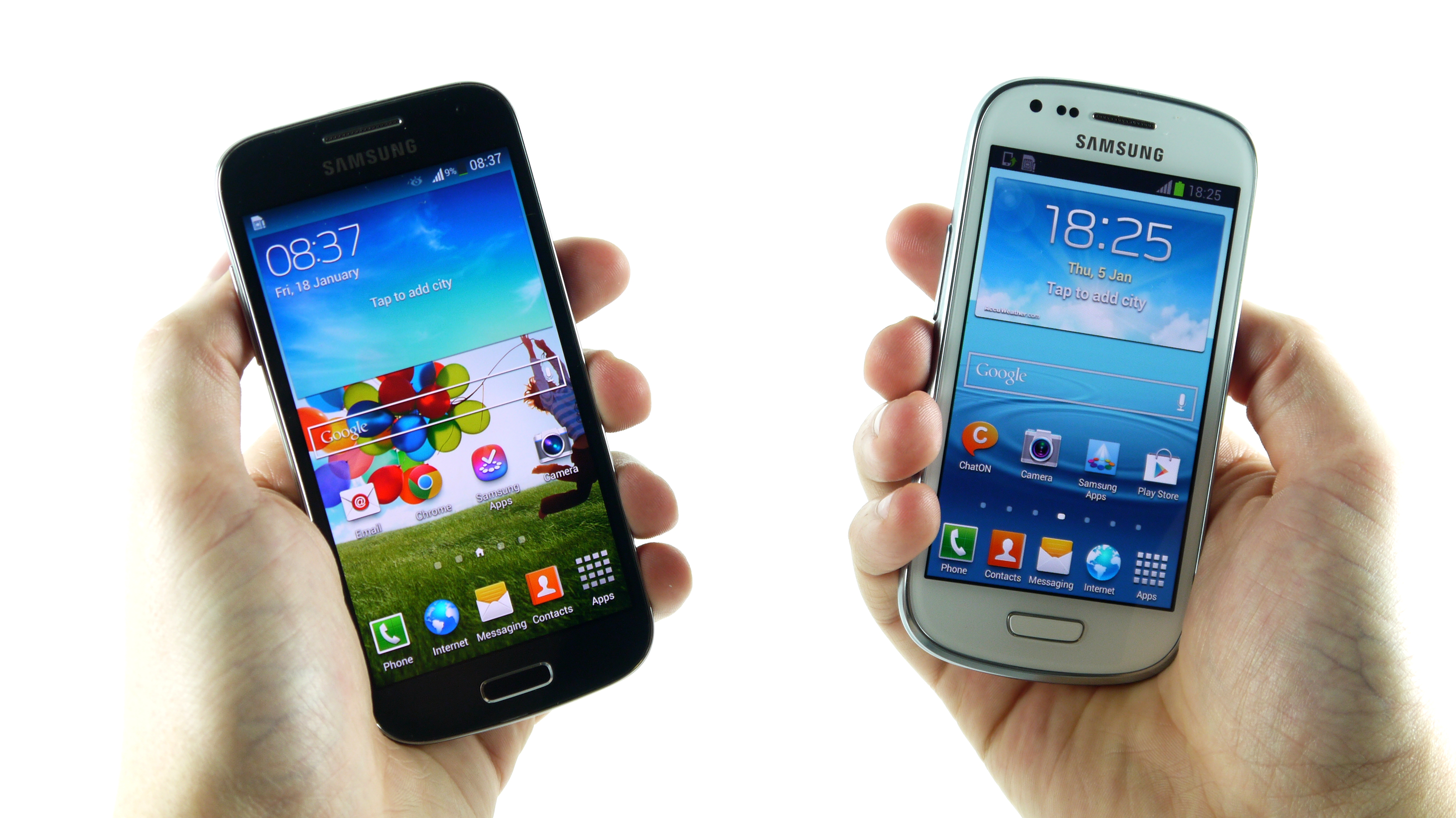
The physical design of the Samsung Galaxy S3 Mini was arguably its most marketable asset. At a time when many mid-range phones featured angular, industrial, or purely utilitarian plastic chassis, the S3 Mini embraced smooth, organic lines. Measuring 121.5 x 63 x 9.85 mm and weighing approximately 111.5 grams, the device felt exceptionally light and ergonomic in the hand. The hyperglaze plastic finish on the back cover provided a glossy appearance, though it was prone to collecting fingerprints and surface scratches over extended periods of use.
The front of the device was dominated by a 4.0-inch Super AMOLED capacitive touchscreen with a resolution of 480 x 800 pixels (WVGB), resulting in a pixel density of roughly 233 pixels per inch (ppi). Unlike standard LCD panels found on competing budget devices of the era, the Super AMOLED technology delivered deep blacks, high contrast ratios, and vibrant color reproduction. Viewing angles were wide, making media consumption pleasant despite the modest resolution. Below the screen sat the iconic physical hardware home button flanked by two capacitive touch keys for menu and back functions, adhering strictly to Samsung's early-2010s navigation layout.
Hardware Architecture and Performance
Beneath its glossy exterior, the Samsung Galaxy S3 Mini housed a hardware configuration tailored for efficient day-to-day tasks rather than heavy computational workloads. The international variant (GT-I8190) was powered by a ST-Ericsson NovaThor U8420 chipset, featuring a dual-core 1.0 GHz Cortex-A9 processor paired with a Mali-400 MP graphics processing unit (GPU). This was backed by 1 GB of RAM, which was standard for mid-range Android devices during the 2012–2013 window.
Storage options included 8 GB or 16 GB of internal flash memory, depending on the specific regional model. Crucially for users of that era, the device included a microSD card slot capable of expanding storage by up to 32 GB. This expansion capability was essential, as the base operating system and pre-installed applications consumed a significant portion of the internal storage out of the box.
In terms of daily performance, the dual-core processor and 1 GB of RAM handled core telephony, web browsing, text messaging, and light casual gaming adequately. However, resource-intensive applications, heavy multitasking, and modern web pages featuring complex JavaScript scripts frequently pushed the hardware to its limits, resulting in occasional stutter or lag.
Software Ecosystem and User Interface
The Samsung Galaxy S3 Mini originally shipped with Android 4.1 (Jelly Bean), utilizing Samsung's proprietary TouchWiz Nature UX interface layered on top. TouchWiz introduced a distinct visual language featuring nature-inspired notification sounds, water-ripple unlock effects, and a bright, colorful color palette.
Jelly Bean brought notable software improvements to the platform, most notably "Project Butter," which utilized vertical synchronization, triple buffering, and uniform touch responsiveness to make user interface transitions significantly smoother than previous iterations of Android. Additionally, the S3 Mini inherited several software features from its larger sibling, including:
- S Voice: Samsung's early voice recognition and virtual assistant software, which allowed users to check weather, set alarms, and launch applications via spoken commands.
- Smart Stay: A front-facing camera feature that tracked the user's eyes to keep the screen illuminated as long as they were looking at it.
- Pop-up Play: A multitasking feature allowing users to watch a video in a resizable floating window while simultaneously navigating menus or sending text messages.
- Direct Call: A motion-recognition shortcut that automatically dialed a contact's number if the user lifted the phone to their ear while viewing that person's text message or contact card.
While software updates for the device officially ceased after Android 4.2.2 (Jelly Bean), the enthusiastic independent developer community on forums like XDA Developers extended the device's lifespan significantly by creating custom ROMs based on later versions of Android, such as CyanogenMod.
Camera Capabilities and Multimedia
The imaging hardware on the Samsung Galaxy S3 Mini reflected its mid-range classification. The rear-facing camera featured a 5-megapixel sensor equipped with autofocus, an LED flash, and support for geo-tagging, touch focus, and face detection. It was capable of recording video at 720p high definition at 30 frames per second. Image quality in well-lit environments was acceptable for casual social media sharing and text messaging, though low-light performance suffered from notable digital noise and soft focus due to the small sensor size and lack of optical image stabilization.
On the front, the device featured a VGA (0.3-megapixel) secondary camera intended primarily for basic video calling via services like Skype. For multimedia consumption, the built-in media player supported a wide array of audio and video codecs, and the device retained the standard 3.5mm headphone jack, allowing users to connect wired headphones for music playback and FM radio listening.
Connectivity and Battery Life
Connectivity options on the Galaxy S3 Mini were comprehensive for its price bracket. It supported quad-band 2G and dual-band 3G HSPA networks (offering download speeds up to 14.4 Mbps depending on the carrier), Wi-Fi 802.11 a/b/g/n, Bluetooth 4.0, and Near Field Communication (NFC) on select regional variants. GPS with A-GPS support ensured reliable satellite navigation capabilities.
Powering the device was a user-replaceable 1,500 mAh lithium-ion battery. Given the modest power demands of the dual-core processor and the energy efficiency of the 4.0-inch Super AMOLED display, the battery easily managed a full day of moderate use—comprising voice calls, messaging, and occasional web browsing—on a single charge. The ability to easily swap out the battery via the removable back cover was a valued practical feature for power users.
Technical Specifications Comparison
To better understand where the Galaxy S3 Mini stood relative to its ecosystem, the following table compares its core specifications against the flagship Galaxy S3 and a typical entry-level competitor of the era.
| Feature | Samsung Galaxy S3 Mini (GT-I8190) | Samsung Galaxy S3 (GT-I9300) | Typical Budget Competitor (2012) |
|---|---|---|---|
| Display | 4.0" Super AMOLED (480 x 800) | 4.8" Super AMOLED (720 x 1280) | 3.5" to 4.0" TFT LCD (320 x 480) |
| Processor | 1.0 GHz Dual-Core Cortex-A9 | 1.4 GHz Quad-Core Cortex-A9 | 800 MHz to 1.0 GHz Single-Core |
| RAM | 1 GB | 1 GB or 2 GB | 512 MB |
| Storage | 8 GB / 16 GB + microSD (up to 32GB) | 16 GB / 32 GB / 64 GB + microSD | 4 GB + microSD |
| Rear Camera | 5 MP, 720p video | 8 MP, 1080p video | 3.2 MP or 5 MP, fixed focus |
| Battery | 1,500 mAh (Removable) | 2,100 mAh (Removable) | 1,300 mAh (Removable) |
| OS (Launch) | Android 4.1 Jelly Bean | Android 4.0 ICS (Upgradable) | Android 2.3 Gingerbread or 4.0 |
Frequently Asked Questions
What operating version did the Samsung Galaxy S3 Mini run natively?
The device launched running Android 4.1 (Jelly Bean) out of the box, customized with Samsung's TouchWiz Nature UX interface. Later regional variants and official updates brought the system up to Android 4.2.2, which remained the final official software iteration released by Samsung for the handset.
Can the storage on the Galaxy S3 Mini be expanded?
Yes. The device includes a dedicated microSD card slot located beneath the removable back cover. It officially supports microSD memory cards up to 32 GB in capacity, allowing users to store significantly more music, photos, and downloadable applications than the internal memory permitted.
Does the Samsung Galaxy S3 Mini support 4G LTE connectivity?
No. The standard international model of the Galaxy S3 Mini is limited to 3G HSPA networks, with maximum theoretical download speeds of 14.4 Mbps. Certain specialized regional carriers released minor derivative variants with LTE capabilities later in the device's lifecycle, but the base GT-I8190 model does not support 4G bands.
Is the battery removable by the user?
Yes. Unlike modern unibody smartphones featuring sealed glass and aluminum enclosures, the Galaxy S3 Mini features a removable plastic back cover that grants direct access to the 1,500 mAh lithium-ion battery, making it simple to swap out for a fresh unit if the original battery degraded over time.
How does the S3 Mini display compare to standard LCD screens?
The S3 Mini utilizes a Super AMOLED panel rather than a traditional LCD screen. This technology allows individual pixels to emit their own light, resulting in true black levels, extremely high contrast ratios, and vivid color saturation. However, the lower 480 x 800 resolution means text and fine details are noticeably less sharp than on modern high-definition displays.
Conclusion and Legacy
The Samsung Galaxy S3 Mini successfully bridged the gap for consumers who admired the design and software features of Samsung's flagship era but required a more pocket-friendly device and a lower financial commitment. While modern mobile applications have long since surpassed the capabilities of its dual-core processor and 1 GB of RAM, the device remains an interesting milestone in smartphone design history. For collectors, mobile enthusiasts, and historians of consumer electronics, the S3 Mini serves as a prime example of how manufacturers once scaled down flagship success to dominate every tier of the global marketplace.
Image Gallery
Select an image to open it in a new tab.


Zara El-Hashem
Sociocultural Dynamics and Academics Writer
