The Ex Officio Board Member Role in Corporate Governance

An ex officio board member is an individual who holds a seat on a board of directors automatically by virtue of holding another office or position, possessing the same rights, duties, and fiduciary responsibilities as elected directors unless explicitly restricted by organizational governing documents.
Understanding the Foundation of Ex Officio Board Membership
The term ex officio originates from Latin, translating literally to "out of office" or "by virtue of office." In the context of corporate governance, non-profit administration, and organizational management, an ex officio board member is someone who gains membership on a board not through a traditional election or appointment process, but because they occupy a specific operational or leadership role elsewhere within the organization or in a related entity.
For example, a non-profit organization's corporate bylaws might stipulate that the sitting Chief Executive Officer (CEO) or Executive Director automatically serves as an ex officio member of the board of directors. Similarly, a municipal development corporation might include the local mayor or head of urban planning as an ex officio director by virtue of their governmental office.
This mechanism ensures that key operational leaders, subject-matter experts, or institutional stakeholders are permanently represented at the highest level of governance. It bridges the gap between executive management and the oversight body, providing a continuous channel of communication and strategic alignment. However, incorporating these members requires careful navigation of corporate law, organizational bylaws, and governance best practices to prevent conflicts of interest and power imbalances.
Rights, Duties, and Legal Responsibilities
A common misconception in corporate governance is that ex officio board members possess diminished legal authority or serve in a merely advisory capacity. In standard legal frameworks, unless an organization's articles of incorporation or bylaws explicitly state otherwise, an ex officio director holds the exact same legal status as an elected board member.
Fiduciary Duties
Ex officio directors are bound by the standard fiduciary duties of corporate governance:
- Duty of Care: The obligation to act with the care that an ordinarily prudent person would reasonably belief appropriate in a similar situation, actively participating in board oversight and informed decision-making.
- Duty of Loyalty: The requirement to put the interests of the corporation above personal or professional self-interest, avoiding undisclosed conflicts of interest and self-dealing.
- Duty of Obedience: The responsibility to ensure that the organization operates in accordance with its founding documents, mission, and applicable laws and regulations.
Voting Rights and Quorum Calculations
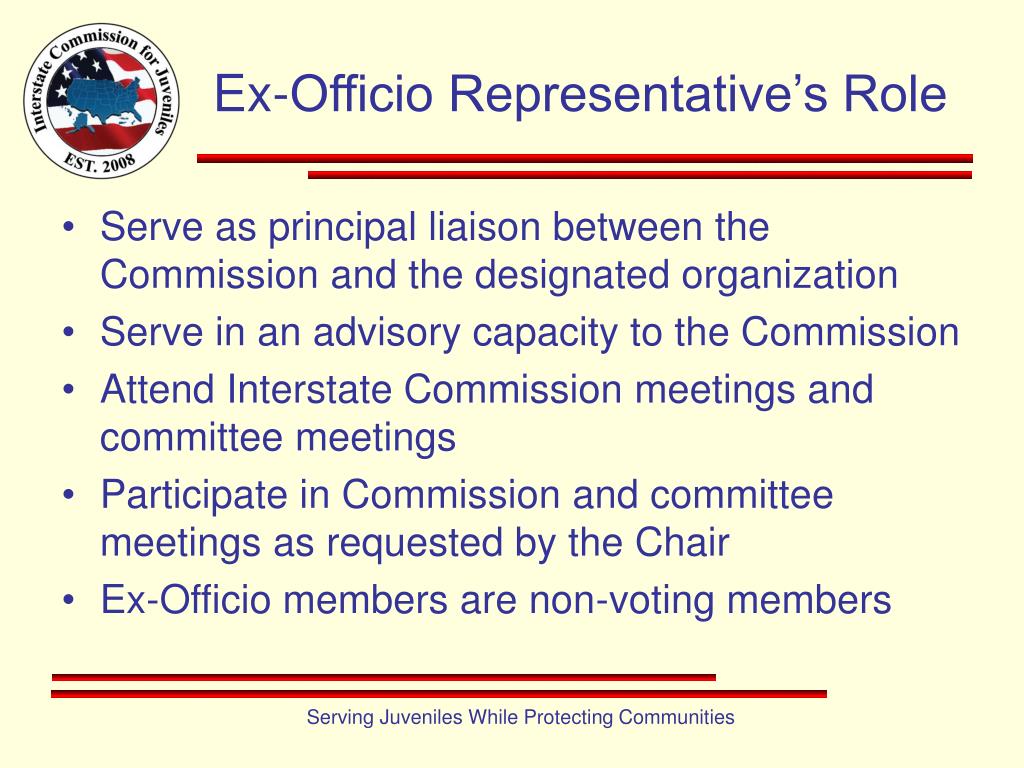
Unless restricted by governing documents, ex officio members typically enjoy full voting rights on all matters brought before the board. Because they possess full voting privileges, governance committees and corporate secretaries must carefully account for ex officio members when calculating quorums and voting majorities. If a set of bylaws states that a quorum consists of a majority of total voting directors, an ex officio member holding voting rights must be counted in that total.
Voting versus Non-Voting Status: Structural Variations
Organizations approach ex officio roles differently depending on their structural needs, regulatory environment, and governance philosophy. The distinction between voting and non-voting ex officio status is a critical design choice in corporate governance.
| Feature | Voting Ex Officio Member | Non-Voting Ex Officio Member |
|---|---|---|
| Primary Purpose | Integrated leadership and operational continuity with direct decision-making power. | Expert guidance, institutional memory, and liaison support without voting power. |
| Fiduciary Liability | Full exposure to standard fiduciary duties and potential liability under corporate law. | Generally limited exposure, though liability can still attach if duties are breached or advice is negligent. |
| Quorum Inclusion | Counted toward total director counts and quorum requirements. | Typically excluded from quorum calculations to prevent administrative deadlocks. |
| Common Use Case | Executive Directors, Managing Partners, or internal corporate officers. | Retiring founders, external legal counsel, governmental observers, or liaison representatives. |
The Executive Director Dilemma
When an executive director or CEO serves as an ex officio member of their own oversight board, a natural governance tension arises. The board’s primary functions include evaluating the CEO's performance, setting their compensation, and retaining the power to terminate their employment.
To maintain sound governance and protect against conflicts of interest, organizations utilizing a voting CEO ex officio model routinely implement strict recusal policies. The CEO must step out of the room during discussions and votes regarding their own compensation, contract renewals, or performance reviews. Many corporate governance experts increasingly recommend making executive directors non-voting ex officio members—or attending meetings strictly by invitation—to maintain clear boundaries between governance (the board) and management (the executive).
Advantages and Disadvantages of Ex Officio Board Seats
Integrating ex officio members into a corporate or non-profit board brings distinct strategic benefits, but it also introduces operational risks that must be managed proactively.
Key Advantages
- Operational Continuity: Ex officio members provide vital context and institutional memory, ensuring that new elected board members understand historical context and ongoing strategic initiatives.
- Streamlined Communication: Direct representation of key operational leaders minimizes bureaucratic friction, accelerating the flow of information between management and governance oversight.
- Built-In Expertise: Organizations can guarantee that specific technical, financial, or legal competencies are permanently seated at the board table, regardless of shifting election outcomes.
- Resource Allocation: In multi-entity or federated corporate structures, ex officio seats ensure that parent organizations or funding bodies maintain a designated touchpoint for strategic alignment.
Potential Risks and Disadvantages
- Erosion of Board Independence: If too many internal managers sit on the board as ex officio members, the board can effectively become self-governing, undermining its role as an independent check on management.
- Conflict of Interest Amplification: Dual-hatted individuals—such as an executive serving as a director—frequently face competing loyalties between corporate goals and personal or departmental interests.
- Chilling Effect on Discussion: General board members may feel hesitant to openly critique management performance or executive strategies if the executive sits at the same table as a voting peer.
- Governance Bottlenecks: Ambiguities in bylaws regarding ex officio voting rights can lead to legal disputes over board resolutions, disputed elections, or failed quorums.
Best Practices for Managing Ex Officio Roles in Bylaws
To prevent ambiguity and mitigate legal risks, organizations must explicitly define ex officio roles within their corporate bylaws or governing charters. Vague provisions frequently lead to corporate disputes, invalid board actions, and governance failures.
Corporate Bylaws Structure for Ex Officio Seats:
- Definition of Position (Which office grants the seat?)
- Scope of Voting Authority (Voting vs. Non-Voting)
- Quorum Calculations (Included or excluded?)
- Term Limitations (Tied to tenure of office or fixed?)
- Mandatory Recusal Protocols (Conflict of interest management)
Essential Checklist for Drafting Bylaw Provisions
- Name the Office, Not the Person: Provisions should tie the seat to a specific title or office (e.g., "The Chief Financial Officer shall serve...") rather than naming an individual, ensuring automatic succession when personnel change.
- Clarify Voting Status: Explicitly state whether the individual has voting privileges. Do not leave this open to interpretation or parliamentary procedure default rules.
- Define Term Lengths: Specify whether membership lasts as long as the individual holds the qualifying office, or if the board must re-confirm the seat periodically.
- Establish Recusal Rules: Draft clear parameters requiring ex officio members to recuse themselves during executive sessions, compensation reviews, or disciplinary matters concerning their own operational areas.
- Review State and Federal Statutes: Ensure that local corporate laws or non-profit regulations do not place statutory caps on internal management representation or mandate specific independent board compositions. For further guidance on regulatory standards governing corporate boards, consult resources provided by the U.S. Securities and Exchange Commission or relevant state corporate filing registries.
Frequently Asked Questions
Can an ex officio board member be held liable for corporate decisions?
Yes. In most jurisdictions, if an ex officio member holds full voting rights and participates in governance decisions, they carry the same fiduciary responsibilities and legal liability as any other director. Even non-voting ex officio members must exercise care, though their liability exposure is often examined differently based on their formal participation level.
Do ex officio members count toward establishing a quorum?
It depends entirely on the organization's bylaws and whether the ex officio member holds voting status. Generally, voting ex officio members are counted toward the total number of directors used to calculate a quorum, whereas non-voting members are excluded. Governing documents should explicitly clarify this calculation to avoid meeting invalidation.
Can an ex officio member hold board officer positions like President or Treasurer?
Yes, provided that the organization's bylaws do not prohibit it. However, combining executive operational roles with key board leadership positions—such as a CEO serving as board chair—is widely discouraged by modern corporate governance standards because it concentrates too much power in a single individual and eliminates independent oversight.
How do ex officio board members differ from standard appointed directors?
Elected or appointed directors are chosen specifically to sit on the board through a nomination and voting process for a fixed term. An ex officio member attains the seat automatically by holding another distinct job title, office, or professional position, and their board tenure is typically tied directly to how long they retain that primary office.
What happens to an ex officio board seat when the person leaves their primary office?
The individual immediately loses their seat on the board the moment they vacate the primary office that entitled them to it. The seat remains vacant until the new occupant of that primary office assumes the position, at which point they automatically inherit the ex officio board seat.
Organizations seeking to optimize their governance framework should audit their existing bylaws to ensure that ex officio roles are clearly defined, properly balanced between operational insight and independent oversight, and fully compliant with applicable corporate law.
Image Gallery
Select an image to open it in a new tab.
Zara El-Hashem
Sociocultural Dynamics and Academics Writer
