When Did Cell Phones Become Common in the US? A Definitive Timeline
Cell phones became common in the United States during the early 2000s, with household ownership crossing the 50% threshold around 2004. While the technology debuted in the 1980s as a luxury, a combination of digital network expansion, lower hardware costs, and the introduction of prepaid plans drove mass adoption by the mid-2000s.
The Early Era: From Luxury to Business Tool (1983–1990)
To understand when cell phones became common, we must first look at the era when they were decidedly rare. The first commercial handheld cellular phone, the Motorola DynaTAC 8000X, received FCC approval in 1983. At the time, its price tag was approximately $3,995—roughly equivalent to over $11,000 in 2026 currency.
During the 1980s, cellular technology was restricted to the social elite and high-level corporate executives. These devices were often referred to as "brick phones" due to their immense weight and size. The infrastructure was equally limited; 1G (First Generation) networks were analog, prone to interference, and easily intercepted by radio scanners. Coverage was mostly restricted to major metropolitan corridors like New York City, Chicago, and Los Angeles.
By 1990, there were only about 5 million cellular subscribers in a country of 250 million people. At this stage, the cell phone was a productivity tool for "road warriors"—salespeople and contractors who spent their days in vehicles—rather than a consumer staple. Most people who needed mobile communication still relied on pagers or "beepers," which were significantly cheaper and more reliable for simple message alerts.
The Digital Shift: The 2G Revolution (1991–1998)
The mid-1990s marked the transition from analog 1G to digital 2G networks. This was arguably the most important technical shift in the history of mobile telephony. Digital signals allowed for "multiplexing," which meant more callers could share the same radio frequency, drastically increasing network capacity and lowering the cost per minute for providers.
The Impact of the Telecommunications Act of 1996
In 1996, the United States passed the Telecommunications Act, which was designed to foster competition in the industry. Before this, the market was dominated by a few large players with little incentive to lower prices. Post-1996, new carriers entered the market, leading to aggressive price wars and the introduction of "nationwide" calling plans.
The Rise of the "Candy Bar" and Clamshell Phones
As the hardware transitioned from analog to digital, the components shrunk. This era saw the rise of iconic devices like the Motorola StarTAC (1996), the first truly successful "flip phone." It was small enough to fit in a pocket, weighing only 3.1 ounces. Simultaneously, Nokia began dominating the market with "candy bar" style phones like the Nokia 5110 and 6110. These phones were durable, had long-lasting batteries, and featured the first mobile game to reach cultural phenomenon status: Snake.
Despite these advancements, cell phones in 1998 were still not "common" in the sense of universal ownership. They were common enough to be seen in public frequently, but they were still considered a secondary device to the landline.
The Tipping Point: 1999 to 2004
The period between 1999 and 2004 is when the cell phone transitioned from a "useful gadget" to an "essential utility" for the average American. Several factors converged during these five years to create a surge in adoption.
The Introduction of SMS (Texting)
While the first text message was sent in 1992, it didn't become a cultural staple in the US until the late 90s. Initially, carriers charged high fees for individual texts, and cross-carrier messaging was often restricted. Once these barriers fell around 1999-2000, texting became a primary driver for young adults and teenagers to acquire their own phones.
The 2-Year Contract and "Free" Phones
To gain market share, carriers like Verizon, Cingular (now AT&T), and Sprint began offering phones for "free" or for a nominal fee (like $19.99) if the customer signed a two-year service contract. This eliminated the high "barrier to entry" of purchasing a $300 device. Consumers were happy to pay $39.99 a month for service if the phone itself appeared to be free.
The Statistical Peak of Ubiquity
According to data from the Pew Research Center, cell phone ownership among US adults grew at an incredible pace during this window:
- 2000: Roughly 53% of American adults owned a cell phone.
- 2002: Ownership rose to 62%.
- 2004: Ownership hit approximately 65-70%.
By 2004, it was more common to have a cell phone than not to have one. This was also the year that "landline cutting" began to emerge as a statistical trend, with younger adults choosing to rely solely on their mobile devices for home communication.
The Features That Drove Commonality
As ownership climbed, manufacturers began adding features that moved the cell phone beyond a mere voice communication tool. These features transformed the device into a multipurpose life assistant.
- Color Screens and Customization: The shift from monochrome to color screens around 2002 allowed for "wallpapers" and a more visual user interface.
- Ringtones: The "polyphonic" ringtone market became a multi-billion dollar industry. Personalizing your phone's sound became a way for users, particularly youth, to express their identity.
- The Camera Phone: In 2002, the Sanyo SCP-5300 was released in the US, featuring a built-in camera. Though the resolution was low (0.3 megapixels), it set the stage for the visual social media culture that would follow.
- Early Mobile Web (WAP): Wireless Application Protocol (WAP) allowed for very basic, text-heavy browsing. While slow and clunky, it allowed people to check sports scores or weather on the go.
Comparing the Evolution of Mobile Ubiquity
The following table outlines the progression of mobile phone technology and its penetration into American society across four decades.
| Era | Primary Network | Key Device(s) | Ownership Status | Primary Use Case |
|---|---|---|---|---|
| 1983–1990 | 1G (Analog) | Motorola DynaTAC | Rare / Luxury | High-level Business |
| 1991–1998 | 2G (Digital) | Motorola StarTAC, Nokia 5110 | Niche / Emerging | Professionals, Early Adopters |
| 1999–2004 | 2.5G (GPRS/EDGE) | Nokia 3310, Sanyo Camera Phones | Common (50%+) | Texting, Emergency Use |
| 2005–2010 | 3G | Motorola Razr, BlackBerry, iPhone | Ubiquitous (85%+) | Email, Music, Early Web |
| 2011–2020 | 4G / LTE | iPhone (4-12), Samsung Galaxy S | Essential (95%+) | Video, Social Media, Apps |
| 2021–2026 | 5G | iPhone 15+, Foldable devices | Universal (98%+) | Everything (IoT, AI, 4K Video) |
The Smartphone Transformation (2007–Present)
While cell phones were already "common" by 2004, they were not yet "smart." The next major evolution occurred in June 2007 with the release of the original iPhone. Prior to this, the BlackBerry had gained significant traction, but it was viewed primarily as a business tool for checking email.
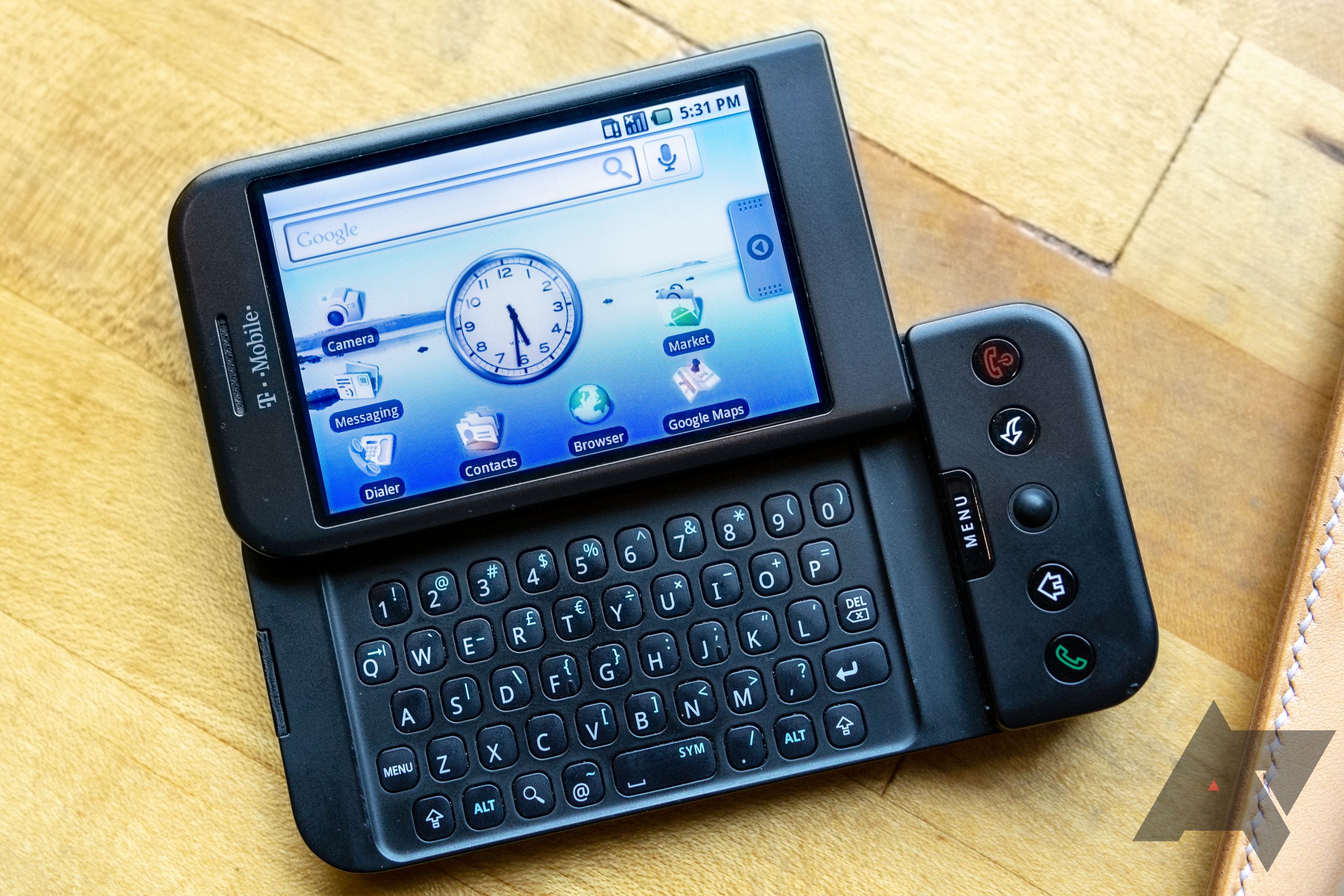
The iPhone, and the subsequent rise of Android devices (starting with the T-Mobile G1 in 2008), changed the definition of a cell phone. It was no longer just a phone; it was a mobile computer. By 2012, smartphones had overtaken "feature phones" (basic phones) in sales.
In 2026, we look back at the early 2000s as the "Wild West" of mobile design. Before the standardized "glass slab" look of modern smartphones, companies like Sony Ericsson, LG, and Kyocera experimented with sliders, swivels, and dual-screen designs. This era of experimentation was the final push that ensured every demographic—from children to senior citizens—had a device in their pocket.
Socio-Economic Impacts of Mobile Ubiquity
The moment cell phones became common, the social fabric of the United States shifted in several permanent ways.
The Decline of the Payphone
As mobile ownership crossed the 50% mark, the revenue from public payphones plummeted. From 2000 to 2006, hundreds of thousands of payphones were removed from street corners and malls across America. For the first time in a century, the concept of a "public telephone" began to vanish.
Changes in Safety and Coordination
Before 2000, if your car broke down on a highway, you had to walk to a call box or hope a stranger would stop. By 2005, the "safety net" provided by cell phones became a standard expectation. Social coordination also changed; people stopped making firm plans days in advance and began using "just-in-time" coordination via text message.
The Digital Divide
While cell phones became common, the "digital divide" initially widened. Those with the latest 3G devices had access to information that those on older 2G networks or prepaid plans did not. However, by 2026, the proliferation of low-cost smartphones and government subsidies like the Lifeline Program has helped bridge this gap, making mobile connectivity a nearly universal human right in the US.
Frequently Asked Questions
What was the first cell phone to be popular in the US?
The Nokia 5110, released in the late 1990s, is often cited as the first cell phone to achieve true mass-market popularity among average consumers. It was affordable, featured replaceable faceplates for customization, and introduced many Americans to mobile gaming with "Snake."
When did teenagers start getting cell phones?
The trend of teenagers owning cell phones surged between 1999 and 2002. This was driven by the introduction of prepaid plans (like Virgin Mobile) and the cultural explosion of SMS texting, which allowed teens to communicate discreetly without using the family landline.
Why did it take so long for cell phones to become common?
The primary barriers were cost and infrastructure. Until the mid-1990s, phones were expensive to build, and network coverage was spotty. The transition to digital 2G networks and the 1996 Telecommunications Act were the necessary catalysts for making service affordable for the middle class.
When did cell phones replace landlines in most homes?
The "tipping point" for landline replacement occurred later than general cell phone adoption. It wasn't until approximately 2016 that a majority of US households (over 50%) were "wireless only," meaning they had abandoned landlines entirely in favor of mobile devices.
What was the most popular phone before the iPhone?
The Motorola RAZR V3, released in 2004, was the best-selling clamshell phone of all time. Its sleek, metallic design made it a fashion statement and solidified the "flip phone" as the dominant form factor of the mid-2000s.
Practical Guidance for Historical Research
If you are researching the history of telecommunications for academic or professional purposes, it is important to distinguish between "subscribers" and "users." In the early 2000s, many families shared a single "car phone" or "emergency phone," meaning the number of users was often higher than the number of active subscriptions.
For the most accurate historical data, consult the FCC's annual Mobile Wireless Competition Reports, which track the industry's growth from the early 1990s to the present day. These reports provide granular detail on pricing, network speeds, and adoption rates across different US regions.
Image Gallery
Select an image to open it in a new tab.
Ingrid Bjornson
Global Cyber Policy and Regulation Analyst
