Understanding Tupac and Assata Shakur: A Legacy of Revolution and Family

To understand the connection between Tupac Amaru Shakur and Assata Shakur, one must look beyond biological lineage and into the framework of revolutionary kinship. While often referred to as his aunt, Assata Shakur was Tupac’s godmother and a close comrade of his mother, Afeni Shakur. Together, they represented a unified front of Black liberation politics that profoundly shaped Tupac's worldview, music, and social activism.
The Roots of the Shakur Name: An Ideological Identity
The name "Shakur" is more than a surname; it is a declaration of purpose. In the late 1960s and early 1970s, members of the Black Panther Party and the Black Liberation Army (BLA) often adopted new names to shed the "slave names" inherited from their ancestors’ captors and to signify their commitment to African heritage and revolutionary struggle. The name Shakur, meaning "thankful" in Arabic, became the banner for a group of activists who formed a chosen family.
Tupac was born Lesane Parish Crooks in 1971, but his mother, Afeni Shakur, renamed him Tupac Amaru Shakur after the last indigenous monarch of the Inca Empire who led a revolt against Spanish rule. This renaming was a deliberate act of political positioning. By bringing him into the Shakur fold, Afeni ensured her son was part of a lineage that included some of the most influential and controversial figures in the American civil rights and militant liberation movements.
Understanding this context is vital because it explains why Tupac often spoke of Assata Shakur with such reverence. To him, the "Shakur" identity was a commitment to the "struggle"—a term used to describe the ongoing fight against systemic oppression, poverty, and police brutality.
Assata Shakur: The Life of a Revolutionary Godmother
Assata Shakur, born JoAnne Deborah Byron, is perhaps the most iconic and polarizing figure associated with the Shakur family. As a member of the Black Panther Party and later the Black Liberation Army, she became a symbol of resistance for some and a fugitive for others.
The 1973 Incident and the "Hands Off Assata" Movement
The defining moment in Assata Shakur’s life—and the event that cemented her status as a revolutionary icon—occurred on May 2, 1973. During a traffic stop on the New Jersey Turnpike, a shootout erupted involving Assata, Zayd Malik Shakur, and Sundiata Acoli, and New Jersey State Troopers. The confrontation resulted in the deaths of Trooper Werner Foerster and Zayd Malik Shakur. Assata was wounded and subsequently captured.
The legal proceedings that followed were fraught with controversy. Supporters argued that she was a victim of COINTELPRO, the FBI's covert and often illegal program designed to surveil, infiltrate, and disrupt domestic political organizations. In 1977, she was convicted of first-degree murder in the death of Trooper Foerster. However, her supporters maintain her innocence to this day, citing forensic evidence that they claim showed she could not have fired a weapon due to her injuries.
In 1979, Assata escaped from the Clinton Correctional Facility for Women in New Jersey with the help of the BLA. After living underground for several years, she surfaced in Cuba in 1984, where she was granted political asylum. As of 2026, she remains in Cuba, a permanent fixture on the FBI’s Most Wanted Terrorists list, while simultaneously being celebrated in popular culture as a "maroon"—a term for Africans who escaped slavery and formed independent settlements.
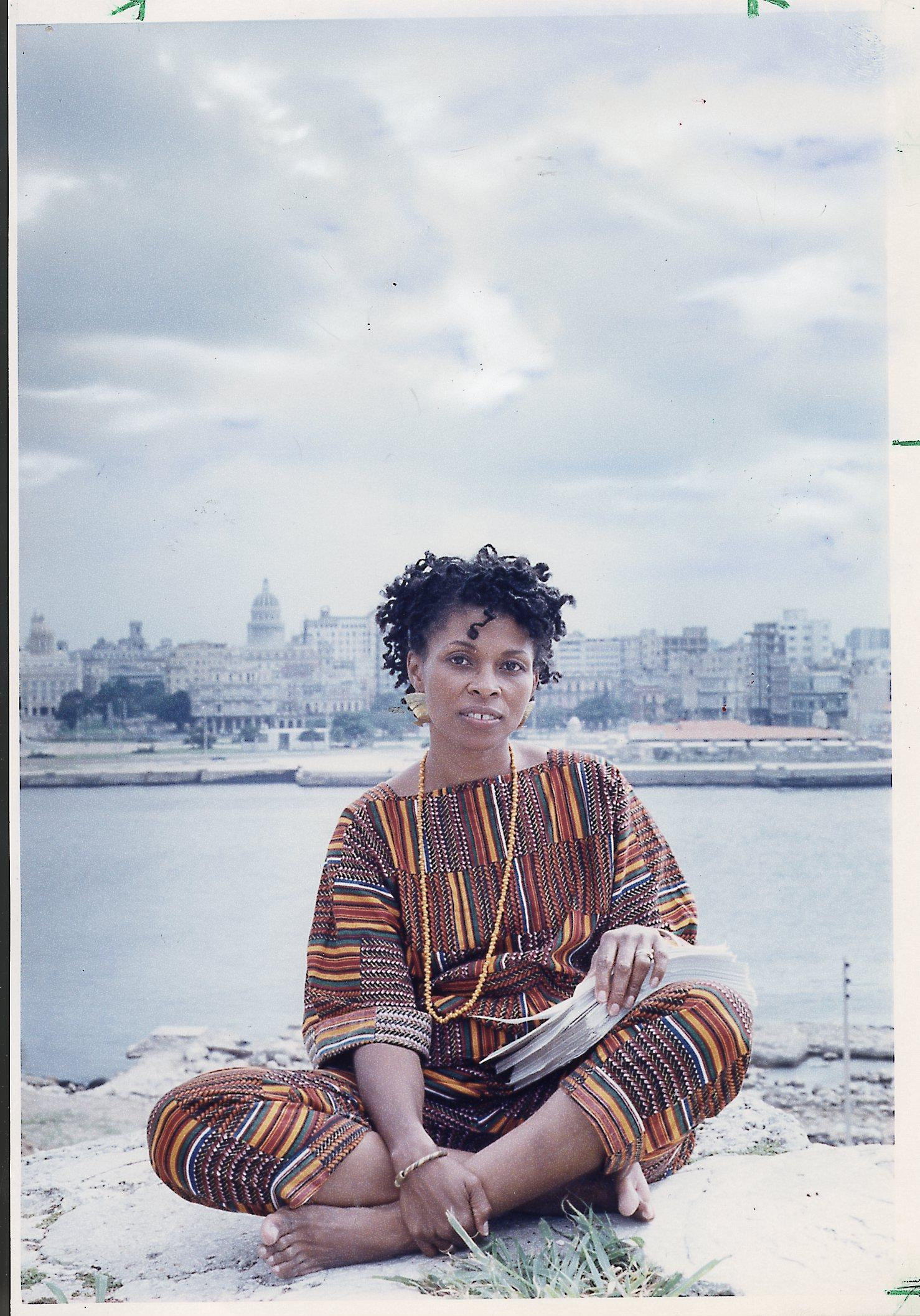
Afeni Shakur and the Birth of a Prophet
To understand Tupac’s connection to Assata, one must understand his mother, Afeni Shakur. Afeni was a high-ranking member of the Black Panther Party in New York. She was famously part of the "Panther 21," a group of activists arrested and charged with a series of planned bombings and rifle attacks on police stations.
Afeni famously defended herself in court while pregnant with Tupac. She was acquitted of all charges just over a month before he was born. This environment of legal warfare, political radicalism, and constant surveillance was the only world Tupac knew as a child. He was raised among "uncles" and "aunts" who were regularly being arrested, exiled, or killed in the line of political duty.
Afeni’s influence on Tupac cannot be overstated. She taught him the importance of intellectualism, the history of African people, and the necessity of using his voice as a weapon. When Tupac spoke of Assata, he was speaking of the woman who shared his mother’s foxhole during the height of the Black Power movement.
Mutulu Shakur: The Bridge Between Tupac and Assata
While Afeni was the maternal link, Mutulu Shakur was the structural link. Mutulu was Tupac’s stepfather and the brother-in-law of Assata Shakur. A doctor and a revolutionary, Mutulu was a key figure in the New Afrikan Independence Movement and was involved in the 1979 escape of Assata.
Mutulu was incarcerated for much of Tupac’s adult life, convicted of RICO conspiracy and involvement in the 1981 Brink’s armored car robbery. Despite his imprisonment, Mutulu remained a mentor to Tupac. He was instrumental in helping Tupac draft the "Code of Thug Life," a set of rules intended to reduce violence between gangs and protect the community from self-destruction.
The relationship between Mutulu and Assata provided the familial architecture that allowed Tupac to claim Assata as his "aunt." In the Black revolutionary community, these bonds were considered more sacred than biological ones because they were forged in shared sacrifice and a common vision for the future.
Dissecting the "Aunt" Relationship: Fact vs. Folklore
In mainstream media, Assata is frequently identified as Tupac’s biological aunt. However, the technical reality is more nuanced:
- Godmother status: Assata is widely recognized as Tupac’s godmother, a role that carries significant spiritual and protective weight in Black culture.
- In-law connection: Through his stepfather Mutulu, Assata was a sister-in-law by marriage and political affiliation.
- Comrade connection: Most importantly, she was a comrade to his mother, Afeni. In the Black Panther Party, members frequently used familial terms (Brother, Sister, Aunt, Uncle) to emphasize solidarity and the destruction of the nuclear family model in favor of a communal one.
By calling her "Aunt Assata," Tupac was not necessarily claiming a DNA match; he was claiming a political inheritance. He was signaling to the world that he was the scion of the Black Liberation Army, the "Prince of the Revolution."
Key Figures in the Shakur Revolutionary Circle
| Name | Role in the Movement | Relationship to Tupac | Current Status (as of 2026) |
|---|---|---|---|
| Afeni Shakur | BPP Leader, Panther 21 | Biological Mother | Deceased (2016) |
| Assata Shakur | BPP / BLA Member | Godmother / "Aunt" | Living in Cuba (Asylum) |
| Mutulu Shakur | BLA / New Afrikan activist | Stepfather | Deceased (2023) |
| Lumumba Shakur | BPP / Panther 21 | "Uncle" (Afeni's 1st Husband) | Deceased (1986) |
| Zayd Malik Shakur | BLA Member | "Uncle" / Namesake | Deceased (1973) |
Influence on Tupac’s Music and Philosophy
Tupac’s discography is littered with references to the Panther ideology and Assata’s struggle. He viewed himself as a bridge between the militant activism of the 1970s and the burgeoning hip-hop culture of the 1990s.
From Panther Power to Thug Life
Tupac’s concept of "Thug Life" is often misunderstood as a glorification of criminality. However, when viewed through the lens of his Shakur upbringing, it was a sociological acronym: "The Hate U Give Little Infants F***s Everybody." This was a direct evolution of the Black Panther Party's focus on the "lumpenproletariat"—the underclass of society that the Panthers believed would lead the revolution.
In songs like "Words of Wisdom," Tupac explicitly mentions the revolutionary struggle: "This is for the masses, the lower classes / The ones you left out, to pass us." His lyrics often mirrored the BPP's Ten-Point Program, which demanded decent housing, education, and an end to police brutality.
Tributes and References
Tupac’s support for Assata was vocal and public. In his song "White Man’s World," he pays homage to the women who sacrificed for the movement, including his mother and Assata. He viewed her exile in Cuba not as a flight from justice, but as a strategic survival of a political prisoner.
His tattoos also told the story. The "2Pac" on his chest, the "Thug Life" on his abdomen, and the various panther and African imagery were visual markers of his loyalty to the Shakur legacy. He understood that his fame gave him a platform to keep Assata’s name in the public consciousness at a time when the government was working to erase her narrative.
The FBI and the Continued Pursuit
The FBI’s interest in the Shakur family did not end with the 1970s. Throughout the 1990s, Tupac himself was under surveillance, as documented in FBI files released after his death. The authorities were wary of his ability to mobilize the youth and his potential to fund revolutionary causes.
As of 2026, the case of Assata Shakur remains a point of contention in U.S.-Cuba relations. The reward for her capture stands at $2 million. For the Shakur family and their supporters, this continued pursuit is seen as evidence that the government still fears the ideological power that Assata and Tupac represent. The "understanding" of their relationship is, therefore, also an understanding of the state’s reaction to radical Black dissent.
Legacy and Cultural Impact in 2026
In 2026, the figures of Tupac and Assata Shakur have transitioned from contemporary activists to historical icons. Their names are invoked in modern social justice movements, such as Black Lives Matter, where Assata’s words—"It is our duty to fight for our freedom. It is our duty to win."—are frequently chanted at protests.
Tupac’s estate and various foundations continue to promote the educational and community-focused goals that Afeni and Mutulu championed. The connection between Tupac and Assata serves as a reminder that hip-hop's foundations are deeply political. To listen to Tupac without understanding Assata is to hear the rhythm but miss the message.
Frequently Asked Questions
Is Assata Shakur still alive in 2026?
Yes, Assata Shakur is currently living in Cuba, where she has been under political asylum since 1984. Despite various attempts by the U.S. government to negotiate her extradition, the Cuban government has maintained her status as a political refugee.
Why is Assata Shakur on the FBI's Most Wanted list?
She was placed on the list following her 1979 escape from prison, where she was serving a life sentence for the 1973 death of a New Jersey State Trooper. In 2013, she became the first woman to be named on the FBI’s Most Wanted Terrorists list, a move that sparked significant debate regarding the definition of terrorism vs. political activism.
Did Tupac ever visit Assata in Cuba?
There is no verified public evidence that Tupac visited Assata in Cuba during his lifetime. While there has been much speculation and urban legend surrounding this, especially following his death in 1996, no photographs or travel records have confirmed such a meeting.
How did Tupac's mother, Afeni, feel about Assata?
Afeni and Assata were close comrades in the Black Panther Party. Afeni consistently spoke of Assata with love and respect, viewing her as a sister in the struggle. The "Shakur" family bond was one of the most important aspects of Afeni's life, and she raised Tupac to honor that bond.
What is the meaning of the name Tupac Amaru Shakur?
Tupac Amaru is named after an 18th-century indigenous revolutionary in Peru who led a massive uprising against Spanish colonial rule. "Shakur" is an Arabic name meaning "thankful" or "grateful." Together, the name represents a combination of global anti-colonial resistance and Islamic-influenced African American identity.
Practical Recommendation for Further Study
To gain a deeper understanding of this complex relationship, readers should consult primary sources. Assata: An Autobiography provides an essential first-person account of her life and the conditions that led to the formation of the BLA. For context on the family's political background, the documentary Tupac: Resurrection and the book Afeni Shakur: Evolution of a Revolutionary offer invaluable insights into the environment that produced one of the most influential artists of the 20th century.
Image Gallery
Select an image to open it in a new tab.
Vivian Cho
Executive IT and Emerging Technologies Reporter
