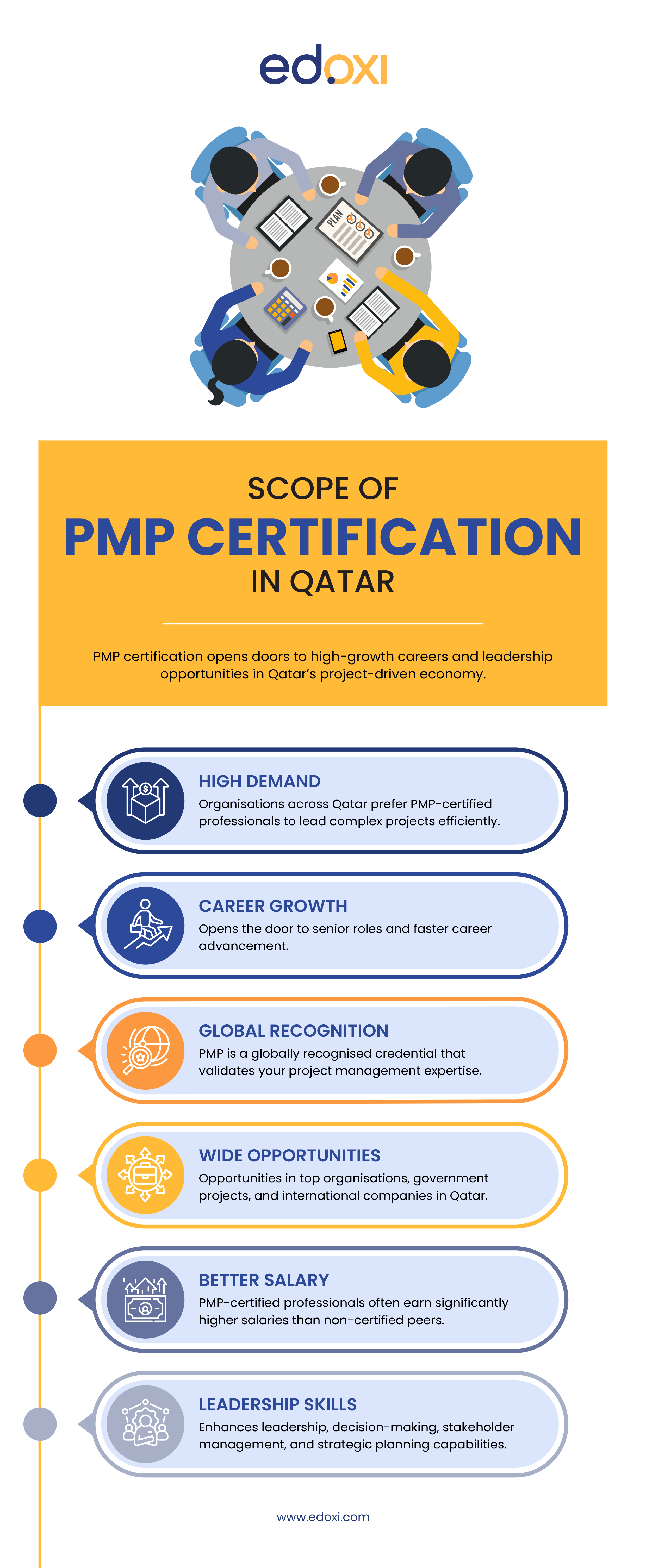
The Project Management Professional (PMP) certification is widely regarded as the gold standard in the project management field, offering a rigorous validation of a professional’s experience and knowledge. Deciding if it is worth the effort requires balancing the significant time, financial, and psychological investment against its potential to boost salary, broaden career horizons, and validate your expertise in global project methodologies.
Understanding the Value Proposition of the PMP
The Project Management Institute (PMI) administers the PMP certification, which has evolved over decades to encompass predictive, agile, and hybrid methodologies. Unlike entry-level certifications that focus solely on theoretical knowledge, the PMP requires a demonstrated track record of managing projects. As of 2026, the PMP remains a heavily sought-after credential by recruiters and hiring managers who need assurance that a candidate can navigate complex project constraints—scope, time, cost, and quality—without direct supervision.
The "effort" involved in obtaining this certification is substantial. Candidates must document thousands of hours of project leadership experience, complete 35 hours of project management education, and pass a rigorous, 180-question examination. This barrier to entry is precisely what gives the credential its perceived value. It acts as a professional signal, demonstrating to employers that you possess both the requisite experience and the commitment to formalize your project management discipline.
The Financial Investment and Potential ROI
The direct costs of the PMP certification include the exam fee, membership dues for the PMI, and prep materials. As of 2026, for a non-member, the examination fee is $555 USD, while PMI members pay $405 USD (following an annual membership fee of $129 USD). When you factor in the costs of high-quality prep courses, practice exams, and potentially specialized training programs, the total investment typically ranges between $800 and $2,000.
Beyond the upfront cost, the "opportunity cost" of the time spent studying is significant. Most successful candidates spend between 60 and 150 hours preparing for the exam. This involves deep reading of the PMBOK Guide, the Agile Practice Guide, and various process flow analyses.
However, the Return on Investment (ROI) is frequently cited by practitioners as positive. According to various longitudinal industry studies, PMP certification holders often report salary increases or eligibility for roles that require a baseline certification. Because the certification is recognized globally, it provides a portable advantage, making it easier to transition between industries or geographic regions where project management standards are standardized around PMI terminology.
Prerequisites: Measuring Your Eligibility
One of the primary reasons individuals wonder if the effort is "worth it" is the strict eligibility criteria. The certification is not designed for students or those entirely new to the field. To qualify, you must meet one of two educational and experience tiers:
- University Degree Path: You must hold a four-year degree (bachelor’s or the global equivalent), have at least 36 months of unique, non-overlapping project management experience, and have 35 contact hours of formal project management education.
- High School Diploma Path: You must have a high school diploma or associate degree, have at least 60 months of unique, non-overlapping project management experience, and have 35 contact hours of formal project management education.
For those who already meet these requirements, the effort is significantly lower than for those who must spend months or years "building" their experience to qualify. If you are already working as a project manager, the effort is less about "learning a new trade" and more about "formalizing what you already do."
The Examination Experience: Complexity and Discipline
The exam itself is a major hurdle. It is not a memorization test; it is a situational assessment. You are often presented with complex scenarios and asked how a project manager should behave or what step they should take next. The 2026 examination format focuses heavily on the integration of predictive (waterfall) and agile methodologies.
For many, the process of studying for the PMP actually improves their on-the-job performance before they even sit for the exam. The discipline of studying common standards allows professionals to speak a universal language. This is particularly valuable in large organizations where communication between disparate teams often breaks down due to differing project management "dialects."
Comparative Overview: PMP vs. Alternatives
When evaluating the effort, it is helpful to compare the PMP against other industry certifications. The table below outlines how the PMP stands in relation to other common credentials.
| Certification | Focus | Difficulty | Primary Benefit |
|---|---|---|---|
| PMP | Global Standards & Strategy | High | Universal recognition, high salary floor |
| CAPM | Entry-level Theory | Moderate | Good for those lacking experience |
| CSM | Scrum/Agile Frameworks | Low | Quick entry into Agile/Software teams |
| PRINCE2 | Process/Methodology | Moderate | Stronger recognition in Europe/UK |
If your goal is immediate job market entry, a CSM (Certified ScrumMaster) might be more "effort-efficient." However, if your long-term goal is high-level project portfolio management or corporate leadership, the PMP provides a more comprehensive foundation that supports a career spanning multiple decades.
Common Pitfalls and Why People Fail to See Value
The primary reason professionals feel the PMP was "not worth the effort" is often a mismatch between expectations and reality.
- Certification as a Silver Bullet: Some candidates believe the PMP will automatically lead to a promotion or a job offer. In reality, the PMP is a catalyst for an existing career, not a replacement for talent, soft skills, or leadership capability.
- The Experience Gap: Candidates who "force" their way into eligibility without truly having the requisite experience often struggle to apply the principles to their daily work, leading to a sense that the certification is just academic theory.
- Maintenance Neglect: Many forget that the PMP requires ongoing Professional Development Units (PDUs) to maintain active status. If you do not intend to remain active in the field or engage in continuous learning, the long-term maintenance can become a burden.
When the Effort is Truly Worth It
The PMP is undeniably worth the effort if:
- You work in an industry (such as construction, engineering, or government contracting) where the PMP is a mandatory requirement for senior roles.
- You are an "accidental project manager" who has been leading projects but lacks a theoretical framework to explain your success or solve systemic issues.
- You are looking to differentiate your resume in a crowded job market where hiring managers use certification status as a primary filter.
Conversely, if you are a creative professional in a very niche field that does not value formal methodology, or if you are looking for a quick, low-effort credential to pad a resume, the PMP will likely feel like an exhaustive and frustrating experience that yields little benefit.
Frequently Asked Questions
Does the PMP expire? The PMP does not "expire" in the sense that you lose the knowledge, but you must maintain your status. To keep your certification active, you must earn 60 PDUs every three years. If you fail to do so, your certification will be suspended, and you will eventually need to retake the exam to become recertified.
Can I get a salary increase immediately after passing? While some employers offer immediate raises, the more common outcome is that the certification makes you a more competitive candidate for higher-paying roles during your next job search. The PMP functions as a long-term salary "accelerator" rather than an immediate "bonus" check.
Is the PMP better than a Master's degree? They serve different purposes. A Master’s degree, such as an MBA or a Master of Science in Project Management, provides academic breadth and high-level management theory. The PMP provides specific, industry-recognized operational standards. They are often complementary rather than mutually exclusive.
How much time should I dedicate to study per day? Success typically requires a consistent schedule. Aiming for 1.5 to 2 hours of focused study per day for 3 months is generally more effective than "cramming" on weekends. The exam tests your ability to think through situational problems, which requires time for concepts to "settle" into your daily decision-making process.
Do I need to be a PMI member? You do not have to be a member to apply for the exam, but the member discount on the exam fee almost always pays for the cost of the membership itself. Furthermore, members get free access to digital copies of the PMBOK Guide and other essential study resources, making membership the more cost-effective route for nearly all applicants.
Final Recommendation
The decision to pursue the PMP should be viewed as a professional investment rather than a cost. If you are committed to a career in project management, the effort invested in the certification is likely to pay dividends for years by opening doors, standardizing your approach to problem-solving, and validating your professional maturity. Start by verifying your eligibility on the PMI website, assessing your internal motivation, and committing to a structured, three-month study plan. If you approach the PMP with the intent to master the discipline—not just pass the test—the effort will be rewarded.

Image Gallery
Select an image to open it in a new tab.


Ingrid Bjornson
Global Cyber Policy and Regulation Analyst
