Understanding the Joaquin Phoenix Late Show Appearance: A Definitive History
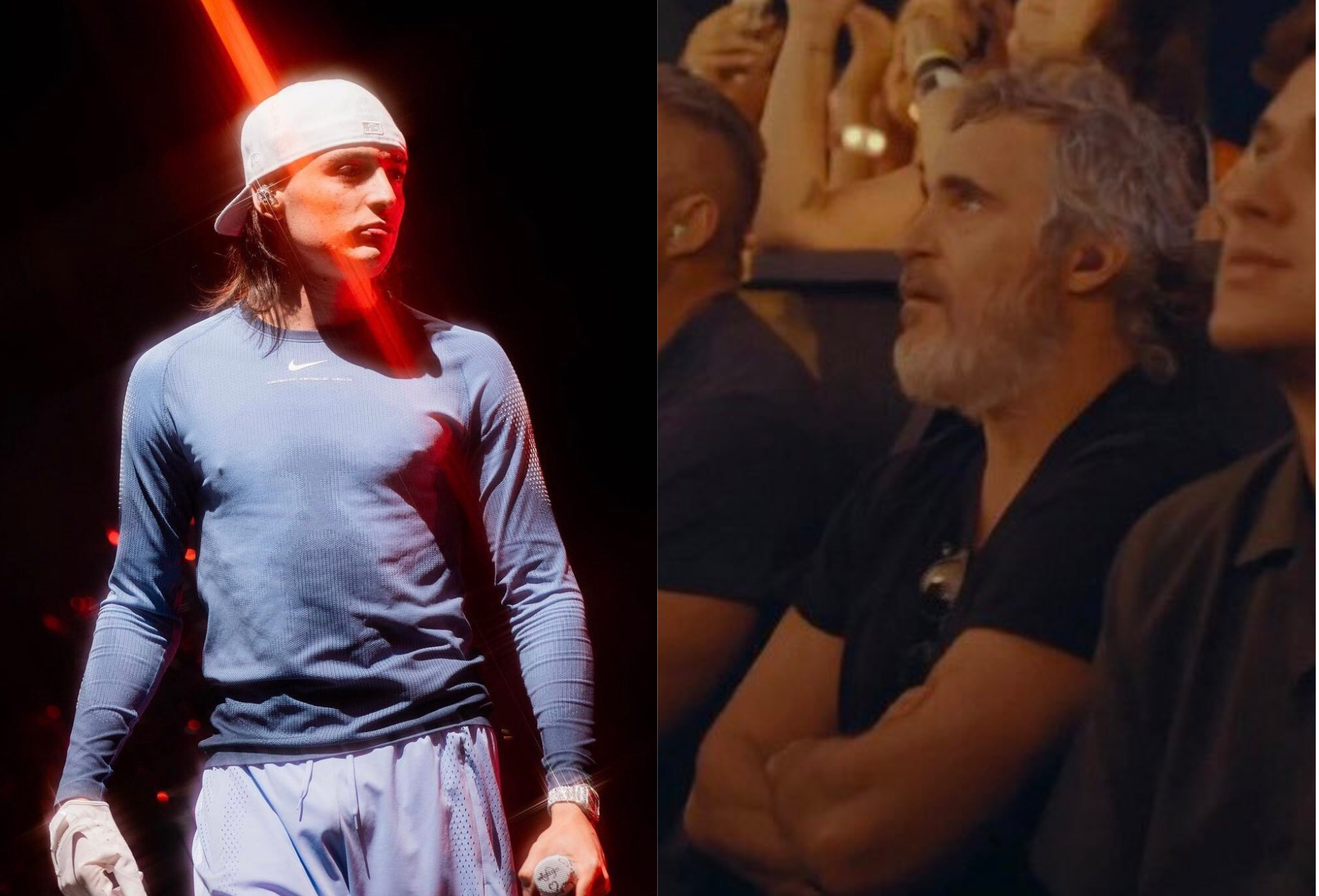
Joaquin Phoenix’s appearances on The Late Show—specifically his 2009 interview with David Letterman—represent some of the most analyzed moments in late-night television history. Originally perceived as a public breakdown, the 2009 appearance was later revealed as a piece of immersive performance art for the mockumentary I'm Still Here.
The 2009 Viral Moment: Joaquin Phoenix on Letterman
On February 11, 2009, Joaquin Phoenix walked onto the stage of the Ed Sullivan Theater for an interview that would immediately become part of pop culture lore. At the time, Phoenix was ostensibly promoting his film Two Lovers, but he arrived looking drastically different from his usual self. He sported a thick, unkempt beard, wore dark sunglasses throughout the segment, and appeared largely incoherent.
The interview was characterized by long silences, mumbled one-word answers, and a palpable sense of discomfort. When David Letterman attempted to engage him in standard talk-show banter, Phoenix was unresponsive, at one point sticking a piece of chewing gum under Letterman’s desk. The host, known for his sharp wit, navigated the awkwardness with a series of barbs, famously concluding the segment by saying, "Joaquin, I’m sorry you couldn't be here tonight."
The Narrative of "Retirement" and Hip-Hop
During this specific appearance, Phoenix claimed he was retiring from acting to pursue a career as a hip-hop artist. This claim was met with widespread skepticism and concern from the public and the industry alike. He appeared to be a man in the midst of a mid-life crisis or a mental health episode, which made the comedy of the late-night format feel particularly jarring to viewers at home.
The "hip-hop" angle was supported by footage that surfaced later, showing Phoenix performing (and occasionally falling off stage) at various clubs. By the time the Late Show appearance aired, the media had already begun a "death watch" for his career, unaware that the cameras were rolling for a different reason entirely.
Behind the Mask: I’m Still Here and the Mockumentary Concept
To understand why the appearance happened, one must look at the technical and creative goals of the film I’m Still Here, directed by Casey Affleck. The film was designed to be a "gonzo" documentary exploring the nature of celebrity, the relationship between the media and the star, and the fragility of public persona.
The Commitment to Method Acting
Phoenix remained in character for nearly two years. This wasn't merely a performance for the duration of a film shoot; it was a total immersion into a fictionalized version of himself. The Late Show appearance was the "climax" of this experiment. The goal was to see if the media would consume a celebrity's downfall as entertainment, even if the signs of that downfall were clearly exaggerated or bizarre.
From a technical perspective, the production team had to maintain the illusion across multiple public platforms. This required Phoenix to decline legitimate acting offers and maintain the physical appearance of the "character" (the beard and weight gain) in all public sightings. The Late Show was the perfect venue because of its high viewership and Letterman's reputation for not "playing along" with guests, which added a layer of authenticity to the perceived friction.

The 2010 Redemption: Returning to the Late Show
In September 2010, following the release of I’m Still Here, Joaquin Phoenix returned to The Late Show with David Letterman to "come clean." This second appearance was a stark contrast to the first. Phoenix was clean-shaven, articulate, and apologetic.
Was Letterman In on the Joke?
One of the most frequent questions regarding this saga is whether David Letterman was aware of the hoax during the 2009 interview. During the 2010 "redemption" interview, both Phoenix and Affleck insisted that Letterman was not in on the joke. However, the host’s legendary ability to improvise meant that his reactions—while genuine in their frustration—were exactly what the filmmakers needed.
Phoenix thanked Letterman for the "great performance" he gave in response to the character, acknowledging that the host provided the perfect foil for the experiment. Letterman, for his part, joked that Phoenix owed him money for the "distress" caused, but the tone was ultimately one of reconciliation. This follow-up was essential for Phoenix’s career, as it signaled to Hollywood that he was still a professional actor capable of "turning off" the character.
Joaquin Phoenix and the Evolution of the Celebrity Interview
Beyond the 2009/2010 saga, Joaquin Phoenix’s relationship with late-night television has remained unique. As we look back from 2026, it is clear that Phoenix changed the expectations for how a celebrity "should" behave on these programs.
The Stephen Colbert Appearances
In later years, specifically while promoting Joker (2019) and its sequel, Phoenix appeared on The Late Show with Stephen Colbert. These interviews showcased a different side of the actor—vulnerable, slightly anxious, and deeply thoughtful. Unlike the 2009 appearance, which was a calculated facade, his interviews with Colbert often feel like a genuine struggle with the art of promotion.
Phoenix has often spoken about his discomfort with the "talk show circuit." This honesty has made his later Late Show appearances feel more authentic to modern audiences who value transparency over polished PR responses. He often breaks the "fourth wall" of the interview, commenting on the strangeness of having to summarize a complex film in a four-minute segment between commercials.
Technical Comparison of Key Late Show Appearances
The following table outlines the key differences between Phoenix’s most notable appearances on the Late Show platform, providing a snapshot of his career evolution.
| Year | Host | Primary Purpose | Demeanor | Key Takeaway |
|---|---|---|---|---|
| 2009 | David Letterman | Promotion for I'm Still Here | Erratic, unresponsive, bearded | The "Hoax" that fooled the world. |
| 2010 | David Letterman | Explaining the Mockumentary | Professional, apologetic, clean-shaven | Confirmation of the performance art piece. |
| 2015 | David Letterman | Promoting Inherent Vice | Quirky, storytelling-focused | Phoenix demonstrating a return to "normal" eccentricity. |
| 2019 | Stephen Colbert | Promoting Joker | Humble, slightly anxious, introspective | A shift toward authentic vulnerability in press tours. |
| 2024 | Stephen Colbert | Promoting Joker: Folie à Deux | Analytical, discussing the craft | Focus on the musical and psychological aspects of the role. |
The Lasting Impact on Late-Night Media
The legacy of the Joaquin Phoenix Late Show appearance extends beyond his own filmography. It served as a critique of the "celebrity industrial complex." By 2026, the era of the "viral talk show moment" has been heavily influenced by Phoenix’s experiment.
Deconstructing the Interview Format
Phoenix proved that the late-night interview is a performance, whether the guest is being "themselves" or not. His 2009 appearance exposed the rigid structure of these shows: the guest is expected to tell a funny anecdote, show a clip, and remain likable. By refusing to follow these rules, Phoenix forced the audience to confront their own expectations of celebrity behavior.
The "I'm Still Here" Effect
The mockumentary genre saw a resurgence in interest following the reveal. It raised questions about the ethics of journalism—many news outlets reported on Phoenix’s "breakdown" without verifying the facts, simply because the narrative was "click-worthy." This remains a pertinent topic in 2026, as the line between reality and curated social media personas continues to blur.
Common Misconceptions About the Appearance
Despite the reveal in 2010, several myths persist regarding the 2009 interview. It is important to clarify these points to understand the full context of the event.
- The "Drugs" Theory: Many viewers initially believed Phoenix was under the influence of controlled substances during the 2009 show. He later confirmed that he was entirely sober and that the "spaced-out" behavior was purely a character choice.
- The Career Suicide Myth: At the time, critics claimed Phoenix had "destroyed his career." On the contrary, his performance in I'm Still Here and his subsequent roles in The Master and Her solidified his reputation as one of the greatest actors of his generation.
- Letterman's Complicity: While Letterman eventually played along in the 2010 segment, the 2009 interview was not rehearsed. The "magic" of the moment came from the collision of Phoenix's silent character and Letterman's need to fill the airtime with comedy.
Frequently Asked Questions
Was Joaquin Phoenix actually trying to be a rapper?
No. While he did record music and perform live during the filming of I’m Still Here, it was entirely for the character. The "rap career" was a satirical take on celebrities who attempt to pivot into different creative fields without the necessary skills, often as a vanity project.
Why did he choose David Letterman’s show for the stunt?
Letterman’s Late Show was considered the "gold standard" for serious yet sharp-witted celebrity interviews. Because Letterman had a history of being tough on guests who weren't prepared, Phoenix knew that his character would face the maximum amount of resistance, making the "drama" feel more realistic to the viewing public.
How did the public react when they found out it was a hoax?
The reaction was polarized. Some praised Phoenix and Casey Affleck for their commitment to a long-form social experiment. Others felt "tricked" or argued that the prank was self-indulgent. However, the film is now studied in film schools as a significant example of performance art in the digital age.
Has Joaquin Phoenix ever done another stunt like this?
While he hasn't repeated a multi-year hoax, Phoenix remains known for his unpredictable and often "anti-celebrity" approach to press. He frequently challenges interviewers’ questions and avoids the typical "polished" answers found in Hollywood junkets.
What is the best way to watch the 2009 interview today?
The full 2009 interview is widely available on official late-night archive channels and is often featured in "Best of Letterman" compilations. To get the full context, it is recommended to watch the 2009 segment and the 2010 follow-up back-to-back.
Final Recommendation for Viewers
To truly appreciate the Joaquin Phoenix Late Show appearance, one should view it not as an isolated incident of "weirdness," but as a deliberate critique of fame. If you are researching this for historical or cinematic purposes, watch the 2009 interview first without the 2010 context in mind. Observe the tension, the audience's laughter, and Letterman's mounting frustration. Only then, watch the apology and the film I'm Still Here. This progression reveals the technical precision required to pull off such a high-stakes cultural prank and underscores Phoenix's unique position in the entertainment landscape of the 21st century.
Image Gallery
Select an image to open it in a new tab.



Declan O'Connor
Higher Education and Campus Culture Reporter
