Choosing Between a Sinker and a Cutter: Precision Engineering and Machining Dynamics
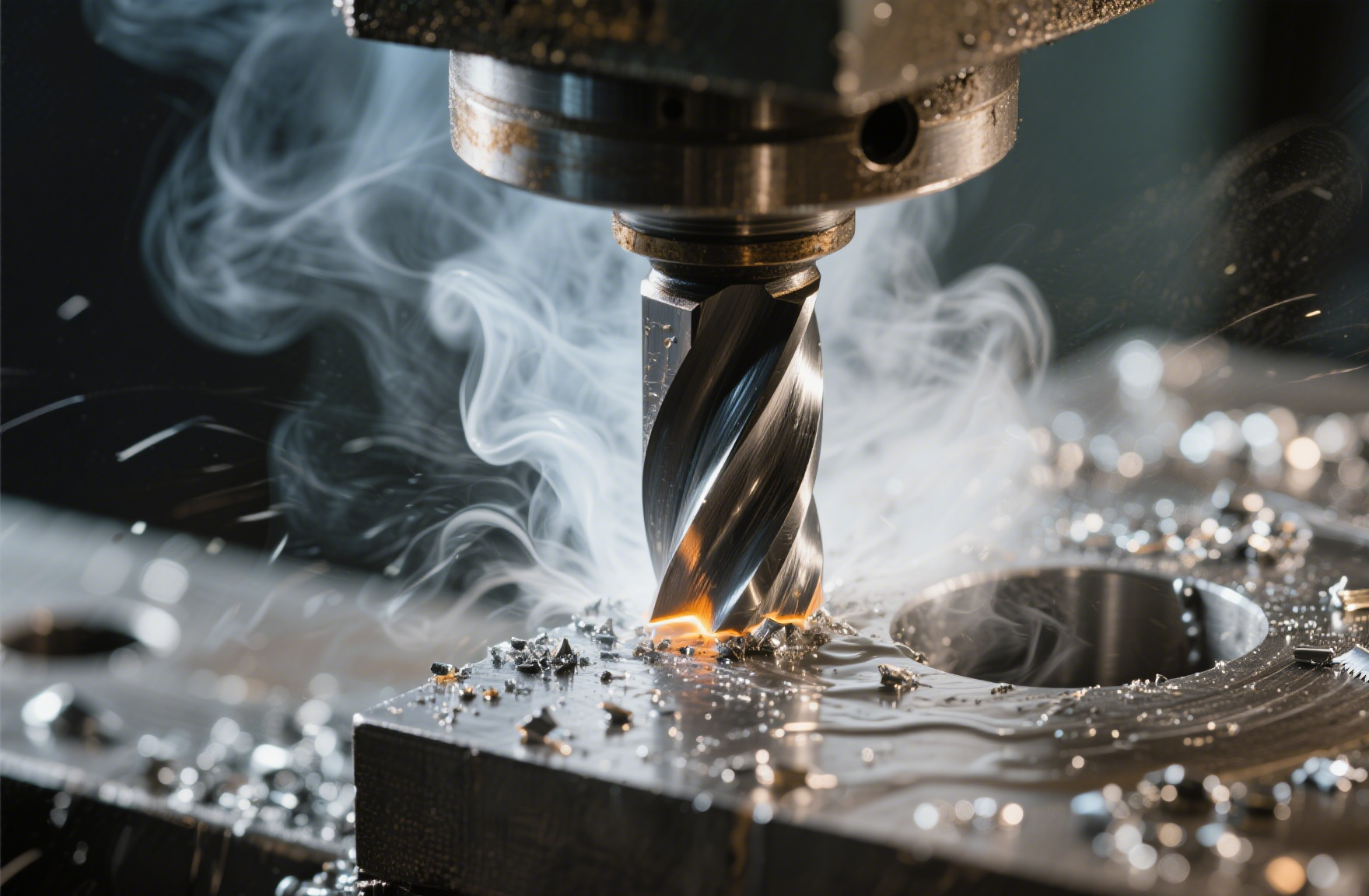
Choosing between a sinker EDM (electrical discharge machining) and a wire cutter EDM depends primarily on the geometry of the workpiece, the internal corner radii required, the depth of the cavity, and whether you are producing a through-hole or a blind pocket. Sinker EDMs—also known as RAM, vertical, or cavity-type EDMs—use a shaped electrode to burn a precise negative impression into a conductive material. Wire cutters, or wire EDM machines, use a continuously moving thin brass or coated wire to slice through material via electrical discharges, excelling at high-precision profile cutting, intricate contours, and stack-cutting through thick plates. Understanding the distinct mechanics, tooling requirements, operational speeds, and surface finish capabilities of each machine ensures that toolmakers, aerospace manufacturers, and mold builders select the right technology for their specific manufacturing challenges.
Understanding Electrical Discharge Machining (EDM) Fundamentals
Electrical discharge machining operates on a fundamentally different principle than traditional milling, turning, or grinding. Instead of utilizing mechanical shear forces to chip away at a workpiece, EDM relies on controlled, rapid electrical sparks generated between an electrode and the conductive material. Both the electrode and the workpiece are submerged in or continuously flushed with a dielectric fluid, typically deionized water for wire machines and specialized hydrocarbon oil for sinker machines.
When voltage across the gap between the electrode and the workpiece reaches a critical threshold, the dielectric fluid breaks down, ionizing into a plasma channel. A high-intensity spark bridges the microscopic gap, generating extreme localized temperatures that melt and vaporize a minute crater of material. The dielectric fluid then flushes away the microscopic debris, and the cycle repeats tens of thousands of times per second.
Because the process relies entirely on thermal erosion rather than physical contact, the hardness of the metal does not affect the machining rate. Hardened tool steels, tungsten carbide, titanium, Inconel, and conductive ceramics can be machined with equal ease. However, the choice of whether to route a job to a sinker EDM or a wire cutter EDM dictates the setup complexity, the tooling investment, and the final geometric capabilities of the manufactured component.
Sinker EDM: Mechanics, Applications, and Tooling
A sinker EDM utilizes a shaped, three-dimensional master electrode—typically machined from graphite, copper-tungsten, or tellurium copper—mounted to a vertical ram. As the ram feeds the electrode downward into the workpiece, it “sinks” a cavity that mirrors the exact geometric inverse of the electrode.
Ideal Applications for Sinker EDMs
- Blind Pockets and Closed Cavities: Creating internal recesses with flat bottoms and specific corner radii that spinning milling tools cannot reach.
- Injection Molds and Die-Casting Dies: Sinker EDMs dominate mold-making shops because they can produce complex, textured, or contoured plastic injection mold cavities with exceptional dimensional accuracy.
- Sharp Internal Corners: Unlike end mills, which leave a radius equal to half their diameter, a well-machined graphite electrode can produce sharp internal corners down to fractions of a millimeter.
- Deep Ribs and Thin Walls: Specialized high-speed orbit machining allows sinker machines to cut deep, narrow ribs for heat exchangers or structural components.
Electrode Fabrication and Wear
One of the primary considerations when operating a sinker EDM is the creation of the electrode itself. The electrode must be machined beforehand, often via high-speed CNC milling or turning. Furthermore, because electrical sparks erode both the workpiece and the electrode, electrode wear is an unavoidable reality.
To achieve high-quality surface finishes and precise dimensions, operators frequently employ a multi-electrode strategy. A "roughing" electrode takes away the bulk of the material with high amperage settings, which accelerates wear. A subsequent "finishing" electrode, featuring minimal undersizing, is then swapped in to impart the final surface finish at lower power settings. Graphite remains the preferred electrode material for steel molds due to its high melting point, ease of machining, and low cost relative to copper-tungsten alloys.

Wire Cutter EDM: Mechanics, Applications, and Productivity
Wire EDM, by contrast, functions much like a vertical bandsaw, except the blade is replaced by a continuously traveling metallic wire—usually brass, zinc-coated, or diffusion-annealed—ranging from 0.05 mm to 0.30 mm in diameter. The wire is fed from a supply spool, guided under precise tension between upper and lower diamond guides, and collected in a scrap bin after a single pass.
Ideal Applications for Wire Cutters
- Through-Holes and Profile Cutting: Cutting complex 2D and 3D contours through thick plates, punch and die sets, extrusion dies, and gears.
- Tapered and 4-Axis Machining: Advanced wire machines can tilt the upper and lower guides independently, allowing for draft angles, variable tapers, and complex ruled surfaces essential in aerospace components.
- Exotic and Hard Metals: Slicing through thick blocks of polycrystalline diamond (PCD), hardened tool steel, or exotic superalloys without inducing mechanical distortion.
- Tight Tolerances on Flat Parts: Achieving micron-level dimensional accuracy and exceptional straightness on flat components where milling forces would cause deflection.
Advantages and Limitations of Wire Cutters
Wire EDMs offer remarkable precision, often holding tight tolerances within $\pm0.001\text{ mm}$ and producing surface finishes with minimal roughness. Because the wire is constantly renewed, tool wear does not compromise dimensional accuracy over long cutting paths.
However, wire EDMs have notable limitations. They can only produce through-features or shapes that can be cut from an entry hole to an exit point. You cannot machine a blind pocket with a flat bottom using a wire cutter. Additionally, setting up a wire job requires a pre-drilled pilot hole (a "start hole") through the workpiece if the cut does not begin from an open edge.
| Feature / Parameter | Sinker EDM (RAM) | Wire Cutter EDM |
|---|---|---|
| Primary Geometry | Blind cavities, 3D molds, ribs, closed pockets | Through-profiles, punches, dies, 2-axis/4-axis contours |
| Tooling Required | Custom-shaped solid electrode (Graphite/Copper) | Continuously fed thin spool of wire (Brass/Coated) |
| Starting Feature | Solid block or pre-machined rough cavity | Requires a pre-drilled start hole (unless cutting from edge) |
| Tool Wear | Yes; requires roughing and finishing electrodes | No; uses fresh wire continuously |
| Dielectric Fluid | Hydrocarbon oil | Deionized water |
| Corner Radii | Can achieve extremely sharp internal radii | Limited by wire diameter (typically 0.1mm to 0.3mm radius) |
Direct Comparison: Key Decision Factors
When evaluating whether to invest in or schedule a job on a sinker or a cutter, manufacturing engineers weigh several technical and economic parameters.
[Workpiece Geometry Analysis] | +---> Is it a through-feature or open contour? | | | +---> YES ---> Use Wire Cutter EDM | +---> Is it a blind pocket, 3D mold, or textured cavity? | +---> YES ---> Use Sinker EDM
1. Geometric Constraints
If your part requires a closed pocket, an internal shoulder, or a complex 3D shape that does not breach the bottom or side of the stock, the sinker EDM is the only viable EDM option. Conversely, if you are manufacturing stamping dies, gear blanks, or intricate cam plates where the profile extends entirely through the thickness of the plate, the wire cutter is vastly superior in both speed and cost-effectiveness.
2. Setup Time and Tooling Costs
Wire EDM setup is generally faster for 2D profiles because it does not require designing and machining a dedicated solid electrode. The operator simply loads the CAD/CAM program, threads the wire through the start hole, and initiates the cut. Sinker EDM projects demand significant lead time for electrode fabrication, electrode alignment (using orbit patterns or multiple electrodes), and electrode wear compensation.
3. Surface Integrity and Metallurgy
Both machines generate a recast layer—a thin, re-solidified layer of metal on the workpiece surface characterized by high hardness and micro-cracking due to rapid thermal cycling. Sinker EDMs often leave a more pronounced recast layer because higher energy discharges are used during roughing passes. Wire EDMs minimize this through advanced generator controls and multi-pass skimming operations, where subsequent passes shave away the recast layer left by the initial rough cut. In aerospace and medical applications, secondary chemical etching or abrasive blasting is frequently specified to remove the recast layer entirely.
Operational Workflows and Best Practices
Maximizing efficiency in EDM operations requires rigorous adherence to setup protocols, fluid management, and maintenance schedules.
Dielectric Fluid Management
- Sinker EDMs: Require hydrocarbon oils with high flash points. The dielectric fluid must be filtered continuously to remove microscopic carbon particles. Poor flushing in deep sinker cavities leads to arcing, which damages both the electrode and the workpiece.
- Wire Cutters: Utilize deionized water maintained at specific resistivity levels (typically between $50,000$ and $100,000\text{ }\Omega\cdot\text{cm}$). Conductivity control is critical; if the water is too pure or too contaminated, the electrical discharge becomes unstable, leading to wire breakage and poor surface finishes.
Programming and Spark Gap Compensation
Programmers must account for the "spark gap"—the micro-distance maintained between the electrode or wire and the workpiece during discharge.
- For sinker EDMs, the electrode must be designed undersized by the exact spark gap value plus the finish allowance for each pass.
- For wire EDMs, the CAM software automatically offsets the cutting path by half the wire diameter plus the spark gap radius, ensuring nominal dimensions are achieved on the finished part.
Frequently Asked Questions
Can a wire EDM be used to make plastic injection molds?
Yes, wire EDMs are extensively used in mold making to cut insert blocks, slide components, lifters, and core/cavity plates that require straight walls or through-slots. However, for 3D curved parting lines and non-through-cavities, a sinker EDM or high-speed CNC mill is still required.
Why do wire EDMs use deionized water while sinker EDMs use oil?
Deionized water provides rapid cooling and flushing capabilities suited for high-speed continuous wire travel, and its lower viscosity helps clear debris from narrow kerf widths. Sinker EDMs use oil because it provides better insulation properties for high-voltage, high-amperage discharges in confined blind cavities and reduces the risk of oxidation on steel workpieces.
How do I prevent wire breakage during a thick wire EDM cut?
Wire breakage is usually caused by poor flushing, excessive discharge energy, or incorrect wire tension. To prevent it, ensure upper and lower flushing nozzles are seated close to the workpiece surface, reduce the peak current during roughing if cutting exotic superalloys, and verify that the dielectric water resistivity is stable.
What is orbital machining in sinker EDMs?
Orbital machining is a technique where the sinker EDM ram moves the electrode in a planetary or circular pattern while sinking into the cavity. This allows a smaller electrode to machine a larger cavity, improves dielectric fluid flushing, and helps achieve uniform surface finishes across large surface areas.
Conclusion
Choosing between a sinker and a cutter comes down to the fundamental geometry of the part and the nature of the feature being produced. Select a wire cutter EDM when working with through-profiles, intricate 2D/4-axis contours, and stack-cut plates where speed and lack of tool wear are paramount. Choose a sinker EDM when your manufacturing process demands blind pockets, sharp internal corners, 3D molded cavities, or complex textured recesses in hardened materials. By aligning the machine’s specific kinematic and electrical capabilities with your part’s engineering requirements, you ensure optimal throughput, dimensional accuracy, and cost efficiency in advanced manufacturing.
Image Gallery
Select an image to open it in a new tab.
Vivian Cho
Executive IT and Emerging Technologies Reporter
