Mephisto and Ghost Rider in Marvel Comics: The Eternal Pact and Supernatural Rivalry
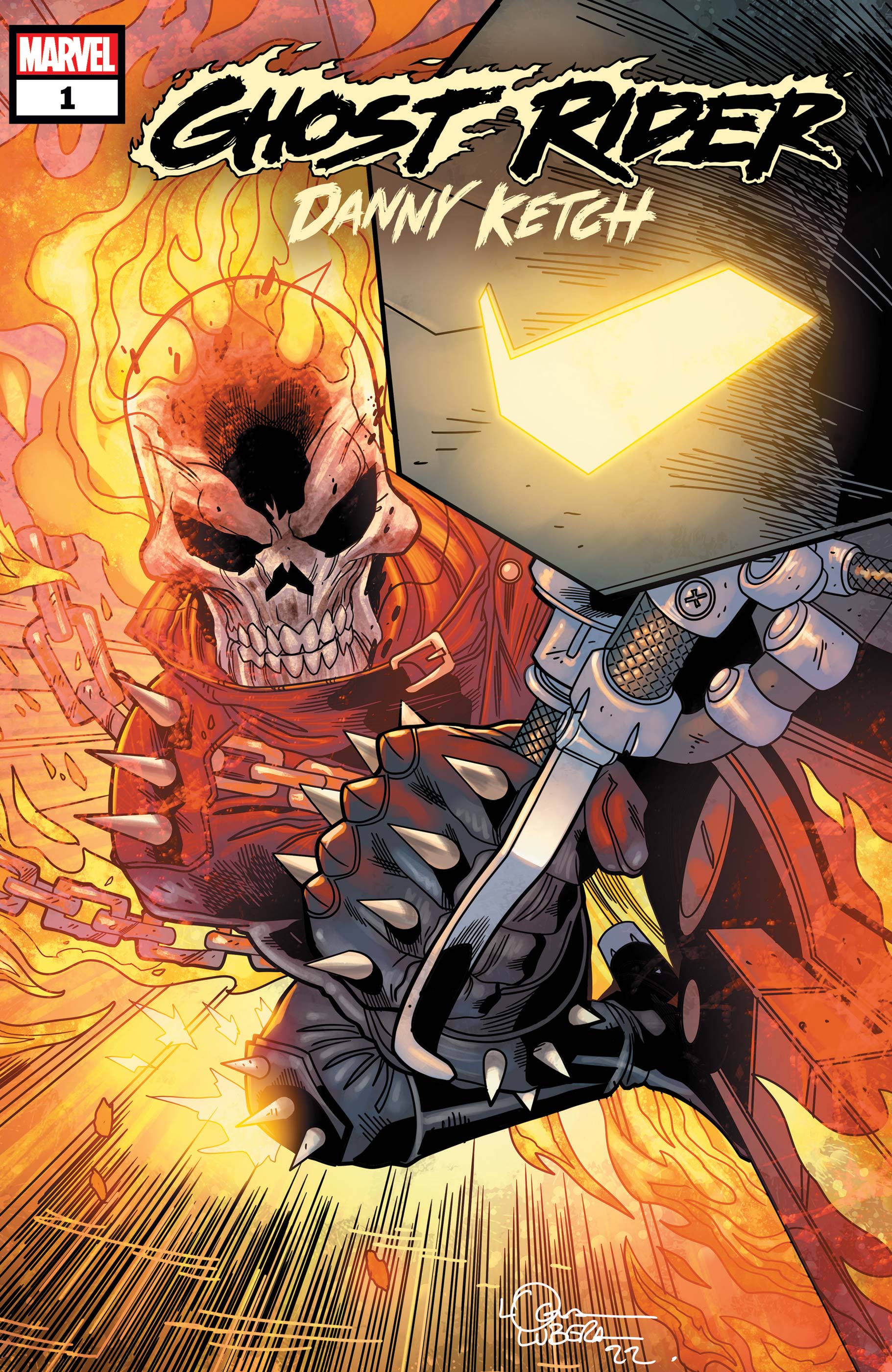
The dynamic between Mephisto and Ghost Rider in Marvel Comics centers on a cursed bargain, wherein the Lord of Hell claims the Spirit of Vengeance to harvest human souls and exert dominion over Earth's most powerful supernatural entities.
The relationship between Mephisto and Ghost Rider stands as one of the most enduring, complex, and philosophically rich rivalries in Marvel Comics history. Rooted in Faustian tragedy, theological struggle, and the dark corners of the Marvel Universe, this adversarial bond defines the very nature of vengeance and damnation. From Johnny Blaze’s initial, desperate pact to save his adoptive father to subsequent hosts like Danny Ketch, Alejandra Jones, and Robbie Reyes, Mephisto has consistently served as the primary architect of the Ghost Rider’s suffering. Understanding how these two iconic characters interact requires a deep dive into decades of storytelling, mythical rules, demonic hierarchy, and the continuous battle for free will against predestined damnation.
The Origins of the Pact: Johnny Blaze and the Birth of the Spirit of Vengeance
The foundational mythos of the Ghost Rider in mainstream Marvel continuity began in Marvel Spotlight #5 (1972), created by Roy Thomas, Gary Friedrich, and Mike Ploog. Johnny Blaze, a stunt motorcyclist, learns that his surrogate father and mentor, Crash Simpson, is dying of terminal cancer. In a desperate bid to save Crash's life, Johnny performs a ritual from an occult grimoire, unknowingly summoning Mephisto—who at the time frequently masqueraded as the biblical Satan or a powerful arch-demon.
Mephisto cures Crash Simpson’s cancer, but as is customary with infernal contracts, the terms are ruthlessly manipulated. Crash dies shortly thereafter in a stunt accident designed to test the limits of his reclaimed health. When Mephisto arrives to claim Johnny's soul, Crash’s foster daughter, Roxanne Simpson, professes her pure love for Johnny. This declaration acts as a mystical deterrent, preventing Mephisto from taking the soul outright. Instead, Mephisto binds Johnny’s soul to Zarathos—an ancient, vengeful entity of immense power—creating the first modern iteration of the Ghost Rider.
This origin establishes the core mechanical template for their relationship:
- The Infernal Contract: Mephisto uses coercion and human vulnerability to bind mortal souls to hellish forces.
- The Loophole: Pure human emotion, particularly love or self-sacrifice, frequently disrupts Mephisto’s absolute ownership, forcing him to adapt alternative strategies.
- The Burden of the Host: Johnny Blaze becomes a tragic figure, harboring a raging demonic force that punishes the wicked while constantly threatening to drag him down to the Pit.
The Nature of Zarathos and Mephisto’s Infernal Hierarchy
To fully grasp the tension between Mephisto and the Ghost Rider, one must examine the true nature of Zarathos. For many years, comic lore presented the Spirit of Vengeance simply as a demonic extension of Mephisto’s realm or an aspect of hellfire. However, subsequent runs—most notably by writers like Howard Mackie, Daniel Way, and Jason Aaron—expanded upon the cosmic hierarchy of the Marvel underworld.
Zarathos was originally an ancient entity worshipped as a god by primitive human tribes, who fed him sacrificial souls. Mephisto, viewing Zarathos as a rival and a powerful source of raw mystical energy, defeated the entity and fused him with various mortals over the centuries before eventually binding him to Johnny Blaze. Consequently, Mephisto does not entirely "own" Zarathos in the way he owns standard damned souls; rather, Mephisto acts as a warden, a corrupting influence, and occasionally a warden who has lost control of his prisoner.
| Character / Entity | Primary Role | Relationship to Mephisto | Mystical Source |
|---|---|---|---|
| Mephisto | Lord of a Nether-Realm (Hell) | Supreme adversary and contractual master | Dark dimensions, ambient sin energy |
| Johnny Blaze | Original modern Spirit of Vengeance | Reluctant pawn, later rebellious rival | Zarathos entity + Hellfire |
| Danny Ketch | Second primary Ghost Rider | Pawn manipulated via family bloodlines | Noble Kale / Spirit of Vengeance |
| Zarathos | Ancient demon/spirit of vengeance | Subjugated entity, occasionally allied with Mephisto | Primordial demonic energy |

Expanding the Bloodline: Danny Ketch and the Lords of Hell
When Marvel refreshed the franchise in Ghost Rider vol. 3 (1990) with Danny Ketch, the mythology surrounding Mephisto expanded. Danny becomes the Ghost Rider after street thugs injure his sister and leave him for dead in a graveyard containing the motorcycle of Noble Kale.
During this era, Mephisto’s motivations shifted from merely tormenting Johnny Blaze to manipulating the broader machinery of Heaven and Hell. It was revealed that the Ghost Rider lineage was tied to the bloodline of the Kale family, making them prime targets for infernal harvesting. Mephisto frequently attempts to corrupt Danny Ketch or trick him into breaking the cosmic balance, recognizing that the Spirit of Vengeance holds the raw power to overthrow minor lords of the underworld or disrupt Mephisto’s own dominion.
Mephisto views independent manifestations of the Spirit of Vengeance as existential threats. While he enjoys the carnage the Ghost Rider inflicts upon sinners—since many of those damned souls eventually trickle down to his realm—he despises the Rider’s autonomy. The Penance Stare, the signature weapon of the Ghost Rider that forces a victim to feel every drop of pain they have ever inflicted, operates on a universal moral law that even Mephisto must respect, though he constantly schemes to subvert it.
The Mechanics of Hellfire, Contracts, and the Penance Stare
The operational mechanics governing Mephisto and the Ghost Rider involve specific rules established across Marvel’s magical continuity. Understanding these rules clarifies why Mephisto cannot simply snap his fingers and destroy the Rider.
- Hellfire: The supernatural flame wielded by the Ghost Rider is native to the infernal realms controlled by beings like Mephisto. However, once bonded to a mortal host, Hellfire burns the soul rather than the physical flesh, ignoring standard physical armor and targeting spiritual essence. Mephisto can generate and manipulate Hellfire, but a fully realized Ghost Rider can channel it to bypass demonic defenses.
- The Power of Contracts: Mephisto’s power is heavily bound by cosmic laws, agreements, and transactional magic. If a mortal willingly signs away their soul or makes a pact under duress, Mephisto’s claim becomes absolute unless overridden by higher cosmic entities (such as the One Above All or Death) or defeated through specific mystical loopholes.
- Jurisdiction of the Underworld: Mephisto’s realm is just one of many hellish dimensions in the Marvel Universe (alongside realms ruled by Dormammu, Pluto, Hela, and Satannish). Ghost Riders frequently operate across these borders, leading Mephisto to view them as unruly interlopers who threaten his territorial sovereignty.
Major Comic Arcs and Confrontations
Throughout Marvel publication history, several landmark storylines have defined the adversarial relationship between Mephisto and the Spirit of Vengeance.
Damnation (2018)
In this crossover event written by Nick Spencer and Donny Cates, Las Vegas is literally dragged down into Hell following the events of Secret Empire. Johnny Blaze, having spent time ruling a tier of Hell himself, attempts to mount a rescue mission alongside a team of supernatural heroes (including Doctor Strange, Blade, and Moon Knight). The climax hinges on a high-stakes gamble where Johnny Blaze manages to outwit Mephisto, taking control of Mephisto’s own throne and temporarily becoming the ruler of Hell. This storyline demonstrates the ultimate evolution of Johnny Blaze from Mephisto's helpless victim to an infernal monarch in his own right.
The Circle of Four (2011–2012)
Spanning Venom, Red Hulk, X-23, and Ghost Rider (Alejandra Jones), this narrative showcases Blackheart—Mephisto’s rebellious son—attempting to bring Hell to Earth in Las Vegas. Mephisto plays a manipulative chess game against his own offspring, using the various heroes and the new Ghost Rider as pieces. This arc emphasizes Mephisto's willingness to sacrifice his own blood to maintain absolute supremacy over the nether-realms.
Common Misconceptions About Mephisto and Ghost Rider
Readers new to supernatural Marvel lore often encounter several persistent misunderstandings regarding how these characters interact.
- Misconception: Mephisto is the literal Christian Devil. While Marvel frequently conflates Mephisto with Satan (and characters within the universe often refer to him as such), the Marvel Universe features distinct entities representing theological archetypes. Mephisto is an extra-dimensional arch-demon, a ruler of a localized pocket dimension, rather than the absolute metaphysical embodiment of cosmic evil.
- Misconception: Ghost Rider works for Mephisto. Aside from brief periods of mind control or enslavement, the Ghost Rider actively opposes Mephisto. The Spirit of Vengeance acts as an arbiter of cosmic retribution, frequently punishing the very agents and demons that Mephisto employs.
- Misconception: The Ghost Rider's power comes directly from Mephisto. While Mephisto engineered the initial bonding of Zarathos to Johnny Blaze, the power of the Spirit of Vengeance stems from primordial cosmic and mystical sources that predate Mephisto's rule over his realm.
Frequently Asked Questions
Can Mephisto permanently kill the Ghost Rider?
No. Because the Spirit of Vengeance is a cosmic, immortal entity tied to the mystical fabric of the Marvel Universe, destroying the physical host simply returns the spirit to the ether or forces it to seek a new mortal vessel. Mephisto can torture, banish, or temporarily incapacitate a Ghost Rider, but he cannot permanently erase the spirit.
Why does Mephisto keep making deals with humans if they always lead to trouble?
Mephisto's existence and power level are sustained by the acquisition of human souls and the amplification of sin. Making Faustian bargains is his primary mechanism for expanding his domain and accumulating leverage against rival lords of the underworld. The chaos caused by these bargains is an intended feature of his eternal quest for dominance.
Is Johnny Blaze currently ruling Hell or trapped by Mephisto?
Comic continuity shifts frequently through various reboots and relaunches, but Johnny Blaze's status has evolved from a tortured stuntman to an experienced infernal ruler, and back to an active roaming Spirit of Vengeance depending on the current creative run. His enduring struggle, however, always involves keeping his demonic passenger in check while resisting Mephisto's ongoing reclamation efforts.
How does the Ghost Rider's Penance Stare affect Mephisto?
The Penance Stare is designed to inflict the pain of all past victims onto the target. When applied to powerful cosmic beings or arch-demons like Mephisto, the effectiveness varies depending on the writer, but it forces the demon to confront the infinite weight of suffering they have caused. Mephisto actively avoids direct eye contact or physical vulnerability to the Stare whenever possible.
Conclusion and Next Actions
The relationship between Mephisto and the Ghost Rider remains a cornerstone of Marvel’s supernatural storytelling, blending horror, theology, and superhero action. For readers looking to explore this dynamic firsthand, starting with classic 1970s Marvel Spotlight issues, progressing through the 1990s Danny Ketch era, and diving into modern events like Damnation provides a comprehensive view of how two legendary entities wage an eternal war over free will and damnation.
Image Gallery
Select an image to open it in a new tab.
Lars Thomsen
Global Labor Markets and Economic Strategy Editor
