The True History of Hark! The Herald Angels Sing: From Wesley’s Hymn to Mendelssohn’s Melody

The true history of "Hark! The Herald Angels Sing" reveals a fascinating evolutionary process involving a theological overhaul by George Whitefield, an intentional alteration of Charles Wesley’s original lyrics, and Felix Mendelssohn’s explicit prohibition against pairing his secular composition with sacred words.
The Genesis: Charles Wesley’s Original Vision
To understand the true history of "Hark! The Herald Angels Sing," one must return to the mid-18th century and the Methodist Revival in England. The hymn was originally penned in 1739 by Charles Wesley, one of the foundational leaders of Methodism and a prolific hymn writer credited with writing thousands of sacred poems and songs.
Wesley’s original creation was vastly different from the version sung in modern congregations. It opened with the striking, triumphant couplet:
"Hark! How all the welkin rings, Glory to the King of Kings!"
In 18th-century English, the word "welkin" referred to the vault of heaven or the sky. While rich in poetic resonance, it was a somewhat archaic term even for the 1700s, and its use signaled that Wesley intended the text for solemn, reflective worship rather than mass, populist singing. Furthermore, Wesley originally composed the text with a solemn, slow-paced meter in mind, designed to fit a standard 7-syllable line structure typical of contemporary church music.
Wesley’s theological intent was deeply focused on the Incarnation. He wanted to capture the cosmic mystery of Christ taking on human flesh, echoing the biblical narrative found in the Gospel of Luke. However, Wesley did not envision this specific poem as a standalone Christmas carol in the modern sense. He viewed it as a "Hymn for Christmas-Day," yet its initial tone was meditative, introspective, and structurally rigid, lacking the soaring, bombastic energy that defines the piece today.
George Whitefield and the First Major Alteration
The first major transformation of the hymn occurred in 1753, just fourteen years after its initial publication, courtesy of the prominent evangelical preacher George Whitefield. Whitefield was a co-founder of Methodism alongside Charles and John Wesley, though the two brothers and Whitefield eventually parted ways theologically over Calvinism versus Arminianism. Despite these ecclesiastical disagreements, Whitefield deeply appreciated Wesley’s hymnody and compiled a major hymnal titled A Collection of Hymns for Sosial Worship.
It was Whitefield who took the decisive liberty of changing Wesley’s famous opening line. Recognizing that "welkin" was too obscure for the average churchgoer, Whitefield substituted it with:
"Hark! The herald angels sing, Glory to the newborn King!"
When Charles Wesley saw what Whitefield had done, he was reportedly displeased. Wesley was fiercely protective of his poetic meter and theological vocabulary. He had deliberately chosen "welkin" to rhyme with "kings" and maintain a specific poetic rhythm. Whitefield’s alteration forced a change in the cadence, though it instantly proved more accessible and memorable to the general public.
In addition to changing the opening lines, Whitefield and subsequent 18th-century editors made further tweaks to stanzas, smoothing out theological nuances and standardizing the language. Despite Wesley’s objections, Whitefield’s version caught on rapidly, cementing the opening couplet that modern listeners recognize instantly. Yet, the hymn still lacked the iconic tune that would ultimately secure its place in global music history.
The Musical Mismatch: From Wesley to Mendelssohn
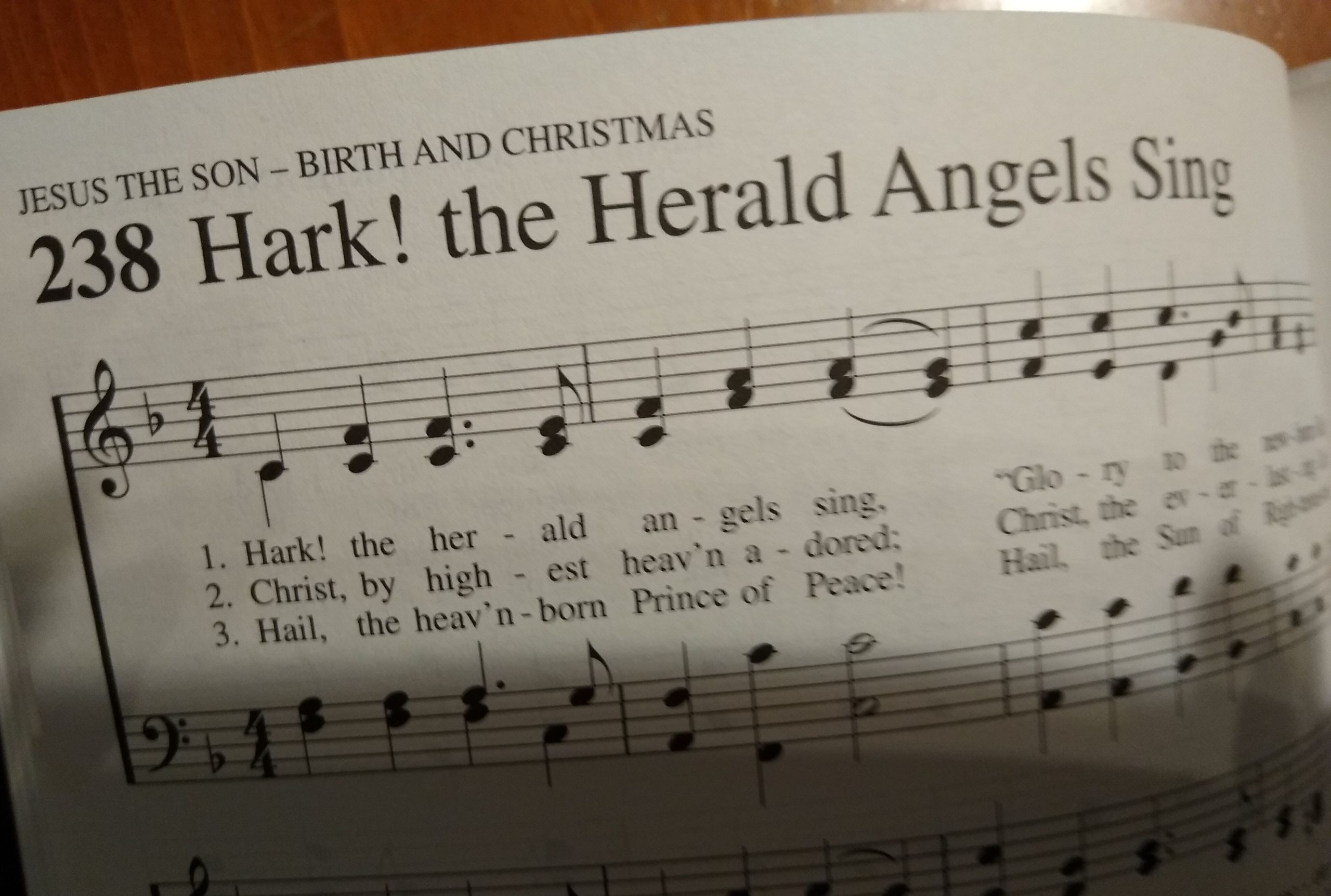
For more than a century, Wesley’s lyrics were paired with a variety of different tunes. Most notably, they were frequently sung to a rather dull, plodding melody adapted from William H. Cummings or various 18th-century church tunes that lacked rhythmic urgency. The hymn was popular, but it was musically unremarkable.
The definitive musical pairing did not occur until 1840—nearly a century after the lyrics were written—and it happened entirely by accident, involving a German composer who explicitly forbade such a use.
Felix Mendelssohn, one of the premier composers of the Romantic era, wrote a grand secular chorus to commemorate the 400th anniversary of Johannes Gutenberg’s invention of the movable-type printing press. The work, titled Vaterland, in deinen Gauen (or the Gutenberg Cantata), was premiered in Leipzig on June 24, 1840, during a massive civic festival.
Mendelssohn was intensely proud of this music and considered it well-suited for secular, celebratory civic events. However, he harbored a specific aesthetic conviction regarding sacred music: he believed that his secular melodies should never be set to Christian hymn texts. In a letter written years later, Mendelssohn remarked that certain types of secular tunes had a distinct character that would inherently clash with sacred words, expressing grave doubts about mixing his secular festive compositions with religious liturgy.
William H. Cummings and the Adaptation Controversy
Despite Mendelssohn's explicit wishes, English musicians immediately recognized the soaring, majestic potential of his Gutenberg melody. The tune possessed a grand, sweeping cadence that seemed tailor-made for congregational singing.
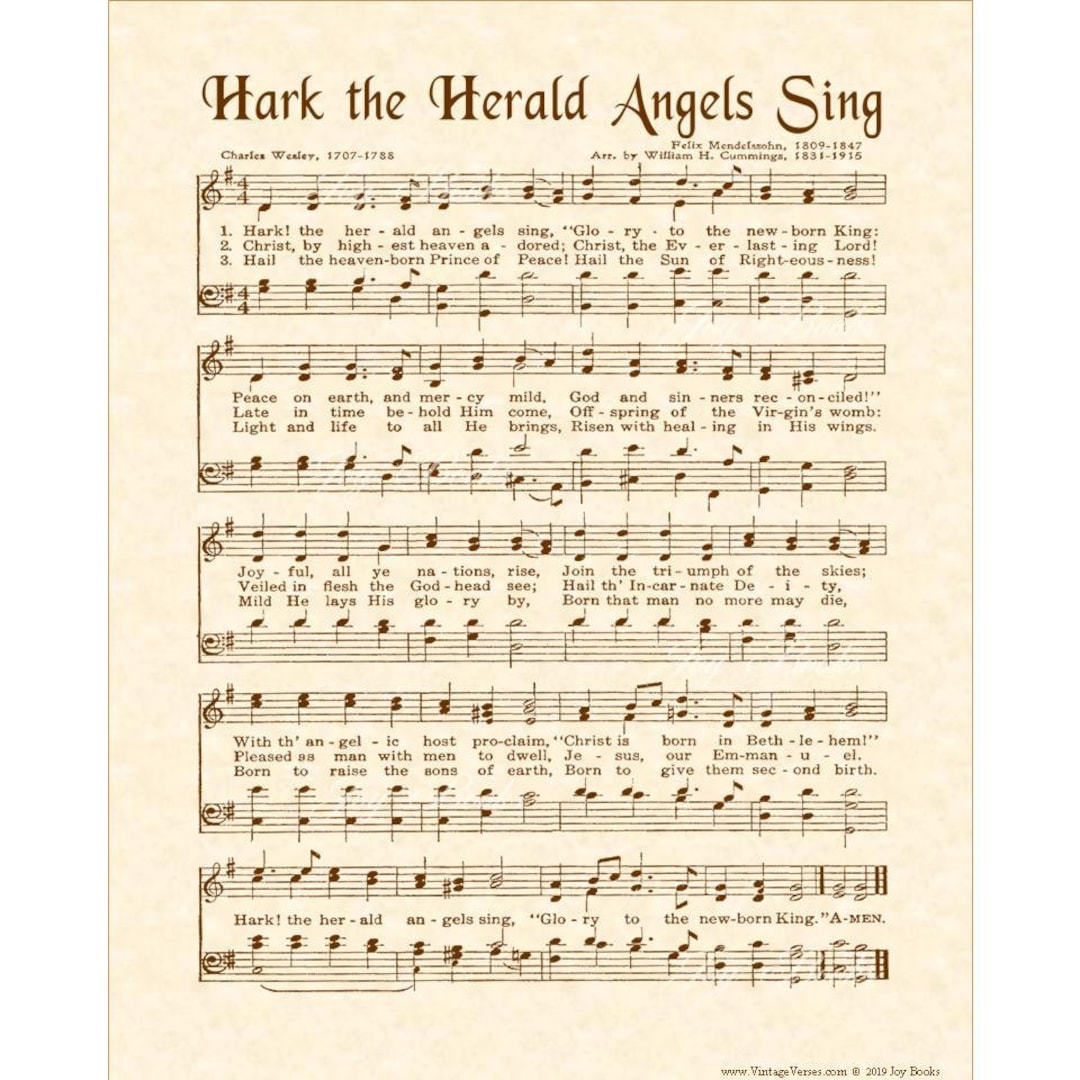
In 1855, an English musician and organist named William H. Cummings took matters into his own hands. Cummings adapted Mendelssohn’s 1840 festival chorus, seamlessly grafting Charles Wesley’s lyrics (as modified by Whitefield) onto the German composer's melody. Cummings later wrote of his work: "It was a successful experiment. I endeavored to fit Mendelssohn’s instrumental melody to the words of Charles Wesley, and the rhythm of the music matched the poetry with astonishing precision."
| Feature | Charles Wesley’s Original (1739) | George Whitefield’s Revision (1753) | Modern Version (Post-1855) |
|---|---|---|---|
| Opening Line | "Hark! How all the welkin rings" | "Hark! The herald angels sing" | "Hark! The herald angels sing" |
| Second Line | "Glory to the King of Kings!" | "Glory to the newborn King!" | "Glory to the newborn King!" |
| Musical Pairing | Various slow 18th-century tunes | Various traditional church tunes | Felix Mendelssohn’s Gutenberg melody |
| Arranger | Charles Wesley | George Whitefield | William H. Cummings |
This cross-cultural, posthumous collaboration violated Mendelssohn’s explicit artistic wishes. Had the German master been alive, he likely would have protested or legally challenged the adaptation. Yet, the public response was overwhelmingly enthusiastic. The marriage of Wesley’s robust theology of the Incarnation with Mendelssohn’s triumphant, majestic orchestration created an artistic masterpiece that quickly eclipsed all previous musical settings of the text. By the late 19th century, this version was published in major British and American hymnals, permanently establishing itself as a cornerstone of the Christmas season.
Theological Depth and Literary Evolution
Beyond its dramatic history of editorial changes and musical theft, "Hark! The Herald Angels Sing" endures because of its dense, orthodox theology. Unlike many modern Christmas carols that focus primarily on the sentimental imagery of a stable, a star, and a sleeping baby, Wesley’s lyrics dive straight into the metaphysical significance of the Nativity.
The text references Pauline theology, drawing heavily from passages in Colossians and Philippians. Consider lines such as:
"Christ, by highest heaven adored, Christ, the everlasting Lord!"
This directly asserts the pre-existence and divinity of Christ, pushing back against any notion that Jesus’s existence began merely in Bethlehem. Furthermore, the stanza addressing the union of divinity and humanity captures the doctrine of the Hypostatic Union:
"Veiled in flesh the Godhead see; Hail the incarnate Deity, Pleased as man with men to dwell, Jesus, our Emmanuel!"
Wesley altered these lines slightly over his lifetime, moving from a somewhat different opening stanza to the refined version we know today. Originally, the second stanza began with "Hail the heaven-born Prince of Peace!" rather than "Christ, by highest heaven adored." These small revisions demonstrate Wesley’s meticulous craftsmanship as a theologian-poet who constantly refined his work to ensure maximum doctrinal clarity and emotional impact.
Frequently Asked Questions
Did Charles Wesley want his hymn to be fast-paced?
No. Charles Wesley originally intended the hymn to be sung to a slow, solemn meter, matching the quiet, reflective mood of 18th-century Anglican and early Methodist worship services. The upbeat, triumphant tempo commonly heard today is a direct result of William H. Cummings pairing the text with Mendelssohn’s brisk, festival-style melody in 1855.
What does the word "welkin" mean in the original lyrics?
"Welkin" is an old English word derived from Middle English and Germanic roots meaning the vault of heaven, the sky, or the celestial sphere. Wesley used it to describe the heavens ringing with the praise of the angels, but George Whitefield replaced it in 1753 to make the hymn more accessible to common churchgoers.
Did Felix Mendelssohn approve of his music being used for this carol?
No. Mendelssohn explicitly opposed setting his secular compositions to sacred hymn texts. The adaptation of his 1840 Gutenberg festival chorus into a Christmas carol was carried out by English organist William H. Cummings eight years after Mendelssohn’s death in 1847.
Why is George Whitefield credited with changing the lyrics?
George Whitefield altered the opening couplet in his 1753 hymnal because he wanted to eliminate archaic vocabulary and broaden the appeal of the collection. His modification replaced Wesley's obscure reference to the "welkin" with the universally understood phrase about the herald angels singing to the newborn King.
Are there other verses in the hymn that are commonly omitted?
Yes. Modern hymnals typically print only three verses of the original hymn: "Hark! The herald angels sing," "Christ, by highest heaven adored," and "Hail the heaven-born Prince of Peace!" Wesley originally wrote more stanzas, including lines addressing the healing power of Christ and the spiritual rebirth of humanity, which are routinely trimmed for modern service lengths.
Practical Next Actions for Choirs and Historians
For those seeking to explore the historical depth of this carol further, examining primary sources such as John and Charles Wesley’s Hymns and Sacred Poems (1739) alongside George Whitefield’s 1753 collection provides profound insight into 18th-century editorial practices. Choirs and musicologists looking to perform the piece with historical context should study the original 1840 Mendelssohn score to appreciate how Cummings extracted the vocal lines from a complex secular orchestration to build one of history’s most enduring holiday anthems.
Image Gallery
Select an image to open it in a new tab.


Simon Caldwell
Enterprise Technology and Systems Editor
