The 1992 Lithuania Basketball Team: Independence, The Grateful Dead, and the Bronze Medal Legacy
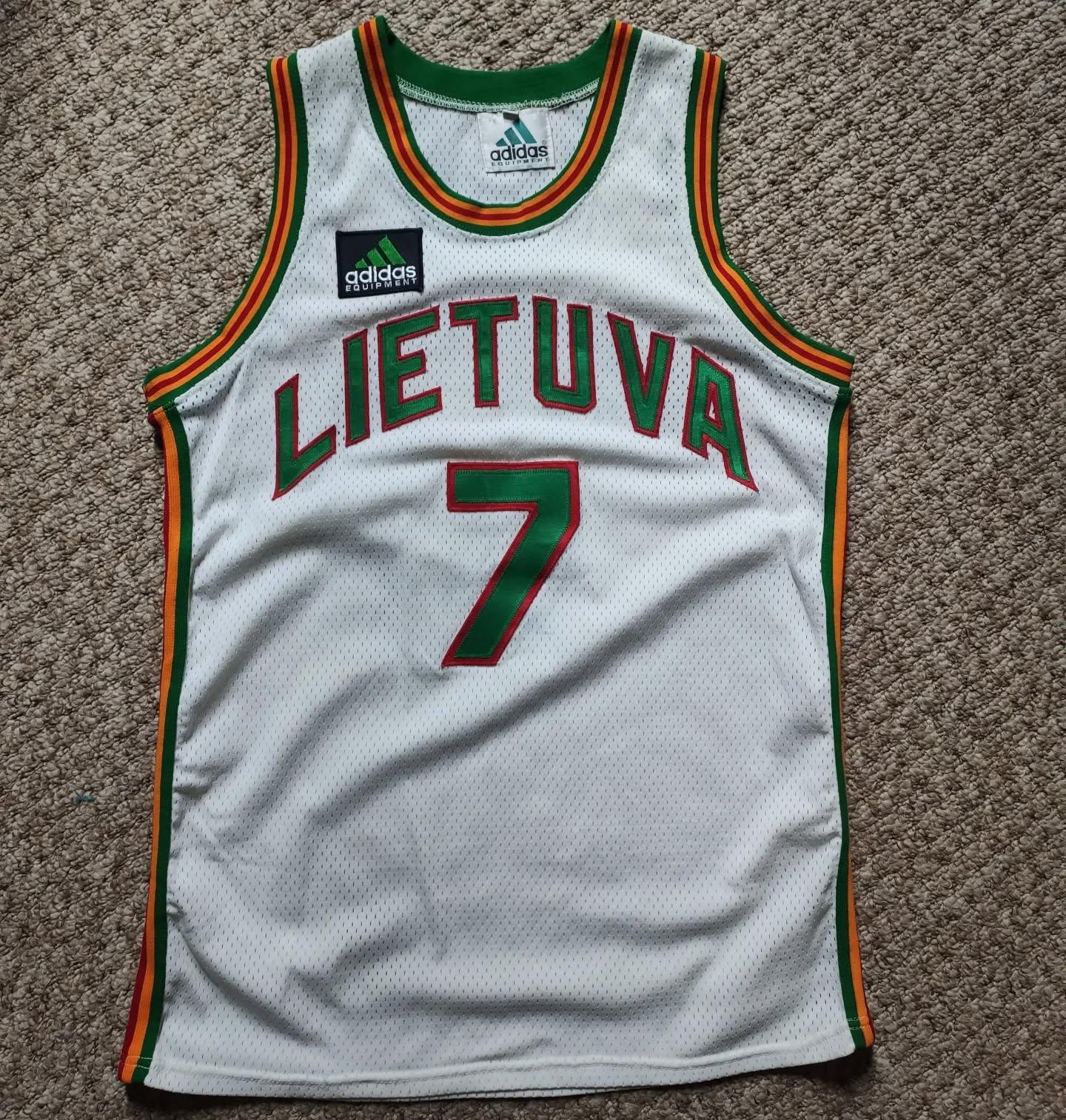
The 1992 Lithuania men’s basketball team remains one of the most culturally and politically significant squads in the history of international sports. Competing in the Barcelona Summer Olympics, this team—often referred to as the "Other Dream Team"—represented a newly independent nation and captured a bronze medal by defeating the Unified Team (representing the former Soviet Union) in a victory that transcended the basketball court.
Beyond their on-court success, the team is immortalized for their association with the American rock band The Grateful Dead, whose financial support and iconic tie-dye uniforms provided the aesthetic backdrop for Lithuania's return to the world stage. As we look back from 2026, the 1992 team is remembered not just for its elite talent, including Hall of Famers Arvydas Sabonis and Šarūnas Marčiulionis, but as a symbol of national resilience and the restorative power of sports.
The Geopolitical Context: From Soviet Shadow to Independent Sovereignty
To understand the weight of the 1992 Olympic run, one must understand the political climate of the late 1980s and early 1990s. Lithuania had been forcibly incorporated into the Soviet Union following World War II. For decades, Lithuanian athletes were the backbone of the Soviet national basketball program. In the 1988 Seoul Olympics, the Soviet Union won the gold medal; however, four of the five starters on that team—Arvydas Sabonis, Šarūnas Marčiulionis, Rimas Kurtinaitis, and Valdemaras Chomičius—were Lithuanian.
On March 11, 1990, Lithuania became the first Soviet republic to declare independence. The transition was far from peaceful. Soviet tanks rolled into Vilnius in January 1991, leading to the deaths of civilians defending the capital’s TV tower. By the time the 1992 Barcelona Olympics arrived, Lithuania was a sovereign state, but its economy was in tatters. The newly formed national Olympic committee had no funds to send its athletes to Spain. The players faced a choice: play for the "Unified Team" (a collection of former Soviet states) or find a way to fund their own independent team. They chose the latter, driven by a fierce desire to wear their own colors for the first time since 1936.
The Grateful Dead and the "Slammin' Skeleton"
The story of the 1992 team is inseparable from its unlikely partnership with the American counterculture. Šarūnas Marčiulionis, who was playing for the Golden State Warriors at the time, was desperately seeking sponsors to cover travel, lodging, and equipment costs. Through a connection with a San Francisco Chronicle reporter, the team’s plight reached the ears of the Grateful Dead.
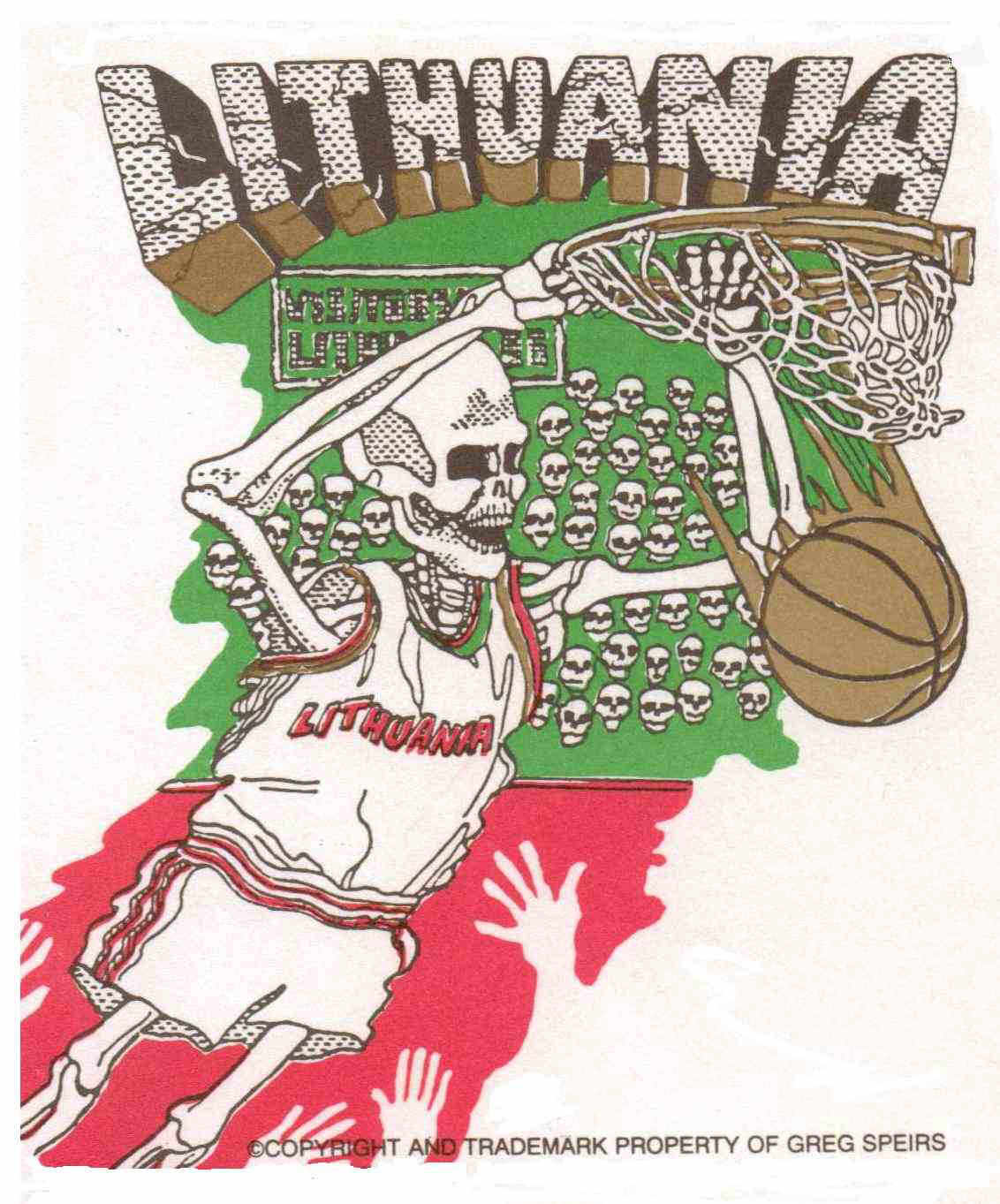
The band, moved by the team’s struggle for freedom and their underdog status, sent a check to help fund the Olympic quest. Furthermore, the band’s management commissioned designer Greg Speirs to create a unique image for the team. The result was the "Slammin' Skeleton"—a skeleton dunking a basketball, rendered in vibrant tie-dye colors of green, yellow, and red (the colors of the Lithuanian flag). These jerseys became a global sensation, selling out worldwide and providing the team with much-needed additional revenue through merchandising. While the team wore traditional white and green uniforms during games, they wore the tie-dye shirts during the medal ceremony, creating one of the most iconic images in Olympic history.

Building the Roster: The Core Four and a New Generation
The 1992 roster was a blend of seasoned veterans who had already conquered the world stage under the Soviet flag and younger talents ready to establish themselves. The team was led by Vladas Garastas, a coaching legend in Lithuanian basketball.
Arvydas Sabonis: The Great Sabas
Standing 7’3”, Sabonis is often cited as one of the greatest centers to ever play the game. By 1992, his body was already beginning to fail him due to chronic Achilles tendon injuries and a lack of proper medical care within the Soviet system. Despite playing on what many described as "one leg," his court vision, passing, and sheer presence in the paint remained unmatched. For Sabonis, 1992 was about more than basketball; it was about vindication for a career spent under a regime he did not support.
Šarūnas Marčiulionis: The NBA Pioneer
Marčiulionis was the first player from the Soviet Union to successfully transition to the NBA. His physical, aggressive style of play at the guard position was the engine of the Lithuanian offense. In Barcelona, he acted as both the primary scorer and the emotional leader, carrying the burden of the team’s logistical and financial arrangements on his shoulders.
The Supporting Cast
Rimas Kurtinaitis provided elite perimeter shooting, while Valdemaras Chomičius brought veteran toughness and defensive intensity. These four players—the core of the 1988 gold medal team—were joined by younger prospects like Artūras Karnišovas, who would later become a high-ranking NBA executive. The chemistry of this group was forged through years of playing together for Žalgiris Kaunas, the club that served as a surrogate for the Lithuanian national identity during the Soviet era.
The Road to Barcelona: The Qualifying Tournament
Lithuania’s journey to the Olympics was not guaranteed. They had to compete in the European Olympic Qualifying Tournament in Badajoz and Zaragoza, Spain, in June 1992. The pressure was immense; failing to qualify would mean the end of the dream before it truly began.
The team dominated the qualifying rounds, finishing with an 11-0 record. This perfect run served notice to the rest of the world that Lithuania was not merely a feel-good story of independence, but a legitimate medal contender. They defeated established powers like the Netherlands, the Commonwealth of Independent States (the pre-Olympic iteration of the Unified Team), and Great Britain. This momentum carried them into the Olympic Village with a sense of destiny.
The Olympic Tournament: Group Stage and Beyond
Lithuania was placed in Group B for the preliminary round. Their performance was a mix of brilliance and the expected rust of a team that had undergone significant upheaval.
- Lithuania vs. China (112-75): A dominant opening win that settled the nerves.
- Lithuania vs. Venezuela (87-79): A closer contest that highlighted the team’s reliance on their veteran stars.
- Lithuania vs. Puerto Rico (104-91): A high-scoring affair that showcased Kurtinaitis’s range.
- Lithuania vs. CIS/Unified Team (80-92): The first meeting with their former teammates. The loss was a psychological blow but served as a valuable scouting report for the eventual bronze medal rematch.
- Lithuania vs. Australia (98-87): A crucial win to secure a favorable seeding in the knockout rounds.
In the quarterfinals, Lithuania faced Brazil, led by the legendary Oscar Schmidt. In a hard-fought game, Lithuania’s size and interior passing proved too much for the Brazilians, resulting in a 114-96 victory. This win guaranteed Lithuania a chance to play for a medal.
The Semifinal: Facing the American Dream Team
The semifinal matchup was against the United States "Dream Team"—the most talented collection of basketball players ever assembled. While Lithuania possessed elite talent, they were no match for Michael Jordan, Magic Johnson, Larry Bird, and company.
The Americans won 127-76. However, for the Lithuanians, this game was treated almost as an exhibition and an honor. They were the only team that didn't seem intimidated by the Dream Team, largely because their primary focus was already shifting to the game that followed. Marčiulionis and Sabonis knew that the real "final" for their country would be the bronze medal game against the Unified Team.
The Match of the Century: Lithuania vs. the Unified Team
On August 8, 1992, the world watched a game that was as much a political statement as an athletic competition. The Unified Team represented the remnants of the Soviet Union—the empire Lithuania had just escaped. For the players on both sides, who were mostly friends and former teammates, the stakes were personal and nationalistic.
The game was a physical, emotional battle. Sabonis and Marčiulionis played nearly the entire game. Sabonis battled against Alexander Volkov and Vladimir Tkachenko (who was on the bench/staff) in spirit, asserting dominance in the paint despite his physical limitations. Lithuania led for most of the second half, but the Unified Team kept the score close.
In the final minutes, Marčiulionis hit several critical free throws, and Sabonis anchored the defense. Lithuania secured an 82-78 victory. As the final buzzer sounded, the Lithuanian players did not just celebrate a bronze medal; they celebrated the survival of their culture. The scene in the locker room afterward, with players weeping and singing national songs while wearing their tie-dye shirts, remains a touchstone of Lithuanian history.
Statistical Leaders: 1992 Olympic Tournament (Lithuania)
| Player | Position | Points Per Game | Rebounds Per Game | Notable Achievement |
|---|---|---|---|---|
| Šarūnas Marčiulionis | SG | 23.4 | 5.0 | Tournament Assists Leader (8.3) |
| Arvydas Sabonis | C | 23.9 | 12.5 | Tournament Rebounding Leader |
| Rimas Kurtinaitis | SG | 14.5 | 3.3 | Top 3-point threat |
| Artūras Karnišovas | SF | 11.2 | 3.6 | Emerging young star |
| Valdemaras Chomičius | PG | 7.9 | 2.5 | Defensive specialist/Captain |
Cultural Impact and the "Other Dream Team" Documentary
The legacy of the 1992 team was captured in the 2012 documentary The Other Dream Team, directed by Marius Markevičius. The film brought the story to a new generation, detailing the struggle against the KGB, the influence of the Grateful Dead, and the sheer willpower required to compete.
In Lithuania, basketball is often described as the "second religion." The 1992 team is the foundation of that devotion. Their success proved that a small nation of three million people could compete with global superpowers. This victory sparked a basketball boom in the country that continues in 2026, with Lithuania consistently producing NBA talent and remaining a powerhouse in FIBA competitions.
The tie-dye jerseys, once a necessity for funding, have become a permanent piece of sports fashion history. They represent a moment when the "Deadhead" philosophy of peace and freedom intersected with a nation's struggle for the same ideals. Greg Speirs, the designer, saw his creation become a symbol of the "triumph of the human spirit over oppression."
Technical Analysis of the 1992 Playstyle
The 1992 Lithuanian team played a style of basketball that was ahead of its time, often referred to as "European Total Basketball."
- Passing Centers: Sabonis was the focal point. Unlike American centers of the era who lived primarily in the low post, Sabonis operated at the high post and the top of the key. His ability to hit cutters and find shooters opened up the floor in a way that modern NBA "Point Centers" (like Nikola Jokić) do today.
- Perimeter Versatility: The team relied on players who could play multiple positions. Marčiulionis was a "combo guard" before the term was popular, using brute strength to drive to the rim—a precursor to the modern "power guard" archetype.
- Three-Point Volume: While the three-point line was still relatively new to the international game, Lithuania utilized it as a primary weapon rather than a secondary one. Kurtinaitis’s willingness to pull up from deep kept defenses stretched, allowing Sabonis more room to operate.
FAQs: Understanding the 1992 Lithuanian Journey
Why did the Grateful Dead help the Lithuanian team?
The Grateful Dead were known for their philanthropic efforts and their support of freedom of expression. When they heard about the Lithuanian team's lack of funding and their fight for independence from the Soviet Union, they felt a kinship with the cause. It wasn't just about basketball; it was about supporting a group of people who were finally able to represent their own identity after decades of suppression.
Who was the leading scorer for Lithuania in the 1992 Olympics?
Arvydas Sabonis and Šarūnas Marčiulionis shared the scoring load, but Sabonis finished with a slightly higher average of 23.9 points per game. Marčiulionis was equally vital, averaging 23.4 points and leading the entire tournament in assists, proving his multifaceted impact on the game.
Did the 1992 team ever win a gold medal?
While the 1992 team won the bronze, many of its members (Sabonis, Marčiulionis, Kurtinaitis, and Chomičius) had previously won the gold medal in the 1988 Seoul Olympics while playing for the Soviet Union. However, the players have stated in numerous interviews that the 1992 bronze medal felt more significant and "heavier" than the 1988 gold because it was won for Lithuania.
What happened to the Unified Team after 1992?
The Unified Team (EUN) was a temporary solution for the 1992 Winter and Summer Olympics following the formal dissolution of the Soviet Union in late 1991. By the 1996 Atlanta Olympics, the former Soviet republics competed as individual nations, such as Russia, Ukraine, and Belarus.
Are the 1992 tie-dye jerseys still available today?
Original 1992 jerseys are highly sought-after collector's items. However, due to their enduring popularity, various licensed reproductions have been released over the years, including special editions for the 20th and 30th anniversaries of the Barcelona games. They remain a staple of Lithuanian sports merchandise.
A Legacy That Transcends the Court
As we evaluate the 1992 Lithuania basketball team in 2026, their impact is measured not just in statistics or the color of their medal, but in the survival of a national spirit. They provided a focal point for a nation's pride during a period of extreme uncertainty. The "Other Dream Team" showed that sports could serve as a peaceful but powerful medium for political expression and national healing.
For fans and historians, the 1992 team serves as a reminder that the most compelling stories in sports often happen away from the gold medal podium. The sight of Arvydas Sabonis and his teammates standing in their tie-dye shirts, bronze medals around their necks, remains a definitive moment in Olympic history—a celebration of freedom, friendship, and the enduring power of the game.
Next Action for Readers: To truly appreciate the emotional depth of this story, it is highly recommended to watch the documentary The Other Dream Team (2012). It provides archival footage of the 1991 independence protests and the 1992 games that puts the team's athletic achievements into their proper historical context.
Image Gallery
Select an image to open it in a new tab.




Celine Dubois
Contemporary Living and Global Arts Columnist
