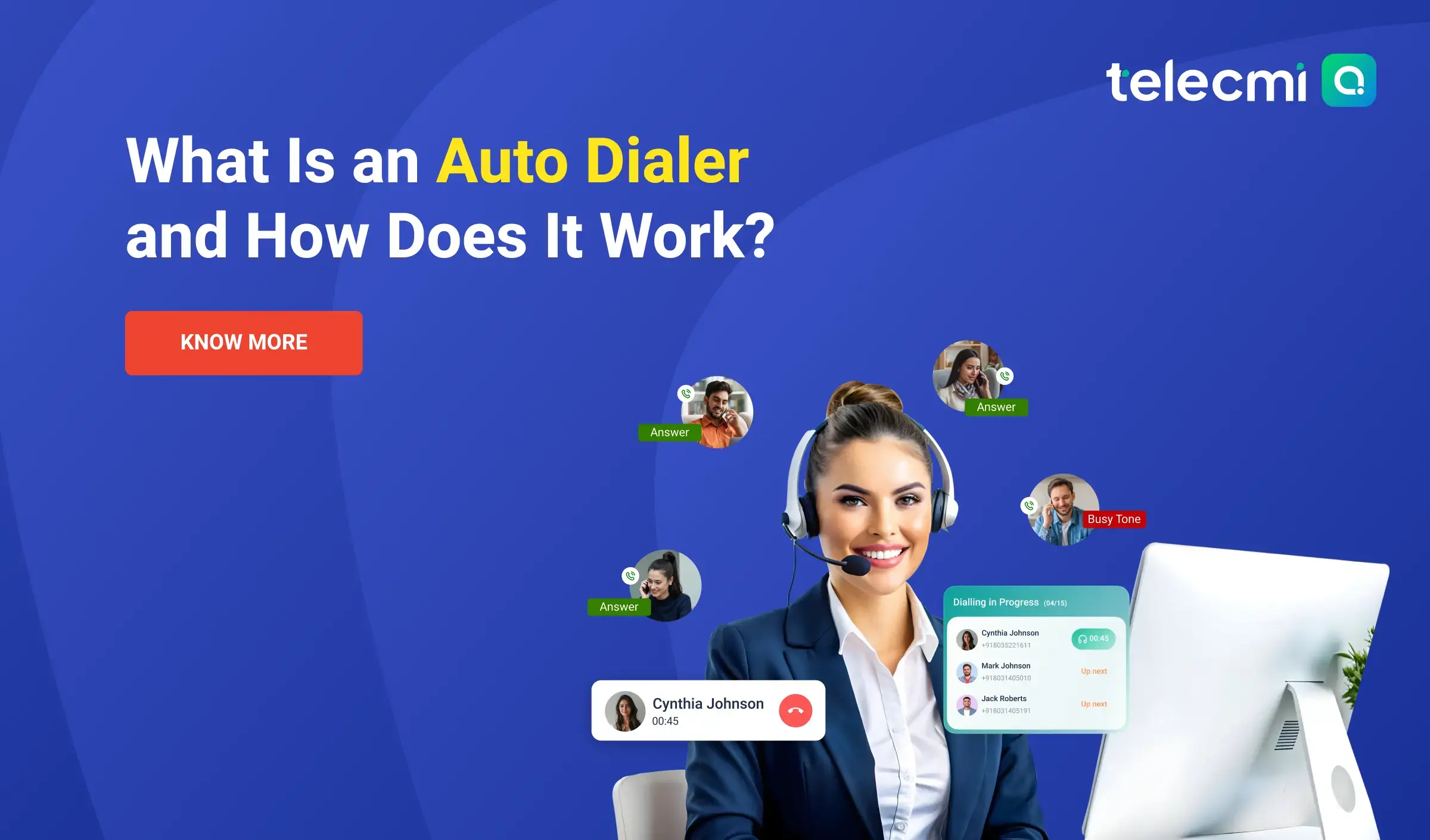
Auto dialer programs automate the outbound calling process by automatically dialing lists of telephone numbers, filtering out busy signals, voicemails, and disconnected lines, and connecting only live, answered calls to available human agents or playing pre-recorded messages.
Introduction to Automated Outbound Calling Technology
Outbound communication forms the lifeblood of numerous industries, ranging from customer service centers and political campaign offices to debt collection agencies and appointment-setting operations. In the past, manual dialing severely limited the volume of outreach an organization could achieve. Agents spent significant portions of their workdays listening to ringing tones, encountering busy signals, or navigating automated answering machines.
Auto dialer programs emerged to solve this inefficiency. By automating the mechanics of placing telephone calls, these software applications eliminate the manual friction of reading numbers from a spreadsheet or CRM and punching them into a keypad. Modern systems go far beyond simple sequential dialing; they integrate sophisticated algorithms to predict agent availability, comply with complex telecommunications regulations, and log interaction data directly into centralized databases.
Understanding what auto dialer programs do requires looking past the basic software interface to examine the underlying logic, operational variants, regulatory parameters, and integration capabilities that make them indispensable tools in contemporary telecommunications infrastructure.
Core Operational Mechanics: How Auto Dialers Function
At its core, an auto dialer program interfaces with telephony infrastructure—traditionally Public Switched Telephone Networks (PSTN) via hardware cards or, increasingly, Voice over Internet Protocol (VoIP) and Session Initiation Protocol (SIP) trunking services. The software ingests a list of phone numbers, typically imported from a Customer Relationship Management (CRM) platform or a comma-separated values (CSV) file, and initiates calls according to predefined parameters.
The primary function is filtering unproductive outcomes so human agents interact solely with live interlocutors. When the software initiates a call, it monitors the line status in real-time. If the system detects a busy signal, a disconnected number, a fax machine tone, or a voicemail greeting, it handles the event based on pre-programmed rules. For instance, a disconnected number might be automatically flagged and removed from the active calling list, while a busy signal might be scheduled for a retry at a later time.
When a live human answers the phone, the auto dialer's behavior diverges depending on the specific program type. In some configurations, the system immediately bridges the call to an available agent, displaying relevant customer data on the agent's screen through a process known as screen pop. In other configurations, the software plays an automated audio message without involving an agent at all.
Primary Types of Auto Dialer Programs
Different operational goals require distinct dialing architectures. Auto dialer programs are generally categorized into four primary types, each tailored to specific communication workflows and regulatory environments.
| Type | Primary Mechanism | Ideal Use Case |
|---|---|---|
| Predictive | Algorithm-driven | High-volume call centers |
| Preview | Agent-controlled | Complex B2B sales |
| Progressive | One-to-one | Controlled pacing |
| Power / Drop | Broadcast audio | Notifications & alerts |
Predictive Dialers
Predictive dialers utilize statistical algorithms to dial multiple phone numbers simultaneously per available agent. The algorithm calculates the average call duration, the average time agents spend on after-call work, and the percentage of calls answered by humans versus machines. The goal is to maximize agent talk time by ensuring a live person is on the line right as an agent becomes free. While highly efficient, predictive dialers require careful configuration to manage abandoned call rates and maintain compliance with telecommunications regulations.
Preview Dialers
Preview dialers place less emphasis on speed and more on preparation. Before a call is placed, the software displays the contact's profile, history, and notes to the agent. The agent reviews the information and manually triggers the dial when ready. This approach suits high-value business-to-business (B2B) sales, specialized support lines, or complex advisory services where context is essential before greeting the customer.
Progressive (Power) Dialers
Progressive dialers operate on a strict one-to-one ratio or a tightly controlled pacing model. When an agent finishes a call and indicates readiness, the system dials the next number on the list for that specific agent. This eliminates wasted time between calls while ensuring that agents are never subjected to abandoned calls or mismatched pacing.
Voice Broadcasting (Robodialing)
Voice broadcasting systems do not connect calls to human agents. Instead, they blast pre-recorded audio files to thousands of phone numbers simultaneously. These programs are utilized for emergency alerts, school closure notifications, appointment reminders, and political announcements. Because they do not involve a live conversation in most cases, voice broadcasters face strict regulatory oversight in many jurisdictions.
Key Features and Capabilities of Modern Auto Dialers
Contemporary auto dialer programs are feature-rich software suites designed to integrate seamlessly into broader enterprise communication ecosystems.
- CRM Integration: Modern dialers sync bi-directionally with popular CRM platforms such as Salesforce, HubSpot, and Zendesk. This ensures that call outcomes, timestamps, recordings, and notes automatically update in the customer profile.
- Answering Machine Detection (AMD): AMD algorithms analyze the cadence and frequency of audio on the line during the first few seconds of a call. Distinguishing between a human saying "Hello" and an automated voicemail greeting prevents agents from wasting time talking to voicemail boxes.
- Call Recording and Monitoring: Supervisors can listen in on live calls (silent monitoring), whisper guidance to agents without the customer hearing (whisper coaching), or barge into calls when necessary. Automated recording stores audio files for quality assurance and training.
- Local Presence Dialing: To increase connection rates, advanced dialers match the outgoing caller ID to the local area code of the recipient, making the call appear local rather than long-distance or international.
- Compliance Management Tools: Built-in tools help organizations respect regulatory frameworks by scrubbing phone lists against national Do-Not-Call (DNC) registries, managing internal opt-out lists, and limiting calling hours based on time zones.
Operational Benefits and Efficiency Gains
Organizations deploy auto dialer programs primarily to overcome the physical and temporal limits of manual dialing. The advantages span multiple operational metrics.
The most immediate benefit is the dramatic increase in agent productivity. Studies and industry benchmarks consistently show that manual dialers limit agents to a fraction of the calling attempts possible with automation. By eliminating dead time spent listening to rings or dialing numbers, auto dialers can increase live contacts per hour significantly.
Furthermore, auto dialers enforce process consistency. Every lead receives outreach according to a structured cadence, and every call outcome is logged uniformly without relying on manual data entry from fatigued agents. This data hygiene improves analytics, allowing managers to track conversion rates, peak calling hours, and campaign performance with accuracy.
Finally, automated systems reduce human error. Agents do not misdial numbers, skip scheduled callbacks, or forget to update lead statuses, ensuring cleaner pipelines and more reliable reporting.
Regulatory Frameworks and Compliance Considerations
The power of auto dialer programs brings significant legal and regulatory responsibilities. Because automated calling can easily become intrusive, governments and regulatory bodies enforce strict rules regarding their use.
In the United States, the primary governing statute is the Telephone Consumer Protection Act (TCPA), enforced by the Federal Communications Commission (FCC). The TCPA places strict limitations on the use of automatic telephone dialing systems (ATDS) and artificial or prerecorded voice messages. Key requirements include:
- Obtaining prior express consent or prior express written consent before calling mobile phones or delivering prerecorded marketing messages.
- Honoring the National Do-Not-Call Registry and maintaining an internal company-specific DNC list.
- Providing clear identification of the caller and an automated opt-out mechanism for voice broadcasts.
Violations of the TCPA can result in steep statutory damages per violation, making compliance an essential component of any auto-dialing operation. Organizations must work closely with legal counsel and ensure their software configuration includes robust compliance safeguards.
Evaluating and Selecting an Auto Dialer Program
Choosing the right auto dialer program requires a thorough assessment of organizational needs, technical infrastructure, and budget constraints.
| Evaluation Area | Key Considerations |
|---|---|
| Infrastructure | Cloud-based (VoIP) vs. On-premise hardware |
| Integration | Compatibility with existing CRM software |
| Compliance | TCPA tools, DNC scrubbing, consent tracking |
| Scalability | Ability to handle fluctuating agent counts |
| Cost Structure | Per-minute, per-agent, or flat monthly fees |
Organizations should prioritize cloud-based (Software-as-a-Service) dialers over legacy hardware solutions, as cloud platforms offer greater flexibility, remote work support, and automatic updates. Integration testing is also vital; the dialer must flow data smoothly into the team's existing database without creating data silos.
Cost structures vary widely across providers. Some charge flat monthly fees per user seat, while others utilize metered billing based on minute usage or carrier fees. Companies must calculate their projected call volumes and average talk times to determine the most cost-effective pricing model.
Frequently Asked Questions
What is the difference between an auto dialer and a predictive dialer?
An auto dialer is a broad category of software that automatically places telephone calls. A predictive dialer is a specific, advanced type of auto dialer that uses statistical algorithms to dial multiple numbers per agent simultaneously, anticipating when agents will finish current calls.
Can auto dialers call mobile phones legally?
Yes, but with strict legal restrictions. In the United States, calling mobile phones using an automated dialing system or prerecorded voice generally requires prior express consent under TCPA regulations. Marketers face stringent consent requirements that do not always apply to informational or debt-collection calls.
Do auto dialers require special hardware?
Most modern auto dialer programs are cloud-based applications accessed via a web browser or softphone software. They require only a reliable broadband internet connection and a USB headset, eliminating the need for dedicated telephone lines or on-premise hardware switches.
How do auto dialers detect answering machines?
Auto dialers use Answering Machine Detection (AMD) technology, which analyzes audio frequencies, signal cadences, and the duration of speech patterns during the initial moments of connection to determine whether a human or an automated greeting answered the call.
Are auto dialers only used for cold calling and sales?
No. While sales and telemarketing are common use cases, auto dialers are widely used in customer service for appointment reminders, healthcare providers for patient notifications, educational institutions for emergency alerts, and debt collectors for account recovery notices.
Conclusion and Next Action
Auto dialer programs transform outbound communication by replacing manual dialing mechanics with intelligent, automated workflows that maximize agent productivity and campaign reach. Whether deploying a predictive dialer for a high-volume sales floor or a progressive dialer for specialized client outreach, success depends on aligning software capabilities with operational goals and maintaining strict adherence to telecommunications regulations.
Organizations looking to implement an auto dialer should begin by auditing their current CRM infrastructure, calculating projected call volumes, and consulting with legal counsel to ensure full compliance with regional calling laws before evaluating specific software vendors.
Image Gallery
Select an image to open it in a new tab.
Vivian Cho
Executive IT and Emerging Technologies Reporter
